
Crypto Project Reviews: What Web3 Projects Actually Do
We review Web3 projects by what they build and how it works – not by token price. Explore identity, storage, stablecoins, real-world assets, privacy tools and NFT infrastructure.
Explore Projects

Ultimate Guide to the Best Decentralized Identity Solutions
The best decentralized identity solutions solve a simple problem: every login you have ever created lives in someone else's database, not yours. This corner of decentralized…
Latest in this topic
How we review a crypto project
Every review answers the same five core questions, which allows readers to compare projects across sectors. The problem question identifies which real problem the project solves and for whom, and the technology question describes how the product works, which chain it runs on and which features are live versus planned.
The token role question determines whether the token is necessary for the product and how the project distributes supply. The adoption question measures on-chain usage, integrations and developer activity, and the risks question covers centralization, regulatory exposure, audits and dependencies.
Six crypto sectors under review
Decentralized identity projects work with DIDs, verifiable credentials and naming systems, so the review asks who issues the credentials and who verifies them. Privacy projects use zero-knowledge (ZK) proofs, trusted execution environments (TEE), fully homomorphic encryption (FHE) and multi-party computation (MPC), and the review asks what each tool hides and what the user must trust.
NFT and metaverse projects include marketplaces, standards and virtual worlds, and the review asks how much of the activity is organic. Storage and compute projects offer file storage plus GPU and compute networks, and the review checks whether users consume the capacity on offer.
Stablecoins follow fiat-backed, crypto-backed or synthetic designs, and the review asks what backs the peg and who can redeem the token. Real-world assets (RWA) cover tokenized bonds, funds, credit and commodities, and the review asks what legal link connects the token to the asset.
Red flags we look for
The reviews flag five red flags, and the first two concern tokenomics: a token with no clear function in the product and a large share of supply held by insiders under short unlock schedules.
The remaining three red flags concern control and verification, starting with admin keys which can change contracts or move user funds without a time delay. Claims of partnerships or users with no verification on-chain or in public sources lower the credibility of a project, and contracts holding user funds without an independent security audit expose depositors to avoidable risk.
How to read on-chain adoption
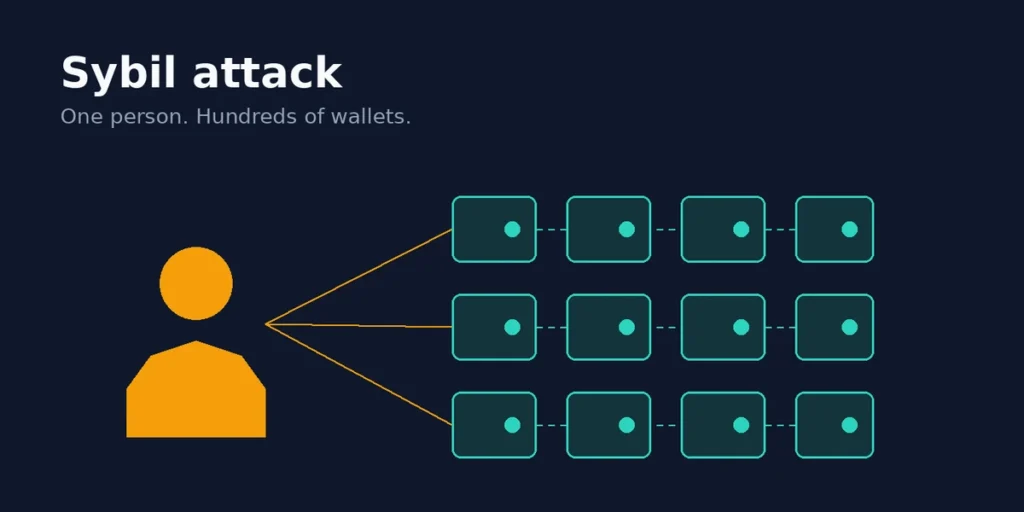
Bots, airdrop farming and incentives can inflate transaction counts and wallet numbers, so raw totals say little about real demand.
Where possible, the reviews examine retention, fees paid by users and activity after incentives end. A project with fewer but recurring users often shows a healthier base than a project with a short burst of activity.
What a review is not
Our reviews are not sponsored and are not investment advice. We do not publish price predictions. When a project has a commercial relationship with us, we say so clearly – see our editorial policy.
Where to start
Readers new to Web3 projects can begin with the sectors with the clearest real-world use: stablecoins and tokenized real-world assets. Both sectors connect directly to traditional finance and show measurable adoption.
Identity and storage projects sit earlier in their development, while NFT and metaverse projects work as case studies of how hype cycles affect on-chain activity.
Each sector hub explains the basics, compares the main approaches and links to the individual reviews, which lets readers move from overview to detail in a few clicks.
Frequently asked questions
Are your project reviews paid?
No. Reviews are written independently, labels any sponsored content clearly and keeps it separate from the reviews.
Do you give price predictions?
No. We analyze technology, adoption and risks, and does not predict token prices or recommend buying or selling.
How can I suggest a project for review?
Readers can submit a project through the contact page. We prioritize live products, public documentation and verifiable on-chain activity.
What does a stablecoin review check?
A stablecoin review examines what backs the peg and who can redeem the token, and applies both questions to fiat-backed, crypto-backed and synthetic designs.
What does token role mean in a project review?
Token role describes whether the token is necessary for the product and how the project distributes supply among holders. A token with no clear function in the product ranks among the red flags of a review.
This page is for educational purposes only and is not financial, investment or tax advice. Crypto assets are volatile and you can lose all of the money you invest.