Aleo network blockchain is one of the few privacy blockchains built to be zero-knowledge by default rather than as an opt-in feature, letting developers write general-purpose private applications instead of just shielding payments. They combine this with a programming language created specifically for this purpose, Leo, which aims to make zero-knowledge system development accessible without requiring any prior knowledge of cryptography.
Key Takeaways
- Aleo’s mainnet launched September 18, 2024, following a $200 million Series B round led by SoftBank and Kora Management, with participation from a16z, Tiger Global, and Samsung Ventures.
- Aleo uses off-chain proof generation with on-chain verification, built on its own snarkVM and snarkOS software and a purpose-built language called Leo.
- A governance proposal called ARC-46, effective August 1, 2025, shifted Aleo mining to a hybrid Proof-of-Work plus Proof-of-Stake model, requiring miners to stake escalating amounts of ALEO just to submit puzzle solutions.
- ALEO traded around $0.018 with a roughly $23 million market cap in late July 2026 – down more than 99% from its September 2024 all-time high of $6.79.
- ARC-46 sparked real backlash from miners, some of whom describe it as effectively forcing them to become long-term ALEO holders regardless of mining profitability.
This guide explains how Aleo’s zero-knowledge architecture actually works, compares it to other privacy-focused blockchains, walks through the real ARC-46 mining controversy in detail, and concludes with an objective assessment of the project’s status and its token in 2026.
What Is Aleo Network Blockchain?
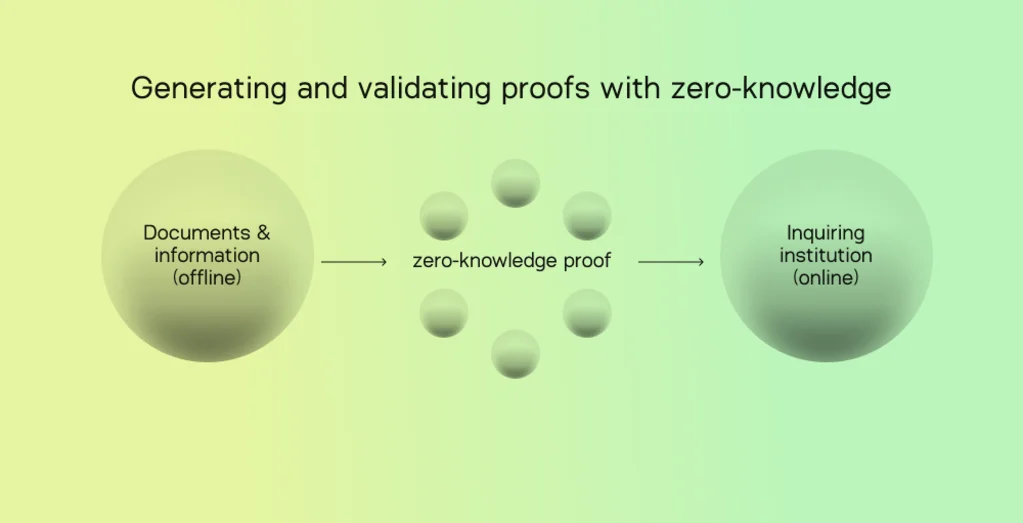
Aleo network blockchain is a Layer 1 built specifically around zero-knowledge proofs (ZKPs), cryptographic methods that let one party prove a statement is true without revealing the underlying data. Rather than treating privacy as an add-on, Aleo makes zero-knowledge computation the network’s default mode: applications run off-chain, and only a compact proof of correct execution is verified on-chain.
The project’s mainnet went live on September 18, 2024, following years of testnets and a record-breaking trusted setup ceremony with over 2,200 participants in 2021. Development was backed by a $200 million Series B funding round led by SoftBank and Kora Management, with participation from a16z, Tiger Global, and Samsung Ventures.
The full breakdown of how Aleo’s proving and consensus system actually works together follows in the next section.
How Aleo’s Zero-Knowledge Architecture Works
Developers write Aleo smart contracts in Leo, a purpose-built, functional programming language that abstracts away most of the underlying cryptography, letting a developer without a ZK background define which parts of an application’s state stay private and which stay public. These programs compile down to run on snarkVM, Aleo’s zero-knowledge virtual machine, while snarkOS handles the peer-to-peer networking and block production.
Consensus runs on AleoBFT, a Proof of Stake algorithm combining the Narwhal and Bullshark protocols with a dynamic validator committee. Separately, network participants called provers compete to solve cryptographic puzzles under a mechanism called Proof-of-Succinct Work (PoSW), earning ALEO rewards for generating valid proofs – which later became the focus of the controversy surrounding ARC-46, discussed below.
Aleo vs Other Zero-Knowledge Privacy Blockchains
Aleo competes in a small but growing field of privacy-focused crypto projects built around zero-knowledge cryptography, each making different tradeoffs. Zcash pioneered zk-SNARK shielding but limits it to payments of its own native asset, with no general-purpose smart contracts. Aztec brings similar zero-knowledge privacy to Ethereum as a Layer-2 rollup rather than a standalone chain.
Namada focuses on shielding assets across multiple chains via a shared pool rather than general application logic. Iron Fish takes a payments-focused zk-SNARK approach similar to Zcash. Aleo’s specific niche is general-purpose, developer-friendly private smart contracts on its own Layer 1, built around a language designed to make zero-knowledge programming accessible rather than a specialist skill.
|
Project |
Privacy Method |
Programmable Privacy |
Base Chain |
|
Aleo |
zk-SNARKs (Leo/snarkVM) |
Yes – general-purpose |
Standalone L1 |
|
Zcash |
zk-SNARKs (Sapling) |
No |
Standalone L1 |
|
Aztec |
zk-SNARKs (Noir) |
Yes – private smart contracts |
Ethereum L2 |
|
Namada |
zk-SNARKs (MASP) |
Limited – shielded transfers |
Standalone / Cosmos-adjacent |
|
Iron Fish |
zk-SNARKs |
No – payments only |
Standalone L1 |
The ARC-46 Mining Controversy
What Is ARC-46 and Why Was It Proposed?
Under Aleo’s original design, anyone could submit puzzle solutions and earn PoSW mining rewards using computing power alone, with ASIC manufacturers like IceRiver and Goldshell releasing Aleo-specific mining hardware in early 2025 as demand grew. ARC-46, a governance proposal that passed and took effect on August 1, 2025, changed that by requiring provers to stake a minimum amount of ALEO credits to be eligible to submit solutions, with the required stake per solution per epoch increasing on a fixed schedule roughly every three months over a two-year period, starting around 100,000 ALEO credits and eventually reaching 2.5 million.
By February 2026, the requirement had already climbed to 500,000 ALEO per solution per epoch. The proposal’s stated goal was for provers to collectively stake at least a third of the total ALEO supply by the end of the ramp-up period, tying mining rewards directly to long-term network commitment.
The Miner Backlash
The reaction from Aleo’s mining community was largely negative. Miners who had just purchased newly released, Aleo-specific ASIC hardware found themselves needing to lock up thousands of dollars worth of ALEO on top of their hardware costs just to keep mining at the same hashrate, with that requirement scheduled to keep climbing every quarter regardless of the coin’s price. Some described the mechanism as effectively forcing miners to become long-term stakers and speculators rather than letting them simply sell mined coins to cover electricity and hardware costs, with a few going as far as calling it a scheme to prop up ALEO’s price by locking up supply rather than a genuine security measure.
Mining pools including F2Pool and WhalePool suspended automatic daily payouts in the run-up to the change so miners’ accumulated rewards could be redirected into the new staking requirement instead.
Is the Backlash Justified?
Both sides of this debate have a reasonable case. Aleo’s own governance documentation frames ARC-46 as a legitimate cryptoeconomic security measure: without it, some provers were reportedly selling mining rewards immediately, which the proposal’s authors argued undermined the puzzle mechanism’s role as a genuine availability guarantee for the network. From that perspective, requiring validators to maintain a high level of participation aligns their incentives with the long-term health of the network, rather than with short-term profits.
From the miners’ side, however, the complaint is less about the theory and more about being blindsided mid-cycle: many had already bought ASIC hardware and budgeted around the original mining economics before the rules changed, and a steadily escalating stake requirement is a real, ongoing cost that specifically falls on smaller miners who can’t easily absorb locked-up capital the way larger pools or well-funded operations can.
Aleo Token Price and Market Position
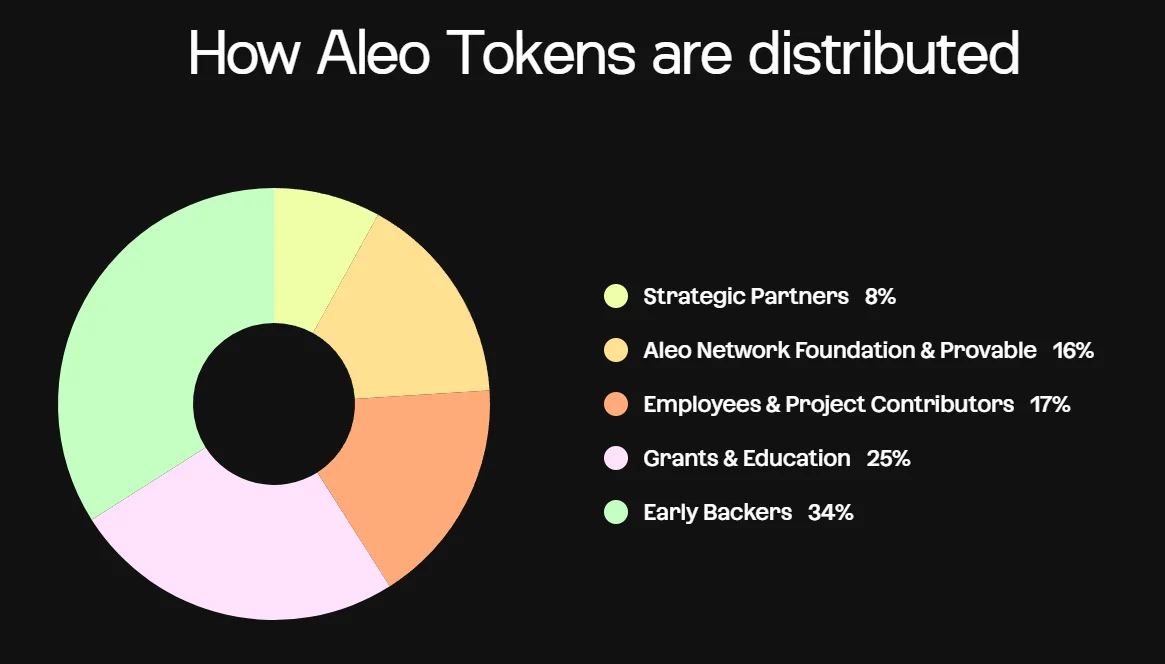
ALEO reached an all-time high of $6.79 on September 28, 2024, shortly after mainnet launch, before falling more than 99% to trade around $0.018, with a market cap of roughly $23 million by late July 2026. The decline reflects the widespread downward trend that has affected small- and mid-cap altcoins since 2024–2025, though the ARC-46 mining disruption and the resulting negative sentiment among a vocal segment of Aleo’s own community likely didn’t help. Circulating supply sits at roughly 1.29 billion tokens against a 5 billion maximum, with total issued supply continuing to grow as validators and provers earn staking and mining rewards.
Is Aleo Network Worth Watching in 2026?
Aleo’s underlying technical bet, that zero-knowledge computation can be made general-purpose and developer-friendly enough for mainstream smart contract use, remains one of the most prominent visions in the field of privacy-oriented blockchains, backed by significant funding and a strong track record in cryptographic research. Leo’s design goal of hiding ZK complexity behind an approachable language is a real and still-underappreciated differentiator versus chains that require specialized, low-adoption languages.
At the same time, ARC-46 has been a really challenging stage: a part of Aleo’s own community, the miners securing its Proof-of-Succinct Work puzzle, think the rules have been changed on them all of a sudden, and the token’s price has fallen over 99% from its post-launch high. Whether Aleo’s long-term security design proves prescient once the staking ramp-up completes in 2027, it remains to be seen over the next two years whether this disruption has dampened the interest of the hardware and mining community, on which it depends.
FAQ
What is ARC-46?
ARC-46 is an Aleo governance proposal, effective August 1, 2025, that requires provers (miners) to stake a minimum, steadily increasing amount of ALEO credits in order to submit puzzle solutions and earn mining rewards, with the requirement ramping up roughly every three months over a two-year period.
Why are Aleo miners upset about ARC-46?
Many miners bought Aleo-specific ASIC hardware before ARC-46 was finalized and now must lock up thousands of dollars in ALEO on top of that hardware cost just to keep mining at the same hashrate, with the required stake continuing to increase every quarter. Some view this as reasonable long-term network security; others see it as an unexpected mid-cycle rule change that specifically burdens smaller miners.
Is Aleo mining still profitable in 2026?
Profitability has declined significantly for many miners since ARC-46 took effect, since the escalating stake requirement adds a real capital cost on top of hardware and electricity. Actual profitability varies by hardware model, pool, electricity rate, and ALEO’s price, so this is not something to take as blanket investment guidance.
What is Leo?
Leo is Aleo’s purpose-built programming language for writing zero-knowledge applications. It abstracts away most of the underlying cryptography so developers can define private and public program state without needing deep zero-knowledge proof expertise.
How is Aleo different from Zcash or Aztec?
Zcash limits zero-knowledge shielding to payments of its own native asset with no smart contracts. Aztec brings zero-knowledge privacy to Ethereum as a Layer-2 rollup. Aleo is a standalone Layer 1 designed from the ground up for general-purpose private smart contracts, using its own Leo language rather than Solidity or Noir.
Why has ALEO’s price fallen so much since launch?
ALEO is down more than 99% from its September 2024 all-time high of $6.79, trading around $0.018 as of late July 2026. This tracks a broader decline across small and mid-cap altcoins over the same period, compounded by negative sentiment from the ARC-46 mining controversy.

Isai Alexei is a journalist and financial analyst covering cryptocurrency markets and traditional securities for Blockchaindose. He has spent ten years analyzing digital assets, trading activity, and market structure.