

Privacy-Focused Crypto Projects: How On-Chain Privacy Works
Public blockchains are transparent by default. Privacy-focused projects add confidentiality with zero-knowledge proofs, secure hardware or encrypted computation. We explain the approaches and review the projects.
Explore Projects
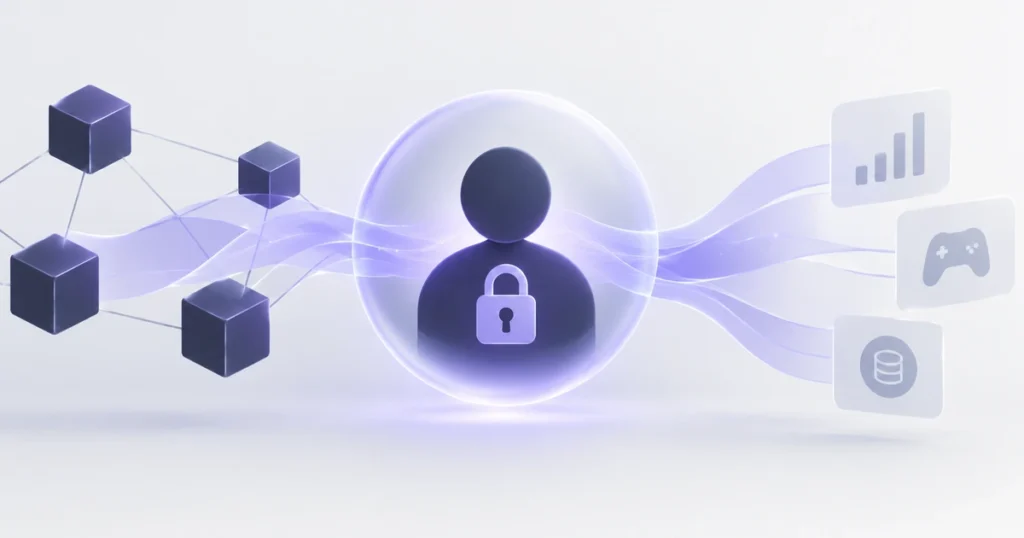
Secret Network Explained: Bringing Data Privacy to Web3
Secret Network blockchain was the first public chain to run smart contracts that keep their inputs, outputs, and state fully encrypted, a feature that most privacy…
Latest in this topic
Why privacy matters on public blockchains
Every transaction on a public chain is visible forever. That makes balances, salaries, trading strategies and business relationships traceable by anyone with a block explorer. For many financial and enterprise uses this is a deal-breaker. Privacy projects aim to keep sensitive data confidential while keeping the system verifiable.
Four approaches to on-chain privacy
| Approach | Strength | Weakness | Projects we cover |
|---|---|---|---|
| Zero-knowledge proofs | Strong cryptographic guarantees, no special hardware | Complex circuits, proving cost | Aleo, Aztec, Privado ID |
| Trusted execution environments | Fast, works with familiar code | Depends on hardware vendors and enclave security | Secret Network, Oasis |
| Fully homomorphic encryption | Computes on encrypted data directly | Still slow and expensive | Zama |
| Multi-party computation | No single party sees the secret | Requires several parties to stay online | Threshold wallets and key management |
Privacy for regulated finance
Banks and asset managers want confidentiality, but regulators need oversight. A growing group of projects – Dusk is one example – focuses on “compliant privacy”: transaction details stay hidden from the public but can be disclosed to auditors or regulators. This selective disclosure is becoming the main dividing line between privacy projects aimed at institutions and those aimed at individuals.
How we evaluate privacy projects
- Exactly which data is hidden, and from whom.
- The trust assumptions: cryptography only, hardware vendors, a trusted setup or a committee.
- Whether the cryptography and implementation have been audited.
- Performance and cost for real applications, not just demos.
- The project’s approach to compliance and selective disclosure.
Where privacy projects are used
Practical use cases include confidential payments and payroll, private voting in DAOs, sealed-bid auctions, protection against front-running and MEV, confidential data sharing for AI and healthcare, and tokenised securities where investors do not want their holdings to be public. Each use case needs a different balance of performance, privacy and auditability, which is why no single technology dominates.
When reading a privacy project’s claims, look for working applications rather than whitepaper promises. Our reviews note which features are live on mainnet and which are still in testing.
Risks and regulation
Regulators are wary of anonymous transfers. The US sanctioned the Tornado Cash mixer in 2022 – sanctions the Treasury later lifted in 2025 – and some exchanges restrict privacy coins. Technically, hardware enclaves have had published vulnerabilities, and complex zero-knowledge code can hide bugs. Our reviews describe each project’s approach and its regulatory position.
Frequently asked questions
What is the difference between privacy coins and privacy platforms?
Privacy coins focus on hiding payment details. Privacy platforms let developers build applications – such as private DeFi or confidential voting – on top of privacy technology.
What is FHE in crypto?
Fully homomorphic encryption allows computation on encrypted data. In blockchains, it can enable smart contracts that process confidential values without ever decrypting them.
Is on-chain privacy legal?
Privacy technology itself is generally legal, but rules on anonymous transfers and mixers differ by country. Many projects now build in selective disclosure for compliance.
This page is for educational purposes only and is not financial, investment or tax advice. Crypto assets are volatile and you can lose all of the money you invest.