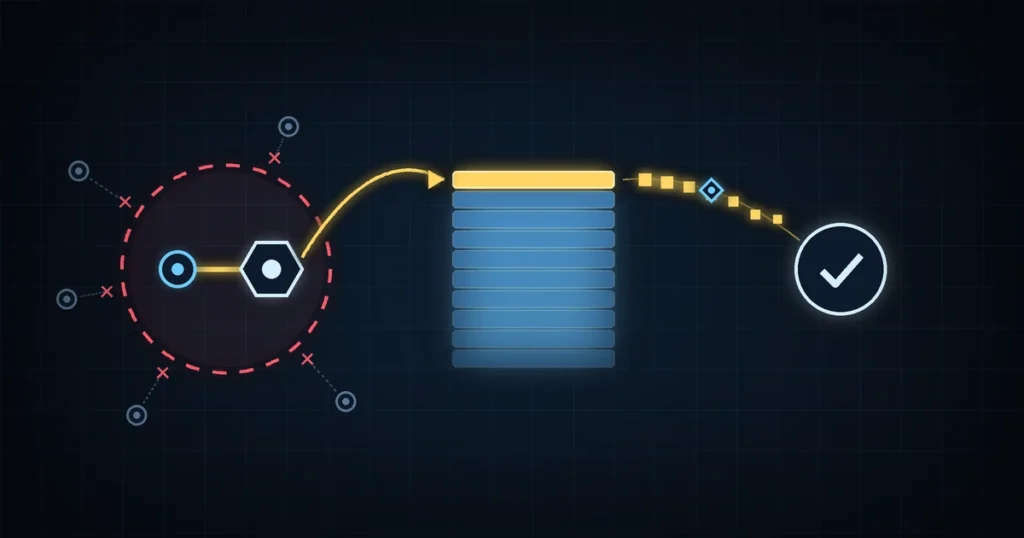

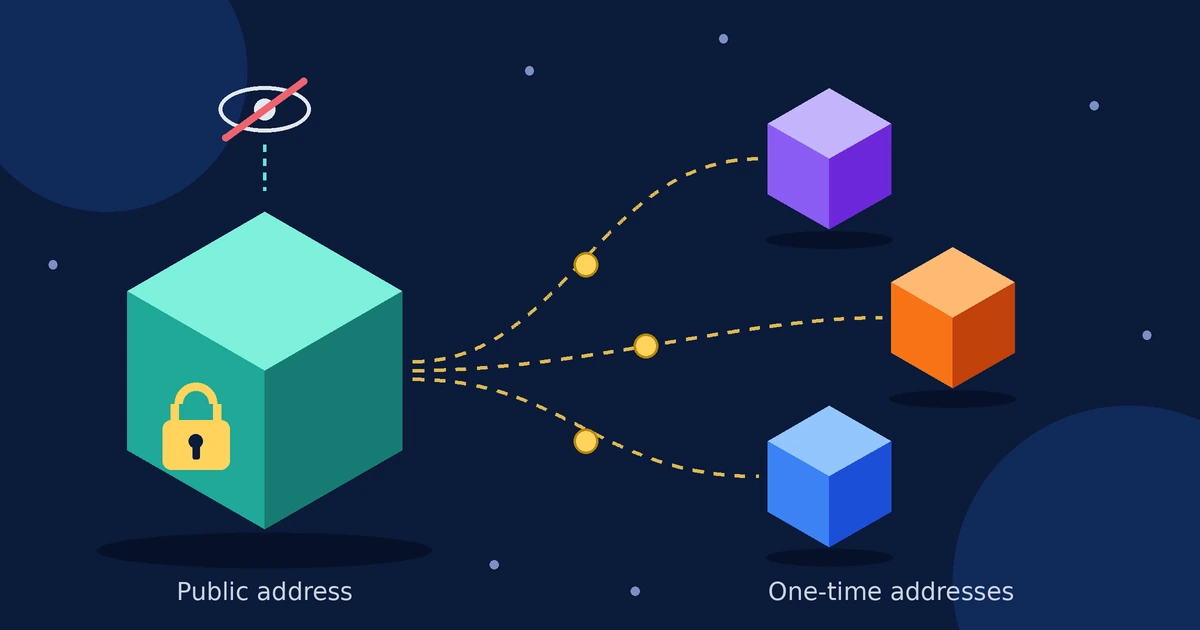
Public blockchains make transactions transparent, but that transparency can expose more financial information than users realize. Anyone who knows a wallet address can potentially monitor incoming payments, balances, and transaction history. Stealth addresses address this problem by creating unique receiving addresses for individual payments, making it harder for outsiders to connect transactions to the same recipient. The technology is already used in Monero and has also been standardized for Ethereum through ERC-5564 and for Bitcoin through BIP-352 (Silent Payments).
Definition
A stealth address is a one-time address generated for each payment, derived from the recipient’s public key, so that only the recipient can find and spend the funds and outsiders can’t link payments to them.
Key takeaways
- Stealth addresses generate unique receiving addresses to make payments harder to link to the same recipient.
- Recipients can share one public identifier without exposing a single reusable receiving address.
- Monero, Ethereum, and Bitcoin use different privacy mechanisms to make incoming payments harder to trace to recipients.
- Stealth addresses improve privacy but cannot eliminate blockchain analysis or metadata exposure.
What Are Stealth Addresses?
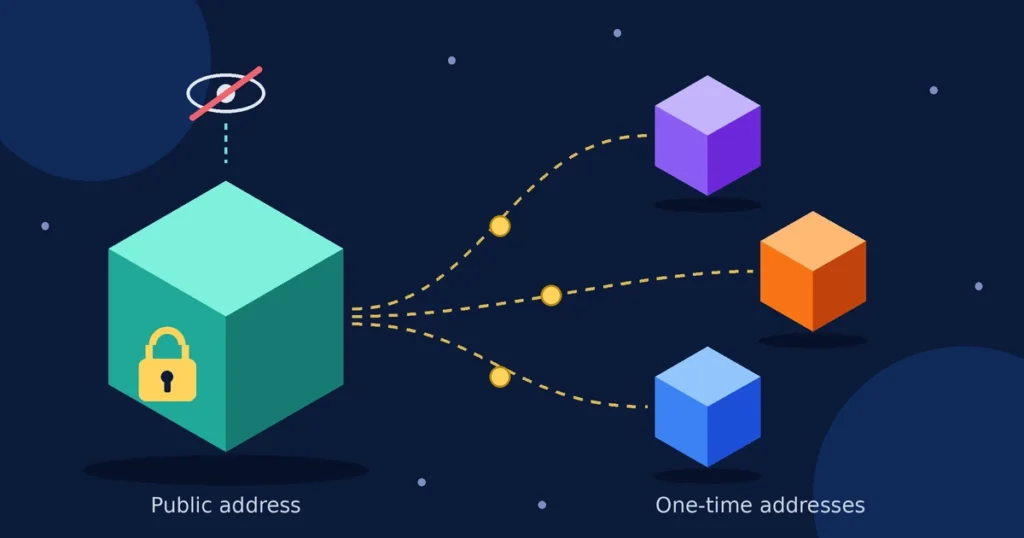
Stealth addresses are a cryptographic mechanism that allows senders to generate unique, one-time blockchain addresses for recipients using publicly shared cryptographic information. Instead of exposing a recipient’s regular wallet address every time they receive funds, the system creates a separate destination for each payment.
The recipient can share a stealth meta-address publicly, allowing anyone to send funds without knowing the recipient’s actual wallet structure. The generated receiving addresses appear unrelated to the recipient’s public identifier, making it more difficult for outside observers to associate multiple payments with the same person.
Unlike traditional wallet address rotation, stealth addresses use cryptographic calculations to create receiving addresses that the intended recipient can identify and access using their private keys.
REAL WORLD example
Monero
Monero builds stealth addresses into every transaction. Users share one public address, but each incoming payment goes to a unique one-time address that can’t be linked back to it or to other payments. A private view key lets the wallet detect incoming funds, while a separate spend key controls them, which also enables view-only wallets for monitoring without spending access. Stealth addresses work alongside ring signatures (hiding the sender) and RingCT (hiding amounts), so privacy covers the whole transaction rather than just the recipient.
How Stealth Addresses Work
Stealth addresses use public and private cryptographic keys to create payment destinations that are unique to individual transactions. The process works without requiring the recipient to generate and manually share a new address for every payment.
1. The Recipient Shares a Stealth Meta-Address
The recipient generates a stealth meta-address containing the public cryptographic information needed to receive payments. This can be shared on websites, profiles, invoices, or other public platforms.
The meta-address is not the actual destination where funds are received. It serves as the information from which senders can derive unique receiving addresses.
2. The Sender Generates a Unique Address
When sending funds, the sender uses the recipient’s meta-address and additional cryptographic information, including a temporary key, to derive a unique receiving address.
The sender then transfers funds to this generated address. Although the transaction remains visible on the blockchain, observers cannot easily determine that the address belongs to the recipient’s publicly shared meta-address.
REAL WORLD example
Ethereum (ERC-5564)
Ethereum’s accounts are public by default, so stealth addresses arrive as an opt-in standard, proposed in August 2022. A sender combines the recipient’s stealth meta-address with a fresh ephemeral key to derive a unique address, then publishes an announcement so the recipient can find the payment. It gives developers a common foundation for recipient privacy on Ethereum and other EVM networks, though it doesn’t hide senders or amounts on its own.
3. The Recipient Detects and Accesses the Payment
The recipient’s wallet scans blockchain transactions using private information associated with their stealth address system. This allows the wallet to identify payments intended for the recipient.
After identifying a payment, the wallet derives the corresponding private key required to access and spend the funds. The recipient does not need to know who generated every address or manually manage multiple wallets.
REAL WORLD example
Bitcoin (Silent Payments, BIP-352)
Silent Payments let a recipient publish one static address while each payment lands on a unique destination derived from the sender’s transaction inputs and the recipient’s public keys. No announcement or notification transaction is needed, so payments blend in with ordinary Bitcoin transactions and avoid extra fees. The tradeoff is that recipient wallets must scan the blockchain to find their payments, which is demanding for lightweight wallets.

Worked example
Imagine a freelance designer who publishes a stealth meta-address on their portfolio website. Three different clients pay for separate projects, and each sender generates a unique receiving address using the designer’s publicly available information.
All three transactions appear on the blockchain, but the receiving addresses do not directly reveal that they belong to the same designer. The designer’s wallet can detect all three payments, while someone examining the blockchain has a harder time connecting them.
What Stealth Addresses Actually Protect
Stealth addresses primarily protect the relationship between a recipient’s publicly known address or identity and the individual addresses receiving payments.
This can be useful in several situations:
- Freelancers: Clients can pay without exposing a freelancer’s complete payment history to everyone who knows their public profile.
- Businesses: Merchants can reduce the visibility of incoming payments being linked to a single publicly known wallet.
- Donations: Public donation campaigns can receive payments without making it as easy to associate every contribution with the same recipient.
- Personal transactions: Individuals can reduce the amount of financial information exposed through address reuse.
Stealth addresses make transaction analysis more difficult, but they do not make transactions invisible.
Why Stealth Addresses Still Have Limitations
Stealth addresses improve recipient privacy, but their effectiveness depends on implementation, wallet support, and user behavior.
Wallet Compatibility
Not every crypto wallet supports stealth addresses. Users need compatible software capable of generating stealth payments, scanning the blockchain, identifying incoming funds, and recovering access to them.
This can create usability barriers, particularly when users interact with wallets or services that do not recognize stealth address mechanisms.
Transaction Costs and Funding
Every generated address may require additional considerations when the recipient wants to move or spend the funds. On networks such as Ethereum, transaction fees can become a practical concern, especially when funds are distributed across multiple addresses.
Funding stealth wallets from other wallets associated with the recipient can also create connections that weaken privacy.
Blockchain Analysis and Metadata
Stealth addresses do not hide everything. Transaction timing, amounts on transparent networks, sender addresses, interactions with exchanges, and other activity can still reveal information.
An observer may not immediately identify a recipient, but connections can sometimes be established through surrounding transactions or information obtained outside the blockchain.
Stealth Addresses vs. Regular Wallet Addresses
| Feature | Regular Wallet Addresses | Stealth Addresses |
|---|---|---|
| Address reuse | Often reused for multiple transactions | Unique receiving address generated for each payment |
| Recipient privacy | Limited when addresses are publicly known | Better protection against linking payments to the recipient |
| Transaction tracking | Easier to trace and connect | More difficult to associate multiple payments |
| Wallet requirements | Supported by most wallets | Requires compatible wallet implementation |
| Transaction visibility | Transactions are publicly visible | Transactions remain visible, but recipient connections are harder to identify |
| Primary purpose | Sending, receiving, and managing crypto | Reducing recipient linkability and improving payment privacy |
The primary difference is not whether transactions are visible. Both can involve publicly recorded transactions. The difference is how easily observers can connect those transactions to the same recipient.
Why Stealth Addresses are important for Crypto Users
As blockchains become more widely used for payments, recipient privacy becomes increasingly important. Public wallet addresses can reveal financial activity that users never intended to make accessible to strangers, competitors, clients, or anyone monitoring the blockchain.
For freelancers, businesses, and individuals receiving regular payments, address reuse can create a permanent and searchable financial footprint. Stealth addresses introduce a way to receive funds without making the relationship between every payment and a shared public identity immediately obvious.
This is particularly relevant if crypto is expected to become a practical payment system rather than simply an asset used for trading and speculation. Financial privacy is an important part of that transition, and protecting recipients should not require users to manually manage a different wallet for every transaction.
My Perspective on Stealth Addresses
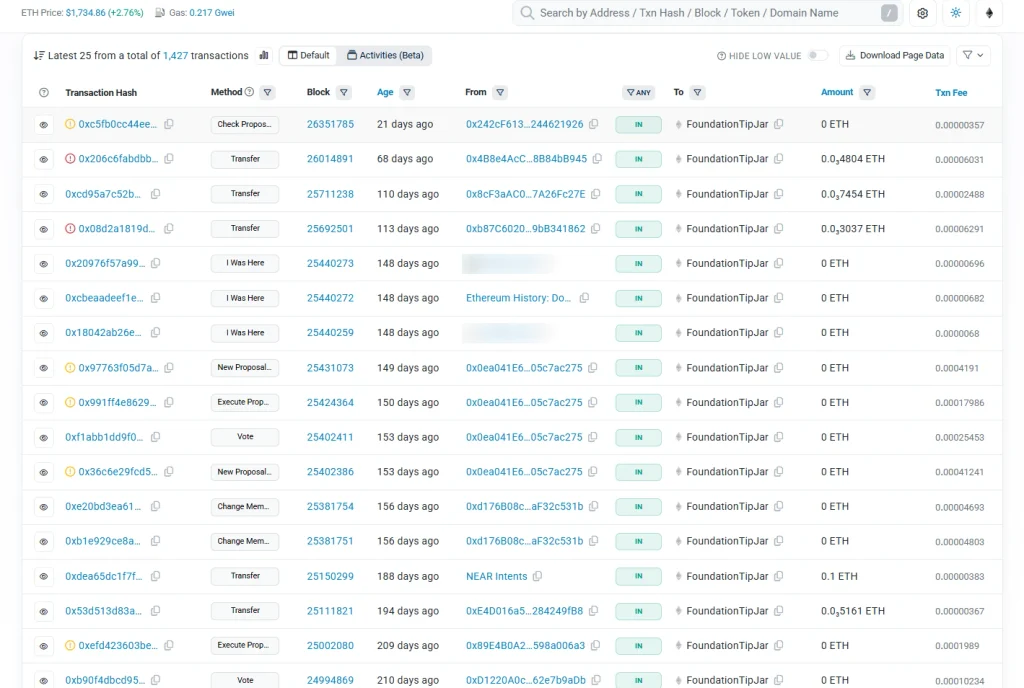
I don’t think stealth addresses are necessary for every crypto user. The privacy problem they solve is real: anyone can trace a public address and see its full payment history. But for most people, the priority is simply being able to send, receive, and manage crypto without extra steps, special wallets, or technical hurdles. Everyday users rarely think about hiding the link between their transactions, and asking them to would only make crypto harder to adopt.
That’s why I see stealth addresses as an option rather than a requirement. They matter most for people who genuinely need financial privacy, such as journalists, businesses protecting their revenue, or anyone who doesn’t want their entire payment history exposed. Those users should have good tools available, but that doesn’t mean every blockchain must build them in by default.
Conclusion
Stealth addresses reduce the risk of linking multiple payments to the same recipient, addressing a privacy weakness in transparent blockchains. By generating unique receiving addresses, they make financial tracking more difficult without compromising transaction verification. Monero implements this alongside other privacy mechanisms, while Ethereum’s ERC-5564 and Bitcoin’s BIP-352 offer alternative approaches. Despite their benefits, stealth addresses remain a specialized privacy tool rather than a necessity for every crypto user.
Q1: Can stealth addresses be used to receive crypto from centralized exchanges?
It depends on the exchange’s withdrawal system. Some exchanges may not support sending funds to stealth-generated addresses, particularly if their withdrawal process requires standard address formats or additional verification.
Q2: Can stealth addresses be reused if they already protect recipient privacy?
The underlying stealth meta-address can be reused, but the purpose of the system is to generate a separate receiving address for each payment rather than reuse the same destination.
Q3: Do stealth addresses make crypto payments more expensive?
They can introduce additional costs depending on the blockchain and implementation. Some systems require extra transactions or on-chain data, while others are designed to minimize additional fees.
Q4: Can stealth addresses be used for recurring crypto payments?
Yes. A sender can use the recipient’s stealth information to generate a new receiving address for each recurring payment, without requiring the recipient to publicly expose the same address every time.

Muhammad Mubashir is a crypto enthusiast who has been in the Web3 space since 2019 and writing content for major industry platforms since 2024. They specialize in blockchain architecture, Layer 1/2 solutions, NFTs, DeFi, and Web3 technologies, and enjoy gaming in their free time.