EVM blockchains support Ethereum’s smart contracts, making it easy for developers to build across multiple networks. Chains like Binance Smart Chain, Avalanche, and Polygon offer lower fees and faster transactions while staying compatible with Ethereum’s tools. EVM compatibility means dApps can run seamlessly on different networks without major changes. This flexibility boosts adoption, letting users interact with DeFi, NFTs, and more without being tied to Ethereum alone.
zkSync Era implements a custom zero-knowledge virtual machine (zkVM) that diverges from the Ethereum Virtual Machine (EVM) bytecode format. Matter Labs selects this design to reduce proving time and lower per‑transaction cost. The approach replaces direct EVM execution with a compilation pipeline that converts Solidity and Vyper source code into zkEVM bytecode. Developers gain faster block finality but incur ...
The Move programming language, originally developed at Meta for the Diem project, has been widely regarded as a technical advancement over Solidity. Its resource-oriented programming model treats digital assets as first-class resources that cannot be copied or implicitly discarded, eliminating entire classes of vulnerabilities at the language level. Sui’s implementation of Move introduces an object-centric data model that enables ...
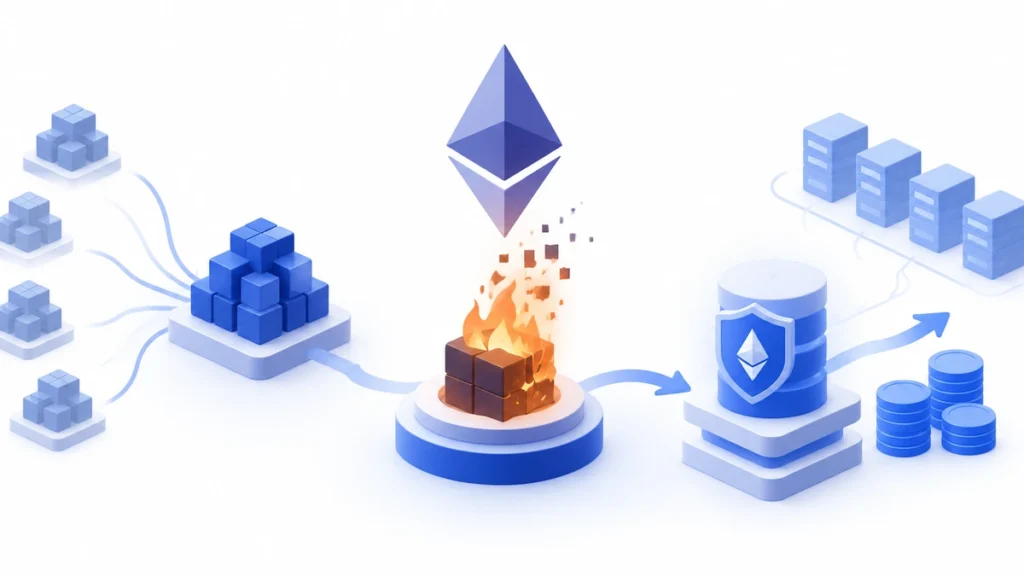
The Ethereum research community has advanced MEV-Burn from a theoretical concept to a protocol-near implementation. Current client software contains the necessary infrastructure to enable MEV-Burn as early as the Glamsterdam upgrade, according to analysis published on Ethereum Research. The mechanism redirects builder auction payments from validators to protocol-level burning, fundamentally altering the economic structure of ...
The Ethereum network was the first blockchain that introduced smart contracts and decentralized applications (DApps). Originally conceptualized by Vitalik Buterin in 2013, Ethereum launched in 2015 and has since evolved into one of the most powerful blockchain platforms. Unlike Bitcoin, which primarily serves as a digital currency, Ethereum provides a Turing-complete programming language that enables ...
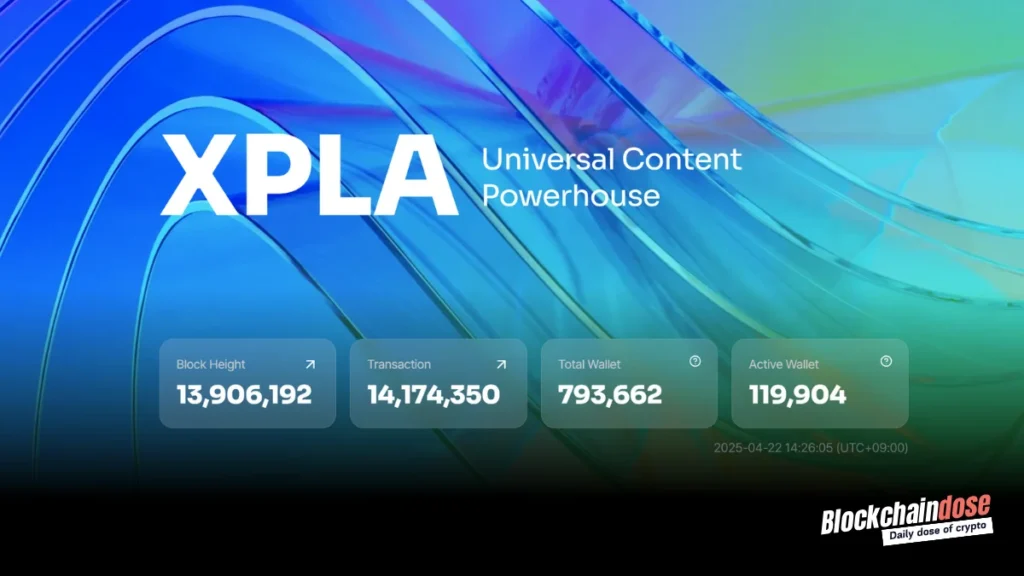
Ethereum, Solana, Binance Smart Chain, Polygon – What immediately comes to mind when you hear one of those names? Well, it’s their great ability to host decentralized applications. A new project, XPLZ Blockchain, is coming up, and it has the potential to challenge even the behemoths of the dApp space. Key Takeaways Understanding XPLA Blockchain: ...
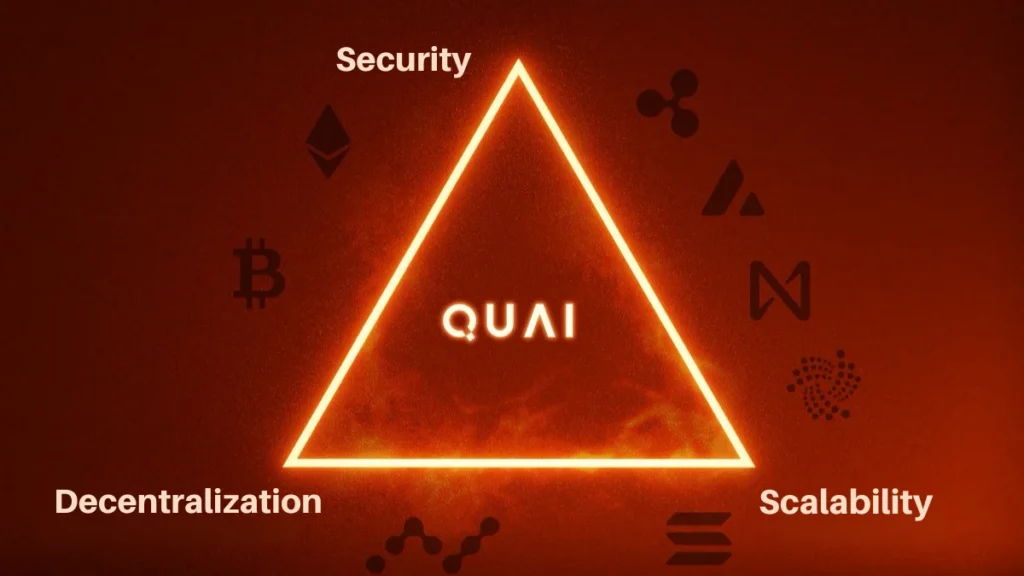
What do you call the network fashioned to return the true meaning and value of money? Well, i’t the Quai Network! But, what is the Quai Network? How does it work? What are its features? Key Takeaways: What Is Quai Network? Quai is defined as a scalable and programmable PoW blockchain network fashioned to bring ...
Taraxa is a cutting-edge blockchain network designed to elevate businesses’ credibility and reputation. This network achieves this massive feat by ensuring the integrity of informal transactional data. Informal transaction data includes records of trades or transactions not featured within the structured systems of legal documents and hence not verifiable. Taraxa takes the reins by simply ...
One of the biggest problems clouding the world of blockchain technology is the lack of scalability. Super large blockchain networks like Ethereum and Bitcoin suffer serious scalability issues, which seem to increase with new tokens and projects. However, the Shardeum blockchain is bringing a new solution to blockchain scalability. Key Takeaways: What is Shardeum Blockchain? ...
Manage Cookie Consent
To enhance your experience, we use cookies. Consent helps us process data like browsing behavior. Denying may affect site features.
Functional
Always active
The technical storage or access is strictly necessary for the legitimate purpose of enabling the use of a specific service explicitly requested by the subscriber or user, or for the sole purpose of carrying out the transmission of a communication over an electronic communications network.
Preferences
The technical storage or access is necessary for the legitimate purpose of storing preferences that are not requested by the subscriber or user.
Statistics
The technical storage or access that is used exclusively for statistical purposes.The technical storage or access that is used exclusively for anonymous statistical purposes. Without a subpoena, voluntary compliance on the part of your Internet Service Provider, or additional records from a third party, information stored or retrieved for this purpose alone cannot usually be used to identify you.
Marketing
The technical storage or access is required to create user profiles to send advertising, or to track the user on a website or across several websites for similar marketing purposes.