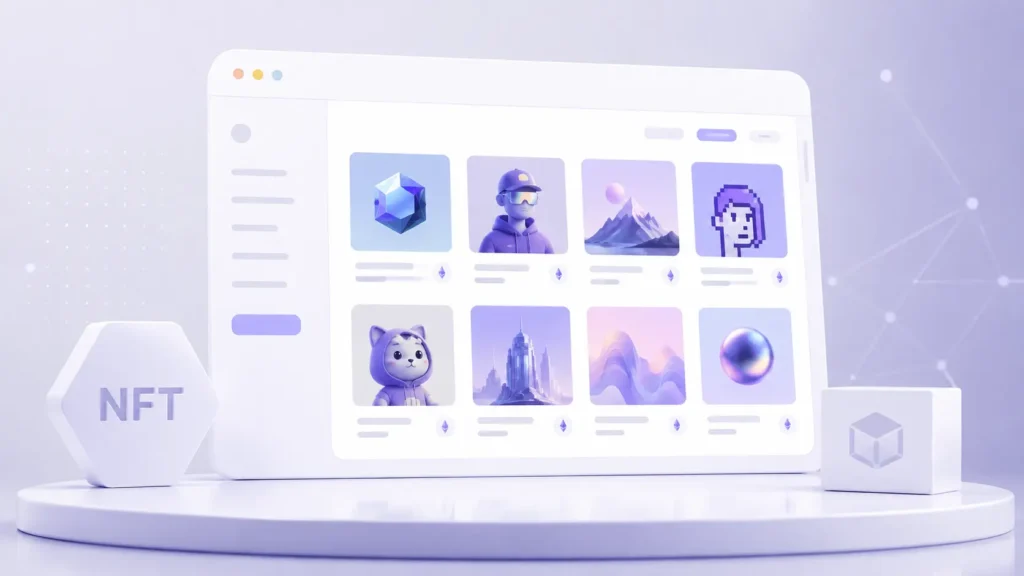
NFTs turn digital art, collectibles, and virtual assets into blockchain-backed ownership. Some focus on gaming, like Axie Infinity, while others power digital art marketplaces, such as OpenSea. Understanding royalties, smart contracts, and marketplace fees is key to buying, selling, or creating NFTs. Here, we break down NFTs with expert insights, practical tips, and deep analysis of their value and use cases.
Are you contemplating establishing your own NFT platform? You might want to think again. To create your own NFT marketplace typically costs over $600,000 and can take around eight months of hard work involving a team of people. Therefore, many businesses should go for a ready-made white label NFT marketplace instead of hundreds of thousands ...
The global NFT marketplace market reached $1.675 billion in 2025 and continues its growth trajectory with a compound annual growth rate of 3.40% through the forecast period. The broader NFT market capitalization exceeds $86 billion as of early 2026, with a compound annual growth rate approaching 41.8%. Gaming NFTs generated over $21 billion in the preceding year. These ...
Remember the 2021 NFT boom? In 2026, the NFT market is just a shadow of what it was in 2021. Yet, many NFT marketplace development services continue to ride on the nostalgia of the NFT boom. Key takeaways: NFT data analytics indicated that the trading volumes plunged to merely 823 million in Q2 2025, a ...
Discover how NFTs serve as the backbone of the metaverse economy. Learn how virtual real estate, digital avatars, and in-game assets create verifiable digital ownership.
NFT bridge security is the difference between cross-chain interoperability and a system vulnerable to multimillion-dollar theft. Bridges have become the central infrastructure connecting every NFT marketplace and chain, and attackers have noticed: bridge exploits are now among the largest thefts in crypto history, and a single mistake in key management can lead to the loss ...
NFT software development looks very different in 2026 than it did during the 2021 hype cycle. The speculative mania has faded, but the engineering discipline has matured: token standards are battle-tested, Layer 2 fees have collapsed to fractions of a cent, and the conversation among developers has shifted from getting rich to asking when the ...
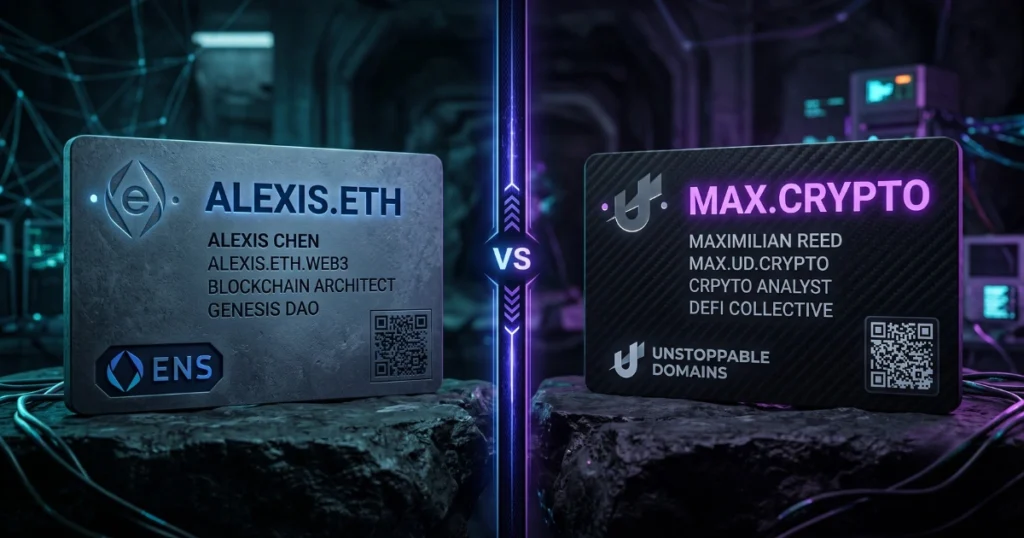
The ENS vs Unstoppable Domains debate has been running in crypto communities for years, and in 2026 it finally has real stakes. ENS has passed 2.8 million registered .eth names as of early 2026, while Unstoppable Domains reports over 4.2 million registered domains (a self-reported figure from the company itself). Both projects solve the same ...
NFT smart contracts are the technical foundation behind every digital collectible, on-chain artwork, and tokenized asset you see traded today. Without them, there is no verifiable ownership, no automated royalty, and no way to prove authenticity at the blockchain level. As the global NFT market was valued at approximately $43 billion in 2025 according to ...
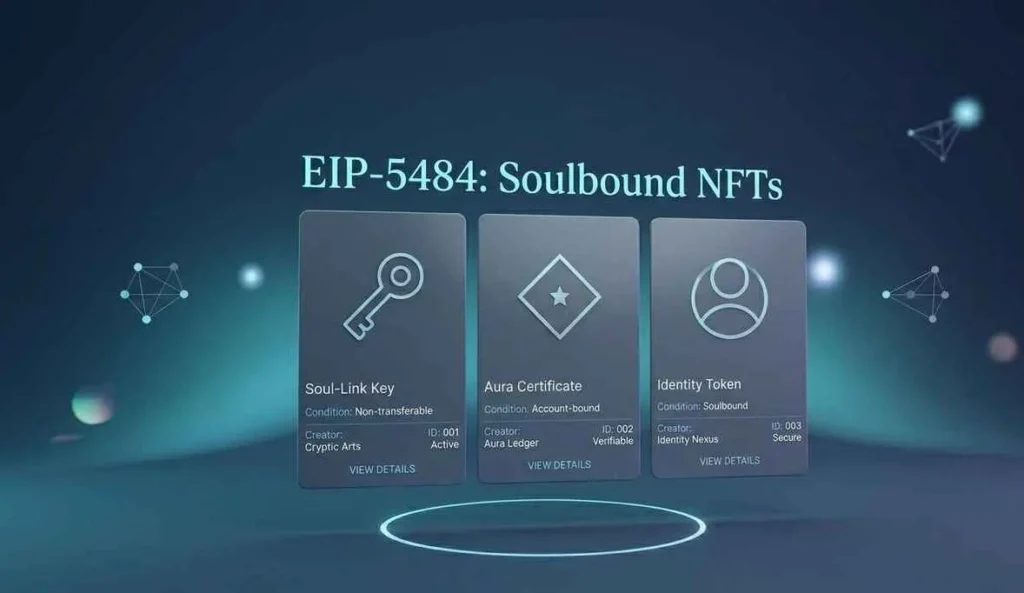
Traditional “soulbound” NFTs (non-transferable) were implemented by blocking the transferFrom function or reverting any movement. But this approach has a fundamental flaw: the token stays trapped forever in the same wallet, even if the user violates the terms of a service or the credential expires. EIP-5484 introduces a much more flexible standard: conditional burning. Instead ...
The Polygon NFT marketplace ecosystem has transformed significantly since the early days when it was seen primarily as a cheaper alternative to Ethereum. In 2026, Polygon is home to some of the most interesting NFT activity happening anywhere in Web3 – not because of speculative art flips, but because of a structural shift toward real-world ...
To enhance your experience, we use cookies. Consent helps us process data like browsing behavior. Denying may affect site features.
Functional
Always active
The technical storage or access is strictly necessary for the legitimate purpose of enabling the use of a specific service explicitly requested by the subscriber or user, or for the sole purpose of carrying out the transmission of a communication over an electronic communications network.
Preferences
The technical storage or access is necessary for the legitimate purpose of storing preferences that are not requested by the subscriber or user.
Statistics
The technical storage or access that is used exclusively for statistical purposes.The technical storage or access that is used exclusively for anonymous statistical purposes. Without a subpoena, voluntary compliance on the part of your Internet Service Provider, or additional records from a third party, information stored or retrieved for this purpose alone cannot usually be used to identify you.
Marketing
The technical storage or access is required to create user profiles to send advertising, or to track the user on a website or across several websites for similar marketing purposes.