NFT software development looks very different in 2026 than it did during the 2021 hype cycle. The speculative mania has faded, but the engineering discipline has matured: token standards are battle-tested, Layer 2 fees have collapsed to fractions of a cent, and the conversation among developers has shifted from getting rich to asking when the technology actually earns its place in an architecture. Activity has not disappeared either – DappRadar’s industry data shows 18.1 million NFT sales and roughly $1.6 billion in trading volume in Q3 2025, a rebound in transaction counts driven by much lower average prices.
This guide covers what NFT software development involves today: the 2026 tech stack, realistic cost breakdowns including audits and salaries, the build-versus-buy decision at the core of every project, security practices, the honest arguments against using NFTs at all, and practical career advice drawn from developers who have shipped and suffered in this space.
What Is NFT Software Development?
NFT software development is the engineering work behind non-fungible token systems: writing and deploying smart contracts that handle minting, transfers, and royalties; building metadata and storage infrastructure (typically on IPFS or similar decentralized storage); integrating wallets and marketplaces into front ends; and running backend services that index on-chain data. It is distinct from creating NFT art – this is systems work, closer to payments engineering than to design.
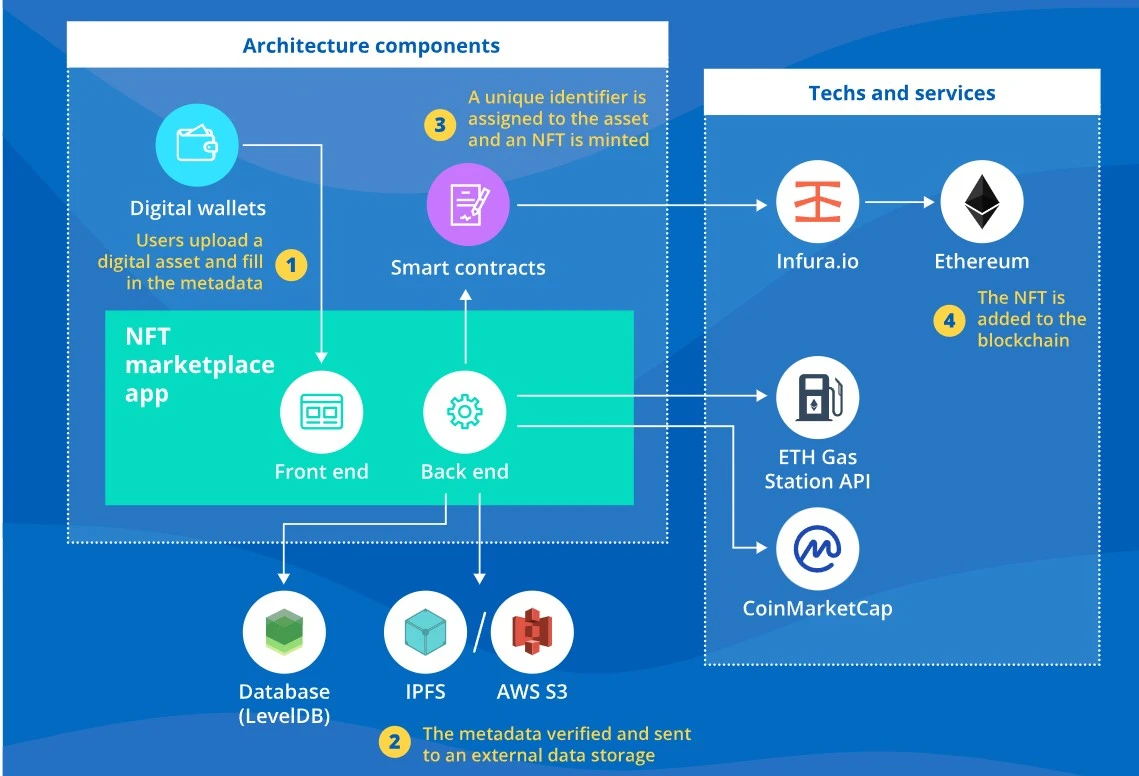
An NFT on most chains stores an identifier and a URI pointing to metadata, while the actual media usually lives off-chain. Skeptical engineers on Reddit are right to note that you still need a database and storage layer on top of the blockchain. The token proves ownership and enables open trading; it does not replace your data architecture.
The 2026 NFT Development Tech Stack
ERC-721 remains the default for unique one-of-one assets, while ERC-1155 handles semi-fungible items such as game consumables or event tickets where many copies of one type exist. For collection drops, the ERC-721A variant popularized by Azuki dramatically reduces gas costs for batch minting and became a standard community recommendation for exactly that reason. Most production contracts are built on audited OpenZeppelin libraries rather than written from scratch, which reduces both risk and audit scope.
Tooling and workflow
Hardhat and Foundry dominate EVM development in 2026, with older projects still on Truffle or Brownie. The workflow advice that experienced NFT developers repeat in community threads is unglamorous but earned: deploy and test everything on a testnet first, and specifically test the withdrawal function, because locked funds are a classic failure.
Use a delayed-reveal metadata approach so rare items cannot be sniped before mint completes. Put admin functions behind a multisig wallet rather than a single private key. And consolidate contract read functions into helpers so your front end is not making twenty separate calls for data it could fetch in one.
Choosing a blockchain in 2026
Chain choice is mostly a question of where your users and liquidity are. Ethereum still hosts the largest developer ecosystem by a wide margin – the Electric Capital Developer Report counts 31,869 active developers in the Ethereum ecosystem, nearly double Solana’s 17,708.
Costs are no longer the barrier they were: after the Dencun upgrade introduced blob transactions, median fees on major Layer 2 networks fell to one cent or below, according to Dune and growthepie data reported by Decrypt, and they have stayed in that territory since. That collapse in transaction costs is what makes the per-transaction pricing model of NFT infrastructure viable for consumer products.
Read also our article about Top 25 NFT marketplace development companies
Build vs. Buy: The Architecture Decision at the Heart of NFT Software Development
Building a secure storage and trading system for digital assets worth real money is genuinely hard: escrow logic, marketplace UI, fraud handling, and security testing all consume expensive developer time, and any bug can destroy user funds and trust.
Integrating with existing NFT infrastructure – marketplaces like OpenSea or Magic Eden, or gaming platforms like Immutable – hands you trading, custody rails, and a proven contract base in exchange for small per-transaction fees. A game developer in the same discussions confirmed the practical point: engines like Unity ship no built-in player-to-player marketplace, so outsourcing that layer saves significant backend and UI work.
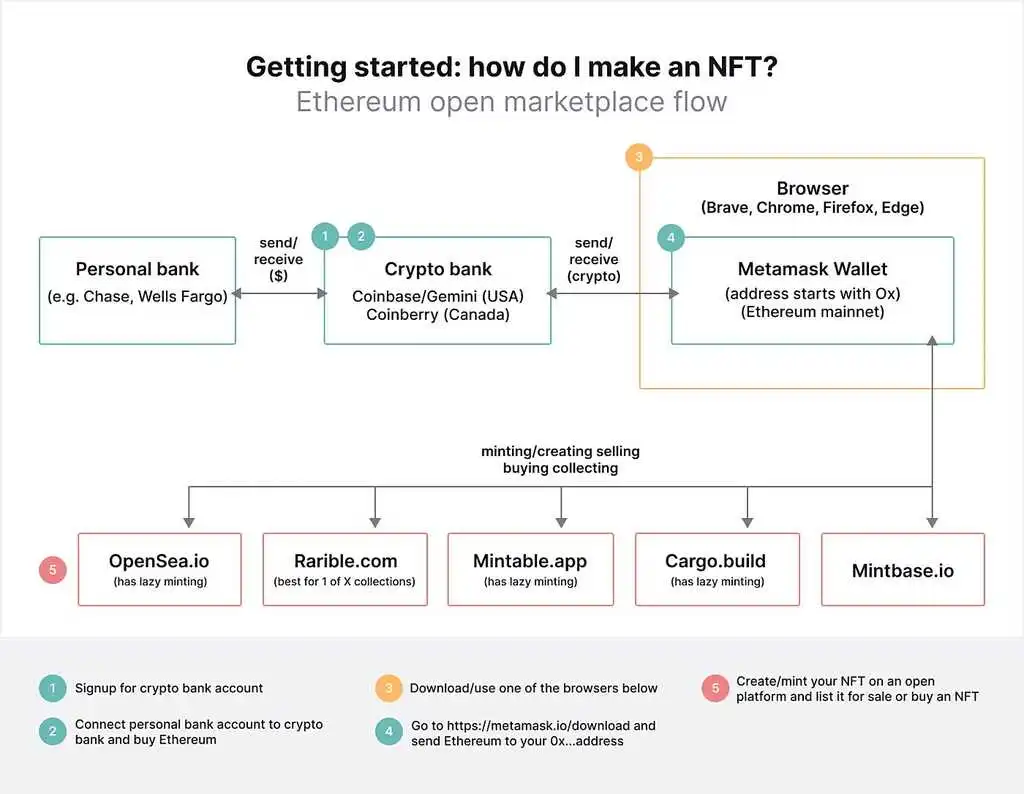
The analogy several engineers reached for is cloud versus on-premises, or serverless pay-per-request pricing versus running your own servers. You trade fixed engineering salaries and infrastructure for variable per-transaction costs, which is attractive when you are not yet sure anyone will use the product.
Blockchains lack reversibility, debuggability, and moderation – you cannot ban a cheater and undo the damage, roll back an exploit, or fix a bugged item once state is on-chain. And if your application has one central authority of trust, which almost every game and consumer app does, a trustless distributed ledger adds overhead without adding capability. Several developers summarized NFTs in gaming as a solution looking for a problem, pointing out that platforms like Steam already run item marketplaces at scale.
What NFT Software Development Costs in 2026
Talent is the largest cost. The Dragonfly 2024/2025 Crypto Compensation Report, built from 85 companies and about 3,400 datapoints, puts blockchain developers at $150,000-$210,000 annually and senior smart contract engineers at $160,000-$250,000, with entry-level roles starting around $80,000. Notably, crypto salaries declined across most levels in 2024 and early 2025 despite the bull market, with only executive pay rising – what Dragonfly calls a barbell effect. Engineering still accounts for roughly two-thirds of crypto industry headcount.
Published pricing guides from multiple audit providers – which are self-reported industry figures, not independent research – consistently place simple ERC-721 collection audits at roughly $5,000-$15,000 and marketplaces or contracts with custom logic at $20,000-$50,000 or more. Community experience backs the higher end for quality work: in an r/ethdev thread, an experienced contract developer noted that reputable firms in the OpenZeppelin and CertiK tier often quote $40,000-$50,000, which can be 15-20 times what a freelancer charges for the development itself.
That freelance gap is real. In the same thread, a developer landing his first paid NFT gig charged $1,200 for the full smart contract, testing, deployment, and integration – and was immediately told by peers he had priced himself far below market. Common advice was a fixed fee plus a percentage upside, never percentage-only. Ongoing infrastructure costs, by contrast, are modest: RPC node providers, IPFS pinning services, and indexing typically run tens to low hundreds of dollars per month for small and mid-sized projects, with minting costs largely shifted to cheap Layer 2s.
Read also our guide about: Polygon NFT marketplaces
Security Is the Largest Line Item for a Reason
Developers who launched contracts without external review describe the experience the same way: a mistake happens fast, and once it is out, it is out. There is no hotfix window and no rollback. That is why audits costing multiples of the development fee are still rational – the downside is total loss.
DappRadar recorded $6.3 billion in Web3 losses from hacks and exploits in Q2 2025 alone, a 215% quarterly increase, with the Mantra exploit accounting for $5.5 billion of it. NFT projects are smaller targets than DeFi protocols, but the same classes of vulnerability – reentrancy, broken access control, flawed withdrawal logic – apply directly to minting contracts and marketplaces.
A practical security baseline for any NFT build in 2026: base contracts on audited OpenZeppelin implementations, commission an independent audit scaled to the value at risk, exhaustively test on testnets including every withdrawal and admin path, gate privileged functions behind a multisig, and use delayed metadata reveals for collection drops. None of this is optional once real money touches the contract.
The Honest Case Against Using NFTs in Your Software
This site covers blockchain development, but readers deserve the counterargument at full strength, because most of it comes from engineers rather than haters. First: most applications do not need a trustless distributed ledger. If there is a single writer or a single authority everyone already trusts – which describes nearly every game, app, and platform – a database is faster, cheaper, and more flexible.
Second, as covered earlier, NFTs point to off-chain data, so adopting them does not eliminate databases; it adds a second system with its own failure modes. Third, immutability cuts both ways: the property that protects buyers also prevents the rollbacks, bans, and item fixes that live services depend on. Fourth, reputation risk is real. Years of rug pulls and pump-and-dump collections have left gaming communities in particular openly hostile, and developers report that user perception, not technology, is now the biggest obstacle to shipping NFT features.
Working as an NFT Developer: Pay, Contracts, and Reputation
The freelance and job-hunting advice from developer communities is remarkably consistent, and it is defensive. Get paid in fiat or a major stablecoin, upfront or on a fixed schedule. Never accept a percentage of mint sales or project tokens as primary compensation – most collections fail, and royalty revenue has largely evaporated across marketplaces. Freelancers commonly take a 50% deposit before starting, keep records of all communication, and treat every engagement as one that could vanish overnight, because NFT studios scale up and shut down quickly.
Due diligence on the client matters as much as the contract. Developers who have worked in the space recommend checking whether founders are publicly identified, whether the company pays regular salaries rather than promises, and whether anyone on the team has actual product experience. Several also flag a career consideration: junior developers at NFT startups often lack senior mentorship, and a resume full of failed token projects requires explaining in later interviews.
The Dragonfly data adds a structural warning for newcomers – entry-level positions made up only 10% of crypto roles in the 2024/2025 survey period, so competition at the bottom of the ladder is intense even as specialized senior skills command premiums.
Where NFT Software Development Goes From Here
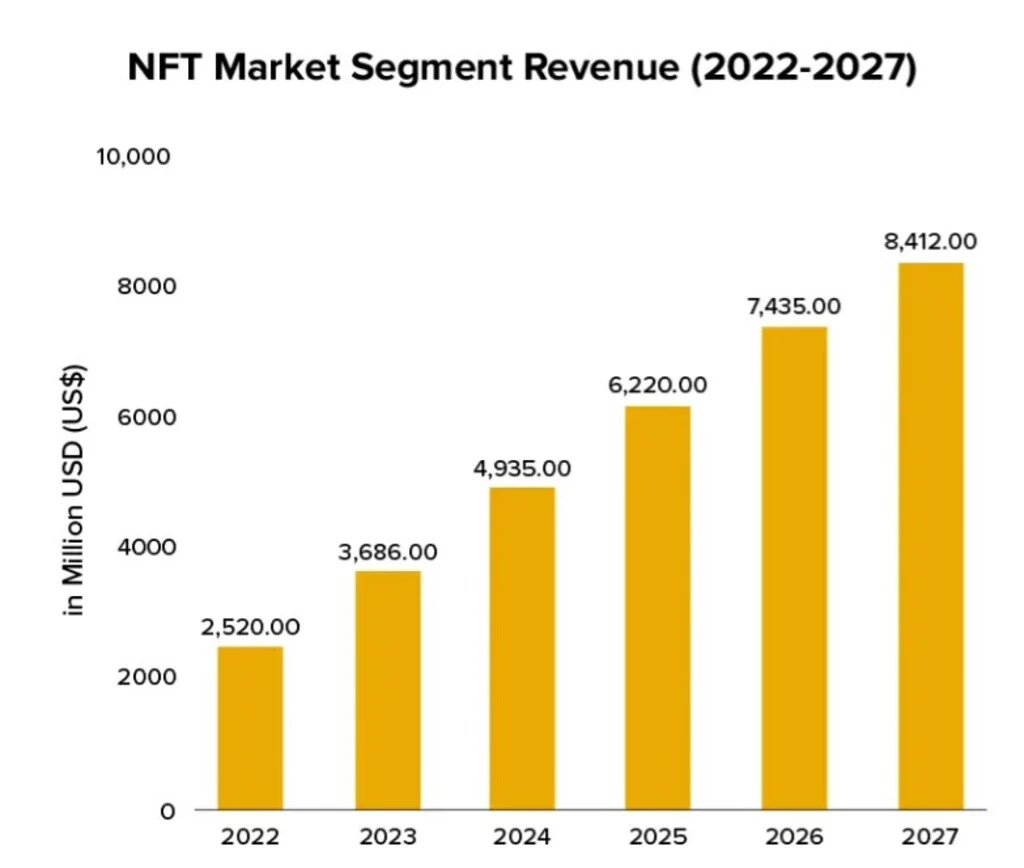
The 2025-2026 data points to a market that is busier and cheaper rather than richer. DappRadar counted 10.1 million NFT sales in October 2025, the highest monthly total of the year, on $546 million in volume – with average prices down roughly sixfold since January. Lower prices mean more users and more transactions, which favors developers building consumer products over speculation platforms.
Utility categories are where the engineering work is concentrating. Real-world asset NFTs became DappRadar’s second-largest category by volume in mid-2025, ticketing and loyalty programs keep expanding, and gaming remains a steady base: gaming NFTs generated $135 million in trading volume in Q3 2025, with Gods Unchained growing trading volume 507% after migrating fully to Immutable zkEVM.
Meanwhile, account abstraction and embedded wallets are turning the old thought experiment – users interacting with NFTs without knowing it – into standard product strategy, and no-code minting platforms such as OpenSea Studio are compressing the low end of the market, pushing custom development work up the value chain toward integrations, gaming backends, and tokenization systems.
For anyone planning a project or a career in 2026, the conclusion is unglamorous but useful: NFT software development rewards teams that treat the blockchain as one component in a larger system, budget seriously for security, and can articulate exactly why an open, immutable asset registry beats a database for their specific product. Where that answer exists, the tooling has never been cheaper or more mature. Where it does not, the honest move is to say so and build with a database.
FAQ
How much does NFT software development cost in 2026?
Costs split into talent, audits, and infrastructure. Blockchain developers earn $150,000-$210,000 annually per the Dragonfly 2024/2025 report, simple contract audits run roughly $5,000-$15,000 based on audit providers’ self-reported pricing, and infrastructure (RPC, IPFS pinning, indexing) is usually a minor monthly expense. Freelance builds of simple collections can cost far less, but underpriced work and skipped audits are the most common ways projects fail.
Which blockchain is best for NFT development?
Ethereum and its Layer 2 networks offer the largest developer ecosystem and liquidity, with post-Dencun L2 fees typically at or under a cent. Solana suits high-volume consumer minting with fraction-of-a-cent costs, and Polygon remains popular for brand and loyalty programs. The right answer follows your users and your transaction patterns, not chain marketing.
Do I need a smart contract audit for an NFT project?
If the contract will hold or move real value, yes. Deployed contracts cannot be patched, and DappRadar documented billions in Web3 exploit losses in 2025 alone. Scale the audit to the value at risk: a boutique firm can review a simple collection, while marketplaces and custom logic justify top-tier firms despite quotes in the tens of thousands of dollars.
Can NFTs replace a database in my app or game?
No. NFTs typically store an identifier and a pointer to metadata, so you still need conventional storage. They complement a database when you need open trading, provable scarcity, or assets that outlive your platform – and they are the wrong tool for frequently changing state, moderated content, or anything you may need to roll back.
How much do NFT and blockchain developers earn?
Per Dragonfly’s 2024/2025 compensation data, blockchain developers earn $150,000-$210,000 and senior smart contract engineers $160,000-$250,000, with entry-level roles from about $80,000. Salaries declined across most levels in 2024-2025 despite the market rally, and entry-level roles made up only 10% of positions.
Is NFT development still worth learning in 2026?
As a specialization inside broader blockchain engineering, yes – transaction activity rebounded strongly in 2025 and utility use cases (gaming, ticketing, real-world assets) keep hiring. As a standalone career bet on collections and drops, no: that segment is commoditized by no-code tools, and the community’s own advice is to demand stable pay and treat any single NFT employer as temporary.

Isai Alexei is a journalist and financial analyst covering cryptocurrency markets and traditional securities for Blockchaindose. He has spent ten years analyzing digital assets, trading activity, and market structure.