
The Polygon NFT marketplace ecosystem has transformed significantly since the early days when it was seen primarily as a cheaper alternative to Ethereum. In 2026, Polygon is home to some of the most interesting NFT activity happening anywhere in Web3 – not because of speculative art flips, but because of a structural shift toward real-world asset tokenization, gaming collections, and utility-driven digital ownership. The chain that once attracted creators with low gas fees now hosts projects beating Bitcoin and Ethereum collections in weekly sales volume.
Key Takeaways
- Polygon has surpassed $2 billion in all-time NFT sales volume and now powers approximately 11% of global NFT minting activity.
- Courtyard, an RWA marketplace built on Polygon, ranked first globally by weekly NFT sales volume in April 2026 – beating CryptoPunks and BAYC.
- Polygon completed the migration from MATIC to POL as its native token in late 2025 as part of the Polygon 2.0 upgrade, with ZK technology and the AggLayer now live.
- NFT minting on Polygon averages $0.0047 in gas fees compared to $4.36 on Ethereum mainnet, making it the most accessible chain for creators and collectors.
- Magic Eden dropped Polygon support in March 2026 – anyone relying on older guides listing it as a Polygon marketplace should be aware it is no longer active on the network.
According to CoinLaw’s NFT market statistics, Polygon now powers approximately 11% of total global NFT minting activity, trailing only Ethereum and Solana. Polygon-based NFTs surpassed the $2 billion milestone in all-time sales volume in 2025, according to CryptoSlam data reported by Cointelegraph, with Courtyard’s RWA collections driving the majority of that growth. On the technical side, the network completed its migration from MATIC to the POL token and launched the AggLayer as part of the Polygon 2.0 upgrade, significantly improving cross-chain interoperability and transaction throughput.
This guide covers the top Polygon NFT marketplaces that are actually active and relevant in 2026, includes updated data on fees and features, and flags one major platform change that many older guides miss entirely. Whether you are a creator looking to mint, a collector building a portfolio, or a developer building an NFT application, the information here reflects the current state of the ecosystem, not its 2021 peak.
Why Polygon Remains a Leading Chain for NFT Marketplaces in 2026
Cost Advantage Over Ethereum Is Still Dramatic
Gas fee savings on Polygon compared to Ethereum mainnet remain one of the most compelling reasons creators and collectors choose the network. According to CoinLaw’s Polygon statistics, NFT minting on Polygon averages $0.0047 in gas fees, compared to $4.36 on Ethereum. During peak congestion on Ethereum, gas can spike to $14 or more per transaction, while Polygon rarely exceeds $0.02. Over 92% of Polygon transactions cost under $0.01. For marketplaces serving everyday collectors and smaller creators, this difference is not marginal – it is the reason the Polygon ecosystem exists at the scale it does.
Polygon 2.0 and the MATIC to POL Transition
In 2024-2025, Polygon executed one of the most significant upgrades in its history. The network officially migrated from MATIC to POL as its native token, completing the transition in September 2025 with over 85% of token holders completing the migration. The Polygon 2.0 upgrade introduced ZK-rollup technology, the AggLayer for cross-chain interoperability, and the Heimdall v2 consensus layer, which reduced transaction confirmation times from around two minutes to under five seconds
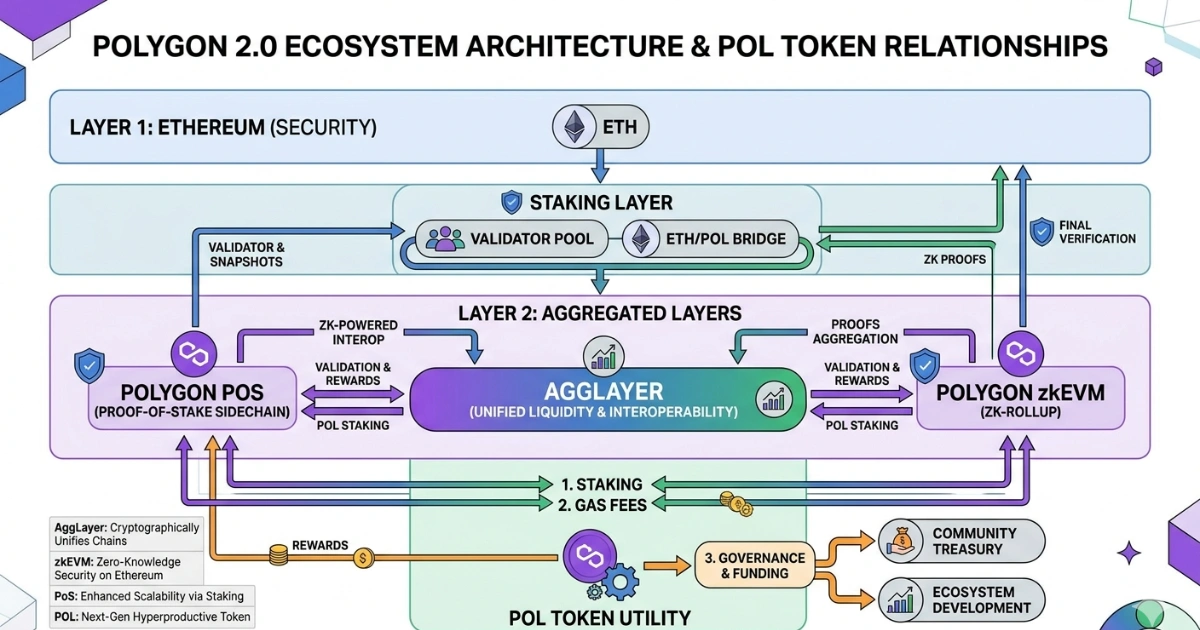
The AggLayer – Polygon’s vision for a unified network of interconnected blockchains – reached further maturity in 2026 and is now the most important piece of infrastructure for NFT projects that need to move assets between Polygon and other EVM-compatible chains without relying on traditional bridges. Visa also integrated Polygon into its stablecoin settlement program in April 2026, a signal of the chain’s deepening institutional footprint.
Strong Brand and Enterprise Adoption
Polygon has attracted institutional and brand-level adoption that gives its NFT ecosystem a legitimacy layer beyond most competing chains. Starbucks, Nike, and Adidas have all built or piloted NFT programs on Polygon. Starbucks Odyssey – the coffee brand’s loyalty NFT program – remains one of the most cited examples of practical utility-driven NFT adoption on any blockchain. This enterprise presence draws new user cohorts into the ecosystem who would not otherwise interact with crypto-native platforms.
Honest Assessment: Where Polygon Faces Pressure
Polygon is not without competition. Other Ethereum Layer 2s such as Base, Arbitrum, and Optimism now concentrate nearly 90% of L2 transaction activity according to CoinLaw’s data, which includes significant NFT traffic. Base in particular surpassed both Solana and Polygon in NFT trading volume in October 2025 according to DappRadar. The POL token has also underperformed price expectations through 2025, reflecting weak speculative demand even as on-chain activity remained healthy. The network’s long-term competitiveness will depend on AggLayer adoption and whether the Gigagas roadmap – targeting 100,000 TPS by 2026 – delivers on its milestones.
Important Update: Magic Eden Dropped Polygon Support in March 2026
Many existing articles and guides list Magic Eden as one of the top Polygon NFT marketplaces. This information is now outdated. On February 27, 2026, Magic Eden CEO Jack Lu announced that the platform would terminate all EVM-chain support, including Polygon and Ethereum, effective March 9, 2026. The platform also sunset its multi-chain wallet on April 1, 2026. Magic Eden has refocused entirely on Solana and a new iGaming product called Dicey.
Polygon NFT holders or creators who previously used Magic Eden should ensure their assets have been migrated to alternative marketplaces. Any guide that still lists Magic Eden as an active Polygon marketplace is relying on information that was accurate in 2025 but is no longer correct in 2026.
Check out also: NFT Screenshots: The Truth About What’s Legal In 2026
Top Polygon NFT Marketplaces at a Glance
| Marketplace | NFT Focus | Polygon Fee | Best For | Key Differentiator |
| OpenSea | General, all categories | 2.5% on sales | All users | Largest catalog, 80M+ NFTs, lazy minting, cross-chain purchasing |
| Courtyard | RWA – physical collectibles | Varies | Physical card collectors | #1 global NFT sales Apr 2026; Brinks vault-backed, burn-to-redeem model |
| Element Market | Multi-chain aggregator | 2% on Polygon | Advanced traders | Aggregates 180M+ NFTs, whale tracking, gas optimization |
| Rarible | Art, creator-focused | 2.5% on sales | Creators, builders | Community governance via RARI, marketplace builder, multi-chain aggregator |
| OKX NFT | Multi-category | 0% (on-chain fees only) | Cost-conscious traders | Zero marketplace fee on Polygon, bulk buying, rarity scoring |
| Zora | Protocol-first, minting | Protocol-level | Developers, artists | Maximum minting control, on-chain logic, composable NFT mechanics |
| MOOAR | Gamification, AI-generated | 2% service fee | Gaming, AI NFT creators | AIGC tools, FairMint launches, Levelable NFT Pets gamification |
| Aavegotchi | DeFi x Gaming NFTs | Smart contract based | DeFi + gaming crossover | aToken-staked NFTs generating yield; DAO-governed metaverse |
| DraftKings | Sports collectibles | Platform defined | Sports fans | All-time #1 Polygon collection by volume; sports moments NFTs |
| Doki Doki | Gacha NFTs | Permissionless | NFT project launchers | Chainlink VRF randomness; customizable Gacha machines on Polygon |
Top Polygon NFT Marketplaces in 2026: Full Profiles
OpenSea
OpenSea remains the largest NFT marketplace globally and the broadest gateway into Polygon’s NFT ecosystem. Launched in 2017, it has processed nearly $40 billion in lifetime NFT transactions across all supported chains. Its Polygon integration offers gas-free minting through lazy mint technology – creators can list NFTs without upfront costs, with gas paid by the buyer at point of first sale. As of 2026, OpenSea has expanded to support over 20 blockchains and introduced OpenSea 2.0 features including cross-chain purchasing, which allows users to buy a Polygon NFT using funds held on Arbitrum or Ethereum without manually bridging assets.
On Polygon specifically, OpenSea’s fee is 2.5% on all sales, with gas costs that typically come to a few cents given Polygon’s low fee environment. The platform supports MetaMask, Coinbase Wallet, WalletConnect, and most major Web3 wallets. Its collection verification system and smart contract audit history make it the safest entry point for users new to Polygon NFTs. The primary limitation is that its 2.5% fee is higher than zero-fee alternatives like OKX NFT, and its large catalog means scam and counterfeit listings remain a persistent challenge despite verification systems.
✓ Supported blockchains: Ethereum, Polygon, Solana, Base, Arbitrum, Optimism, Avalanche, and 15+ more
✓ Transaction fee: 2.5% on sales
✓ Best for: Beginners, broad collection access, high-liquidity trading
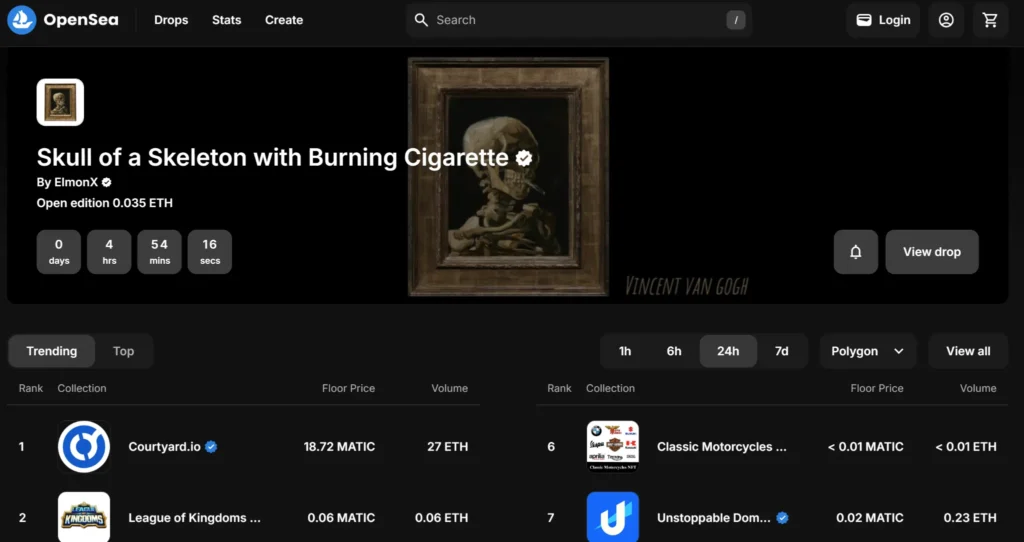
Courtyard – The Platform Redefining Polygon NFTs in 2026
Courtyard is the most significant new development in the Polygon NFT ecosystem and the platform most responsible for Polygon’s $2 billion all-time sales milestone. It is a real-world asset (RWA) marketplace that tokenizes physical collectibles – primarily graded Pokémon cards, sports cards, and other high-value physical items – into NFTs on the Polygon network. Each item is stored in an insured vault managed by Brink’s, the global security company. Buyers purchase the NFT representing legal ownership of the physical card. If they want the actual item, they can redeem it at any time, at which point the NFT is burned.
The market validation in 2026 has been striking. For the week ending April 20, 2026, according to The Market Periodical and CoinGecko data, Courtyard ranked first among all NFT collections globally by weekly sales volume, generating $7.82 million on the Polygon blockchain – beating CryptoPunks, BAYC, and every other collection across all chains. Backed by Y Combinator and launched in 2022, Courtyard has brought over 500,000 physical collectibles on-chain. A rare 1st edition Charizard Pokémon card tokenized on Courtyard drew bids approaching $180,000.
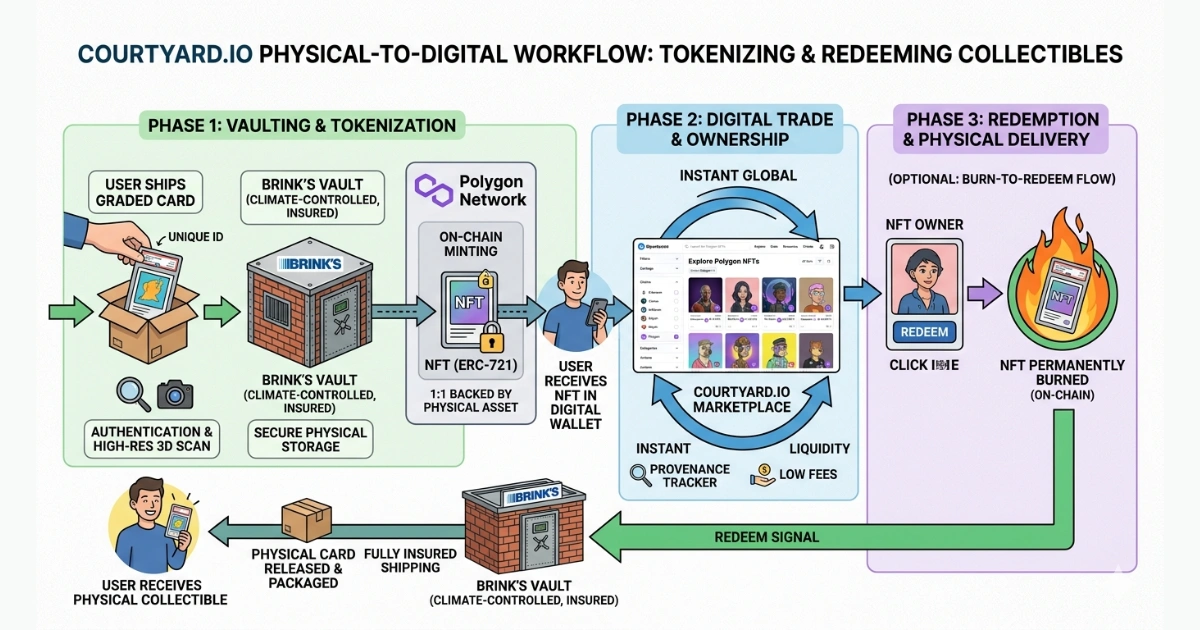
Courtyard’s success reflects something important about where the NFT market has matured: the most successful Polygon NFT project in 2026 is not speculative digital art. It is a platform solving a genuine, longstanding problem in physical collectibles trading – trust, authenticity, and the friction of shipping irreplaceable items.
✓ Supported blockchain: Polygon
✓ Asset type: Real-world asset NFTs (graded physical collectibles)
✓ Best for: Physical collectibles collectors, RWA investors
Element Market
Element Market positions itself as the first community-driven NFT aggregator and has become one of the largest NFT platforms by trading volume in 2026. According to CryptoNews, during recent months it dominated trading on multiple chains including BSC and Avalanche, and it actively supports Polygon as part of its 25+ chain coverage. The platform aggregates NFT listings from multiple sources including OpenSea, enabling users to find the best price across marketplaces without switching interfaces.
On Polygon, Element Market charges a 2% transaction fee, below OpenSea’s 2.5%. Its differentiating features include whale tracking tools that let users monitor what large wallets are buying and selling, gas-saving optimizations for batch transactions, and royalty payments made at the point of sale. The platform supports over 180 million NFTs across 25+ blockchains including Ethereum, BNB Chain, Polygon, Arbitrum, zkSync, Linea, Base, and Starknet.
✓ Supported blockchains: Ethereum, BNB Chain, Polygon, Avalanche, Arbitrum, zkSync, Linea, Base, opBNB, Starknet, Optimism, and more
✓ Transaction fee: 2% on Polygon
✓ Best for: Advanced traders, cross-chain collectors, high-volume buyers
OKX NFT Marketplace
OKX, one of the world’s largest cryptocurrency exchanges, runs a decentralized NFT marketplace that supports Polygon alongside Ethereum, Solana, Bitcoin, BNB Chain, Avalanche, Immutable X, Arbitrum, and more. Its Polygon integration is notable for offering zero marketplace fees – users only pay the on-chain network transaction cost, which on Polygon typically amounts to fractions of a cent. This makes OKX NFT one of the most cost-effective options for trading Polygon-based collections.
The platform includes bulk buying tools, custom offer expiration settings, rarity scoring, and comprehensive NFT trading history for informed decision-making. As an exchange-integrated marketplace, it offers a practical all-in-one experience for users who also trade crypto on OKX. Assets span art, sports, music, gaming, and virtual real estate categories.
✓ Supported blockchains: Ethereum, Solana, Bitcoin, Polygon, BNB Chain, Avalanche, Immutable X, Arbitrum, Optimism, Klaytn, and more
✓ Transaction fee: 0% marketplace fee on Polygon (on-chain network fees only)
✓ Best for: Cost-conscious traders, exchange-integrated users
Zora
Zora is a protocol-first NFT marketplace on Polygon designed for developers and artists who want maximum control over minting mechanics, distribution logic, and on-chain behavior. Unlike marketplace-first platforms that impose their own fee structures and listing rules, Zora exposes its underlying smart contracts directly, allowing teams to build custom NFT mechanics on top of the protocol.
For Web3 developers building NFT platforms on Polygon, Zora offers composable minting flows, experimental token mechanics, and deep on-chain control that platforms like OpenSea cannot match. For independent artists, its creator-first ethos and low-friction publishing make it an appealing alternative to the high-traffic but crowded OpenSea environment. Gas costs on Polygon make Zora’s protocol-level interactions economically viable in a way they would not be on Ethereum mainnet.
✓ Supported blockchain: Polygon, Ethereum, Base, and other EVM chains
✓ Best for: Developers, artists wanting protocol-level control, experimental minting
MOOAR
MOOAR is a multi-chain NFT marketplace supporting Solana, Ethereum, and Polygon, with a particular focus on NFT creation, gamification, and AI-generated collections. Its AIGC (AI-generated content) tools allow users to create entire NFT collections programmatically, and its FairMint feature provides a structured launch framework for new drops. The platform’s gamification layer includes MOOAR Box randomized rewards and Levelable NFT Pets that evolve based on user activity.
MOOAR charges a 2% service fee on trades with optional or enforced royalties depending on the collection’s partnership status with the platform. For creators looking to build gamified NFT experiences on Polygon without coding a custom smart contract, MOOAR offers a more structured creator environment than general-purpose marketplaces. Security protocols are less thoroughly documented than OpenSea or OKX, which is worth noting for high-value transactions.
✓ Supported blockchains: Solana, Ethereum, Polygon
✓ Transaction fee: 2% service fee, optional royalties
✓ Best for: AI NFT creators, gaming-focused collections, gamified drop launches
Rarrible
Rarible is a decentralized, community-governed NFT marketplace that has evolved into a true multi-chain aggregator by 2026. It connects Ethereum, Polygon, Base, Arbitrum, RARI Chain, and several other networks, allowing collectors and creators to view unified NFT listings and find the best prices across multiple marketplaces in one interface. The RARI governance token gives holders voting power over platform decisions and fee structures, making it one of the more genuinely decentralized NFT marketplace protocols.
Rarible also released a customizable community marketplace builder for Polygon, allowing any ERC-721 or ERC-1155 collection owner to create their own branded marketplace for free. The tool has been used by over 1,240 NFT communities. Transaction fees are 2.5% on sales, and creators can set royalties up to 50% – notably higher than most competing platforms enforce. For independent artists and smaller collections that depend on ongoing royalty income, this is a meaningful advantage.
✓ Supported blockchains: Polygon, Ethereum, Base, Arbitrum, RARI Chain, Tezos, Celo, and more
✓ Transaction fee: 2.5% on sales
✓ Best for: Creators, community-run collections, governance-oriented users
Aavegotchi
Aavegotchi is a DeFi-powered NFT platform built on Polygon that merges gaming, digital collectibles, and decentralized finance in a way that is genuinely unique. Each Aavegotchi is an NFT staked with Aave’s interest-bearing aTokens, which means the NFT itself generates yield over time. The digital characters have varying traits, wearables, and kinship levels that affect their rarity and performance in mini-games within the platform’s DAO-governed metaverse.
The platform’s migration to Polygon was specifically driven by the need for lower gas fees – DeFi interactions with NFTs that generate yield require frequent on-chain activity, which would be prohibitively expensive on Ethereum mainnet. The AavegotchiDAO allows players to vote on game mechanics and smart contract updates, giving the community genuine governance over the ecosystem. It is best suited for users at the intersection of DeFi and gaming NFTs rather than general collectors.
✓ Supported blockchains: Ethereum, Polygon
✓ Best for: DeFi-native users, gaming NFT collectors, DAO governance participants
DraftKings NFT Marketplace
DraftKings holds the distinction of being the all-time top Polygon NFT collection by total sales volume, with over $287 million in all-time sales on CryptoSlam data as of mid-2025. The platform focuses on sports moment NFTs, allowing users to collect, trade, and build rosters from officially licensed sports highlights. DraftKings’ existing user base from its fantasy sports and betting platform has made onboarding easier than most crypto-native projects, as many users were already familiar with the DraftKings brand before engaging with its NFTs.
The marketplace is not a general-purpose platform in the way OpenSea or Element Market is – it is built around its own licensed sports content. But for sports fans looking to enter the Polygon NFT ecosystem through familiar intellectual property, it represents one of the most credible and highest-volume entry points available.
✓ Supported blockchain: Polygon
✓ Best for: Sports collectors, DraftKings users, licensed sports moment NFTs
Doki Doki
Doki Doki is a Web3 platform that introduces provably fair NFT Gacha machines to Polygon – a concept inspired by Japanese Gachapon capsule toy vending machines. These are customizable smart contracts that dispense randomized NFTs in exchange for tokens, providing a permissionless and non-custodial framework for projects, artists, and collectors to launch randomized NFT sales.
The platform integrates Chainlink VRF (Verifiable Random Function) to ensure the randomness of each NFT dispensed is provably fair and cannot be manipulated. This matters for collectibles where rarity is central to value. Doki Doki’s Creator Dashboard simplifies minting and Gacha machine management, and the platform has collaborated with projects including Sushi and Pranksy. It is a niche but genuinely innovative addition to the Polygon ecosystem for projects that want to add a lottery-style distribution mechanic to their NFT drops.
✓ Supported blockchain: Polygon (with multi-chain expansion planned)
✓ Best for: NFT project creators, artists using randomized drop mechanics
How to Choose the Right Polygon NFT Marketplace
Define Your Goal First
The single most important variable in choosing a Polygon NFT marketplace is your purpose. A creator minting their first collection has completely different needs from a DeFi-native user looking to stake yield-generating NFTs, or a physical collectibles trader who wants to tokenize their card portfolio. OpenSea serves broad accessibility. Courtyard serves physical collectible holders. Zora and Rarible serve creators who need control over their minting mechanics and royalties. OKX serves cost-conscious traders who want zero marketplace fees. Starting with your specific goal eliminates most of the decision.
Verify Current Status Before Using Any Platform
The Polygon NFT marketplace landscape has changed materially in 2026. Magic Eden’s departure from Polygon is the most visible example, but platform support changes quickly in Web3. Before committing to any marketplace – especially for high-value transactions – verify that Polygon is actively supported, check the platform’s official documentation for current fee schedules, and confirm wallet compatibility with your preferred setup.
Evaluate Security and Track Record
Security is the most important factor for any NFT transaction. Look for platforms with documented smart contract audits, verified collections, and a history of responding appropriately to security incidents. OpenSea’s Seaport protocol, OKX’s exchange-grade security infrastructure, and Rarible’s open-source protocol have all been battle-tested over multiple years and multiple market cycles. Newer or less-established platforms should be approached with more caution for high-value transactions.
Understand the Full Cost Structure
Marketplace fee percentages are only one component of total transaction cost. On Polygon, gas fees are negligible – typically under $0.01 per transaction. But creator royalties, platform fees, and any wrapping or bridging costs can add up. For a full picture of what a transaction will cost, check the marketplace fee, the creator royalty on the specific collection, and any wallet interaction costs. OKX’s zero-fee model is genuinely attractive, but OpenSea’s larger catalog may provide better price discovery on the same collection – total cost must be weighed against liquidity.
Check out also: NFT Fractional Ownership Explained: Where To Start In 2026
How to Buy NFTs on a Polygon NFT Marketplace
The process for buying NFTs on any Polygon marketplace follows a consistent pattern. Having a clear sequence before your first transaction reduces errors and unnecessary fees.
- Set up a compatible wallet. The most widely used options are MetaMask, Trust Wallet, and Coinbase Wallet. Make sure Polygon (or the POL network) is added as an active network in your wallet settings.
- Fund your wallet with POL or MATIC (MATIC is still accepted on many platforms during the transition period) or ETH that can be bridged to Polygon. On-chain swaps using Polygon protocols like QuickSwap typically cost under $0.01.
- Connect your wallet to the marketplace. All platforms listed above are non-custodial, meaning they never hold your assets. Connecting only grants read and interaction permissions – your private keys remain in your wallet.
- Browse and filter collections by category, volume, price range, or rarity scores. On aggregators like Element Market or OKX, you can compare listings across multiple platforms in one view.
- Review the total transaction cost before confirming: marketplace fee, creator royalty, and estimated gas cost (typically a few cents on Polygon).
- Confirm the transaction in your wallet. The NFT will appear in your wallet and on the marketplace’s portfolio view within seconds given Polygon’s fast transaction finality.
What Is Driving Polygon NFT Activity in 2026
Real-World Asset Tokenization Is the Biggest Story
The rise of Courtyard to the top of global NFT sales charts tells the most important story about where Polygon’s NFT ecosystem has evolved. Real-world asset tokenization – converting physical items into on-chain tokens that can be traded without moving the physical asset – has gone from a speculative concept to a $26+ billion on-chain market according to CleanSky’s 2026 analysis. Polygon is the preferred chain for this category because its low fees make it economically viable to tokenize items worth $20 as well as items worth $200,000. The burn-to-redeem model pioneered by Courtyard is being studied and adopted by other physical asset categories.
Gaming NFTs on Polygon
Polygon’s gaming ecosystem has seen significant activity, with a 100% increase in gaming activity on the network according to DappRadar’s industry reports. Projects including QORPO WORLD and Planet IX have been among the notable drivers. Gaming NFTs benefit particularly from Polygon’s low fees because in-game assets require frequent transfers, minting of new items, and real-time trading – all of which would be economically unworkable at Ethereum mainnet gas prices. The Polygon 2.0 upgrades improving transaction throughput directly benefit gaming dApps with high transaction volume.
AI Integration in NFT Creation
Approximately 30% of new NFT projects in 2026 incorporate AI in some form according to CoinLaw’s market statistics. On Polygon, this trend is visible through platforms like MOOAR’s AIGC tooling and through a wider wave of AI-native NFT collections being launched at low cost given the network’s fee structure. Intelligent NFTs (iNFTs) that combine blockchain ownership with AI-driven behavior are emerging as a category distinct from static digital art, with the token representing ongoing, evolving digital content rather than a fixed image.
Frequently Asked Questions
OpenSea is generally the safest entry point for new users due to its large catalog, established security track record, wallet compatibility, and user-friendly interface. It supports lazy minting for creators, meaning no upfront gas costs, and its collection verification helps identify legitimate projects from counterfeits. OKX NFT is the best option for beginners who are fee-sensitive, as it charges zero marketplace fees on Polygon.
Polygon completed the official migration from MATIC to POL as its native token in late 2025. On the Polygon PoS network, MATIC was automatically converted to POL for users – no action was required. Some older wallet interfaces and marketplace UIs may still display MATIC labeling, but the underlying token is now POL. For any new wallet setup or transactions, configure for the POL token.
Magic Eden announced in February 2026 that it was refocusing the platform entirely on Solana and a new iGaming product. The EVM marketplaces – covering Polygon, Ethereum, and other EVM-compatible chains – were shut down on March 9, 2026. The decision was described as a strategic pivot toward Magic Eden’s core strengths on Solana, rather than a reflection of any problem with Polygon specifically.
According to CoinLaw’s Polygon statistics, NFT minting on Polygon averages $0.0047 in gas fees compared to $4.36 on Ethereum mainnet. On marketplaces that support lazy minting like OpenSea, the creator pays no gas at all – the gas cost is passed to the first buyer. For standard direct minting, the cost is so low that even minting multiple items in a single session typically costs under $0.05 total.
Courtyard is a real-world asset marketplace built on Polygon that tokenizes physical collectibles – primarily graded Pokémon cards and sports cards – into NFTs. Each physical item is stored in a vault managed by Brink’s. Buyers own the NFT representing the physical card, can trade it freely, and can redeem the physical item at any time by burning the NFT. In April 2026, Courtyard ranked first globally among all NFT collections by weekly sales volume, generating $7.82 million – more than CryptoPunks or BAYC. It is the clearest example of how Polygon’s NFT market has shifted from speculative digital art toward real-world utility.
Yes, and many active collectors and creators do. Aggregator platforms like Element Market and OKX NFT pull listings from multiple marketplaces, allowing you to find the best price across platforms without maintaining separate accounts. Your NFT wallet is chain-native – assets visible on OpenSea are the same assets visible on Rarible or OKX. Listing the same NFT on multiple platforms simultaneously is possible but requires managing listings carefully to avoid selling the same item on two platforms at once.

Stefan is the founder of Blockchaindose and a long-time tech enthusiast who first dove into crypto back in 2012, starting out by mining his first coins on graphics cards. Over the years, he shifted gears into active trading and investing. Today, his main focus is driving the platform forward and showing people how crypto can actually be used in the real world—beyond just the speculation.
That blend of early-adopter roots, hands-on market experience, and a practical vision makes his perspective a solid anchor for the team.