Key Takeaways
- NFT fractional ownership splits a single NFT into smaller tradable tokens
- The tokenized real estate market was valued at $3.5 billion in 2024 and is projected to reach $19.4 billion by 2033 – growing at a 21% CAGR.
- Platforms like Lofty.ai and RealT already let you invest in real US properties starting from $50, with daily rental income paid directly to your wallet.
- 57% of institutional investors expressed interest in tokenized assets in 2025, according to an EY survey
- The biggest real-world risks are governance conflicts, regulatory complexity, and liquidity
- Deloitte projects tokenized real estate alone could reach $4 trillion by 2035
In June 2021, the Doge Meme NFT sold for over $4 million. A few months later, PleasrDAO – the buyer – did something unexpected: they split it into millions of tiny pieces, letting anyone buy a fraction for as little as $1. That experiment planted the seed for what is now one of the most discussed ideas in blockchain: NFT fractional ownership.
The concept has moved well beyond memes and digital art. In 2026, fractional ownership NFTs are being used to invest in real US rental properties, luxury resort hotels, virtual land in the metaverse, and music royalties. The technology that once felt like a novelty is now attracting serious institutional capital – and creating genuine opportunities for everyday investors who were previously priced out.
This guide explains how it works, where it is actually being used today, and what the real risks look like – including the ones the promotional materials tend to skip over.
What Is NFT Fractional Ownership?
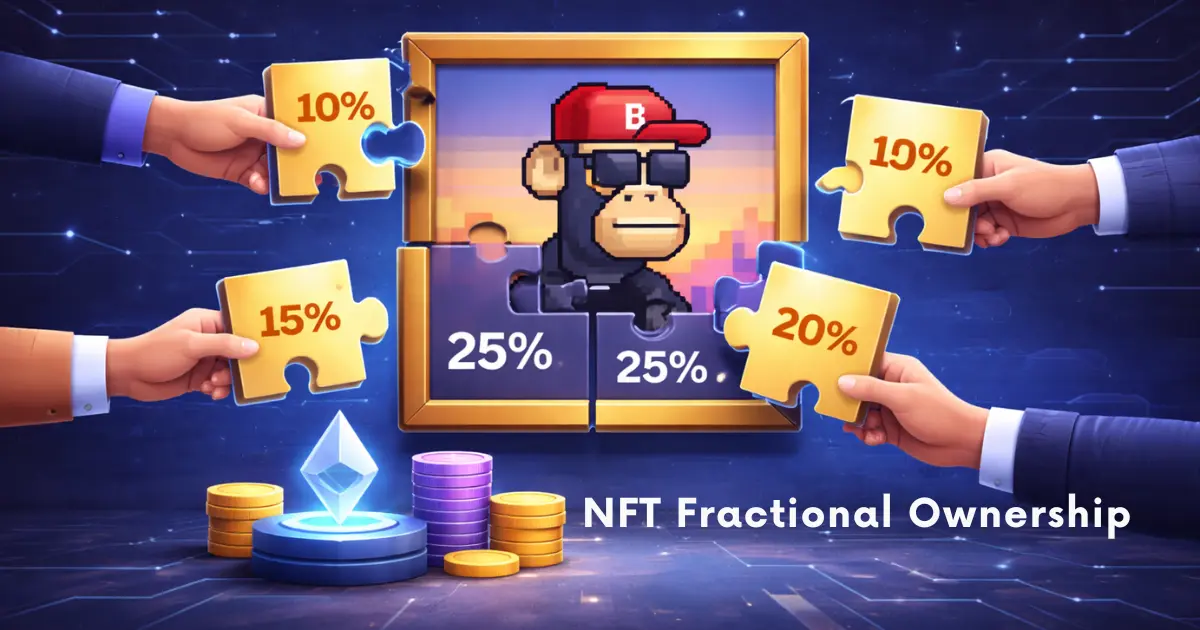
NFT fractional ownership is the process of splitting a single, high-value NFT into smaller tokens that multiple investors can purchase. Each token represents a proportional share of the underlying asset.
Mechanics behind the fractional NFT
The mechanics work like this: a smart contract locks the original NFT and issues a set number of ERC-20 or equivalent fungible tokens in its place. These smaller tokens can be bought, sold, and traded on secondary markets, just like any other crypto asset. If the underlying NFT gains value, each fractional token gains value proportionally.
A simple example: a real estate NFT worth $1 million is split into 10,000 tokens at $100 each. Buying one token gives you 0.01% ownership. If the asset appreciates to $2 million, your token is worth $200. If rental income is distributed, you receive 0.01% of whatever the property earns.
The key distinction from simply buying crypto is that these tokens represent ownership in a specific underlying asset – not just a speculative position in a currency.
Where Fractional NFT Ownership Is Actually Being Used in 2026
Community discussions make clear that people are most interested in use cases where fractional ownership solves a genuine access problem – not just where it adds blockchain for its own sake. Here are the areas with real traction.
Tokenized Real Estate
This is where fractional NFT ownership has the clearest real-world proof of concept. The tokenized real estate market was valued at $3.5 billion in 2024 and is growing at a 21% CAGR toward a projected $19.4 billion by 2033. Deloitte projects the longer-term total could reach $4 trillion by 2035.
Lofty.ai – backed by Y Combinator and built on the Algorand blockchain – lets investors buy fractional ownership in US rental properties for as little as $50 per token. Rental income is distributed daily, and tokens can be traded instantly on a secondary market with no lock-up period. The platform describes itself as building the NASDAQ for real estate. RealT, which operates on Ethereum and Gnosis Chain, has tokenized over 200 US properties and serves more than 10,000 global investors, with a minimum entry point of around $10.
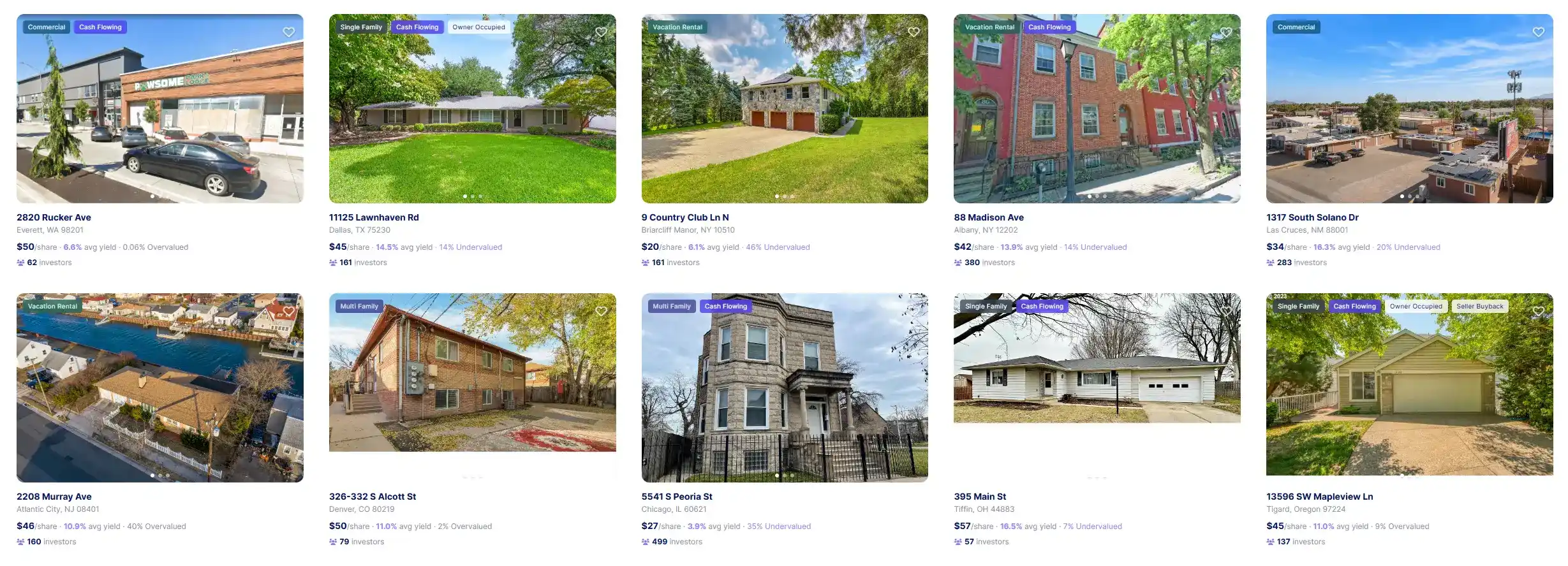
A landmark example: the St. Regis Aspen resort in Colorado raised $18 million through tokenized equity via SolidBlock, giving investors access to a luxury hospitality asset that would otherwise require institutional-level capital.
Dubai launched a 2025 pilot project targeting 7% of its national property market for tokenization. Singapore and Hong Kong are leading adoption in Asia-Pacific. In Europe, Luxembourg, Switzerland, and Germany are the most active markets.
High-Value Digital Art and Collectibles
Fractional ownership of high-value NFT art – works by Beeple ($69.3 million) or Pak ($91 million) – allows collectors with smaller budgets to gain exposure to pieces they could never purchase outright. Platforms like Fractional.art pioneered this model, wrapping NFTs into shared ERC-20 tokens that trade on open markets.
The same logic applies to sports memorabilia, limited edition collectibles, and trading cards. Physical items are tokenized and divided, allowing fans and investors to own verifiable shares of authenticated pieces.
Gaming and Virtual Real Estate
In gaming, fractional ownership allows players to co-own rare in-game assets, split the value of high-level accounts, or jointly invest in virtual land on platforms like The Sandbox or Decentraland. Some game studios are actively building interoperable NFTs that work across multiple games, creating assets that retain value and utility beyond any single platform.
Fractional virtual real estate is also gaining ground, particularly in metaverse platforms where prime digital land commands significant prices. Co-ownership lowers the barrier for individual investors while preserving upside exposure.
Music and Media Rights
Artists can tokenize ownership stakes in their songs, albums, or catalogs. Fans and investors can purchase fractional shares, earning proportional royalty income when the music is streamed or licensed. Music NFTs generated over $520 million in revenue in 2025, signaling genuine adoption beyond the speculative phase.
Key Platforms for Fractional NFT Investment
| Platform | Min. Investment | Blockchain | Avg. Yield |
| Lofty.ai | $50 | Algorand | 0-12% (rental) + appreciation |
| RealT | ~$10 | Ethereum / Gnosis | Varies by property |
| Arrived Homes | $100 | Traditional + blockchain | 5.4 – 7.0% |
| Ark7 | $20 | Traditional + blockchain | Varies |
| St. Regis Aspen (SolidBlock) | $1,000+ | Ethereum | 18M raised, sold out |
The Real Risks – What the Community Actually Warns About
Online discussions about fractional NFT ownership – particularly around real estate tokenization – are notably more cautious than marketing materials suggest. The people who have actually used these platforms raise consistent concerns worth understanding before investing.
Governance conflicts are a real problem
When hundreds of token holders co-own an asset through a DAO structure, decision-making can break down. Experienced community members have flagged scenarios where a majority token holder can push through proposals that disadvantage minority investors – for example, selling an asset back to themselves at a below-market price. This is technically legal under many smart contract structures. One community member described testing this exact vulnerability with an RWA founder, who could not provide a satisfactory answer about how it would be prevented.
Liquidity depends on the market, not the technology
Fractional tokens are technically easier to trade than whole NFTs, but that only matters if there are enough active buyers. In thin markets – or during a downturn in the underlying asset class – selling your fraction may be difficult or only possible at a steep discount. Community members who tried fractional real estate platforms during market slowdowns found secondary markets much less liquid than advertised.
Regulatory status varies widely by jurisdiction
In the US, tokenized real estate frequently qualifies as a security under SEC rules, requiring platforms to comply with Regulation D, Regulation A+, or Crowdfunding exemptions. This means many platforms are only legally accessible to accredited investors – a requirement that significantly limits the democratization narrative. The GENIUS Act of 2025 established the first federal regulatory framework for stablecoins, and the Clarity Act is expected in 2026, but NFT-specific legislation at the federal level does not yet exist. In Europe, MiCA regulations are providing more clarity, but the cross-jurisdictional patchwork remains complex.
Smart contract vulnerabilities are a permanent risk
The ERC-404 standard, which attempted to combine fungible and non-fungible mechanics, attracted scrutiny for vulnerabilities that could allow repeated minting and burning of fractional tokens to game rare trait distributions. This is one example of a broader pattern: new token standards and fractionalization mechanisms can introduce exploits that are only discovered after significant capital is deployed.
Platform dependency is an underappreciated risk
If the platform that manages your fractional investment goes out of business, the situation becomes legally complicated. If the LLC structure that holds the property requires platform approval for governance proposals – and the platform ceases to operate – the property can effectively be frozen. Investors need to understand how their legal rights would be enforced in a platform failure scenario before committing capital.
Institutional Interest Is Changing the Landscape
The 2025 EY survey found that 57% of institutional investors are interested in allocating capital to tokenized assets including real estate. In 2024, institutional investors already held nearly 70% of all tokenized assets, with retail making up just over 30%. BlackRock and JPMorgan are running tokenized funds. Goldman Sachs has forecast the tokenized real estate industry reaching $1 trillion.

This institutional involvement is a double-edged signal. On one hand, it validates the technology and drives regulatory clarity. On the other hand, retail investors entering these markets alongside institutional players need to be aware that sophisticated capital will often have information and access advantages that individual investors do not.
The passage of the GENIUS Act in 2025 and the anticipated Clarity Act in 2026 represent the clearest regulatory tailwinds the space has seen. These frameworks are designed to reduce the volatility and legal uncertainty that has slowed mainstream adoption.
How NFT Fractional Ownership Actually Works – Step by Step
Using a real estate example on a platform like Lofty as the reference:
- A property owner submits a property for listing. The platform conducts due diligence including inspection reports, rental history, and financial analysis.
- If approved, an LLC is formed to hold legal ownership of the property. This LLC is then divided into tokens at a set price, typically $50 per token on Lofty.
- Tokens are listed on the marketplace. Investors browse listings, review documentation, and purchase tokens representing fractional ownership of the LLC, and by extension the property.
- Rental income is distributed proportionally. On Lofty, this happens daily. If you own 1% of a property generating $2,000 in monthly rent, you receive approximately $0.67 per day.
- Tokens can be traded on a secondary market at any time, allowing investors to exit positions without waiting for the property to sell. Price is determined by supply and demand.
- Token holders vote on major decisions through the DAO governance structure, including repairs, tenant issues, and whether to sell the property.
Frequently Asked Questions about NFT Fractional Ownership
NFT fractional ownership is the process of splitting a single high-value NFT into smaller tokens that multiple investors can buy, sell, and trade. Each token represents a proportional share of the original asset and its value.
Entry points vary by platform. Lofty.ai starts at $50 per token, RealT at around $10, Ark7 at $20, and Arrived Homes at $100. These are among the lowest entry points for any form of real estate investment.
Yes, on established platforms like Lofty and RealT. Income is distributed proportionally based on your ownership stake. Lofty pays daily, RealT distributes periodically in stablecoins directly to your wallet. Smart contracts handle the distribution automatically.
The main risks are governance conflicts between token holders, liquidity that depends on an active secondary market, regulatory complexity especially for non-accredited investors, smart contract vulnerabilities, and platform dependency – if the managing platform fails, your investment may be difficult to recover.
In the US, tokenized real estate frequently qualifies as a security and must comply with SEC regulations. Many platforms limit access to accredited investors as a result. The GENIUS Act of 2025 and the expected Clarity Act of 2026 are improving the regulatory environment. In Europe, MiCA provides a clearer framework. Always verify the regulatory status of any platform in your jurisdiction before investing.
The global real estate tokenization market was valued at $3.5 billion in 2024 and is forecast to grow to $19.4 billion by 2033 at a 21% CAGR. Deloitte projects the longer-term total could reach $4 trillion by 2035, up from under $300 billion in 2024.

Dan is a seasoned crypto writer for Blockchaindose who got his start in the space back in 2019. Over the past four years, he’s built a solid grasp of how the industry moves, focusing heavily on DeFi, NFTs, GameFi, and promising new projects.
Off the clock, you’ll usually find him buried in a good book or kicking back with a movie. His blend of hands-on market experience and straightforward commentary makes him a clear, trusted voice across the platform.