Key Takeaways
- The global NFT market is projected to reach $60.82 billion in 2026
- OpenSea remains the largest NFT marketplace with 80+ million NFTs and 280,000 monthly active users
- For beginners, OpenSea and Magic Eden are the most recommended starting points
- NFTs are no longer just digital art. Gaming NFTs account for 38% of total transaction volume, and real-world asset NFTs represent 11% of market share in 2026
- The biggest risk for new buyers is illiquidity
- Volatility is real and fast-moving
What Is an NFT Marketplace?
An NFT marketplace is an online platform where users can create, buy, sell, and trade non-fungible tokens. Just as eBay connects buyers and sellers of physical goods, an NFT marketplace connects creators and collectors of digital assets verified on the blockchain.
NFTs themselves are unique digital tokens, each with its own metadata, ownership record, and blockchain address. Unlike cryptocurrencies such as Bitcoin or Ethereum – which are interchangeable – each NFT is one of a kind. When you buy an NFT, you are not just buying an image file. You are acquiring a blockchain-verified record of ownership, which may come with smart contract rights, royalties, access to communities, or exclusive content.
The NFT marketplace is where all of that activity happens. It handles the minting process (converting a digital file into a blockchain token), facilitates listings and auctions, processes payments in cryptocurrency, and records every transaction on-chain for full transparency.
The NFT Market in 2026: Where Things Actually Stand
The NFT market has gone through a dramatic cycle. Trading volumes peaked in 2021-2022, with the industry generating $24.7 billion in NFT sales in 2022 alone. Since then, the market has cooled significantly. Annualized NFT trade volume in 2025 is estimated at approximately $5.5 billion by The Block, with liquidity increasingly concentrated in a smaller number of projects and platforms.
That does not mean NFTs are dead. The global NFT market size is projected at $60.82 billion in 2026, growing toward a projected $247 billion by 2029. The difference between those two numbers reflects the distinction between speculative trading activity and the broader underlying value of the NFT ecosystem – including real estate tokenization, gaming economies, digital identity, and brand loyalty programs.
There are now 11.64 million NFT users globally. OpenSea alone hosts over 80 million NFTs. Gaming NFTs account for 38% of total transaction volume. Real-world asset NFTs represent 11% of market share. Major brands including Disney, Spotify, Netflix, Starbucks, and Nike have launched NFT integrations. The market is smaller than its peak but more structurally sound.
As one analyst put it: the 2026 NFT market is no longer a single market. Ethereum leads with high-value collectibles, Solana handles consumer-facing trading with fast and cheap transactions, and Bitcoin Ordinals have created their own ecosystem with different rules. Marketplaces are adapting by becoming broader crypto platforms with NFT functionality rather than NFT-only destinations.
How an NFT Marketplace Works
The process behind buying and selling NFTs involves a few layers of technology working together.
When a creator lists a piece on an NFT marketplace, they go through a minting process – the conversion of a digital file into a unique token on the blockchain. This process uses smart contracts, self-executing code that defines the rules of the token: who owns it, how royalties work, and how ownership transfers. The most common standards are ERC-721 for unique one-of-a-kind tokens and ERC-1155 for semi-fungible tokens that allow batching, which is especially useful in gaming.
Buyers need a digital wallet to interact with the marketplace. Wallets like MetaMask, Phantom, or Coinbase Wallet store the user’s cryptocurrency and NFTs, and connect to the marketplace to authorize transactions. When you buy an NFT, the transaction is processed on the blockchain and recorded permanently – the token moves from the seller’s wallet to yours.
Most marketplaces charge fees at two points: when you mint or list an NFT, and when a sale completes. Some chains also charge gas fees – variable transaction fees paid to the network. On Ethereum, gas fees can be significant. NFT marketplaces on Polygon, Solana, or Algorand, they are near-zero.
Royalties are a key feature that distinguishes NFT marketplaces from traditional art sales. Creators can embed a royalty percentage (typically 2.5% to 10%) directly in the smart contract, meaning every time the NFT resells on a secondary market, the original creator receives a cut automatically. However, this enforcement varies by platform – Blur made royalties optional in 2022, which increased buyer activity by roughly 12% but reduced creator revenue by around 18%.
Top NFT Marketplaces in 2026
With around 112 active NFT marketplaces operating in 2026, the choice of platform matters. Here is an honest breakdown of the main options based on both platform data and real community experience.
OpenSea
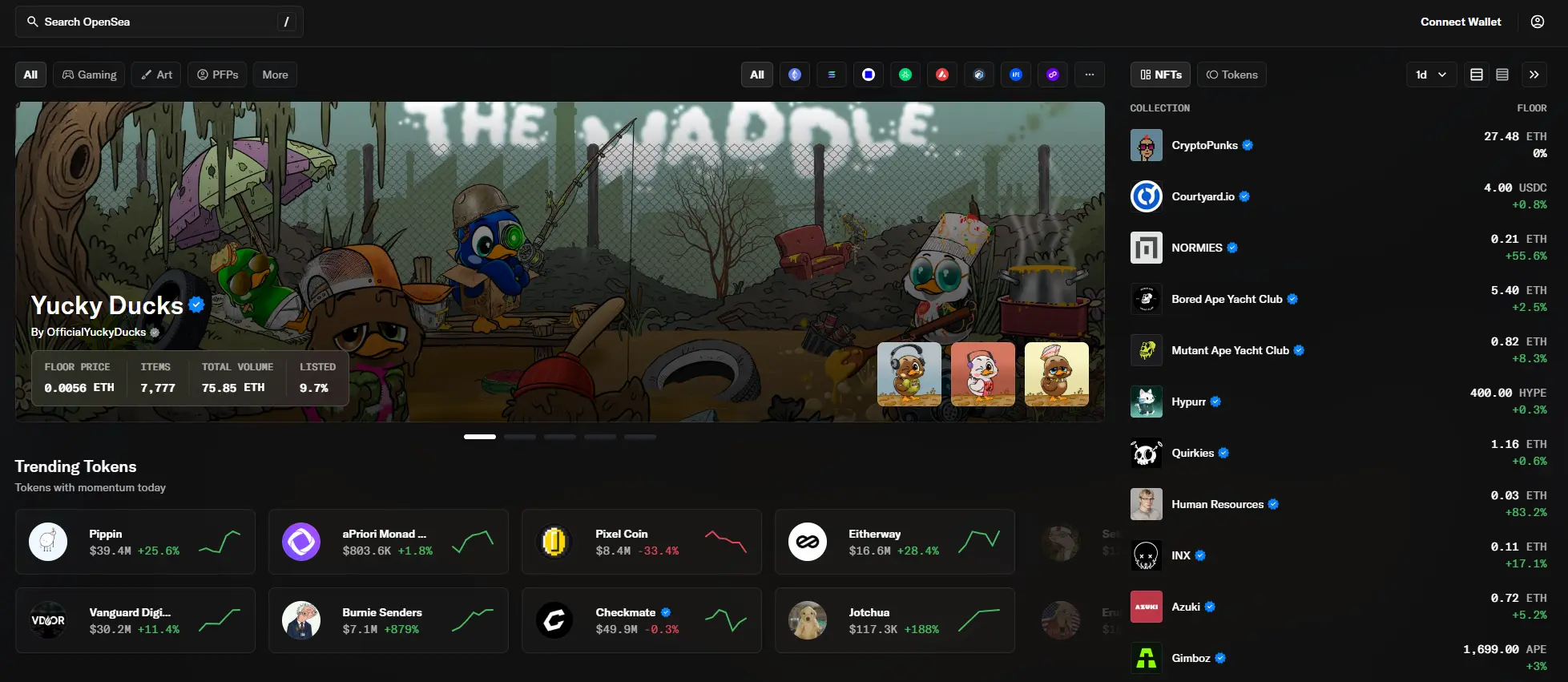
OpenSea is the largest NFT marketplace by user base and the most commonly recommended starting point for beginners. Its OS2 platform, launched in May 2025, added support for 19 blockchains, AI-driven recommendations, and a Voyages rewards system tied to the $SEA governance token. In May 2025, OpenSea held 29.7% of NFT market share with $69 million in monthly volume and 283,000 active users. The platform hosts over 80 million NFTs across art, collectibles, gaming items, virtual real estate, and domain names. Fee: 2.5%.
Blur
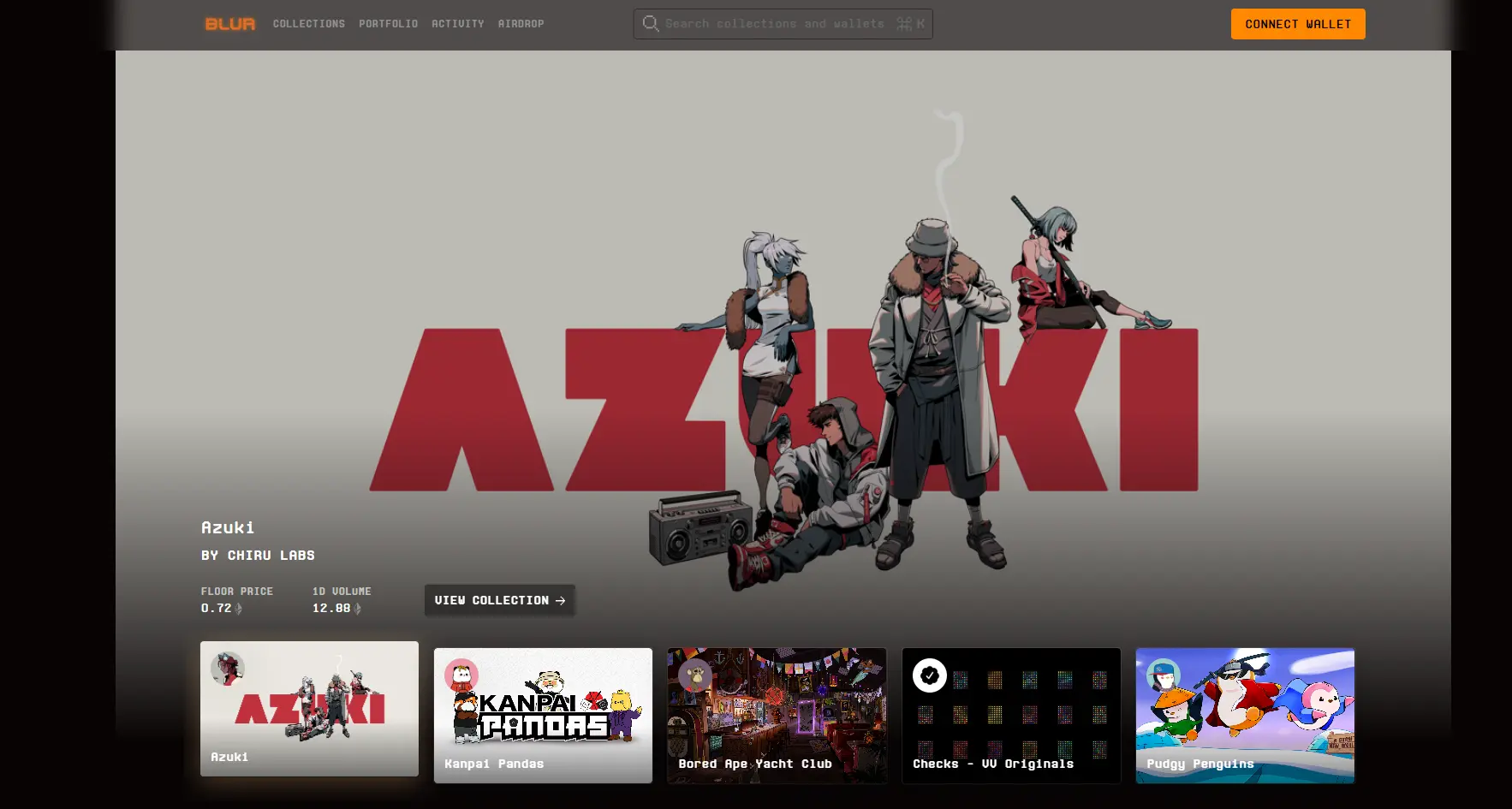
Blur is built for professional traders. It offers zero platform fees, bulk listing tools, and real-time floor price analytics. It aggregates listings from OpenSea and other platforms. Blur recorded approximately $135 million in 30-day trading volume in August 2025 and commanded 68.8% of Ethereum NFT market share by trading volume in the same period. It is not designed for casual collectors – the interface is more like a trading terminal than a browsing experience.
Magic Eden
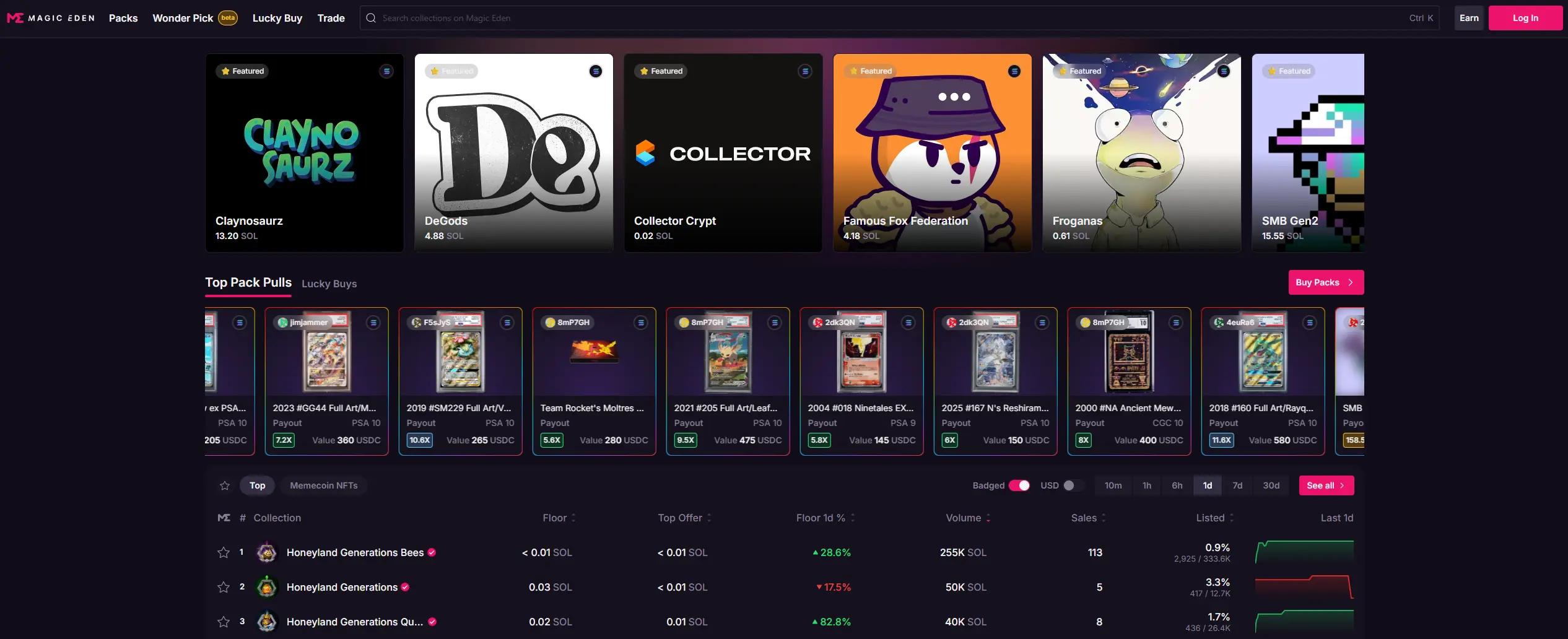
Magic Eden started as a Solana-native platform and has expanded to Ethereum, Polygon, and Bitcoin Ordinals. It held 37% market share at its 2024 peak and accumulated $6.39 billion in cumulative trading volume through that period. It is particularly strong for gaming NFTs and Solana-native creator projects. Multiple community members recommend it alongside OpenSea as a beginner-friendly option.
Rarible
Rarible takes a decentralized, community-governed approach. Artists mint their own NFTs, set their own terms, and participate in platform governance through the RARI token. It charges a 1% fee and supports multiple blockchains. It appeals primarily to creators who want more control over their work and a community-driven environment rather than a pure commercial marketplace.
SuperRare
SuperRare focuses on curated, high-quality digital art. Artists must apply to be featured, and the platform maintains tight quality standards. This curation creates scarcity and prestige but means it is not a viable option for most new creators. For serious collectors of fine digital art, it is considered one of the most reputable venues. Fee: 3%.
Foundation
Foundation operates on an invitation model – artists need to be invited by another creator already on the platform. This keeps quality high and the community tight-knit. It focuses on exclusive drops and has attracted serious collectors. Fee: 5%.
Manifold
Manifold is the preferred platform for technically sophisticated creators who want complete ownership of their smart contracts. Rather than minting through OpenSea’s shared contract, Manifold deploys a creator-owned contract, giving artists full control over royalties, supply, and functionality. It charges no platform fee. Community members specifically recommend it for experienced users over OpenSea.
JPG Store
JPG Store is the leading NFT marketplace on the Cardano blockchain. For collectors and creators working in the Cardano ecosystem, it is the default destination. Community members who have personal experience with it report straightforward minting and listing processes. Fee: 2%.
NFT Marketplace Comparison
| Marketplace | Best For | Blockchains | Fee | Min. Entry | Standout Feature |
| OpenSea (OS2) | Beginners, collectors | 19 blockchains | 2.5% | Any | Largest selection, 80M+ NFTs |
| Blur | Pro traders | Ethereum | 0% | Any | Zero fees, bulk listing, analytics |
| Magic Eden | Solana / gaming | Solana, ETH, BTC | Varies | Any | Fastest growing cross-chain |
| Rarible | Artists, creators | Multi-chain | 1% | Any | Community governance, RARI token |
| SuperRare | High-end art collectors | Ethereum | 3% | Higher | Curated artists only |
| Foundation | Curated art | Ethereum | 5% | Higher | Invitation-only, prestige |
| Manifold | Experienced creators | Ethereum + L2s | 0% platform | Any | Full smart contract control |
| JPG Store | Cardano collectors | Cardano | 2% | Any | Largest Cardano marketplace |
What NFT Marketplaces Are Actually Used For in 2026
The perception that NFT marketplaces are purely for buying and selling digital art is outdated. Here is where the real activity is.
Gaming assets
Gaming assets represent 38% of transaction volume. In-game items, characters, virtual land, and skins are the largest category of NFT trading by volume. Platforms like Axie Infinity (valued at $3.94 billion in cumulative trading), Immutable-powered games, and The Sandbox allow players to genuinely own their in-game assets and trade them on secondary markets. The NFT gaming market is expected to reach $0.54 trillion in 2025 on its way to $1.08 trillion by 2030.
Digital art and collectibles
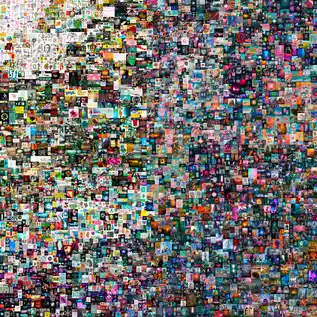
The category that created the initial NFT boom. Beeple’s ‘Everydays: The First 5000 Days’ sold for $69.3 million at Christie’s in 2021, and Pak’s ‘The Merge’ reached $91.8 million – still the most expensive NFT ever sold. Today, the average NFT sale price has stabilized around $940, a sign of a more mature and less speculative market. Profile picture NFT collections (PFPs) account for 37% of trading volume by category.
Physical collectible authentication
One of the most discussed emerging use cases in community forums is using NFTs as digital certificates of authenticity for physical collectibles. GameStop’s partnership with PSA – announced in October 2024 – has generated significant discussion about attaching NFTs to graded trading cards. The concept: a PSA-graded card is vaulted, and an NFT is issued representing ownership. The card can be traded digitally without physical shipping, and the NFT is burned when the owner requests physical delivery. Courtyard.io is already doing this for trading cards, with Nat Turner involved in the project.
Real-world asset tokenization
NFTs representing ownership stakes in real estate, luxury goods, art, and other physical assets account for 11% of NFT market share in 2026. This includes platforms like Lofty.ai for tokenized real estate and brand NFTs from companies like Nike, Gucci, and Adidas. Tokenized ticketing is active across 20+ global events.
Digital identity and membership
NFTs as access passes, membership tokens, and identity credentials are a growing use case. Holding a specific NFT can unlock access to private Discord communities, exclusive content, early access to drops, or governance rights in a DAO. Over 12 million identity NFTs were issued in 2025. Reddit Avatar NFTs surpassed 18 million mints, demonstrating how mainstream platforms can onboard users to NFTs without requiring any crypto knowledge.
The Real Risks
Community discussions are consistently more cautious than marketing materials. These are the risks that come up most often from people who have actually been through the cycle.
Illiquidity is the most common problem
NFT prices can drop fast, and buyers can disappear even faster. One community member described making good profits flipping NFTs in 2024, then buying into a collection expecting strong growth – only for BTC to drop and leave them with an 80% loss and no buyers. Another user emphasized: ‘NFT fluctuates really aggressively, so profit can be achieved but you can also lose everything in one day. Or have an NFT worth 1/10 ETH that cannot be sold because it has really low audience.’ Illiquidity is not a theoretical risk – it is what most new buyers encounter.
Your first time should be learning time, not earning time
Multiple experienced community members gave the same advice to beginners: treat your first NFT purchase as a learning exercise. Understand how wallets work, how transactions are confirmed, what gas fees look like, and how listings and offers function – before putting in money you would miss losing.
Scams are everywhere
The NFT space has a high density of fraud. Common vectors include fake collection listings on legitimate marketplaces, phishing links in Discord and Telegram, wallet-draining approval scams, and wash trading that artificially inflates floor prices. Before buying any collection, verify the contract address against the artist’s official social media. Use Etherscan to confirm transaction histories. Never click links from unsolicited messages.
Owning an NFT does not automatically give you copyright
When you buy an NFT, you acquire blockchain proof of ownership of that token. Unless the smart contract or associated license explicitly transfers it, you do not own the copyright to the underlying artwork. You cannot legally reproduce, resell, or commercialize the image in ways the creator has not authorized. This is a common misunderstanding – and the legal landscape around NFT ownership rights is still evolving.
Not all NFT projects are legitimate
Rug pulls – where a project team disappears after raising money – are common. Warning signs include anonymous teams, no verifiable roadmap, pressure to buy quickly, and artificially inflated trading volumes. The top 50 NFT projects represent less than 1% of all projects but account for 52% of total market capitalization. Most projects will not succeed.
How to Buy Your First NFT
Here is a practical step-by-step process based on how the ecosystem actually works in 2026.
- Choose your marketplace. For beginners, OpenSea or Magic Eden are the most recommended starting points. Both have large user bases, active support, and straightforward interfaces.
- Set up a digital wallet. MetaMask is the most widely supported wallet for Ethereum-based platforms. Phantom works best for Solana and Magic Eden. For Cardano, Nami or Eternl are standard. Write down your seed phrase and store it securely offline – losing it means losing access to everything.
- Fund your wallet. Buy the appropriate cryptocurrency on an exchange (Coinbase, Kraken, or Binance) and transfer it to your wallet. For Ethereum-based purchases, have extra ETH available for gas fees.
- Research before buying. Check the collection’s verified status on the marketplace, the trading history, the floor price trend over time, and the creator’s official social media. Use Etherscan to inspect the contract.
- Make the purchase. For a fixed-price listing, confirm the transaction in your wallet. For an auction, place your bid and monitor until it closes. Confirm you have enough cryptocurrency to cover both the NFT price and gas fees.
- Understand what you own. After the transaction confirms, the NFT appears in your wallet. You own the token – not necessarily any broader rights to the content unless the license specifies otherwise.
The Future Direction of NFT Marketplaces
Several clear trends are shaping where NFT marketplaces are heading in 2026 and beyond.
Marketplaces are evolving into broader crypto platforms. OpenSea’s OS2 launched with multi-asset trading, staking features, and governance tokens. Blur has always functioned more like a DeFi-adjacent trading tool. The era of the pure-play NFT marketplace is giving way to platforms that handle NFTs alongside tokens, DeFi positions, and cross-chain assets.
Physical-to-digital integration is gaining traction. The GameStop-PSA partnership, Courtyard.io, and the broader RWA tokenization trend are all pointing toward NFTs serving as digital twins for physical assets. If this adoption pathway matures, it could bring in a much larger audience than pure digital art ever could.
AI-integrated NFTs represent 30% of new NFT developments in 2026. The ERC-6551 standard, now mainstream, enables NFTs to own other assets – creating new possibilities for composable digital items that accumulate value over time. Dynamic NFTs that update their metadata based on real-world events are active in education and health tech.
Regulatory clarity is improving. The GENIUS Act (2025) established the first federal stablecoin framework in the US. The Clarity Act is expected in 2026. Europe’s MiCA regulation is in effect. As the legal environment becomes more defined, institutional participation is expected to grow – institutional investors already contribute approximately 15% of annual NFT market revenue.
Frequently Asked Questions for NFT Marketplaces
OpenSea and Magic Eden are the most commonly recommended for first-time buyers. Both have large selections, clear interfaces, and strong community support. OpenSea’s OS2 platform supports 19 blockchains. Magic Eden is particularly strong on Solana. For artists who want to create their own contract and maintain full control, Manifold is the preferred choice among experienced creators.
Most marketplaces charge a percentage fee on completed sales – typically between 1% and 5%. Some charge additional minting or listing fees. A few, like Blur, charge zero platform fees but monetize through other means such as token incentives and aggregation. The creator royalty (paid to the original artist on every resale) is separate from the marketplace fee.
Reputable marketplaces like OpenSea, Magic Eden, and Foundation have strong security infrastructure and verified collections. The main safety risks come from phishing attacks, fake listings of copycat collections, and wallet-draining approvals. Always verify a collection’s contract address against the creator’s official channels before purchasing. Never connect your wallet to links from unsolicited messages.
Some people have. Many more have lost money. The NFT market is highly speculative and illiquid – a collection that looks promising can lose 80% or more of its value rapidly, with no guaranteed buyers when you want to sell. Community experience consistently shows that treating your first involvement as learning, not earning, is the most sensible approach. Never invest more than you can afford to lose entirely.
GameStop launched its NFT marketplace in July 2022 and shut it down in February 2024, citing regulatory uncertainty in the crypto space. The more pragmatic explanation, confirmed by sales data, is that trading volumes dropped sharply after the initial NFT hype cycle ended. However, GameStop’s partnership with PSA – announced in October 2024 – has renewed community speculation about a future NFT-based collectibles platform. The existing marketplace and wallet infrastructure was never fully dismantled.
GameStop launched its NFT marketplace in July 2022 and shut it down in February 2024, citing regulatory uncertainty in the crypto space. The more pragmatic explanation, confirmed by sales data, is that trading volumes dropped sharply after the initial NFT hype cycle ended. However, GameStop’s partnership with PSA – announced in October 2024 – has renewed community speculation about a future NFT-based collectibles platform. The existing marketplace and wallet infrastructure was never fully dismantled.

Stefan is the founder of Blockchaindose and a long-time tech enthusiast who first dove into crypto back in 2012, starting out by mining his first coins on graphics cards. Over the years, he shifted gears into active trading and investing. Today, his main focus is driving the platform forward and showing people how crypto can actually be used in the real world—beyond just the speculation.
That blend of early-adopter roots, hands-on market experience, and a practical vision makes his perspective a solid anchor for the team.