What Is Tokenized Water
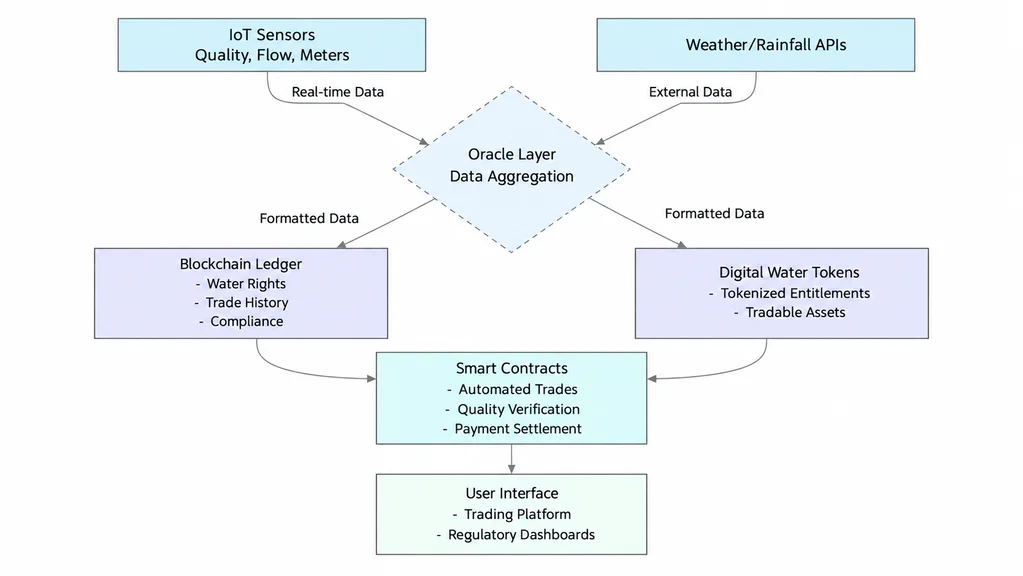
Tokenized water refers to the representation of water rights, allocations, or conservation credits on a blockchain. In traditional systems, water rights are often tied to land ownership or governed through paper-based legal frameworks, which can make trading slow and difficult. Tokenization converts rights into tokens managed through smart contracts, allowing network participants to track, trade, and audit them.
Delivery rights are a claim to a specific volume of water from a reservoir or aquifer, and in practical terms they represent a right of use. Water credits, on the other hand, are verified water savings or ecological restoration projects that function in a similar way to carbon credits: companies purchase them to offset their hydrological footprint.
How It Works
The process begins with right verification, in which a central authority, water district, or trusted validator confirms that an entity holds the right to pump or divert a specific amount of water. That right is then digitized through a Special Purpose Vehicle (SPV) or an equivalent legal structure that connects the token to the off-chain right, giving the holder a legally enforceable claim.
Once issued, the smart contract enforces the conditions automatically without manual intervention; for example, it can limit a token’s validity to a growing season or prevent its transfer to a region with no physical connection to the source.
Finally, to link legal parameters to smart contract logic, CRE (Chainlink Runtime Environment) can be used as an orchestration layer that connects smart contracts to water district databases or legal registries.
Benefits Attributed to Onchain Markets
Liquidity is one such benefit: selling a traditional right can take months because the seller must find a buyer, negotiate the transaction, and obtain regulatory approval. Fractionalization and peer-to-peer trading would allow a farmer to sell a neighbor only the unused portion of an allocation instead of selling the entire right or relying on a broker.
Transparency is another key aspect, since water management faces problems related to data quality and double counting: the same right may be sold to several buyers while paper claims may exceed the water actually available in a river system. An immutable transfer record reduces the first problem. However, because a blockchain only records the data it receives, the second problem depends on the accuracy of physical water supply data, according to an inference.
Price discovery would also benefit, as a digital order book could produce a visible market price. Proponents argue that a higher price could encourage water-intensive industries to invest in efficiency and sell their surplus.
What Chainlink Provides
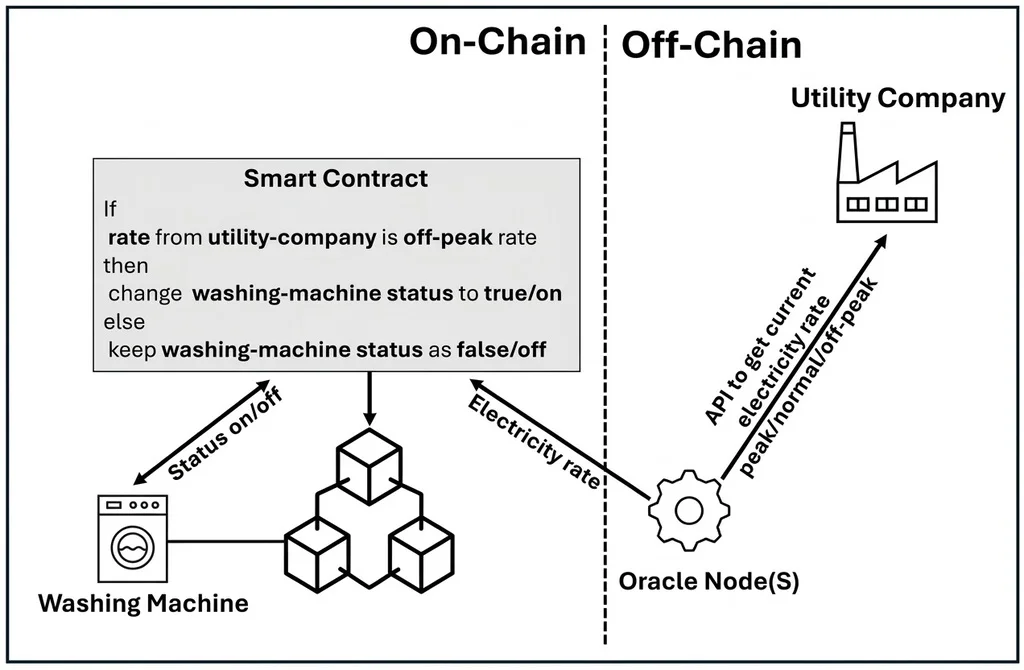
Oracle data supply contracts with information such as rainfall, reservoir depth, or flow meter readings. A parametric insurance contract, for instance, can automatically pay a farmer if rainfall in their area falls below a set threshold.
Proof of Reserve connects contracts to offchain sources, such as API readings from reservoir level sensors, to verify that circulating tokens are physically backed. If the level drops due to drought, the protocol could automatically adjust the token supply. This works well for tokens that represent measurable volumes, but it is harder to apply to legal rights, which do not always equal the water stored at a given moment.
CCIP, or Cross-Chain Interoperability Protocol, allows assets to move between public and private blockchains. For example, a loan granted by a chain of private banks could be sold to an investor through a public DeFi application.
Compliance is also addressed through a compliance policy implemented to ensure that tokens circulate only among verified participants who meet local legal requirements.
Use Cases
In agriculture, a farmer who adopts drip irrigation and reduces water consumption could tokenize the surplus and sell it to a water agency or another farmer facing a shortage.
In the area of corporate water stewardship, technology and beverage companies that have committed to becoming “water positive” could buy tokenized credits representing ecosystem restoration or aquifer replenishment. When restoration data is verified through oracles, the process could reduce the risk of greenwashing.
Limits and Risks
A tokenization framework must comply with a set of local, state, and national rules. In some jurisdictions, water is a public good that cannot be owned, while in others it constitutes a private property right.
Water is heavy and expensive to transport. A token issued for one basin cannot be redeemed for water from another without infrastructure connecting them, so markets must account for hydrological constraints.
Financializing water could allow it to be traded alongside commodities such as oil and gold.

Isai Alexei is a journalist and financial analyst covering cryptocurrency markets and traditional securities for Blockchaindose. He has spent ten years analyzing digital assets, trading activity, and market structure.