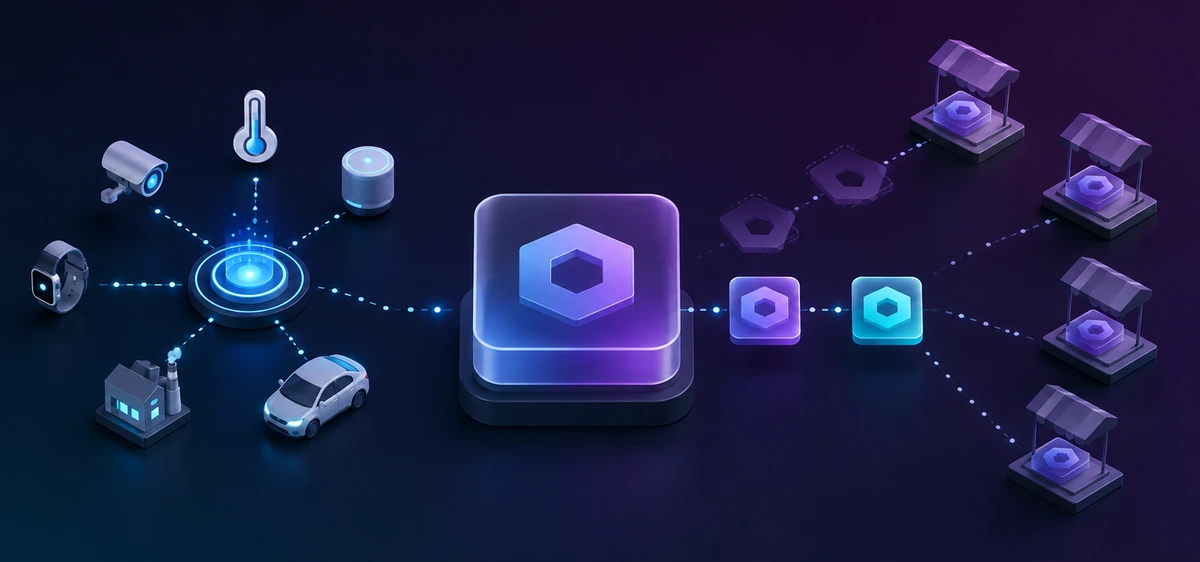
Blockchain-based IoT data trading faces a structural barrier that limits the realization of its projected $1.9 trillion market value. Market illiquidity prevents efficient data exchange between device owners and data consumers. Semi-Fungible Tokens (SFTs), particularly under the ERC-3525 standard, provide a technical mechanism to resolve this friction through granular tokenization and flexible trading operations.
The Illiquidity Problem in IoT Data Markets
IoT devices generate data characterized by three properties that conflict with traditional asset trading frameworks. Data is anti-rivalrous, meaning multiple buyers can use the same dataset without depletion. Data is combinatorial, where combined datasets produce value exceeding the sum of individual components. Data is perishable, with real-time streams losing economic value over time.
The Data Asset Liquidity Index (DALI), proposed at the IEEE International Conference on Blockchain 2025, addresses this mismatch through a multidimensional liquidity framework. DALI quantifies liquidity across multiple dimensions specific to data assets, enabling systematic evaluation of tradability and market depth.
ERC-3525: The Semi-Fungible Token Standard
The Ethereum community ratified ERC-3525 in September 2022 as the formal standard for semi-fungible tokens. The standard defines tokens that maintain ERC-721 compatibility while introducing fungibility between tokens sharing the same SLOT parameter.
ERC-3525 implements two novel transfer models. Value transfer between two tokens of the same SLOT enables fungible exchange while preserving individual token identity. Value transfer from a token to an address allows direct value movement without requiring token destruction.
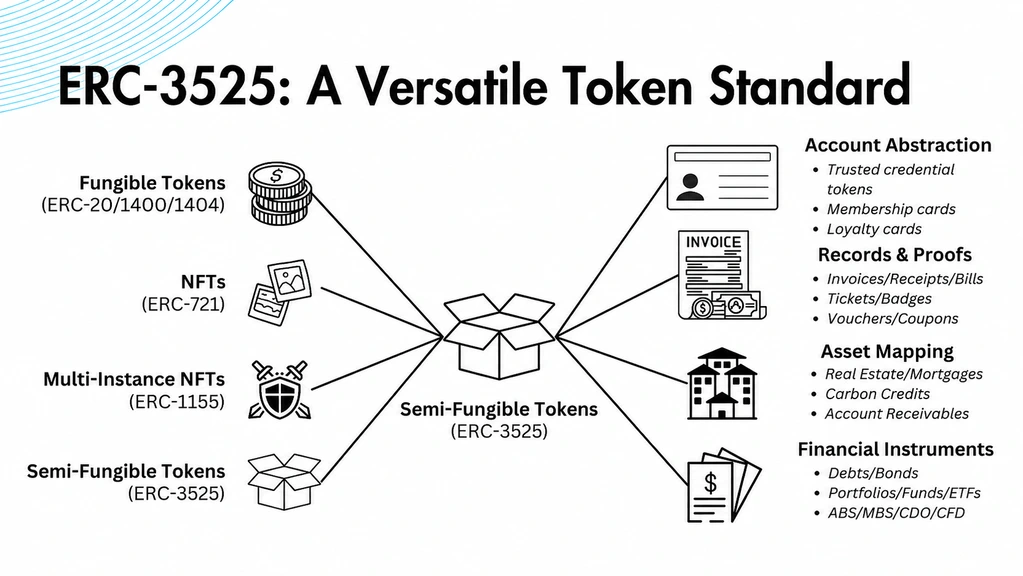
The standard combines properties of ERC-20, ERC-721, and ERC-1155 within a single specification. This enables representation of complex assets including bonds, coupons, invoices, futures, options, and asset-backed securities. For IoT data, ERC-3525 provides the technical foundation for datasets that require both quantitative flexibility and individual traceability.
DALI Framework Implementation
The DALI framework deploys ERC-3525 SFTs as the primary instrument for granular data tokenization. The approach enables flexible trading and reduces transactional friction through three technical mechanisms.
Intelligent device grouping aggregates IoT devices with complementary data streams into tradable packages. Advanced SFT merging functionalities allow combination of multiple tokens into larger units representing composite datasets. Device package trading systems enable transactions involving multiple devices and data streams in single operations.
Theoretical analysis and case studies demonstrate that SFTs enhance each DALI component, producing measurable improvements in market efficiency. The framework establishes a decentralized trading mechanism where data owners retain control over tokenization parameters while buyers access verifiable data provenance through blockchain records.
ERC-1155: Multi-Token Standard Applications
ERC-1155 enables a single smart contract to manage multiple token types including fungible, non-fungible, and semi-fungible assets. The standard reduces gas costs by up to 90% for bulk operations through batch transfer functionality.
In IoT data markets, ERC-1155 supports Energy Attribute Tokens representing kilowatt-hours of verified generation. Each token mint links to off-chain IoT meter data including generation time, location, and energy source. The smart contract manages financial settlement using designated ERC-20 payment tokens while ERC-1155 tokens represent the underlying energy credits.
Biodiversity credit platforms utilize ERC-1155 semi-fungible tokens to represent ecological assets with satellite and IoT data verification. Each batch of credits shares common metadata while maintaining individual traceability through the token’s unique identifier.
SFT Protocol:
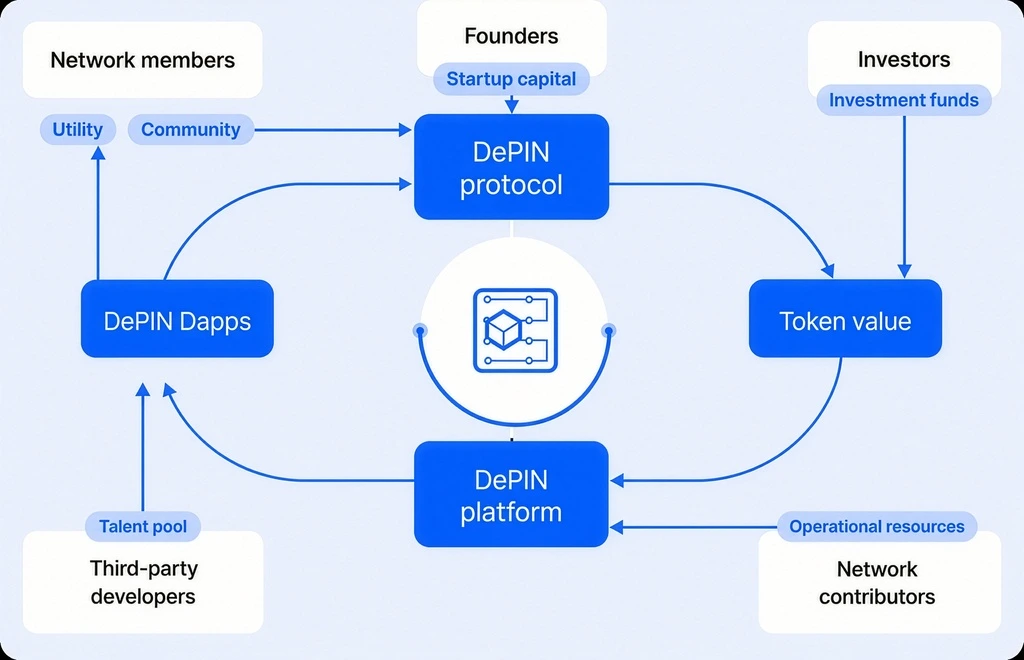
The SFT Protocol operates a decentralized blockchain powering Decentralized Physical Infrastructure Network (DePIN) infrastructure. The platform bridges physical hardware with Web3 technologies through a “Chain of Chains” architecture serving as a marketplace for transactions across multiple blockchain networks.
Key technical capabilities include encrypted and validatable data collection from IoT sources, liquid staking derivatives for long-term locked assets, and distributed storage and computing services. The protocol supports device tokenization where hardware owners mint SFTs representing their infrastructure, enabling participation in the Web3 economy.
In June 2025, SFT Protocol announced a partnership with ManusPay to deploy IoT sensors across multiple nations. The deployment enables cryptocurrency payments for real-world services including water, electricity, and internet access. The implementation moves users beyond crypto speculation toward everyday practical applications.
KIP Protocol: Knowledge Asset Tokenization
KIP Protocol utilizes ERC-3525 SFTs to represent knowledge assets including AI models, datasets, and training materials. Each component wraps in an ERC-3525 token, enabling low-gas transfers of economic value between ecosystem participants.
The protocol addresses data monopolization in AI development through blockchain-based digital ownership verification. Knowledge Asset ownership represented by ERC-3525 SFTs grants control and verifiable ownership to creators and token holders. The framework supports fractional ownership, efficient value transfer, and verifiable digital property rights.
KIP Protocol’s modular architecture enables different AI components to interact transparently while ensuring data, models, and applications receive fair profit distribution. The protocol eliminates intermediaries through transparent accounting systems, creating an open platform for AI data and model integration.
Chainscore Labs: Sensor Data Tokenization
Chainscore Labs builds production systems that transform raw IoT sensor streams into verifiable, tokenized data assets. The platform ingests real-time environmental, laboratory, and field research data through secure pipelines.
Technical infrastructure includes custom oracle networks that aggregate and verify sensor data for smart contract consumption. The platform deploys ERC-1155 contracts with built-in regulatory hooks supporting KYC/AML checks, transfer restrictions, and investor whitelists. Cross-chain interoperability bridges tokenized data assets across Ethereum, Polygon, and Avalanche using secure messaging protocols.
Applications include real estate sensor data tokenization for occupancy, temperature, and energy usage metrics, predictive maintenance data from industrial machinery, and supply chain tracking with immutable location and condition verification.
Standard maturity presents a constraint for ERC-3525 adoption. While the standard received formal ratification in 2022, production implementations lag behind ERC-1155 deployments.
Regulatory compliance requires integration of data protection frameworks including GDPR and sector-specific requirements. Chainscore Labs addresses this through ERC-3643 security token contracts with compliance logic.
Data quality verification remains independent of tokenization
Oracles must provide reliable data feeds from physical sensors to smart contracts. The platform implements data validation, formatting, and immutable logging for verifiable provenance.
Interoperability between different blockchain networks and IoT systems requires secure cross-chain communication layers. Current implementations support EVM-compatible chains with bridge times under three minutes.
The IoT and blockchain market is projected to reach $1.9 trillion with a compound annual growth rate of 48.8%. SFT-based solutions address the illiquidity barrier that currently limits market participation.
ERC-3525 provides the technical standard for assets requiring both quantitative flexibility and individual traceability. The DALI framework establishes metrics for evaluating data asset liquidity across multiple dimensions. Production implementations from SFT Protocol, KIP Protocol, and Chainscore Labs demonstrate viable deployment models.
The integration of SFTs with DePIN infrastructure enables device-level tokenization where physical hardware generates tradable digital assets. This creates alignment between infrastructure investment and data market participation, potentially accelerating IoT deployment through token economic incentives.
FAQ
What distinguishes ERC-3525 from ERC-1155 for IoT data?
ERC-3525 enables SLOT-based fungibility and direct value transfer between tokens without destruction. ERC-1155 supports multi-token types and batch transfers. ERC-3525 allows dataset merging, matching IoT data’s combinatorial property.
How do SFTs verify data provenance and quality?
Off-chain oracles validate sensor readings. Cryptographic hashes bind data to token IDs. Metadata stores timestamps and device identifiers. Buyers verify by comparing hashes. DALI includes quality scoring with smart contract thresholds.
What regulatory barriers affect IoT data tokenization?
GDPR and CCPA restrict cross-border transfers and require consent. Compliance hooks enforce KYC whitelists. Geographic restrictions limit trading jurisdictions. Data anonymization removes personal information before tokenization.
Can SFTs integrate with existing enterprise IoT infrastructure?
Middleware layers bridge MQTT/CoAP to blockchain RPC nodes. Device-side signing works on Raspberry Pi and Arduino. REST APIs query metadata without direct contract interaction.
What cost reductions do SFTs provide versus other models?
ERC-1155 batch transfers reduce gas by 90%. ERC-3525 updates values in one transaction instead of two. DALI estimates 70% gas savings versus NFTs. Shared metadata lowers storage costs.

Isai Alexei is a journalist and financial analyst covering cryptocurrency markets and traditional securities for Blockchaindose. He has spent ten years analyzing digital assets, trading activity, and market structure.