

On September 13, 2026, 248,655 New Bitcoin addresses joined the BTC blockchain for the very first time. As you read this article, there are newer and newer bitcoin addresses joining the bitcoin blockchain, contributing to the daily count.
Since January 2009 when the first ever new address was recorded in the chain this has been a pattern for Bitcoin. By 2026, the Bitcoin blockchain is already reporting that over 1.54 billion addresses appeared on the chain at least once in its long history. That number alone is over four times the US population.
The number, in context
A new Bitcoin address is simply a new wallet ID registered on the Bitcoin record. They appear primarily because either a person received a payment, or just completed some regular on-chain activity.
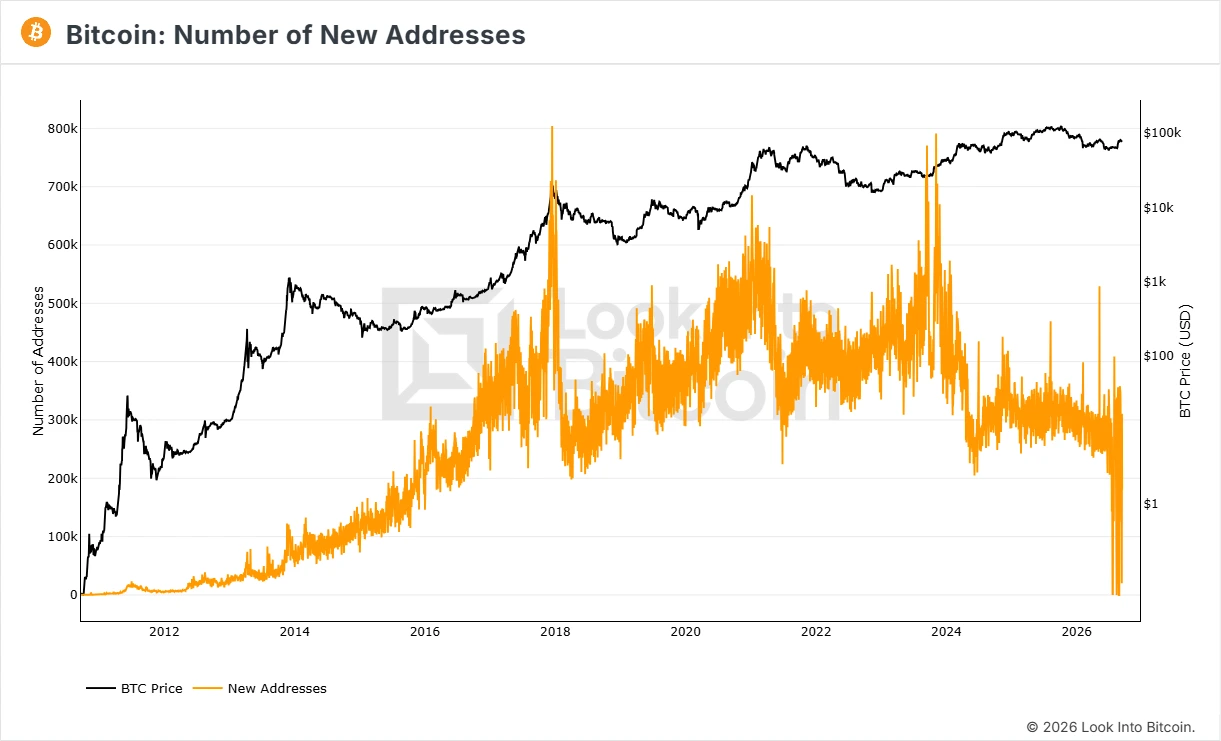
Several crypto data aggregators, including Lookintobitcoin track the data daily by counting all the new addresses when every new block is confirmed. When writing this report, the daily count ranged between 248,000 and 250,000.
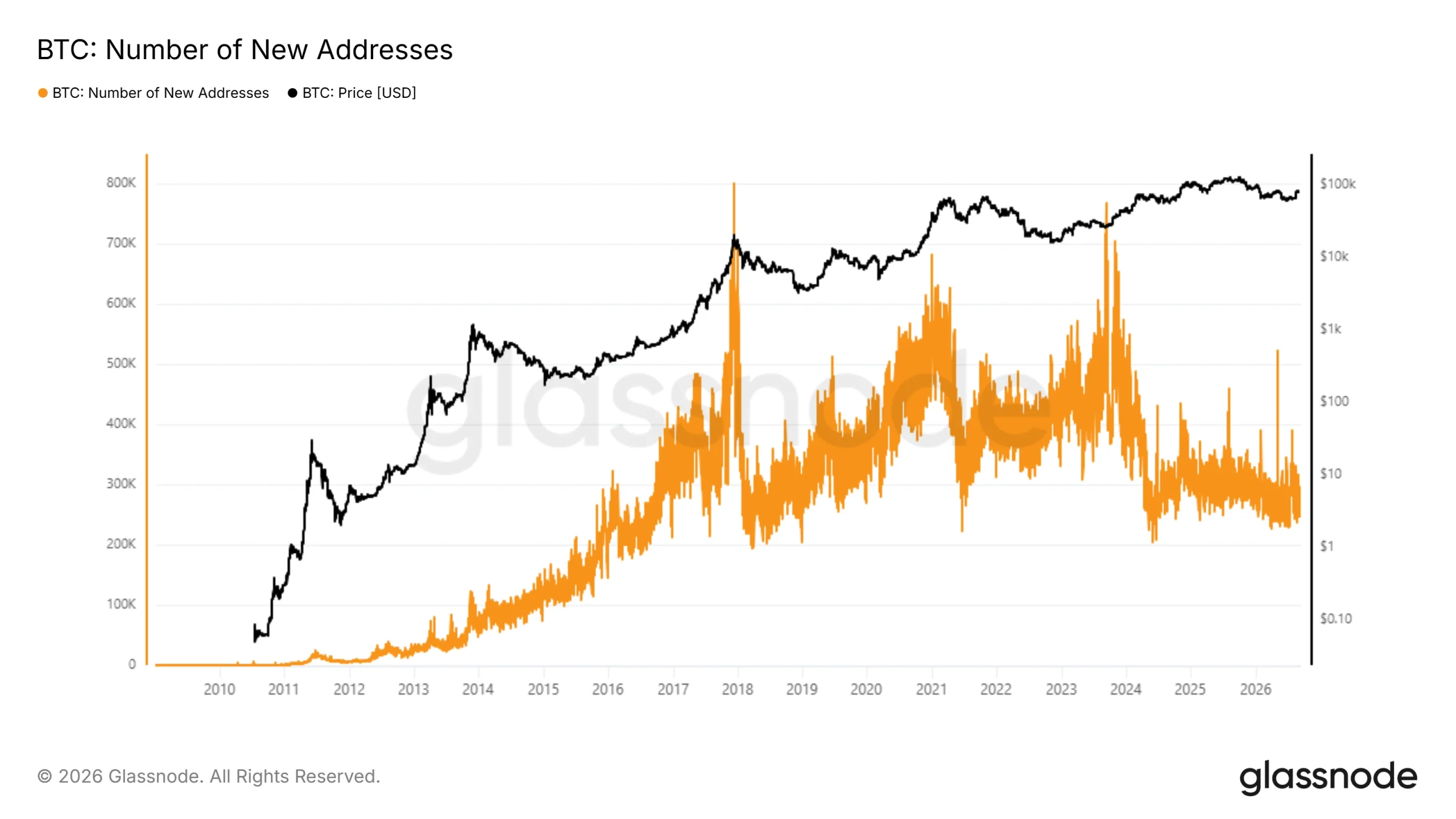
According to Glassnode’s research from late February 2026, this peak was around 316,390. In fact, Glassnodes charts indicate that this is a major drop from all time highs. In mid-2021. Data indicates that the peaks would get to over 500,000 new addresses in a single day. Yet, this was still not close to the all time peaks.
The highest ever recorded flow of new addresses in a single day on Bitcoin was reported on December 14th, 2017. It was at the peak of the Bitcoin retail frenzy, and over 804,5784 new addresses were created that single day. The current daily number is about 69% less than that record. So, even with new interest from institutions, the number of new addresses being created on the Bitcoin network hasn’t reached the levels seen during the 2017 bull market.
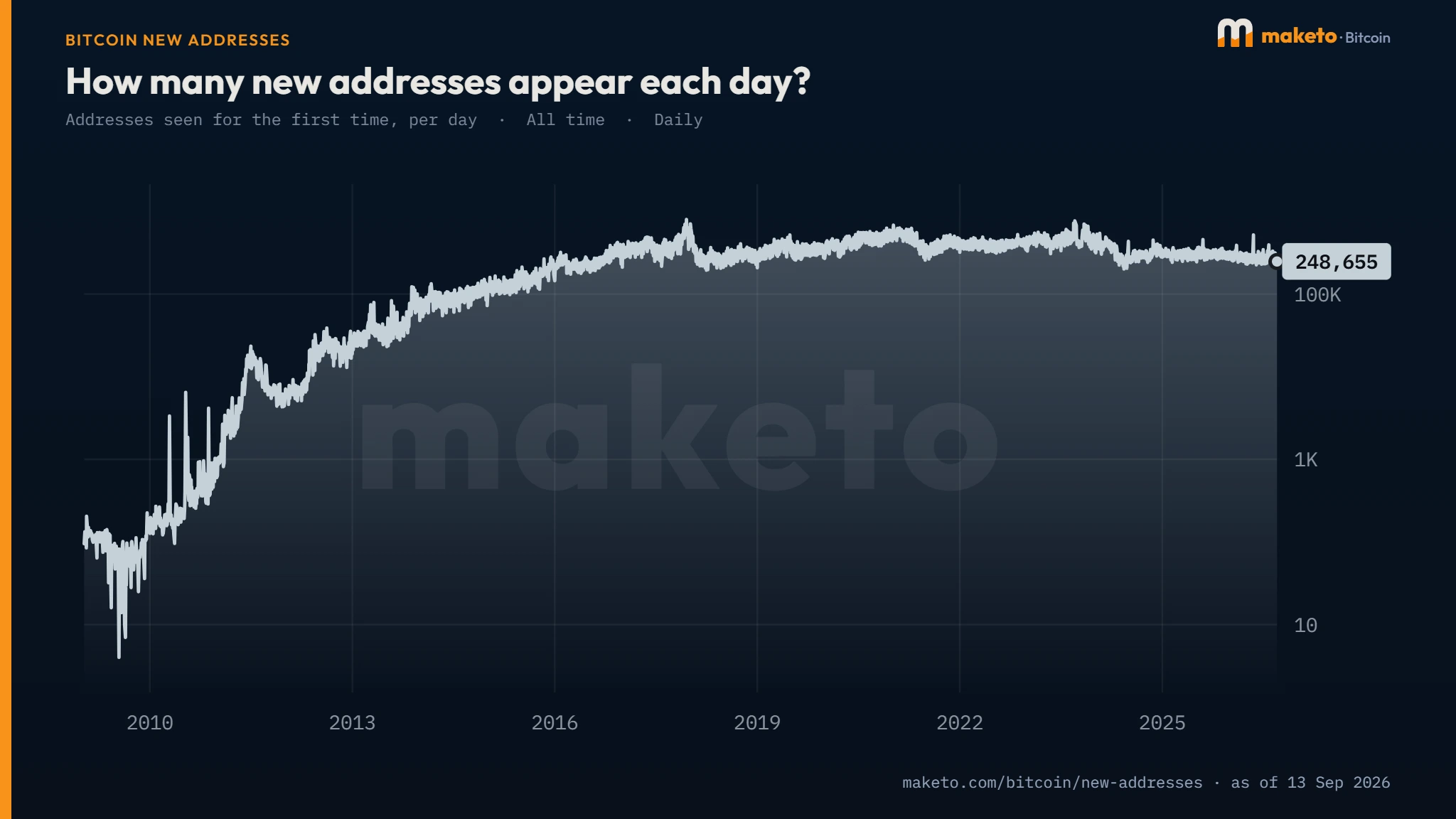
Maketo, an analytics network that has tracked Bitcoin new addresses from 2009 also lines up with research from other analytics firms. The charts clearly display the peaks in 2017.
But, does the number of new addresses always move with the price? The answer is No! Glassnode data from July 2024 showed the average going over 317,000, even though Bitcoin’s price dropped more than 10% during that period.
Why the raw count is deceptive
Here’s why just counting new addresses can be misleading.
Many people new to this get fooled by the idea that a new address means a new person. Bitcoin wallets create a new receiving address for most transactions. They also create a new “change address” ecause Bitcoin tracks amounts in chunks (UTXOs) rather than a running balance.
If you send 0.5 BTC from a UTXO that’s worth 0.8 BTC, the extra 0.3 BTC doesn’t stay put. It gets sent to a brand-new address. Because of this, a single active trader, exchange, or custodian can easily create hundreds of “new” addresses in a week, even if no new people are actually joining the network.
To get the most out of the new addresses metric, you also need to incorporate other stats like “Active Addresses” and transaction fee data. A July 2024 study highlighted this well. While the number of new addresses surged by 20% week-over-week, the average transaction fee dropped to just $1.75. This was much lower than Ethereum’s fees at the time. Hence, a spike in new wallets doesn’t automatically mean a spike in costly, network-heavy activity.
This also makes the early years of data a bit tricky. In the early years, Bitcoin’s first address type, “pay-to-public-key” (P2PK), could make it look like the same address was used repeatedly. Hence, the address counts from 2009-2011 probably don’t show the full picture of actual activity. By 2013, P2PK addresses made up less than 1 in 400 new addresses, and they are hardly used now. So, the data from recent years is considered reliable.
Check also: What Are The Busiest Hours For Bitcoin Movements?
The bigger picture: two very different totals
Looking at the bigger picture, there are two very different numbers that long-term charts clearly show. First, all the addresses ever created. This number is well over 1.54 billion and growing. It counts every wallet address that has ever interacted with the blockchain, even briefly.
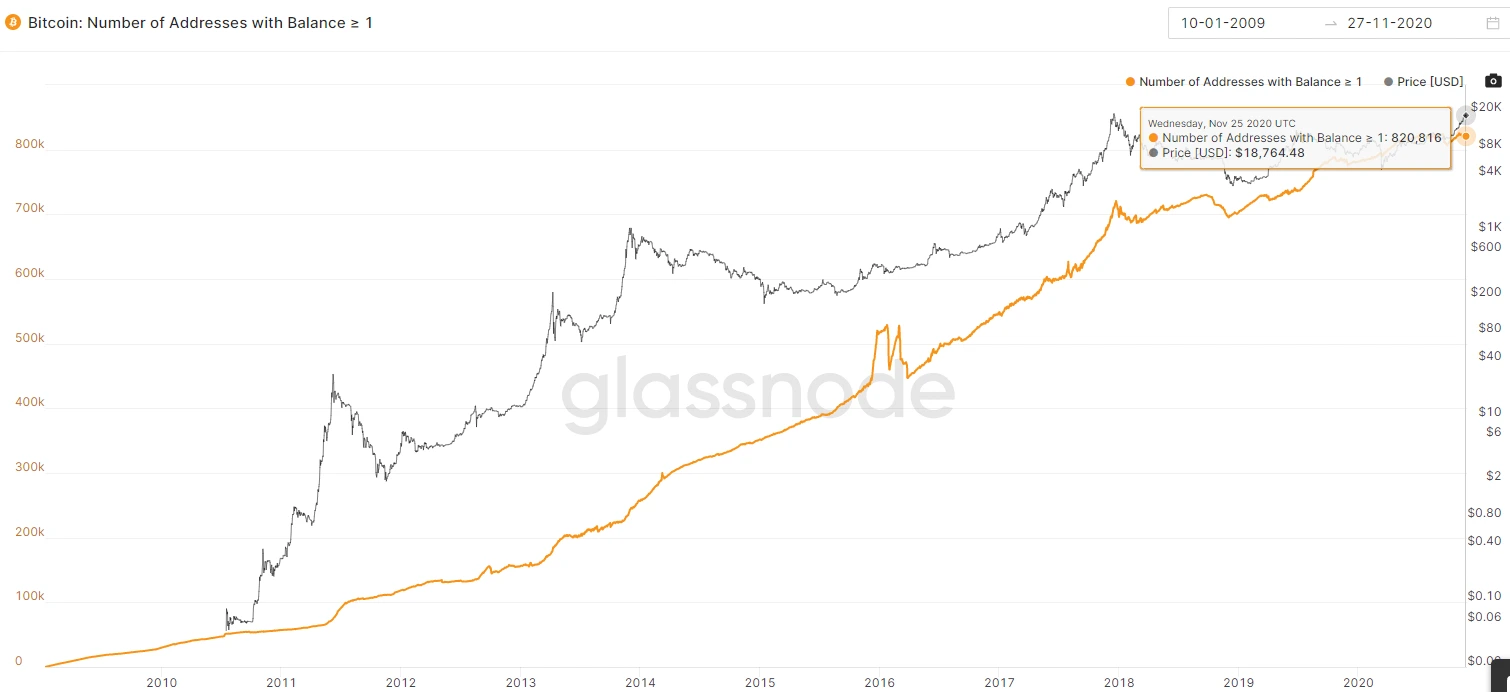
Second, there are addresses with a non-zero balance. This is a much smaller number because most of those billions of addresses were used only once and then abandoned.
Back in late 2020, when Bitcoin’s price was heading towards its previous record high, the Glassnode Web3 data team noted a huge spike. For every hour, an average of 24,807 new addresses were created, translating into over 500,000 per day.
This level hadn’t been seen since the “Bitcoin-mageddon” after its brief run to $20,000 in early 2018. At that time, there were about 32.5 million addresses with a balance, and around 850,000 “active” addresses. The difference between the billions of addresses ever seen and the tens of millions actually being used is something every serious on-chain analyst understands is important.
Why this number is important to watch
It’s easy to think that “new addresses” simply means more users and therefore something good for the price. The reality is a bit more complex. However, this doesn’t make the number less useful. Instead, it actually makes it more interesting.
For people watching the market, a steady increase in new addresses, especially if it’s growing faster than the price, suggests that regular people are getting interested or buying again before it’s reflected in the price. Historically, big jumps in this number have happened both at the peak of excited bull markets (like in 2017) and during calmer buying periods when prices were recovering.
For technical analysts, this number is most useful when looked at with other data. This includes active addresses, transaction fees, and how much money is moving in and out of exchanges. Just looking at new addresses alone can be misleading because they can be created by things like exchanges setting up many receiving addresses for privacy, or by automated services.
For daily users, knowing why new addresses show up so frequently clears up a frequent source of misunderstanding for newbies. No, you don’t have to manually manage dozens of addresses. Moreover, your wallet’s generating a new address for every transaction is a privacy feature, not a bug.
Bitcoin’s built-in defense against surveillance is a new address for every payment. Reusing one address repeatedly makes it easy for outside observers to connect your transaction history.
That is actually the more complex story underlying a chart that on its face only counts strings of letters and digits. Every one of those 248,655 addresses generated today either reflects a really new user entering the Bitcoin network or an active user’s wallet subtly guarding their financial privacy behind the scenes.

Dan is a seasoned crypto writer for Blockchaindose who got his start in the space back in 2019. Over the past four years, he’s built a solid grasp of how the industry moves, focusing heavily on DeFi, NFTs, GameFi, and promising new projects.
Off the clock, you’ll usually find him buried in a good book or kicking back with a movie. His blend of hands-on market experience and straightforward commentary makes him a clear, trusted voice across the platform.