

Crypto markets boast of offering 24/7 access to services for every trader. Bitcoin in its very nature never sleeps. However, despite offering year round access, did you know that Bitcoin has rush hours?
Key Takeaways
- 16:00 UTC is Bitcoin’s busiest hour by value moved, while 15:00 UTC is the busiest by number of separate movements
- The busiest six hours of the day carry 29.1% of all value
- Fee rates and price volatility both tend to rise in the same windows where activity peaks
- Whale and institutional activity offers a plausible explanation for why fewer, larger transactions dominate the 16:00 UTC .
In our analysis, which includes research from sites like Maketo, Kaiko and other market trackers, we discovered a daily trend for Bitcoin markets. There are a handful of hours within the London/New York overlaps that account for a disproportionate share of everything from coins moving on-chain to trading volume, transaction fees, and price volatility.
The busiest hour, by the numbers
Analytics network Maketo, on its dashboard, displayed an analysis of Bitcoin transactions since the network was born. This includes over 514 million individual market movements. A movement in crypto/bitcoin markets can be defined as when an owner spends coins in a single transaction.
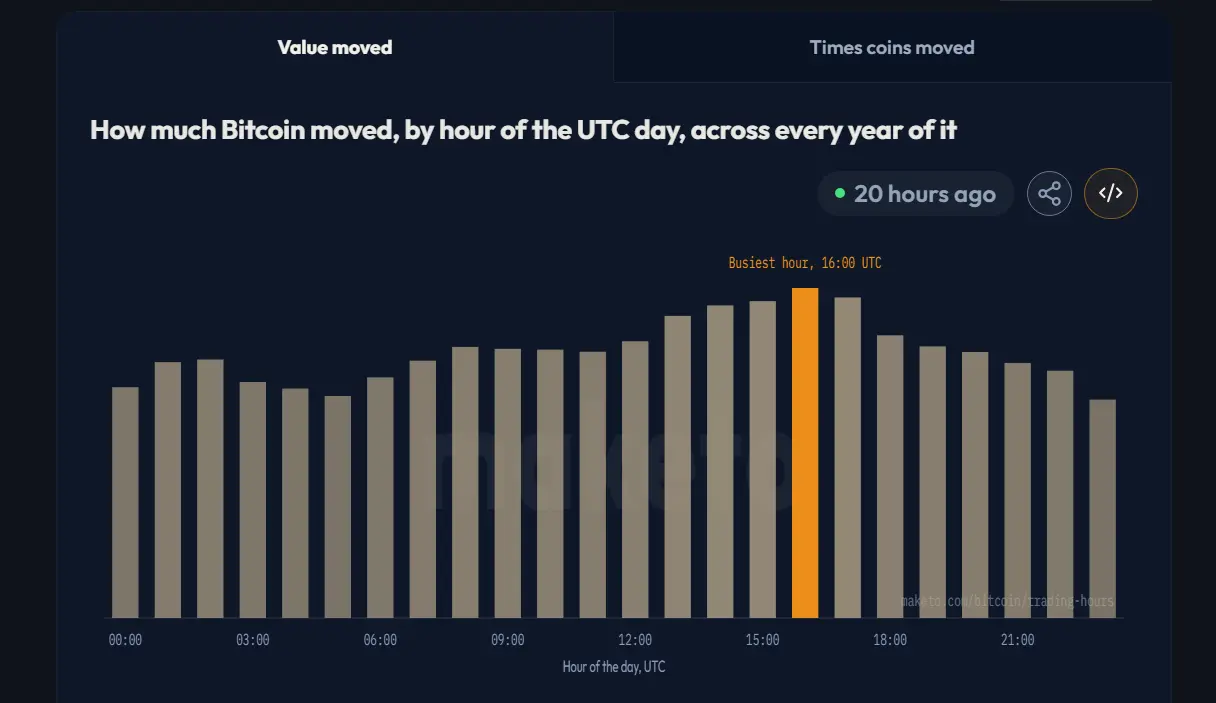
Maketo sort all the movements based on the hour of the day they occurred, with the standard time zone being UTC. Based on data analysis, 16:00 UTC stands as the single busiest hour by value, with roughly 40.7 million BTC having changed hands during that hour in BTC’s history. This value represents just about 5.2% of all daily BTC value movements.
In the analysis, it is also clear that the most quiet hour every day is 23:00 UTC. In this period, historical data indicates that about 26.9 million Bitcoin moved across wallets, that’s about 3.4% of the daily value. Yet, this is very different from the next statistics we are sharing.
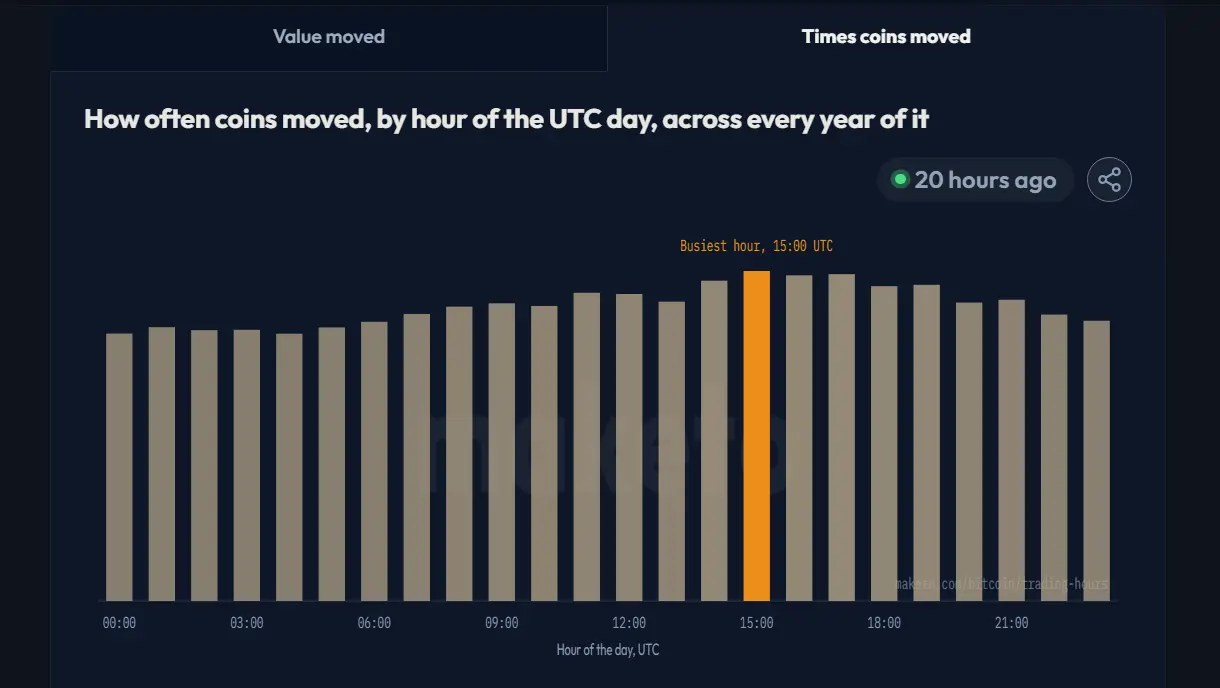
After thorough analysis by Maketo, it was discovered that the peak hour, based on the number of separate transactions, was 15:00 UTC. While more transactions happen at 15:00 UTC, bigger transactions dominate the 16:00 UTC hour, marking it as the most valuable hour in BTC.
The busiest quarter of the day seems to run between the 15:00 UTC hour mark to the 21:00 UTC mark. And based on Kiiko analytics, could represent over 29% of the daily trading volumes.
Why 15:00 and 16:00 UTC, specifically
This timing is not at all coincidental. 15:00 and 16:00 UTC, are hours that lie deep within the overlap of the London afternoon and New York morning session. This is the point of the day where both the European and US trading desks are both active. It’s a pattern long recognized in traditional finance and increasingly visible in Bitcoin.
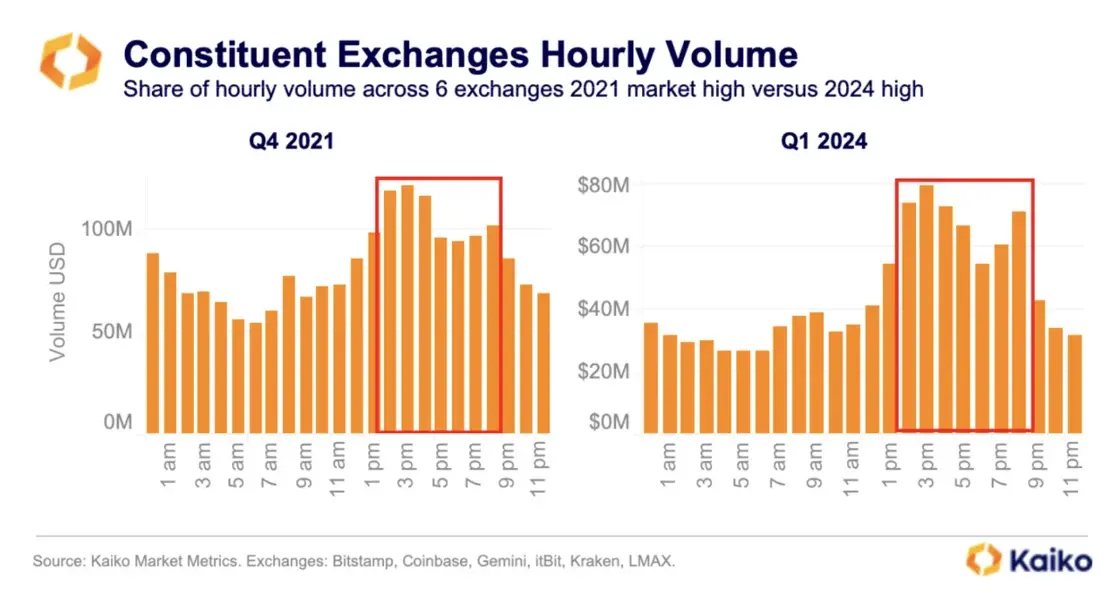
Kaiko charts and data analytics indicate a very similar pattern in busy hours of the day, especially since the birth of U.S. spot Bitcoin ETFs in early 2024. According to the numbers, the U.S close, between 19:00 and 20:00 UTC became the busiest window of the day soon after the ETF launched.
More recent Kaiko data even suggests the U.S. open has since overtaken the close as the single busiest time of day, a shift the firm links to deeper institutional participation or a rise in algorithmic trading that concentrates around market open, similar to equities.
In an analysis originally done by Kaiko, the window between 20:00 and 21:00 UTC generated over $17.6 billion in BTC volume for a single quarter. This comfortably sits the time period slightly below the 15:00 UTC mark which stands as the most active hour.
Even noticeable in the charts above, it is clear that while the trading volumes dropped between 2021 and 2024, the 3:00 pm to 4:00 pm hour attracted more volume than every other hour. This is evidence that the busy window shows up whether you’re counting exchange trades or blockchain settlements.
Fees, volatility, and the cost of showing up late
Busy hours aren’t free. Bitcoin’s fee market functions as an auction for limited block space, so when more people try to transact at once, fees rise and confirmation times can stretch. Sending a transaction during the 15:00–20:00 UTC window generally means competing with more traffic than sending it at 4:00 or 5:00 UTC, when the network is at its quietest.
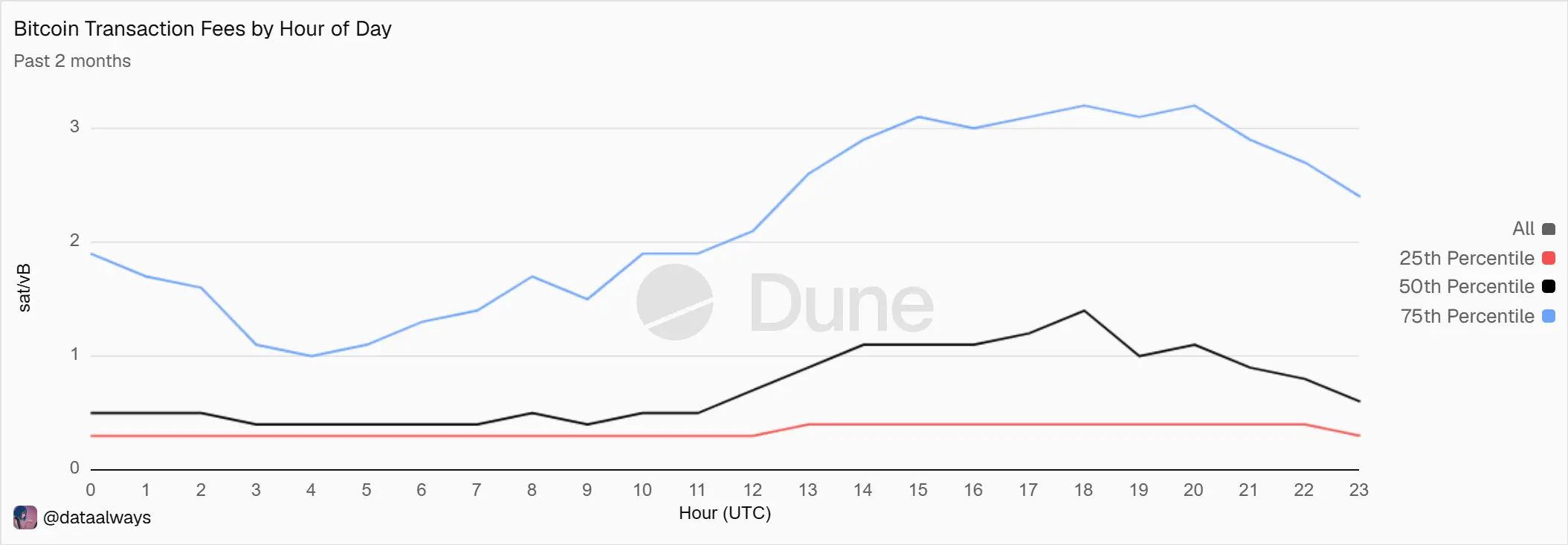
A Dune analytics style chart shows that the 15:00-21:00 UTC hour zone is the most expensive time period of the day. In fact, see the chart below.
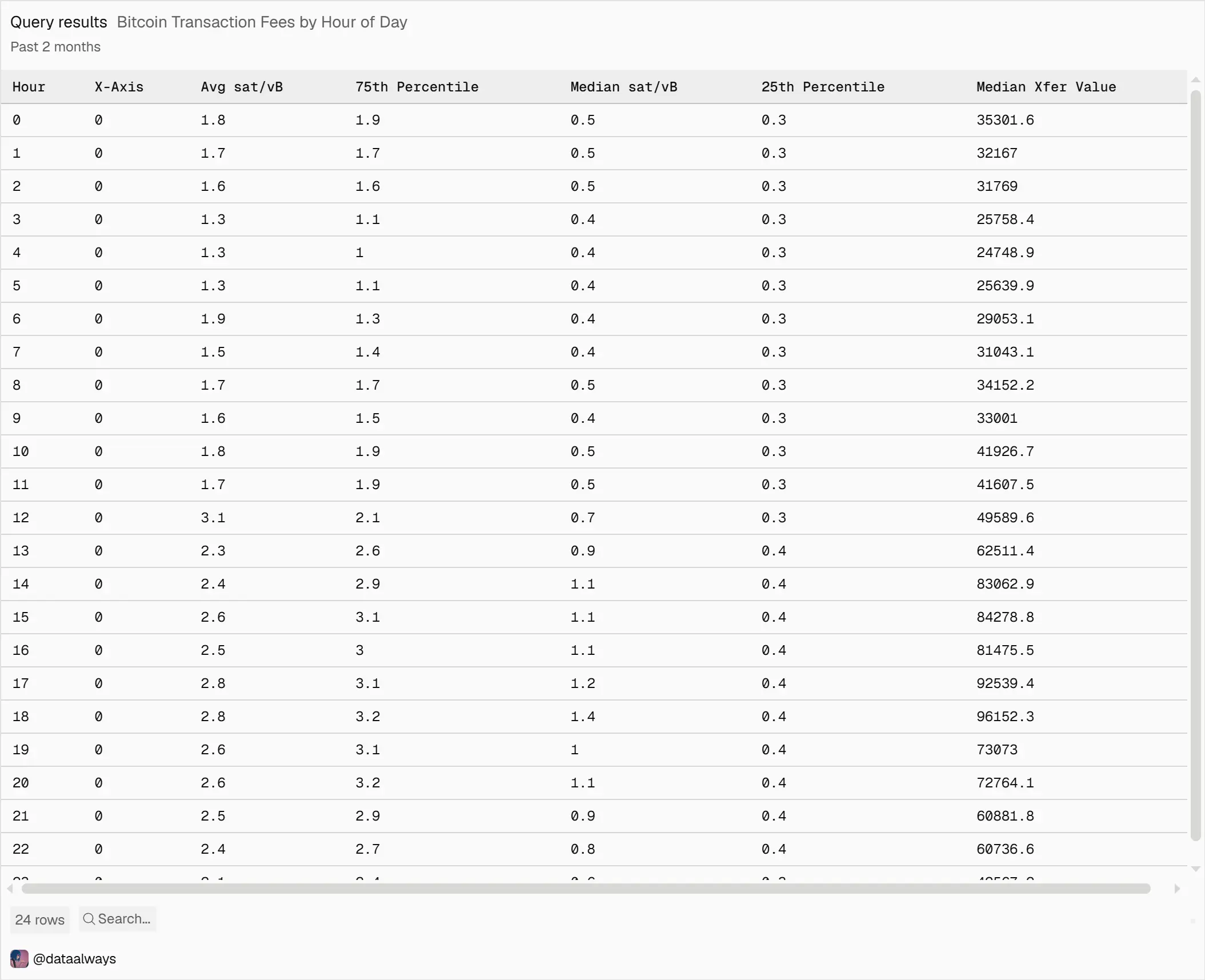
Volatility tracks a similar pattern. Independent hourly studies of BTC/USDT price action have found the highest average volatility clustering around midday and early-afternoon UTC hours. This analysis widely concurs with both the window Maketo and Kaiko flagged. The quietest, lowest-volatility hours fall in the early UTC morning, during Asian overnight hours.
Who’s actually moving at 16:00 UTC?
The 15:00 UTC hour full of small but many trading activities could be a signal of the involvement of retail activity, automated trading bots and some routine level protocol transfers.
The 16:00 UTC hour, which carries less trades of more value, could signal wide whale involvement in the markets. This however does not mean that whales prefer the 16:00 UTC.
Why this matters
Knowing the busiest hours for Bitcoin trading is an important metric that directly affects decision making, especially for serious traders.
- Fee timing: Sending BTC outside the 15:00–20:00 UTC window can meaningfully cut transaction costs. This is because, outside of that window there are fewer transactions, hence faster and cheaper settlement fees.
- Trade execution: Larger trades tend to fill closer to target price during high-liquidity hours, reducing slippage. Similar orders during quiet hours, or on weekends could mean bigger slippage hence bigger price impact.
- Reading the market correctly. A sharp move during a historically quiet hour is more likely to reflect thin liquidity than genuine new information. This can help day traders in decision making.
- Spotting behavioral shifts. Because the daily shape is so consistent across years of data, an hour that’s normally calm suddenly turning busy is itself a trading or market signal.
Note that our analysis has not been factoring out prices, rather the number of Bitcoin transactions, and the value in Bitcoin. As such, busy hour should not be understood as price changes.
FAQ
Does Bitcoin trade 24/7, and does it actually have busy hours?
Yes. While Bitcoin markets operate continuously around the clock 365 days a year, trading activity, transaction volume, and network usage fluctuate significantly. Data shows that a disproportionate amount of market activity concentrates in a few specific peak hours each day.
How do transaction fees and market volatility behave during peak hours?
Both tend to rise alongside volume. Because Bitcoin operates on a block-space auction model, higher traffic during the 15:00–20:00 UTC window increases network fees and confirmation times. Similarly, price volatility tends to cluster around midday to early afternoon UTC, while early UTC morning hours (Asian overnight trading) remain the quietest.
Why are 15:00 UTC and 16:00 UTC the busiest times?
These hours fall directly within the overlap of late London trading hours and early New York trading hours. During this window, both European and U.S. institutional trading desks, hedge funds, and market makers are active simultaneously.

Dan is a seasoned crypto writer for Blockchaindose who got his start in the space back in 2019. Over the past four years, he’s built a solid grasp of how the industry moves, focusing heavily on DeFi, NFTs, GameFi, and promising new projects.
Off the clock, you’ll usually find him buried in a good book or kicking back with a movie. His blend of hands-on market experience and straightforward commentary makes him a clear, trusted voice across the platform.