DeSci (decentralized science) is a broad term for projects and platforms that use blockchain for funding, publication, peer review, and other stages of scientific research. The concept emerged in response to processes that rely on a limited number of institutions and publications.
The problems DeSci aims to solve
In biomedicine, the “valley of death” refers to the gap between academic research and clinical development, where relevant findings can fail to progress due to insufficient funding. Funding sources, which include private investors and grants from academic institutions or governments, are limited, and competition is high. Funding also tends to favor scientists with established track records, measured by the number of published papers and citations.
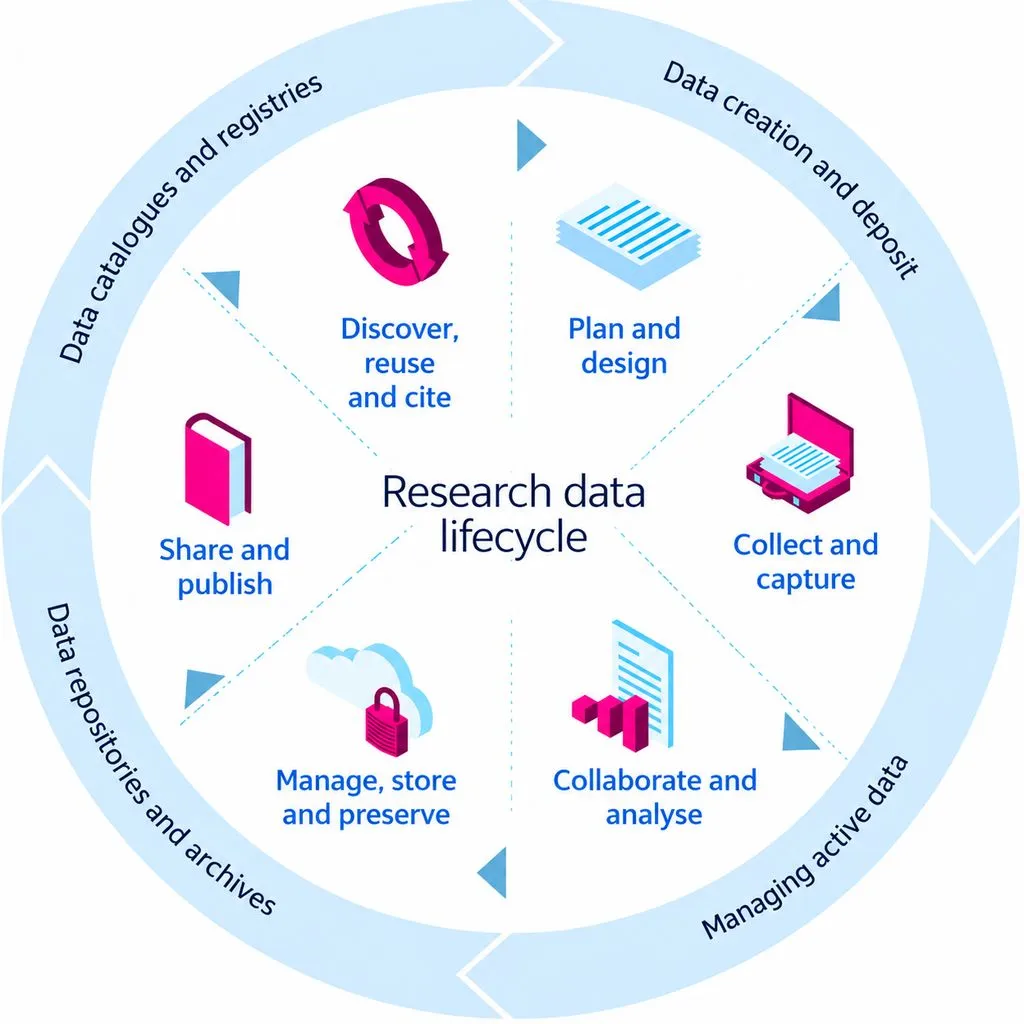
Research generates large amounts of data, but locating it across projects can be difficult. Repositories form a complex system that requires knowledge of copyright and intellectual property (IP) licensing. There is also no mechanism for determining whether data has been preserved intact or has been modified.
A small number of journals dominate scientific publishing within a relatively closed system. Researchers and peer reviewers receive little or no compensation for work that must meet high publication standards. Open-access journals charge high publication fees; in other cases, access remains restricted to people affiliated with institutions that maintain expensive licenses.
DeSci solutions
Decentralized autonomous organizations (DAOs) can be used to crowdfund research or development projects that might otherwise fail to attract investment. Participants contribute funds and receive governance tokens that give them voting rights over how the money is distributed. Examples include VitaDAO, focused on longevity; AthenaDAO, focused on women’s health; and HairDAO, focused on hair loss.
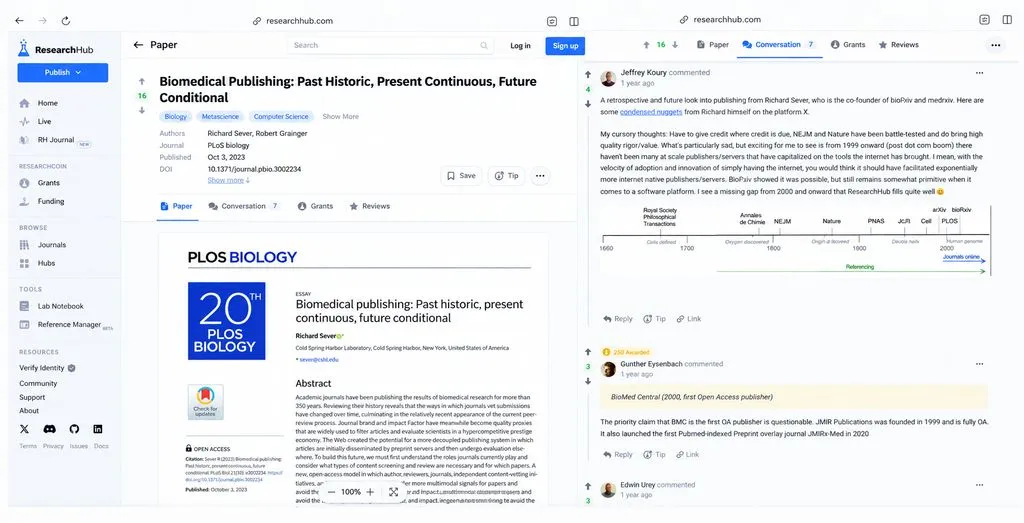
Storing data, discussions, and research on a blockchain aims to increase access and align participant incentives. Platforms use a native token to reward users who upload papers or conduct peer reviews. ResearchHub, which describes itself as a “GitHub for science,” is an Ethereum-based example.
An NFT can represent a piece of intellectual property, such as a research paper, dataset, or patent. The NFT is linked to smart contracts that define the terms of ownership and transfer. One use case involves a research agreement between a sponsor that funds the work and the researcher or institute conducting it. The IP-NFT can encode the terms of the agreement and facilitate the later transfer of intellectual property and its further development. Molecule Protocol is a project focused on the model.
On-chain capacity remains a limitation across the blockchain ecosystem, and storing large volumes of scientific data could increase costs quickly. Solutions under development, such as data availability layers, could increase capacity and reduce costs.
To gain adoption within the scientific community, DeSci solutions must comply with rules governing data privacy and sharing. Rights such as the deletion of personal data may conflict with blockchain immutability. Smart contracts can also enforce only actions that are possible within the blockchain environment, which does not provide a full legal remedy in the event of an intellectual property breach.
Decentralized governance has limited experience at scale, and as participation increases, the value of each vote becomes diluted while maintaining voter engagement becomes more difficult. Governance attacks by majority token holders may require token ownership rules to mitigate them.
Only a small number of projects are in production, and many solutions require additional testing and development before they can be considered viable alternatives to existing centralized processes.

Isai Alexei is a journalist and financial analyst covering cryptocurrency markets and traditional securities for Blockchaindose. He has spent ten years analyzing digital assets, trading activity, and market structure.