Hedera Hashgraph operates a public distributed ledger that does not rely on a blockchain. The network implements a directed acyclic graph (DAG) data structure combined with the Hashgraph consensus algorithm, a combination that distinguishes it from conventional blockchain architectures. This design delivers ~10,000 transactions per second (TPS) on the mainnet with 3–5 second absolute finality, compared to Ethereum’s ~15–30 TPS and ~13-minute probabilistic finality.
DAG Architecture and Hashgraph Consensus
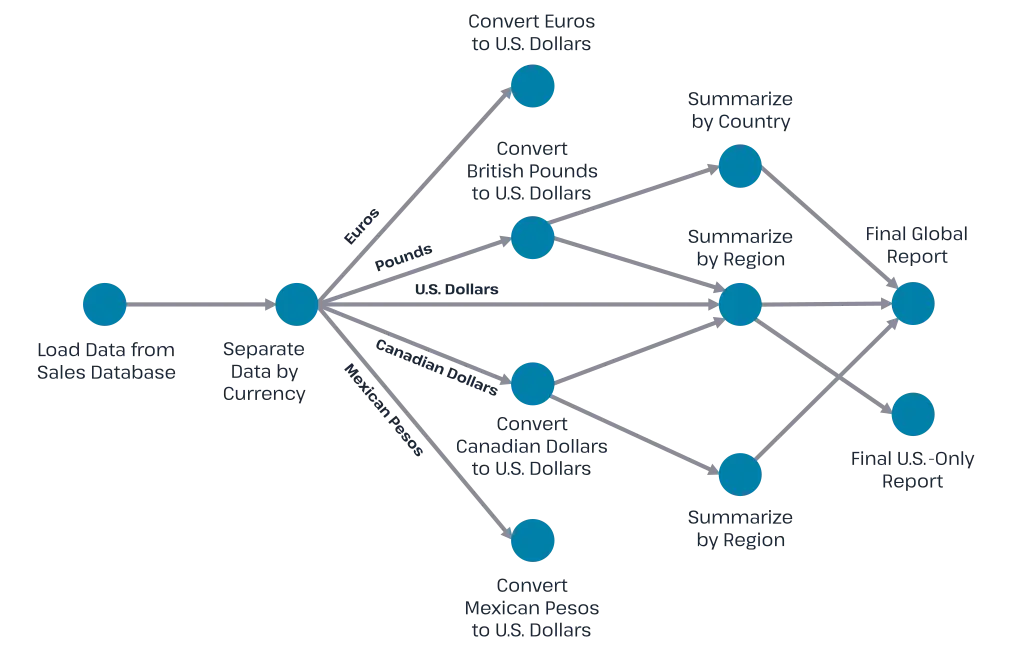
Hedera records transactions as events within a DAG, where each event references two previous events, creating a web of cryptographic hashes that encode the complete communication history of the network. This data structure enables the network to process transactions without the sequential bottleneck inherent in blockchain architectures. The algorithm achieves Asynchronous Byzantine Fault Tolerance (aBFT), the highest security classification in distributed systems theory.
The Hashgraph consensus algorithm relies on two mechanisms:
The hashgraph consensus algorithm operates through two primary mechanisms: gossip-about-gossip and virtual voting. In the gossip-about-gossip protocol, nodes propagate transaction information to randomly selected peers. Each gossip message contains not only the transaction data but also a history of prior gossip communications, establishing a verifiable record of how information disseminated across the network.
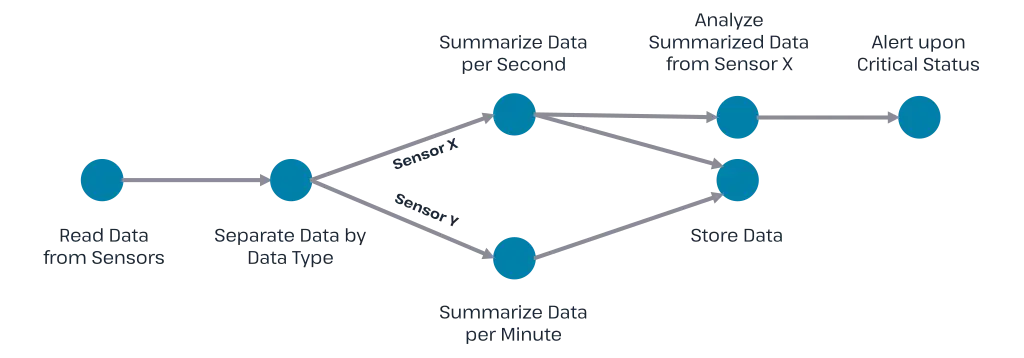
Virtual voting eliminates the need for actual vote messages between nodes. Each node independently computes how other nodes would vote on a transaction’s order and timestamp based on the DAG’s structure. This computation occurs locally without requiring additional network round trips, reducing bandwidth consumption and latency. The algorithm achieves asynchronous Byzantine Fault Tolerance (aBFT), which has been mathematically verified using the Coq proof assistant.
Throughput Performance: Hedera vs. Ethereum
Hedera’s performance metrics differ substantially from Ethereum’s across multiple dimensions.
Transaction Throughput: The Hedera mainnet processes ~10,000 TPS for cryptocurrency transactions. The current 10,000 TPS limit is a governed throttle, not a technical ceiling. The consensus layer alone could theoretically handle over one million transactions per second, with the actual bottleneck being disk I/O during state execution. Different transaction types execute at different rates: token transfers process at approximately 11,000 TPS, while account creations exceed 25,000 TPS under performance testing. Ethereum’s Layer 1 processes approximately 15–30 TPS.
Finality: Hedera delivers absolute finality—once a transaction receives a consensus timestamp, it cannot be reversed or reorganized. Ethereum provides probabilistic finality, typically requiring 12 or more confirmations (~13 minutes) before considering a transaction sufficiently settled. Hedera transactions achieve finality in 3–5 seconds.
Transaction Fees: Hedera fees are denominated in USD and paid in HBAR at the current exchange rate. The average transaction fee is approximately $0.0001. The Hedera Governing Council sets these fees, and they do not fluctuate with network demand. Ethereum uses a gas auction model where fees vary based on network congestion.
The Hedera network recorded average daily transactions of approximately 291,200 over a two-week period in August 2026, with a peak of 346,943 transactions on August 12. The network has surpassed 71 billion total transactions as of mid-2026.
Validator Economics and Staking Mechanism
Hedera employs a Proof-of-Stake (PoS) consensus model where node influence on consensus outcomes correlates directly with the amount of HBAR staked to that node. A transaction achieves consensus only after nodes representing more than two-thirds of the total staked HBAR have processed it.
The staking program imposes no lock-up period and carries no slashing risk. HBAR holders may stake their tokens to a network node and withdraw them at any time without penalty. To qualify for staking rewards, an account must remain staked for a minimum of one full 24-hour period beginning and ending at midnight UTC.
The maximum annual staking reward rate is capped at 2.5% by the Hedera Governing Council. The actual network APY typically ranges between 1.97% and 2.5% depending on network participation levels. Staking rewards accumulate daily but expire if not claimed within 365 days. Accounts that exceed this window without claiming rewards forfeit the oldest accumulated rewards.
Governance Structure
The Hedera Governing Council manages network operations, protocol decisions, and the HBAR treasury. As of 2026, the council comprises 31 to 34 member organizations across 11 industries. Membership includes:
Hedera operates under the governance of the Hedera Council, a consortium of 31 organizations as of February 2026. Council members include Google, IBM, Dell, LG Electronics, Boeing, FedEx, Deutsche Telekom, Nomura Holdings, Shinhan Bank, and Ubisoft. These entities operate the network’s nodes and participate in protocol governance decisions, including fee structures, system upgrades, and staking reward parameters.
Council members serve limited, rotating terms, and the council structure aims to provide enterprise-grade stability and accountability. Recent additions include FedEx, which joined to advance supply chain digitization initiatives, and McLaren Racing.
Each council member holds one equal vote on protocol decisions, regardless of company size or HBAR holdings. Members serve a maximum of two consecutive three-year terms. The council targets a maximum of 39 seats. All council members are required to operate a consensus node.
All Hedera SDKs and node software are open-source and governed by the Hiero project under the Linux Foundation.
Technical Differentiation from Blockchain Networks
The DAG-based architecture eliminates the need for miners or validators to compete for block production. All nodes participate equally in consensus, and the network processes transactions in parallel rather than serial. This design enables higher throughput and lower latency compared to blockchain systems that require sequential block validation.
The absence of block reorganizations provides for applications requiring immediate finality, such as financial settlements and supply chain tracking. Ethereum’s probabilistic finality introduces risk for applications that cannot tolerate transaction reversal. The fixed fee structure denominated in USD provides cost predictability for enterprise users. Blockchain networks with variable fee markets expose users to cost volatility during congestion periods.
FAQ
How does Hedera achieve finality without block confirmations?
Hedera uses the hashgraph consensus algorithm, which employs virtual voting to determine transaction order and timestamps. Once the network achieves consensus on a transaction, that transaction becomes final and irreversible. The algorithm’s aBFT property ensures finality within three to five seconds without requiring multiple block confirmations.
What is the current maximum staking reward rate on Hedera?
The Hedera Governing Council caps the maximum annual staking reward rate at 2.5%. The actual network APY fluctuates between approximately 1.97% and 2.5% based on total network participation and staking activity.
Who operates the nodes on the Hedera network?
The Hedera Council, composed of 31 global organizations including Google, IBM, Boeing, FedEx, and Deutsche Telekom, operates the network’s nodes. These entities participate in governance decisions and maintain the network infrastructure.
Does staking HBAR require locking up tokens?
No. Hedera’s staking program imposes no lock-up period. HBAR holders may stake their tokens to a node and withdraw them at any time without penalty or slashing risk.
How does Hedera’s transaction throughput compare to Ethereum?
Hedera’s mainnet processes approximately 10,000 cryptocurrency transactions per second with three-to-five-second finality. Ethereum’s base layer processes 15-30 transactions per second with approximately 12-15 minutes to reach probabilistic finality.

Isai Alexei is a journalist and financial analyst covering cryptocurrency markets and traditional securities for Blockchaindose. He has spent ten years analyzing digital assets, trading activity, and market structure.