
Stablecoins and cross-border payments are becoming part of a growing conversation about how money moves around the world. Sending money from one country to another should be straightforward, yet individuals, businesses and financial institutions still face delays, multiple intermediaries, unpredictable fees and complicated settlement processes. Blockchain-based money is introducing a different approach to this long-standing problem, raising an important question: could stablecoins make international payments faster and more accessible?
Key takeaways
- Stablecoins are digital tokens designed to maintain a relatively stable value, commonly by tracking currencies such as the US dollar.
- They can move across blockchain networks without relying on every stage of the traditional correspondent banking process.
- Their potential benefits include faster settlement, improved access to dollar liquidity and more flexible payment operations.
- Africa, Asia and Europe are seeing different forms of stablecoin adoption, shaped by local payment needs and regulatory approaches.
- Stablecoin transaction figures need careful interpretation: large on-chain volumes do not automatically represent real payments for goods, services or remittances.
- Reserve quality, regulation, consumer protection, currency exposure and the connection to traditional banking remain important challenges.
Why Cross-Border Payments Still Feel Complicated
International payments are part of everyday economic activity. Businesses pay overseas suppliers, families send money across borders, and companies manage employees and contractors in different currencies. Yet, moving money internationally is not always straightforward. Transfers often pass through several banks and payment providers, each with its own operating hours, processing requirements and fees.
When financial institutions lack a direct relationship, intermediary or correspondent banks help move the funds. This can add processing time and costs, while currency conversion and transfer charges may reduce the amount the recipient receives. Traditional banking remains essential to global trade, but its different systems do not always work together seamlessly. The real opportunity is not simply moving money online. It is reducing the delays, costs and friction involved in moving it across borders.
What Are Stablecoins?
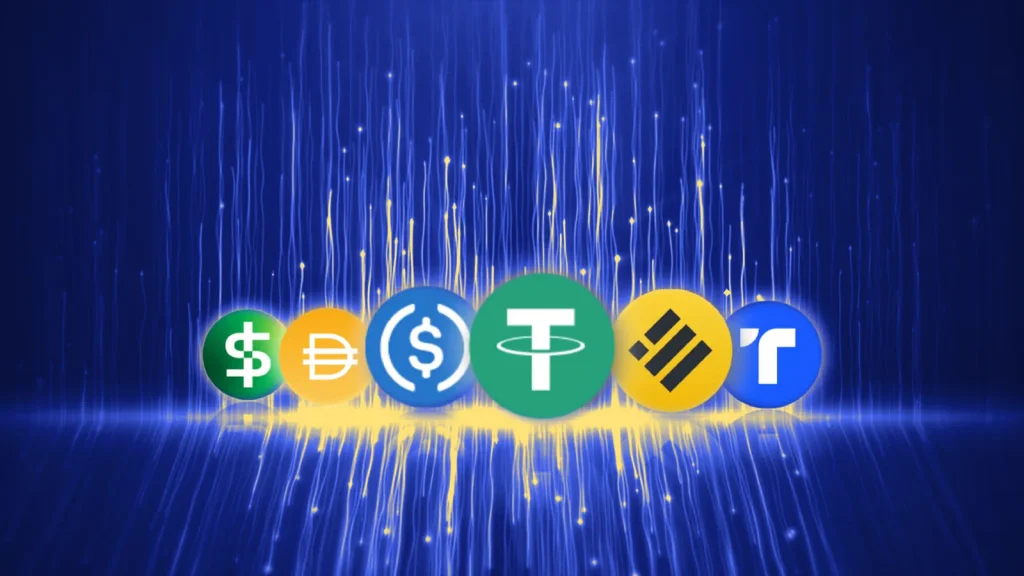
Stablecoins are digital assets designed to maintain a relatively stable value by referencing another asset, usually a national currency such as the US dollar. Their purpose is to combine the flexibility of digital currencies with the price stability associated with traditional money. Unlike Bitcoin, whose market price can rise or fall significantly within a short period, a dollar-pegged stablecoin aims to maintain a value close to one US dollar. This makes it useful for people and businesses that want to transfer, receive or hold digital value without being exposed to the same level of market volatility.
Two widely recognised examples are USDT, issued by Tether, and USDC, issued by Circle. Both are designed to maintain a one-to-one relationship with the US dollar, supported by reserve arrangements intended to back the tokens in circulation. These reserves may include cash, bank deposits and short-term government securities. The idea is that eligible holders can redeem their tokens for the corresponding value, although the process depends on the issuer’s terms, access requirements and ability to meet redemption requests. This is why reserve transparency and the financial strength of the issuer are important when assessing a stablecoin.
These tokens operate on blockchain networks. A blockchain is a shared digital record that allows transactions to be recorded and verified across a network of computers rather than depending on one central database. Each transaction is checked according to the network’s rules before it is added to the ledger, creating a record of how digital assets move between wallet addresses. Stablecoins can operate on different blockchains, which means users need compatible wallets and networks when sending or receiving them. Network fees and transaction confirmation times can also vary.
When someone sends a stablecoin, they authorise a transfer from their wallet to the recipient’s wallet address. The blockchain network processes and records the transaction, updating the balances associated with both addresses once the transfer is confirmed. The recipient can then hold the tokens, use them for another payment or exchange them for local currency through a supported service provider. This ability to move digital value between compatible wallets without relying on every stage of a traditional bank transfer is one of the reasons stablecoins are attracting attention in cross-border payments.
A Simple Breakdown
| Feature | What it means |
|---|---|
| Digital representation | Money is represented by a token on a blockchain |
| Price stability | The token aims to maintain a value linked to another asset |
| Blockchain settlement | Transfers are recorded and processed on a blockchain network |
| Wallet access | Users can hold and transfer tokens through compatible digital wallets |
| Redemption | Eligible holders can exchange tokens for the referenced currency through supported arrangements |
However, stablecoins should not be confused with money held directly in a traditional bank account. Although they are designed to maintain a stable value, their reliability depends on the issuer, the quality of the reserves backing them, and the arrangements available for redeeming them. Maintaining a one-to-one value with the US dollar does not eliminate financial risk. A stablecoin can lose its peg, face liquidity challenges or become difficult to redeem, particularly when confidence in its issuer or reserve assets is affected.
How Stablecoins Could Change International Payments

The potential of stablecoins becomes clearer when we look at how they move money across borders. Traditional international payments often involve several banks and financial institutions working together to process a transfer. When the sending and receiving banks do not have a direct relationship, intermediary or correspondent banks may be needed to move the funds between them. Each stage can introduce additional processing requirements, fees and delays before the recipient receives the money.
Stablecoins offer another way to approach this process. Instead of relying entirely on the traditional banking network, a sender can transfer a digital token directly to a compatible wallet address on a supported blockchain network. The network verifies and records the transaction, allowing the recipient to access the tokens once the required confirmations are completed. This can reduce the number of intermediaries involved in the actual transfer and allow transactions to take place outside conventional banking hours.
However, this does not mean the entire payment process happens instantly or without additional costs. The sender may need to convert local currency into a stablecoin before making the transfer, while the recipient may need to exchange the tokens for local currency to use the funds. These steps can involve cryptocurrency exchanges, banks, payment providers and identity verification procedures. The advantage is that the blockchain can simplify the movement of digital value, even though the services connecting it to traditional money are still necessary.
How a Stablecoin Cross-Border Transfer Works
Step by step
- The sender obtains stablecoins. The sender exchanges local currency or an existing balance for a supported stablecoin through a cryptocurrency exchange or payment provider.
- The recipient’s wallet address is entered. The sender provides the recipient’s compatible blockchain wallet address, which identifies where the tokens should be delivered. Choosing the correct network is important because sending assets through an incompatible network can result in lost funds.
- The transaction is submitted to the blockchain. The sender authorises the transfer, and the blockchain network verifies the transaction before recording it on its shared ledger. A network fee may apply, depending on the blockchain being used.
- The recipient receives the stablecoins. Once the transaction has been confirmed, the tokens appear in the recipient’s compatible wallet. The recipient can then verify the balance and access the transferred digital assets.
- The recipient uses or converts the funds. The stablecoins can be held, transferred to another wallet or exchanged for local currency through a supported exchange or payment provider.
Important: The blockchain transfer is only one part of the complete payment journey. Access to reliable exchanges, sufficient liquidity, local banking services and appropriate conversion options determines how easily recipients can turn stablecoins into money they can spend. These factors also influence the final cost and convenience of the transfer.dity and regulatory-compliant providers still matters.
The Numbers Behind the Growing Interest
Stablecoin adoption is attracting attention as blockchain activity continues to expand across international markets. However, the figures behind this growth need to be understood in context, particularly because not every transaction recorded on a blockchain represents an actual payment for goods, services or business activities.
A 2026 International Monetary Fund (IMF) paper on foreign currency stablecoins estimated that approximately 90% of stablecoin activity was cross-border in 2025. The study also found that gross cross-border flows involving USDT and USDC reached approximately $6.3 trillion during the year. These figures show how frequently dollar-linked digital assets are moving between wallets associated with different countries, with Europe, Asia and the Pacific accounting for some of the largest flows by value.
However, the $6.3 trillion figure does not mean that stablecoins processed that amount in purchases, remittances or business payments. Gross transaction flows measure the total value moved across wallets, meaning the same funds can be transferred several times and counted repeatedly. The IMF’s estimates also rely on identifying wallet locations and classifying transactions, which presents challenges because blockchain addresses do not automatically reveal the identity or country of residence of their owners.
This distinction is important when assessing the real economic impact of stablecoins. High transaction volume demonstrates activity across blockchain networks, but it does not necessarily show how much money is being used for everyday payments. To understand their role in international finance, we also need to examine the portion of that activity connected to actual payments and transfers.
Stablecoin Activity Versus Real Payment Activity
A McKinsey analysis conducted with Artemis Analytics estimated that actual stablecoin payments reached approximately $390 billion in 2025, based on annualised activity recorded in December. This provides a more realistic picture of how stablecoins are being used for payments, rather than simply measuring the total value of transactions moving across blockchain networks.
The analysis distinguished genuine payment activity from other transactions, including cryptocurrency trading, internal transfers between wallets and automated blockchain processes. These activities can contribute significantly to overall transaction volumes, even when they do not represent payments for goods, services or business obligations. This explains why the value of actual stablecoin payments is considerably smaller than the larger figures often reported for total on-chain activity.
| Measurement | What it tells us |
|---|---|
| Gross on-chain transaction volume | The total value recorded across blockchain transactions |
| Cross-border stablecoin flows | The value of stablecoin movements between locations or jurisdictions |
| Security | Transactions used to pay for goods, services, business obligations and other real-world purposes |
The distinction between these figures is important because it shows that, although stablecoins are already generating significant activity across blockchain networks, their adoption for everyday payments is still developing. While the technology has demonstrated its potential to move value across borders, wider adoption will depend on making these transactions more accessible, reliable and practical for individuals and businesses.
The opportunity is significant, but turning that potential into a widely adopted part of global payment infrastructure will require further development, stronger regulation and greater confidence from users and financial institutions.
Why Businesses Are Paying Attention
For businesses operating internationally, payment delays can affect much more than the time it takes to receive money. They can disrupt cash flow, delay supplier payments, complicate payroll and make it harder to manage funds across different markets. A company working with contractors in several countries, for example, may need to make payments in different currencies while ensuring that sufficient funds are available to meet its obligations. Stablecoins offer another way to move value between supported markets, potentially giving businesses greater flexibility when managing international payments and settlements.
1. Faster Settlement
Traditional cross-border transfers can involve several financial institutions, each operating under different banking hours and settlement schedules. Stablecoin transfers on supported blockchain networks can take place outside conventional banking hours, including weekends and public holidays, allowing businesses to move digital value without waiting for the next banking day. This can be particularly useful for companies working across different time zones or managing payments that need to be completed outside normal business hours. However, faster blockchain confirmation does not automatically mean the recipient can immediately access local currency, as conversion services, banking access and compliance checks can still affect when the funds become available.
2. More Flexible Liquidity Management
Liquidity refers to how easily a business can access and use its funds when financial obligations arise. Companies operating across several countries often maintain balances in different currencies and financial institutions to cover supplier payments, payroll and other operational expenses. Managing these funds across separate banking systems can create additional administrative work and make it harder to move money quickly when priorities change. Stablecoins may provide another way to hold and transfer dollar-linked value across supported blockchain networks, giving businesses already using digital assets more flexibility when managing certain payments and settlements.
3. Around-the-Clock Payments
Traditional financial institutions generally operate according to banking hours, local holidays and established settlement schedules, which can create delays when businesses need to move funds between countries. Public blockchain networks, on the other hand, generally operate continuously, allowing stablecoin transfers to be submitted and processed beyond conventional banking hours. This flexibility can benefit international companies that work with suppliers, employees and service providers across different time zones. Nevertheless, network congestion, service-provider restrictions and compliance procedures may still affect how quickly a transaction is completed and made available to the recipient.
4. Programmable Payments
Another important feature of blockchain infrastructure is programmability, which allows certain financial transactions to be controlled through predefined instructions. This is made possible through smart contracts, which are programs deployed on a blockchain that automatically execute specific actions when their conditions are met. For example, a business could arrange for a payment to be released once a delivery has been confirmed or the required approval has been received. Although this does not eliminate the need for legal agreements, accurate delivery information or human oversight, it creates opportunities to automate payment processes that would otherwise require several manual steps.
Where Stablecoin Adoption Is Taking Shape
Stablecoin adoption is developing differently across regions because countries have distinct financial systems, regulatory priorities and payment needs. While some markets are exploring their potential for remittances and international transfers, others are concentrating on institutional settlement, financial market integration and regulatory oversight. Developments across Africa, Asia and Europe help illustrate how stablecoins are becoming part of a wider discussion about the future of international money movement.
Africa: Remittances and Access to International Payments
Across parts of Africa, international transfers support millions of households and businesses, from families receiving money from relatives working abroad to small companies paying overseas suppliers or receiving funds from international customers. However, the cost of sending money across certain payment corridors remains a challenge. According to the World Bank’s Remittance Prices Worldwide database, the global average cost of sending $200 was 6.36% in the third quarter of 2025, with costs varying depending on the destination, service provider and payment method.
Stablecoins may offer an alternative route for transferring value, particularly in markets where reliable digital-asset service providers and local conversion options are available. Their ability to move across supported blockchain networks could help reduce some of the friction associated with traditional payment routes. However, lower blockchain transaction fees do not automatically translate into cheaper international transfers, as users may still pay for currency conversion, exchange services, withdrawals and other intermediaries. The wider opportunity is to improve access to affordable cross-border payments while ensuring that users have appropriate consumer protection and dependable ways to convert their funds.
Asia: Digital Payments and Business Settlement
Asia contains some of the world’s busiest commercial and financial corridors, with businesses regularly moving money between markets such as Singapore, Hong Kong, Japan and other regional economies. As international trade and digital financial services continue to develop, payment efficiency has become an important consideration for both businesses and financial institutions. This has encouraged several jurisdictions in the region to examine how stablecoins can operate within established financial systems while maintaining appropriate regulatory safeguards.
In Singapore, the Monetary Authority of Singapore (MAS) introduced its stablecoin regulatory framework to establish requirements for qualifying stablecoin issuers. The framework addresses important areas such as value stability, reserve assets, redemption and disclosure, helping establish clearer expectations for regulated stablecoin arrangements. Hong Kong has also developed its approach to stablecoin regulation through the Hong Kong Monetary Authority, while Japan has taken steps to establish a legal framework governing stablecoin issuance and distribution, including rules for electronic payment instruments outlined by the Japan Financial Services Agency. Together, these developments show that the region’s interest extends beyond using stablecoins for transfers to understanding how digital currencies can operate within regulated financial markets.
Europe: Regulation and Financial Market Integration
Europe presents another important part of the stablecoin conversation, particularly because of its focus on creating a consistent regulatory environment across its financial markets. The European Union introduced the Markets in Crypto-Assets Regulation, commonly known as MiCA, to establish rules for crypto-assets and the businesses operating within the sector. Its framework covers categories such as asset-referenced tokens and e-money tokens, setting requirements intended to provide greater clarity for issuers and crypto-asset service providers.
The European Banking Authority’s MiCA materials explain the regulatory requirements governing these categories of tokens. For cross-border payments, this clarity is important because businesses and financial institutions need to understand how digital assets can be issued, held, transferred and redeemed across different jurisdictions. Europe’s approach highlights a broader point: the future of stablecoins will not depend on technological development alone, but also on whether the infrastructure can operate within trusted legal and financial frameworks.
Are Traditional Financial Institutions Joining the Conversation?

For years, blockchain-based payments were largely discussed as an alternative to the traditional financial infrastructure used by banks and payment networks. However, that conversation is gradually changing as established financial institutions begin exploring how blockchain technology and digital assets can work alongside their existing systems. Rather than treating these developments as something separate from traditional finance, major industry players are beginning to examine how they could improve settlement processes, liquidity management and international payment operations.
Visa and Stablecoin Settlement
In April 2026, Visa announced an expansion of its global stablecoin settlement pilot, extending its support to additional blockchain networks. The company reported that the pilot supported nine blockchain networks and had reached a $7 billion annualised stablecoin settlement run rate, representing 50% growth compared with the previous quarter. This development demonstrates how an established payment network is exploring stablecoins as part of the infrastructure used to settle financial obligations between institutions.
To understand why this matters, it is important to distinguish settlement from the payment itself. Settlement is the process through which financial obligations are completed and funds are transferred between the parties involved. While a customer may initiate a card payment within seconds, the underlying financial institutions still need to complete the settlement process. Visa’s stablecoin initiatives therefore show how blockchain-based assets could support certain stages of financial transactions beyond their traditional use within cryptocurrency exchanges.
Mastercard’s Expansion into Stablecoin Payments
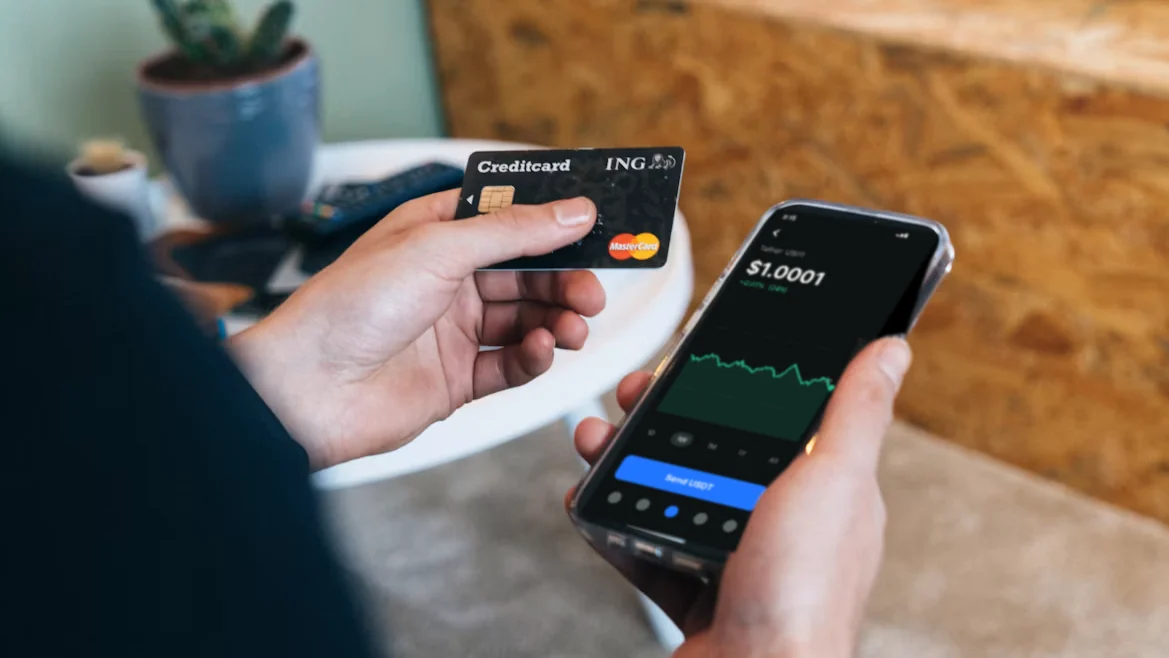
Mastercard has also announced expanded stablecoin settlement capabilities, reflecting growing interest in incorporating regulated digital assets into established payment infrastructure. Its developments point towards additional settlement options that can support financial transactions beyond conventional banking schedules. For large payment networks, the objective is not necessarily to replace every existing payment method, but to explore how stablecoins could improve settlement flexibility, support liquidity management and provide access to additional digital financial infrastructure.
SWIFT and the Development of Tokenised Deposits

Another important development comes from SWIFT, the global financial messaging network that banks use to exchange payment instructions and coordinate international transactions. In July 2026, SWIFT announced that its blockchain-based ledger was ready for initial use, with 17 banks from six continents preparing to participate in pilot transactions involving tokenised deposits. The initiative is intended to support round-the-clock cross-border payments while improving the movement of funds and liquidity between financial institutions.
However, tokenised deposits should not be confused with stablecoins, even though both use blockchain technology to represent digital value. A tokenised deposit represents money held as a deposit within a commercial bank, with the digital token reflecting a claim against that institution. A stablecoin, on the other hand, is issued under a separate arrangement and may be backed by reserve assets such as cash, bank deposits or short-term government securities, depending on its structure and regulatory framework.
This distinction is important because both approaches represent different ways of bringing money onto blockchain networks. As financial institutions continue exploring digital payment infrastructure, the international payments landscape may increasingly involve traditional bank deposits, tokenised deposits and regulated stablecoins operating alongside one another.
Traditional Bank Transfers Versus Stablecoin Transfers
Neither system is automatically better in every situation. Their usefulness depends on the payment corridor, the parties involved, the amount being transferred and the available infrastructure.
| Area | Traditional bank transfer | Stablecoin transfer |
|---|---|---|
| Infrastructure | Banking networks and correspondent institutions | Blockchain networks and compatible wallets |
| Operating hours | May depend on banking and settlement schedules | Blockchain networks generally operate continuously |
| Settlement | Can involve several institutions and stages | Can be recorded directly on a supported blockchain |
| Currency | Often uses bank-account currencies | Commonly uses tokens linked to currencies such as the US dollar |
| Access | Usually requires access to banking or payment services | Requires a compatible wallet and access to stablecoin services |
| Conversion | Banks and payment providers handle currency exchange | Exchanges and other service providers may be needed |
| Regulation | Established banking and payment rules | Depends on the token, issuer, jurisdiction and service provider |
The comparison shows that both payment methods have advantages, but neither is automatically faster or cheaper in every situation. Traditional bank transfers may remain more convenient when both parties have access to reliable banking services, while stablecoins can offer greater flexibility where compatible blockchain networks, sufficient liquidity and dependable conversion services are available.
Rather than viewing stablecoins as a complete replacement for traditional banking, it is more useful to consider where each system can deliver the greatest value in international payments.
The Hidden Costs Behind Stablecoin Transfers
One of the main arguments for stablecoins is their potential to reduce the cost of international payments by simplifying how money moves between countries. Blockchain networks can process transfers without relying on every intermediary involved in certain traditional payment routes, potentially reducing some of the fees and delays associated with cross-border transactions. However, this does not mean that sending stablecoins is entirely free or that the blockchain transaction fee represents the full cost of the payment.
Before a transfer is completed, users may need to convert their local currency into a stablecoin, purchase the tokens through an exchange or payment provider, and pay a network fee to move them to the recipient. The recipient may then need to sell the stablecoins and withdraw the proceeds into a local bank account. Each stage can introduce separate charges, exchange-rate differences or service fees, meaning the final cost depends on the entire payment process rather than the blockchain transfer alone.
Understanding the Full Payment Journey
| Stage | Possible cost |
|---|---|
| Local currency conversion | Currency conversion fee or exchange-rate spread |
| Stablecoin purchase | Trading fee or service-provider charge |
| Blockchain transfer | Network transaction fee |
| Stablecoin sale | Trading fee and exchange-rate spread |
| Local currency withdrawal | Withdrawal or banking fee |
This is sometimes described as the stablecoin payment sandwich: the blockchain transfer sits between the traditional financial services needed to enter and exit the system.
The IMF’s research on stablecoin payment costs examines the different stages involved in these transactions and why the full cost matters.
The lesson is simple: a cheap blockchain transaction does not automatically produce a cheap international payment.
For stablecoins to deliver meaningful savings, the entire process must become more efficient, including the services that connect blockchain networks to local currencies.
The Risks That Should Not Be Ignored
Although stablecoins offer new possibilities for international payments, their growing use also introduces risks that individuals, businesses and financial institutions need to understand. Their ability to move digital value across borders does not automatically guarantee financial stability, security or regulatory protection. From the assets backing each token to the networks used to transfer them, several factors can affect how reliable stablecoins are in practice.
1. The Stability of the Peg
Definition
PEG
A peg is a fixed value that links one currency or asset to another. For example, a dollar-pegged stablecoin aims to maintain a value of $1.
A stablecoin is designed to maintain a particular value, but that stability is not guaranteed under every market condition. Its ability to maintain the peg depends on factors such as the issuer’s reserves, available liquidity, redemption arrangements and the level of confidence users have in the system. When concerns arise about these arrangements, holders may begin selling their tokens or attempting to redeem them, potentially causing the stablecoin to trade below its intended value.
Worked example
Suppose you hold 1,000 USDC, each intended to be worth $1. During the March 2023 banking crisis, USDC temporarily fell below its dollar peg. If its market price dropped to $0.87, your 1,000 USDC would be worth $870 instead of $1,000.
- Original value: 1,000 × $1.00 = $1,000
- Value at $0.87: 1,000 × $0.87 = $870
- Difference: $1,000 − $870 = $130
This illustrates how concerns about the reserves backing a stablecoin can affect its market value, even when it is designed to maintain a $1 peg.
2. Reserve Transparency and Redemption
Another important consideration is whether stablecoin issuers hold sufficient and reliable assets to support the tokens in circulation. Users need access to clear information about the composition of these reserves, how frequently they are reported and whether the assets can be accessed when redemption requests arise. Without adequate transparency, it becomes more difficult for holders and institutions to assess the financial strength of an issuer.
Redemption is equally important because it determines how eligible holders can exchange their stablecoins for the currency they represent. If an issuer faces liquidity difficulties, imposes restrictions or cannot process redemptions as expected, confidence in the stablecoin may weaken. For businesses considering stablecoins for international payments, understanding the issuer’s reserve arrangements and redemption conditions is therefore essential.
3. Regulatory Differences
Stablecoin regulations are developing across different jurisdictions, but countries do not necessarily apply the same requirements to issuers, service providers and users. A stablecoin that operates under one regulatory framework may face additional restrictions or different compliance obligations when used in another market. These differences can create uncertainty for businesses that want to use the same payment infrastructure across multiple countries.
Regulatory clarity is particularly important for international payments because transactions often involve several jurisdictions, each with its own financial laws and compliance procedures. Businesses need to understand where a stablecoin can be issued, transferred, held and redeemed without creating unnecessary legal or operational risks. As adoption expands, greater coordination between regulators will be important in establishing consistent standards while maintaining appropriate financial oversight.
4. Illicit Financial Activity
Although transactions on public blockchains can be viewed and traced through digital records, this does not automatically reveal the real-world identities of the individuals or organisations behind every wallet address. This distinction creates challenges for financial monitoring, particularly when digital assets are transferred through multiple wallets, exchanges or jurisdictions. Criminal actors may attempt to exploit these systems for money laundering, sanctions evasion, fraud and other illicit financial activities.
To address these risks, regulated exchanges and digital-asset service providers are expected to apply appropriate identity verification, transaction monitoring and compliance procedures. These controls help identify suspicious activity and support investigations where necessary. The Financial Action Task Force guidance on virtual assets and virtual asset service providers explains the importance of applying risk-based measures to businesses operating within the digital-asset sector.
5. Wallet and Network Security
Stablecoin transactions also depend on the security of the wallets, applications and blockchain networks used to transfer and store digital assets. A transaction can be correctly processed by a blockchain and still result in a financial loss if the sender enters the wrong wallet address, interacts with a fraudulent platform or loses access to their private keys. Private keys are the cryptographic credentials that give users control over the digital assets held in their wallets, making their protection particularly important.
Unlike many conventional bank transfers, confirmed blockchain transactions may be difficult or impossible to reverse, especially when funds are sent to an incorrect address or an unauthorised recipient. Users therefore need to verify wallet addresses, understand the networks they are using and protect their account credentials against theft and phishing attacks. Reliable wallet security, user education and trustworthy service providers remain essential if stablecoins are to become a dependable option for international payments.
Myths and Facts About Stablecoins and International Payments
Myth vs fact
Stablecoins are completely risk-free because their value is pegged to a currency.
Their stability depends on reserves, redemption arrangements and market confidence.
Every stablecoin transaction represents a real payment.
On-chain activity also includes trading, internal transfers and automated processes.
Blockchain transfers are always free.
Network fees and other service charges may apply.
Stablecoins have already replaced international banking.
They are developing alongside traditional payment infrastructure.
A transaction confirmed on-chain means the recipient has local cash.
The recipient may still need a reliable conversion and withdrawal service.
Sources: International Monetary Fund – Foreign Currency Stablecoins; McKinsey and Artemis Analytics – Stablecoins in Payments; Financial Action Task Force – Virtual Assets Guidance. Checked November 15, 2026.
Understanding these differences is important because the discussion around stablecoins can sometimes move faster than the actual development of the payment infrastructure.
What Could the Future of Cross-Border Payments Look Like?

The future of international payments may not involve one system completely replacing another. Instead, traditional banks, established payment networks, blockchain infrastructure, tokenised deposits and regulated stablecoins could operate alongside one another, each serving different needs within the financial system. A business might continue using conventional banking services for certain transactions while relying on stablecoins for other payments or tokenised deposits for specific institutional settlement arrangements. For this to work effectively, however, these different systems will need to communicate and transfer value without unnecessary complications.
This brings interoperability into the conversation. Interoperability refers to the ability of different networks and financial systems to exchange information and transfer value while working together effectively. It will become increasingly important as businesses and financial institutions operate across multiple blockchains, currencies and regulatory environments. Without reliable connections between these systems, the benefits of digital payment infrastructure could remain limited to individual networks rather than supporting a more connected international financial system.
Three Developments Worth Watching
1. Greater Regulatory Clarity
Clearer regulations will play an important role in determining how stablecoins develop within international finance. Financial institutions and businesses need to understand the requirements for issuing, backing, distributing and redeeming these digital assets, particularly when transactions involve multiple jurisdictions. Regulatory developments in Europe, Singapore, Hong Kong and Japan demonstrate how different governments are establishing frameworks to address these requirements while providing greater clarity for market participants.
2. Better Connections Between Traditional Finance and Blockchain Networks
Another important development is the growing effort to connect established financial infrastructure with blockchain-based systems. Initiatives from Visa, Mastercard and SWIFT show that traditional financial institutions are exploring how digital assets and blockchain settlement can support existing payment arrangements. As these developments progress, the focus will be on making different systems work together securely and efficiently rather than creating completely separate financial networks.
3. More Practical Payment Applications
The next stage of stablecoin adoption will depend on whether the technology can consistently address real payment challenges. Business-to-business transactions, international remittances, supplier settlements and corporate treasury operations are important areas to watch because they involve regular movement of funds across different markets. Wider adoption will require reliable service providers, sufficient liquidity, accessible conversion options and regulatory arrangements that allow businesses and individuals to use these services with confidence.
Ultimately, stablecoins do not need to replace every part of the existing financial system to become useful. Their long-term value will depend on whether they can make specific financial activities more efficient, reliable and accessible while working alongside the infrastructure that already supports global commerce.
Final Thoughts
Stablecoins and cross-border payments are part of a much bigger conversation about how money moves in an increasingly connected world. For years, international transfers have relied on financial infrastructure that can be expensive, time-consuming or difficult to navigate across certain payment corridors. Blockchain technology introduces another way to move digital value, while stablecoins provide a form of digital money designed to maintain a relatively stable price. Together, they offer an alternative approach to certain parts of the international payment process.
The progress from early payment experiments to institutional settlement initiatives is worth paying attention to, particularly as established financial institutions begin exploring how blockchain technology can support their operations. However, the difference between headline transaction volumes and genuine payment activity reminds us that adoption needs to be measured carefully. Significant movement across blockchain networks does not automatically mean that stablecoins have become a mainstream method for paying suppliers, sending remittances or settling international business transactions.
Important challenges also remain, including regulatory differences, reserve transparency, redemption arrangements, wallet security and access to local currencies. These issues cannot be resolved simply by making blockchain networks faster or increasing transaction capacity. The wider payment infrastructure must also provide reliable ways for people and businesses to convert, receive and use their funds across different markets.
What matters most is whether stablecoins can improve the experience of individuals and businesses that need to move money internationally. The future of cross-border payments may not belong to stablecoins or traditional banking alone. It may belong to an interconnected financial infrastructure that brings the strengths of both together, making global money movement more efficient, reliable and accessible.
Frequently asked questions
What are stablecoins?
Stablecoins are digital assets designed to maintain a relatively stable value by being linked to another asset, usually a traditional currency such as the US dollar.
How do stablecoins support cross-border payments?
Stablecoins allow people and businesses to transfer digital value across blockchain networks without relying entirely on traditional banking intermediaries. This can make international transfers faster and more accessible.
Are stablecoin transfers cheaper than traditional international payments?
They can be cheaper, but the total cost depends on network fees, exchange rates, conversion charges and the platforms used to send and receive the funds.
Are stablecoins completely risk-free?
No. Stablecoins carry risks, including losing their peg, problems with reserve backing, regulatory uncertainty, security vulnerabilities and difficulties converting them into traditional currencies.
Can stablecoins replace traditional cross-border payment systems?
Stablecoins could become an important part of international payments, but they are not yet a complete replacement for traditional systems. Their wider adoption will depend on regulation, trust, infrastructure and integration with existing financial institutions.

I’m a Product Designer, Web3 enthusiast, and technology writer passionate about exploring how emerging technologies are shaping our digital future.
My interests span blockchain technology, cryptocurrency, decentralisation, digital privacy and product innovation. Beyond following developments in the Web3 ecosystem, I enjoy researching complex technical concepts and breaking them down into simple, relatable explanations that anyone can understand, regardless of their technical background.
As a writer, my goal is to educate, share perspectives, simplify ideas and help more people discover the opportunities behind emerging technologies.
I believe technology becomes more powerful when people understand it, and I’m passionate about making that understanding accessible to everyone.