
Fruit fly Bitcoin mining reached a browser demonstration in September 2026, when hardware maker FutureBit presented HashFly, a program which simulates a digital model of an adult male fruit fly brain to run SHA-256 calculations. A second project, FlyMiner, uses a larger neural map to control a standard mining program.
Both experiments run on conventional computers and fall far short of the hash rate and difficulty required by commercial Bitcoin mining operations.
FutureBit supports the experiment with an efficiency projection of 1 watt per terahash, a figure which would place neuron-based hardware well ahead of current silicon chips if living tissue ever performed the work.
How HashFly Simulates Fruit Fly Neurons for SHA-256
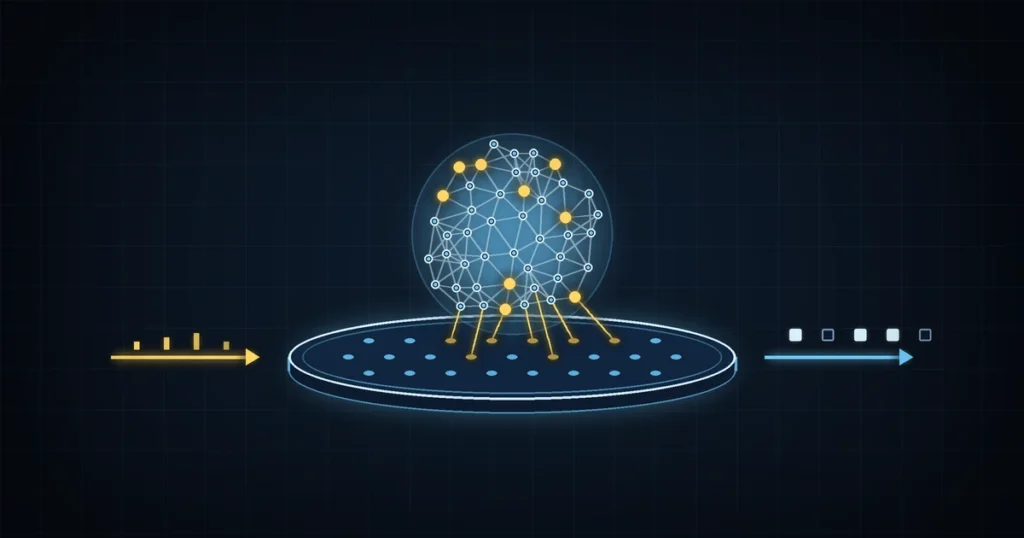
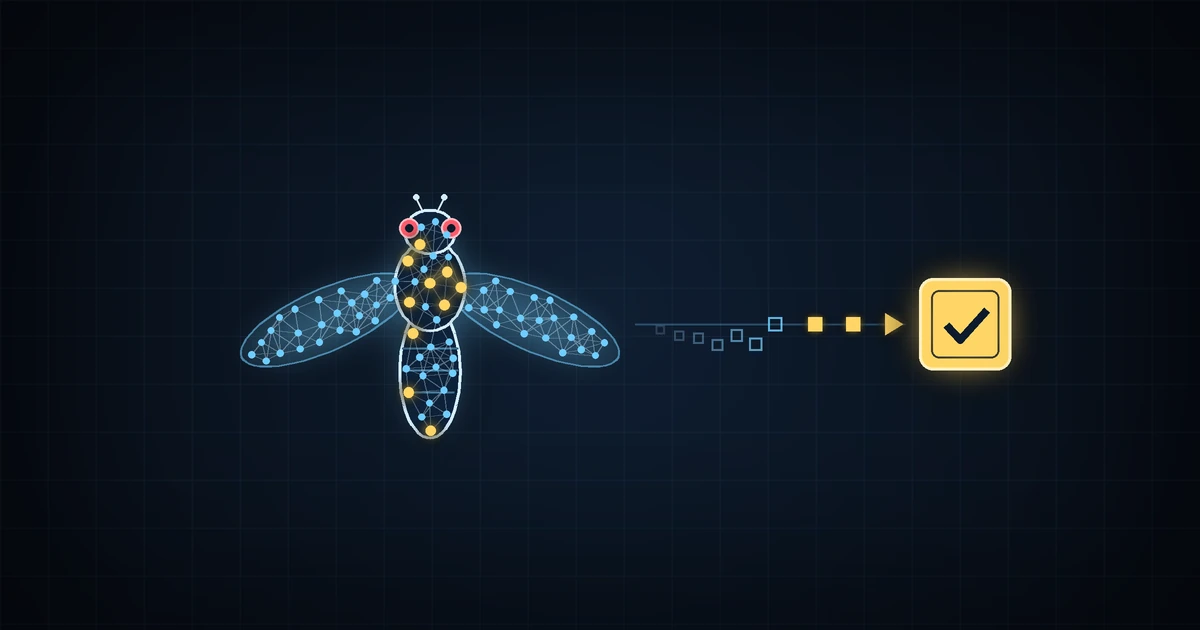
HashFly runs in a web browser and simulates activity across 2,914 neural pathways taken from MaleCNS v1.0, a digital wiring diagram of the brain and central nerve cord of an adult male fruit fly.
FutureBit announced the demonstration on X on September 13, 2026, and called it the first organic neuron Bitcoin miner based on a fly brain, although the program simulates the neurons in software.
Bitcoin miners compete to add transaction blocks by running SHA-256 calculations repeatedly, and hash rate counts the attempts completed per second. Each attempt hashes a block header with a different nonce, and the network accepts a result only when the hash falls below the current difficulty target.
HashFly lets users adjust the target and operates at a fraction of Bitcoin’s current mining difficulty, so its output cannot compete with network requirements.
FutureBit says it is working to simulate every neuron in the MaleCNS dataset with SHA-256 and plans to publish its findings. The full simulation will show how many hashes per second a connectome-based fruit fly Bitcoin mining design reaches on conventional hardware.
The browser format lets any visitor run a fruit fly Bitcoin mining simulation without mining firmware or dedicated hardware, and the adjustable target gives users control over how difficult a valid hash is to find.
FlyMiner Connects a Connectome to CKPool Solo Mining
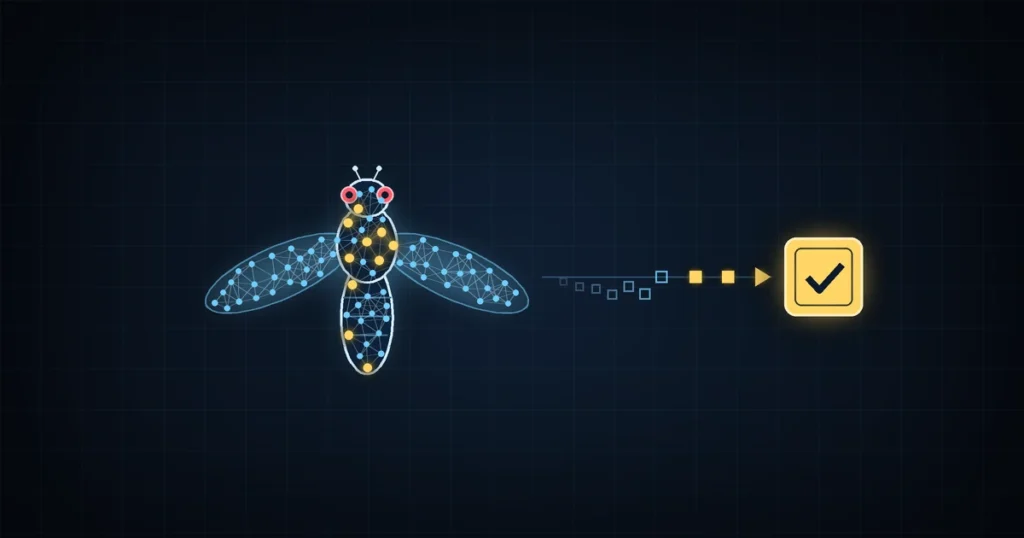
FlyMiner uses a digital map of 139,255 fruit fly neurons and 16.8 million connections to control a standard Bitcoin mining program instead of replacing the hashing routine.
When simulated signals from the movement-control neurons reach a set threshold, the program tests possible solutions to a mining problem supplied by CKPool.
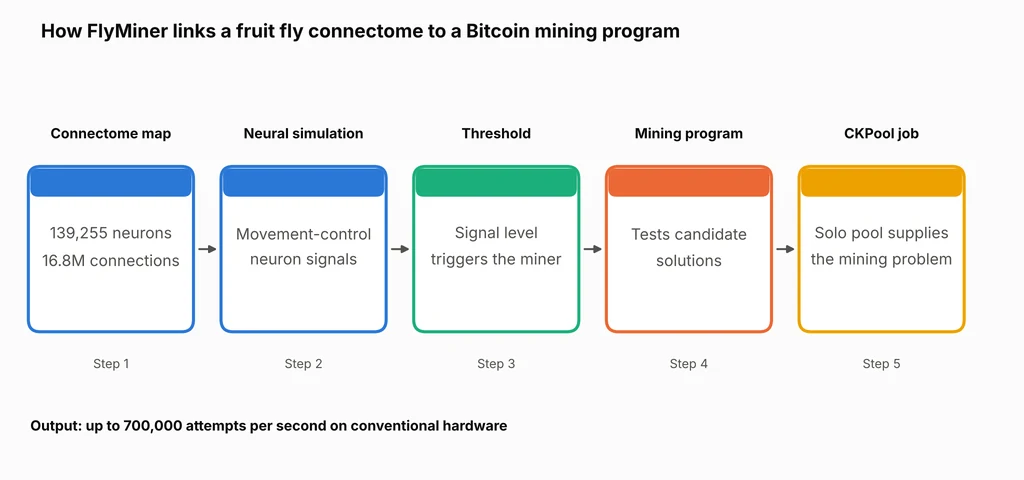
CKPool operates as a solo mining pool, a service in which a miner receives a block template and keeps the block reward only if one of its own hashes solves the block. FlyMiner tests solutions at speeds of up to 700,000 attempts per second, a rate equal to 0.7 megahashes per second.
FutureBit’s five-inch Apollo III ASIC miner reaches 18 terahashes per second, about 25.7 million times the speed of FlyMiner, while FlyMiner runs 875,000 times faster than the 1989 Game Boy miner built in 2021, which reached about 0.8 hashes per second.
| Project or device | What runs the hashing | Speed | Reported in |
|---|---|---|---|
| Game Boy miner | 1989 Nintendo Game Boy converted into a miner | About 0.8 H/s | March 2021 |
| FlyMiner | Standard mining program triggered by 139,255 simulated fruit fly neurons | Up to 700,000 H/s | September 2026 |
| HashFly | Browser simulation of 2,914 neural pathways from MaleCNS v1.0 | Not reported | September 2026 |
| Apollo III ASIC | Five-inch FutureBit ASIC miner | 18 TH/s | September 2026 |
Solo mining pays only when a single hash solves a full block, so a fruit fly Bitcoin mining setup running at 700,000 attempts per second has a negligible chance of earning a reward against a network hash rate far above any individual ASIC.
FutureBit’s Efficiency Claim Compared With 3nm ASIC Miners
FutureBit stated on X an efficiency of about 1 watt per terahash for a system built on real organic neurons, roughly 10 times the efficiency of the best silicon 3-nanometer ASICs.
The estimate applies a fruit fly’s total power consumption to a hypothetical system in which every neuron mines Bitcoin continuously, which yields one trillion calculations per second at about one watt of electricity.
Mining efficiency appears as joules per terahash (J/TH), the energy a machine uses for every trillion SHA-256 hashes, so one watt per terahash equals one joule per terahash, or one picojoule per hash.
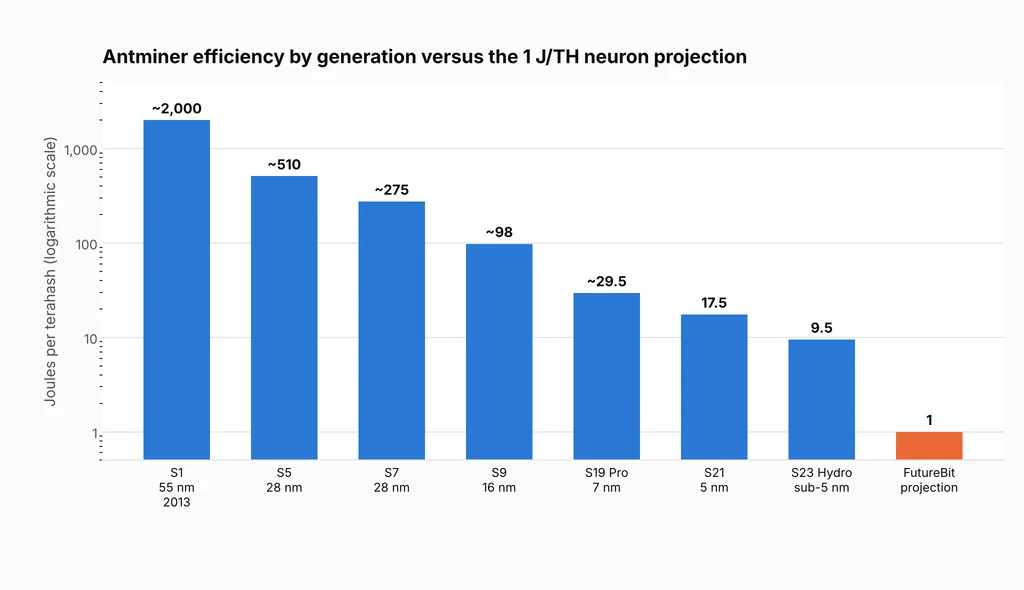
Spark’s hardware comparison lists the Antminer S9 at about 98 J/TH on a 16-nanometer process, the S19 Pro at about 29.5 J/TH, the S21 at 17.5 J/TH and the water-cooled Antminer S23 Hydro at 9.5 J/TH.
Efficiency improved about 210 times between the 2013 Antminer S1, rated near 2,000 J/TH, and the S23 Hydro, yet each full process node has delivered gains of 30% to 50%, and gains slow at advanced nodes.
A 1 J/TH machine would cut the energy draw of an 18 TH/s workload from roughly 171 watts at 9.5 J/TH to 18 watts, a tenfold change which lithography alone does not deliver.
Myth vs fact
Fruit fly Bitcoin mining already beats ASIC miners in efficiency.
The 1 watt per terahash figure is a projection built on a fruit fly’s total power consumption, and both experiments run simulated neurons on conventional hardware at a hash rate far below the Bitcoin network’s requirements.
Earlier Unconventional Bitcoin Mining Experiments
The fruit fly Bitcoin mining projects follow a series of unconventional mining experiments, each of which tested a different limit of the mining process: processor speed, heat waste and energy sourcing.
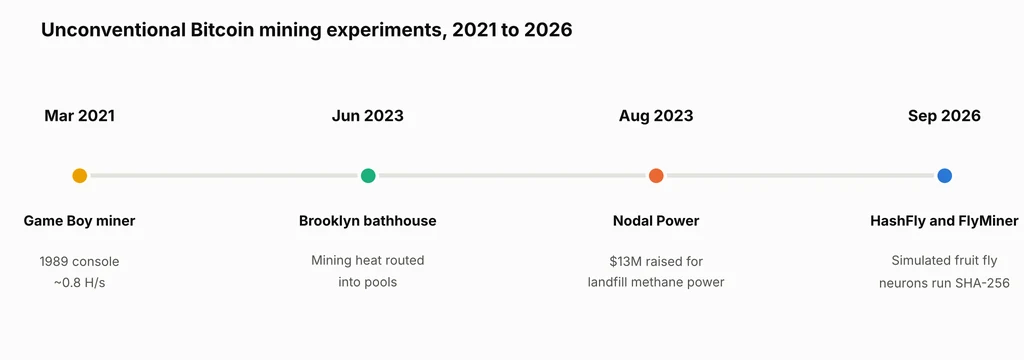
In March 2021, an IT security researcher converted a 1989 Nintendo Game Boy into a miner producing about 0.8 hashes per second, a speed far below any rate able to solve a Bitcoin block.
A Brooklyn bathhouse said in June 2023 it was routing heat from mining equipment into its pools, which treats waste heat as a usable output instead of a cost.
Utah-based Nodal Power raised $13 million in August 2023 to expand facilities which generate electricity from landfill methane and use some of the power to mine Bitcoin.
What Neuron-Based Mining Tests Show About Hardware Limits
Bitcoin recalculates mining difficulty every 2,016 blocks to keep block times near 10 minutes, so the combined hash rate of ASIC fleets sets the bar for any new hardware, biological or simulated.
HashFly runs at a reduced difficulty to stay within reach of a browser, while FlyMiner delegates the hashing to a conventional program and uses neurons only for control.
Biological fruit fly Bitcoin mining hardware would face constraints absent from silicon, because the 1 watt estimate counts only a fly’s own power consumption and omits the equipment needed to keep tissue alive, including nutrient supply and temperature control.
Fruit fly Bitcoin mining experiments test computing media rather than market competitiveness: HashFly examines whether a connectome can carry out SHA-256 logic, and FlyMiner examines whether neural signals can steer a conventional miner.
FutureBit’s pending SHA-256 simulation of the full MaleCNS dataset will supply the first measured data on the approach. Until the data arrives, the 1 watt per terahash figure for fruit fly Bitcoin mining stays a hypothesis, and ASIC makers hold the lead in joules per terahash.
FAQ
Can a fruit fly brain mine Bitcoin?
No. HashFly and FlyMiner simulate fruit fly neurons in software on conventional computers, and neither reaches the hash rate or difficulty of the Bitcoin network.
What is HashFly?
HashFly is a FutureBit browser demonstration that simulates 2,914 neural pathways from the MaleCNS v1.0 fruit fly dataset to run SHA-256 calculations at an adjustable target.
How fast is FlyMiner?
FlyMiner tests up to 700,000 attempts per second, equal to 0.7 megahashes per second, while FutureBit’s Apollo III ASIC miner reaches 18 terahashes per second.
What does 1 watt per terahash mean?
One watt per terahash equals one joule per terahash, or one picojoule per hash. The Antminer S23 Hydro lists 9.5 J/TH, so the projection implies a tenfold gain if living neurons ever reach the figure.
What does CKPool do in FlyMiner?
CKPool is a solo mining pool supplying the mining problem FlyMiner tests, and a solo miner earns a reward only when one of its own hashes solves a block.

Isai Alexei is a journalist and financial analyst covering cryptocurrency markets and traditional securities for Blockchaindose. He has spent ten years analyzing digital assets, trading activity, and market structure.