
Stablecoins have become a cornerstone of the crypto market, offering a way to hold and move dollar-linked value on the blockchain. Yet most traditional stablecoins keep the income earned on their reserves rather than passing it on to holders. Yield-bearing stablecoins change this by letting users earn returns through savings mechanisms, lending, tokenized financial assets, or trading strategies.
Key takeaways
- Yield-bearing stablecoins earn returns from Treasury bills, DeFi lending, derivatives strategies or protocol savings rates, and each source carries its own risks, from smart contract flaws to liquidity and counterparty exposure.
- The source of yield determines the risk: Treasury-backed tokens differ greatly from those relying on funding rates or lending demand.
- Headline APY is variable and can change with market conditions, so it should never be treated as a guaranteed return.
- A price near $1 does not guarantee instant redemption, so check reserves, audits and redemption terms before investing.
What Are Yield-Bearing Stablecoins?
Definition
A yield-bearing stablecoin is a blockchain-based token designed to track the value of a fiat currency, usually the US dollar, while giving holders access to income from an underlying asset, lending activity, protocol revenue, or financial strategy.
Yield-bearing stablecoins add an income layer to the dollar-linked value that conventional stablecoins provide. Tokens like USDC and USDT work much like digital cash: they hold their value, but they earn nothing while they sit in your wallet, and any interest on the reserves stays with the issuer. A yield-bearing stablecoin changes this by giving holders a way to share in the returns. Depending on the product, your token balance may grow over time, or your balance may stay the same while each token becomes redeemable for a larger amount of the underlying asset.
This is also different from depositing an ordinary stablecoin into a lending platform. In that case, you earn through a separate service, whereas a yield-bearing stablecoin is itself your claim on the income-generating structure. Because of this, two products that look similar can differ in legal classification, redemption rights and risk. Some behave like stablecoins, while others, such as tokenized Treasury products, function more like financial instruments that happen to be dollar-linked. Looking at how a product is actually structured, rather than how it is marketed, is therefore the first step in understanding what you are holding.
How Do Yield-Bearing Stablecoins Generate Returns?
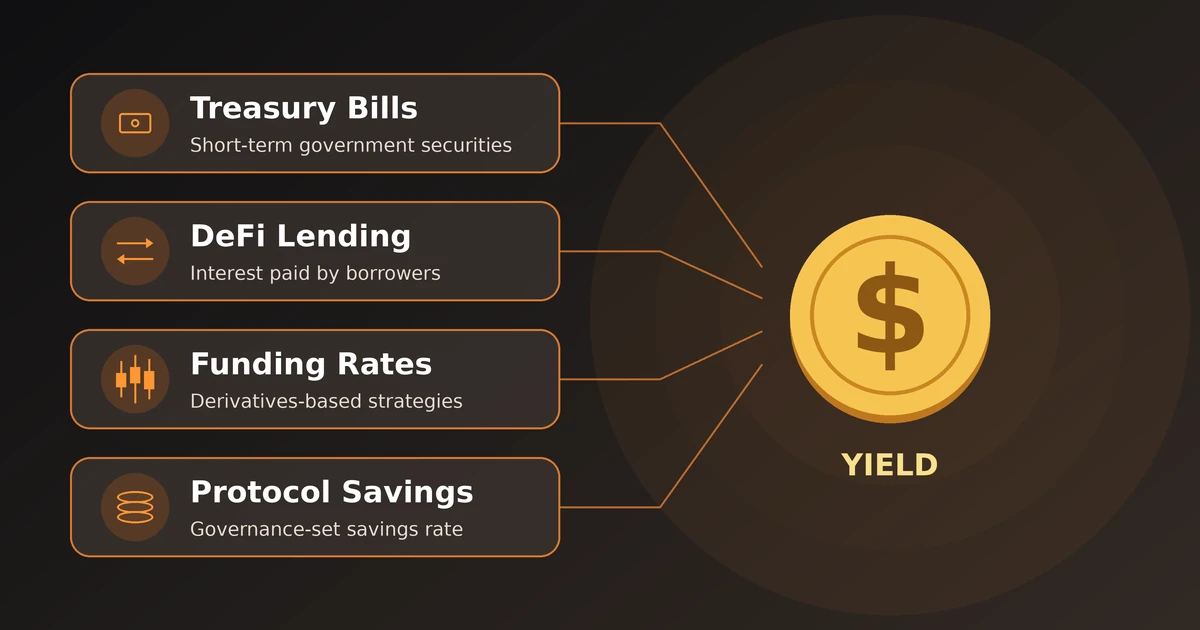
The returns offered by these products do not come from a single source. Their sustainability depends on the economic activity, assets or strategies generating the income.
Revenue From Treasury Bills and Real-World Assets
One approach involves investing in short-term government securities, particularly US Treasury bills. These instruments generate interest, which can support returns distributed to token holders.
Tokenized real-world asset products bring this model onto blockchain networks. Their underlying investments remain connected to traditional financial markets, while blockchain tokens represent the relevant economic exposure under the product’s legal structure.
Ondo’s USDY is an example. Its official product information identifies short-term US Treasuries and bank deposits as underlying assets. The token is structured to provide yield-bearing exposure, rather than operating exactly like a conventional dollar-backed payment stablecoin.
This model connects blockchain-based financial products with traditional income-generating assets. However, it does not remove risks associated with asset management, custody, legal arrangements or redemption conditions.
Yield From DeFi Lending and Borrowing
Another source of income is decentralized lending. Users supply assets to lending protocols, where borrowers pay interest to access available liquidity.
A yield-bearing product can use this activity to generate returns for holders. The amount earned generally depends on borrowing demand, available liquidity and the protocol’s interest-rate mechanism.
When borrowing activity increases, lending rates may rise. When demand weakens, returns can decline. This means the income is variable rather than a guaranteed payment.
There is also a distinction between lending yield and token incentives. Some platforms distribute additional tokens to attract deposits. Although these incentives can increase the advertised return, their market value may fluctuate and they may not represent sustainable income from actual borrowing activity.
Staking Rewards and Derivatives Funding Rates
Some products generate returns through cryptocurrency-related strategies. Ethena’s USDe and its staked version, sUSDe, provide an example of a synthetic dollar model connected to crypto collateral and hedging strategies.
Ethena’s documentation describes several sources of protocol revenue, including staking rewards from certain backing assets, perpetual futures funding rates or futures basis, and rewards from liquid stable assets.
In simplified terms, a derivatives strategy can hold an underlying asset while using short positions to reduce exposure to its price movements. Depending on market conditions, the derivatives positions may generate funding payments or basis income.
However, these returns are not guaranteed. Funding rates can change direction, trading venues can experience stress, and the strategy depends on effective collateral management and counterparties.
Protocol Revenue and Savings Mechanisms
Some protocols distribute a portion of their revenue through governance-controlled savings mechanisms.
Sky’s sUSDS is an example. Users supply USDS to access the Sky Savings Rate and receive sUSDS. The number of sUSDS tokens held can remain unchanged while each token becomes redeemable for a greater amount of USDS as the savings rate accrues.
Sky explains that the savings rate is variable, set through governance and funded by aggregate protocol surplus. It can change over time depending on governance decisions and protocol finances.
This structure demonstrates why investors should understand how returns are calculated instead of assuming every product earns interest from the same underlying assets.
How Do Yield-Bearing Stablecoins Work in Practice?
Although individual products use different mechanisms, the general process involves supplying assets, receiving a corresponding token and allowing the underlying income mechanism to generate returns.
Step by step
- Supply the required asset: The user deposits an eligible stablecoin or another accepted asset into the relevant protocol.
- Receive the yield-bearing token: The protocol issues or transfers a token representing the user’s position.
- Allow returns to accumulate: Income is generated through the product’s underlying strategy or savings mechanism.
- Track the position: The holder monitors the token’s value, exchange rate or balance to understand accumulated returns.
- Redeem or transfer: Depending on the product’s conditions, the holder may exchange the token for the underlying asset or transfer it to another supported wallet.
The exact process depends on the protocol. Some products require users to hold a separate receipt token, while others automatically reflect accumulated income through the token’s exchange value.
Rebasing Tokens vs. Value-Appreciating Tokens
Yield-bearing products generally use different methods to reflect returns.
With a rebasing structure, the number of tokens in a wallet can increase as rewards accumulate. The token’s unit price may remain relatively stable, depending on the design.
With a value-appreciating structure, the token balance remains unchanged while each token represents a growing claim on the underlying asset. Sky’s sUSDS follows this general approach.
Neither structure automatically makes a product safer or more profitable. Investors should understand how the token’s accounting works, particularly when using it as collateral or transferring it between decentralized applications.
Major Yield-Bearing Stablecoin Projects and Their Models
Several projects demonstrate how different mechanisms can support yield-bearing digital assets. Their similarities should not hide the differences in their underlying financial arrangements.
Sky’s sUSDS
Sky’s sUSDS provides access to the Sky Savings Rate through a value-accruing token. Users supply USDS and receive sUSDS, with the redemption value increasing as the savings rate accrues.
According to Sky’s documentation, the rate is determined through governance and funded by aggregate protocol surplus. It is variable and can be adjusted or removed. Holding sUSDS therefore does not mean receiving a permanently fixed interest rate.
Ethena’s sUSDe
Ethena uses a different approach. USDe is a synthetic dollar, while sUSDe represents its staked version and provides access to the protocol’s applicable rewards.
The strategy involves backing assets and offsetting derivatives positions. Staking rewards and derivatives-related income can contribute to the returns, but market conditions influence the results.
This makes sUSDe particularly important to evaluate from a risk perspective. Derivatives exposure, exchange counterparties, custody arrangements and changes in funding rates can affect the strategy.
Ondo’s USDY
USDY offers another model based on traditional financial assets. Ondo identifies short-term US Treasuries and bank deposits as the underlying assets supporting the product.
Its structure provides eligible holders with tokenized exposure to yield generated by these assets. However, access is subject to eligibility requirements and legal conditions. Ondo’s documentation identifies non-US individuals and organizations as eligible categories, subject to its applicable requirements.
USDY is therefore better understood as a tokenized yield-bearing financial product rather than simply another conventional payment stablecoin.
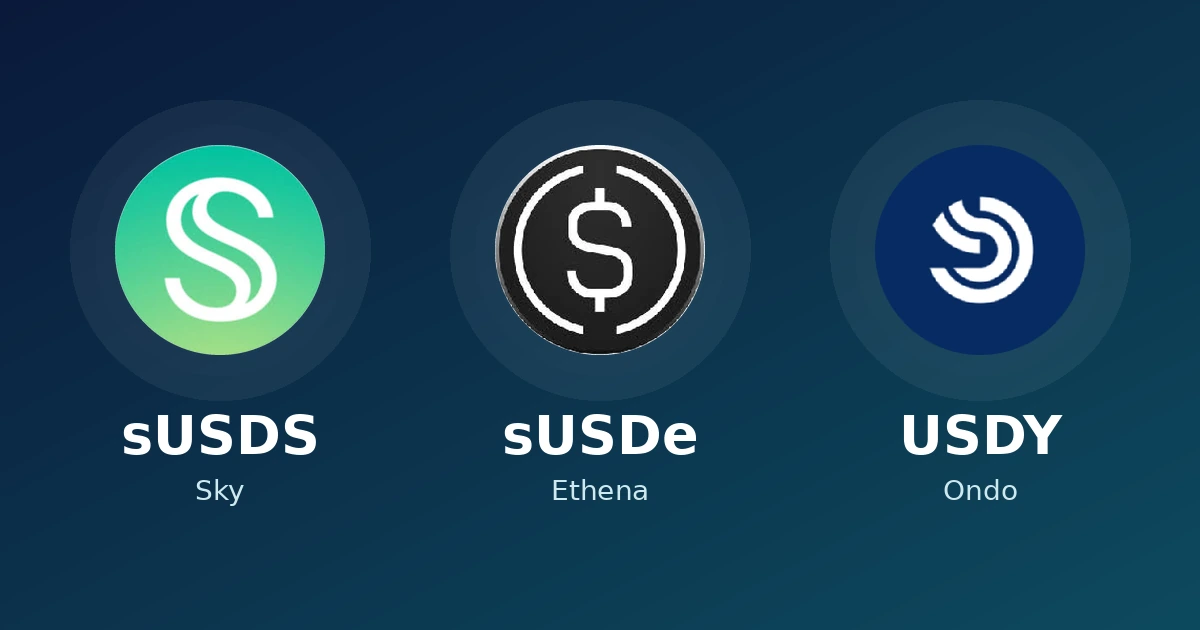
Yeild Rate Comparison
Rates checked: November 23, 2026
| Token | Yield (APY) | Yield mechanism |
|---|---|---|
| sUSDS | 3.80% | Sky Savings Rate |
| sUSDe | 4.91% | Staking rewards and protocol revenue |
| USDY | 3.75% | Short-term U.S. Treasury and bank deposit income |
Sources: Sky savings rate data, Ethena sUSDe yield snapshot, and Ondo Finance USDY official page.
Comparison Table
| Product | Main Yeild Mechanism | Important Consideration |
| Sky sUSDS | Sky Savings Rate and protocol surplus | Governance-controlled variable rate |
| Ethena sUSDe | Staking rewards and derivatives-related income | Funding rates and counterparty exposure |
| Ondo USDY | Short-term US Treasuries and bank deposits | Eligibility and legal redemption conditions |
What Risks Do Yield-Bearing Stablecoins Carry?
Risk notice
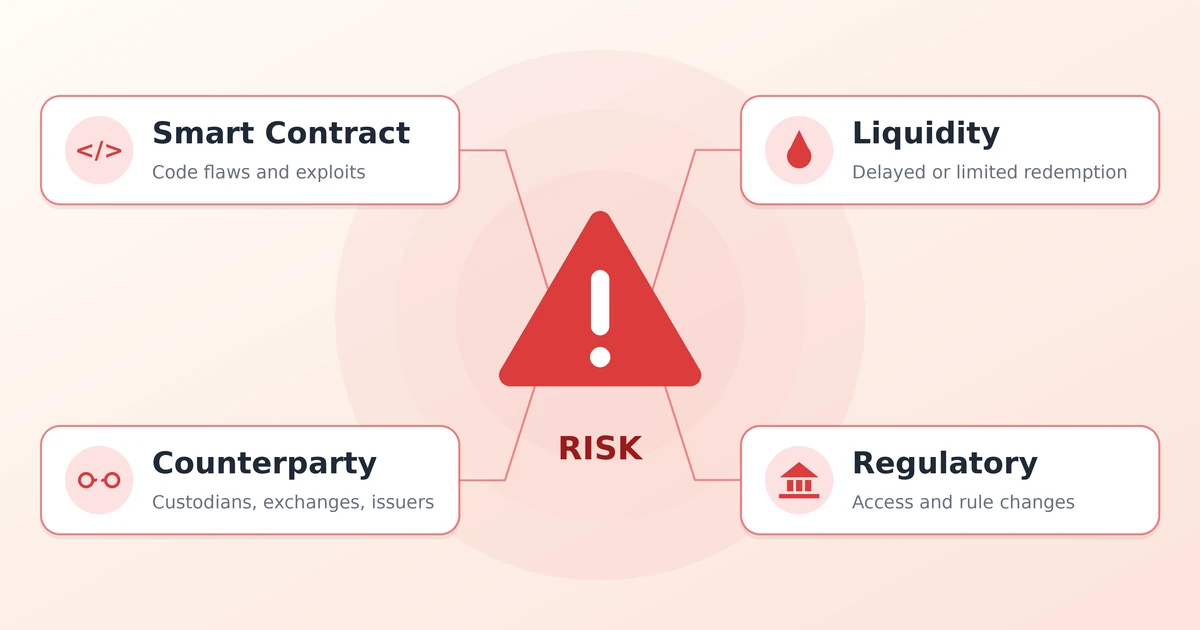
Yield-bearing stablecoins are not risk-free savings accounts. Their returns depend on underlying assets, financial strategies and protocol operations. Investors may experience losses, reduced liquidity or difficulties redeeming their positions, even when a product is designed to maintain dollar-linked value.
Smart Contract and Protocol Risk
Decentralized products rely on smart contracts to manage deposits, transfers, collateral and withdrawals. A vulnerability or coding error can expose user funds to theft or unexpected losses.
Even audited contracts are not guaranteed to be secure. Protocol upgrades, governance decisions and integrations with other applications can introduce additional risks.
Liquidity and Redemption Risk
A product may display a stable value without guaranteeing immediate access to cash under every market condition.
Treasury-backed products may depend on redemption processes, settlement periods and eligibility requirements. DeFi products can also experience liquidity shortages when many users attempt to withdraw simultaneously.
The International Monetary Fund’s 2026 research on stablecoin stability discusses how large-scale redemption pressure can create runs and place pressure on an issuer’s ability to meet withdrawals. Similar liquidity concerns matter when evaluating yield-bearing products, although their specific redemption arrangements differ.
Collateral and Counterparty Risk
Some yield strategies depend on custodians, exchanges, asset managers, borrowers or financial institutions. If one of these parties fails to meet its obligations, the product may suffer losses.
For derivatives-based models, adverse funding conditions and problems at trading venues can affect the strategy. For tokenized financial products, custody arrangements and the legal structure connecting tokens to underlying assets are important considerations.
Regulatory and Centralization Risks
Regulations can affect how yield-bearing products are issued, distributed and accessed. Certain products may be unavailable to users in particular jurisdictions or may require identity verification.
Governance also matters. A protocol may be decentralized in some operations while important decisions, such as changing a savings rate or risk parameters, remain dependent on governance participants.
The Financial Stability Board has emphasized the importance of transparent disclosures, clear redemption rights, effective stabilization arrangements and appropriate risk management for global stablecoin arrangements.
Are Yield-Bearing Stablecoins Better Than Traditional Stablecoins?
The answer depends on what users want from their digital assets.
What do Traditional Stablecoins Offer To The Users
Traditional stablecoins such as USDT and USDC are primarily designed for payments, trading, transfers and holding dollar-linked value. Their simplicity can make them useful when immediate liquidity and straightforward transfers are the main priorities.
What do Yield Bearing Stablecoins Offer To The Users
Yield-bearing products offer an additional potential benefit: access to income without necessarily leaving the blockchain ecosystem. They may be useful for users who want their holdings to participate in savings mechanisms, lending markets or tokenized financial products.
However, additional income comes with additional considerations. A product relying on derivatives does not have the same risk profile as one backed by short-term government securities. Similarly, a governance-controlled savings rate is different from interest earned directly from borrowers.
The most appropriate choice therefore depends on the investor’s risk tolerance, liquidity requirements, access restrictions and understanding of the underlying mechanism.
What Should Investors Check Before Holding Them?
Before purchasing a yield-bearing stablecoin, investors should examine more than its advertised return.
Verify the Source of Yield
Find out whether the income comes from Treasury securities, lending interest, staking rewards, derivatives funding rates or protocol revenue. If a project cannot clearly explain its yield mechanism, that is a reason to investigate further.
Examine Reserves, Audits and Redemption Terms
Review reserve disclosures, independent attestations, smart contract audits and custody arrangements where available. Investors should also understand who can redeem the token, which assets they receive and whether fees, delays or minimum amounts apply.
Compare Realistic Returns Rather Than Headline APY
Annual percentage yields can change with market conditions and protocol decisions. A high displayed rate should not be treated as a permanent return
Tip
Before depositing funds, check the protocol’s official documentation, current yield information and withdrawal conditions. Never assume that a token can be redeemed instantly simply because it trades close to one dollar.
My Perspective on Yield-Bearing Stablecoins
Personally, I think yield-bearing stablecoins are an interesting development because they allow people to put their stablecoin holdings to work instead of leaving them idle. However, I wouldn’t choose a product simply because it advertises a higher APY. The source of that return matters far more to me than the percentage itself. Earning yield from Treasury-backed assets is very different from relying on leveraged strategies or changing funding rates. In my opinion, these products can be useful, but only when users understand where their returns come from and what risks they are taking. A few extra percentage points of yield aren’t worth it if the safety or accessibility of your funds is compromised.
Q1:What happens if a yield-bearing stablecoin loses its dollar peg?
If a token drops below $1, holders who sell on the market may take a loss, and redemption may be limited or delayed depending on the product’s terms. Peg problems can come from market stress, heavy redemption demand, collateral issues or failures in the underlying strategy. Some value-accruing tokens are also not designed to trade at exactly $1, so it helps to know whether a price difference reflects accumulated yield or a genuine peg problem.
Q2:How is the income from yield-bearing stablecoins taxed?
Tax treatment varies by country and by product structure. Rewards, token balance increases and gains from redemption may be treated differently, and some jurisdictions may tax them as income or capital gains. It is best to keep records of deposits, redemptions and yield received and consult a qualified tax professional.
Q3:What does it cost to hold or redeem a yield-bearing stablecoin?
Beyond the advertised yield, users may face blockchain network fees, minimum amounts, redemption fees or spreads when swapping through exchanges. These costs can reduce the real return, especially on smaller deposits, so they are worth checking before committing funds.
Q4:Where can I buy or access yield-bearing stablecoins?
They are usually accessed through the issuing protocol’s own app, decentralized exchanges or some centralized exchanges, depending on the product and the user’s region. Using official links and verifying contract addresses helps avoid fake tokens and scam sites.
Q5:How much of my money should I put into yield-bearing stablecoins?
There is no universal answer, since it depends on risk tolerance, liquidity needs and understanding of the product. Because these tokens carry smart contract, liquidity and counterparty risks, many investors limit exposure to an amount they can afford to have tied up or lose, and avoid putting all their savings in one product.

Muhammad Mubashir is a crypto enthusiast who has been in the Web3 space since 2019 and writing content for major industry platforms since 2024. They specialize in blockchain architecture, Layer 1/2 solutions, NFTs, DeFi, and Web3 technologies, and enjoy gaming in their free time.