
Decentralized finance had a good third quarter. Total value locked (TVL), the figure everyone uses to measure DeFi, rose 38% to $95 billion, the first quarterly increase since the 2025 peak. That headline got the “DeFi is back” treatment across crypto media.
The DeFi recovery is real. But the biggest number in the story isn’t the 38%. It’s a much smaller one that most reports skipped.
First, how deep was the hole?
TVL measures the dollar value of crypto parked in DeFi apps. It is a useful gauge, but a moody one, because it moves with prices.
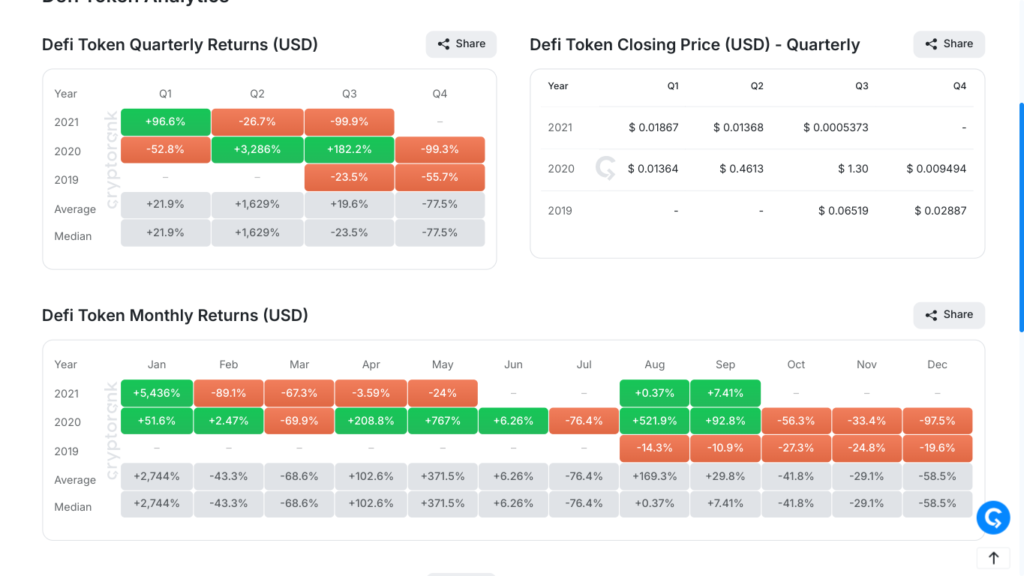
According to CryptoRank data, TVL hit $156 billion in Q3 2025, then fell for three straight quarters, bottoming near $69 billion by June 2026. That is a drop of roughly 56%. Peak figures vary by tracker (DappRadar reported a record $237 billion for the same period), so treat the exact peak as a range, not a fixed point.
The rebound then came in steady steps: TVL grew in July, August and September by 7%, 15% and 11%. DefiLlama data puts the gain at $26.24 billion, or 37.9%, from June 30 to September 26.
Even after the bounce, TVL sits about 39% below the CryptoRank peak (my arithmetic: $95B against $156B). A 38% rally from the bottom does not undo a 56% fall. A fall of 56% needs a gain of about 125% to fully recover.
The hidden stat: $26 billion in, $2 billion of new stablecoins
Stablecoins are the cash of DeFi. When real new money arrives, stablecoin supply usually grows. In Q3 2026 it barely moved.
According to DefiLlama-based analysis from Dwellir, stablecoin supply rose only about $2 billion in the quarter, under 1%. Total supply stood at $304.2 billion on September 29, roughly $16 billion below the all-time peak of $320.6 billion in May.
Put those side by side. TVL gained $26 billion, while stablecoins added about $2 billion. That is roughly $13 of TVL growth for every $1 of new stablecoin supply. Most of the gain cannot have come from fresh cash.
So where did the $26 billion come from?
Mostly from price. The same Dwellir analysis notes that ETH went from $1,610 to $2,688, and that price move explains most of the TVL gain. That is a 67% rise in one quarter, and ETH is the main collateral in DeFi.
The mechanism is simple. If you locked 100 ETH in a lending app in June, you still have 100 ETH in September. Its dollar value is just 67% higher, so TVL goes up with no new deposit. A separate lending-market report makes the same point: rising collateral values can raise TVL without requiring new user deposits.
Ethereum’s weight in the system shows it. Its share of all DeFi TVL moved from 54.0% to 56.1%, and the network holds about $53.7 billion, more than half of the total.
But it wasn’t only price
Fairness matters here. The recovery had real activity underneath it, which is why “recovery” is the right word and “fake” is the wrong one.
Lending came back. Lending TVL grew 51%, from $35.66 billion to $53.88 billion. Borrowing rose too: Aave V3 borrowing climbed from $9.76 billion to $12.57 billion, which means people took out more loans, not just posted more collateral. Borrowing is a better sign of demand than a TVL figure.
Trading and fees improved, modestly. DEX volume rose 13% to $721.7 billion, and protocol fees rose 15% to $5.88 billion. Those are healthy gains, but they are far smaller than the 38% TVL jump or the 67% ETH move.
Some corners cooled. Perpetual-futures DEX volume fell 10.7% quarter on quarter. Speculative leverage, the engine of past DeFi booms, did not lead this time.
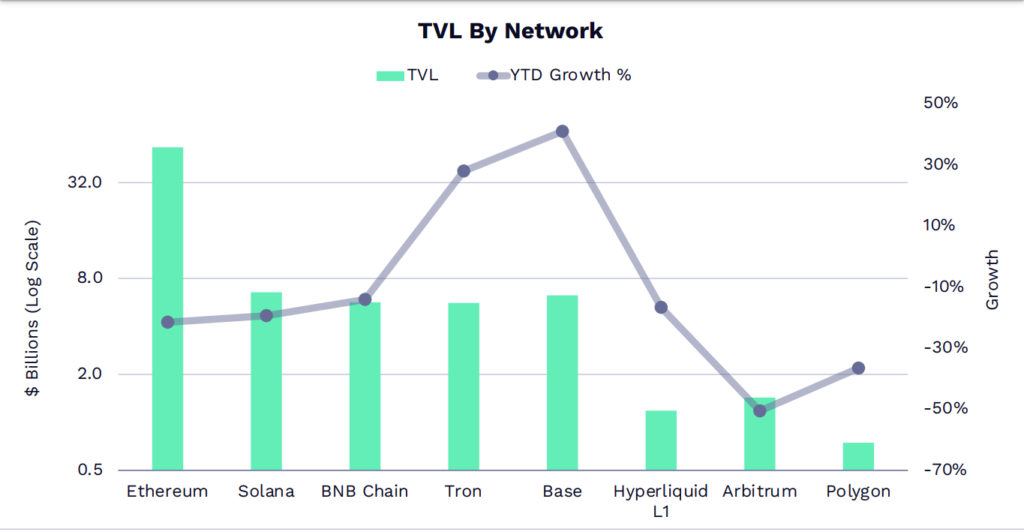
New themes appeared. ARK Invest’s Q3 report found that spot DEX volume in tokenized stocks grew about ninefold to roughly $50 billion, close to 9% of all spot DEX volume, up from around 1% in Q2. Newer networks also grew quickly: Monad’s TVL surged 183% in the quarter. ARK’s headline, though, was that the rebound partly runs on incentives, meaning rewards that attract capital and may not outlast them.
The reasons for caution
Security is the clearest warning. Hackers took $1.25 billion across 116 incidents, the worst quarter of 2026. A market that is truly euphoric tends to shrug off losses like that. This one is still a place where money gets stolen at a record pace.
Ethereum’s base layer also looked weaker than the apps built on it. ARK noted that Ethereum’s network revenue fell from $63 million to about $40.6 million in Q3. More value is sitting on the chain, yet the chain is earning less from it.
Finally, the fall was brutal and quick. In late June, Ethereum’s own DeFi TVL fell 11.51% in 30 days to $37.50 billion. Rebounds in this market are fast, and so are reversals.
Why this matters
If you read “TVL up 38%” as “38% more people and money are using DeFi,” you will overestimate the recovery. The better reading is that prices lifted the old capital, lending and trading improved moderately, and fresh money mostly stayed away. That is a healthy, early-stage recovery. It is not a boom.
It also gives you a simple test for the next rally. Ask whether stablecoin supply is growing alongside TVL. If it is, new money is arriving. If it isn’t, you are looking at price.

Dan is a seasoned crypto writer for Blockchaindose who got his start in the space back in 2019. Over the past four years, he’s built a solid grasp of how the industry moves, focusing heavily on DeFi, NFTs, GameFi, and promising new projects.
Off the clock, you’ll usually find him buried in a good book or kicking back with a movie. His blend of hands-on market experience and straightforward commentary makes him a clear, trusted voice across the platform.