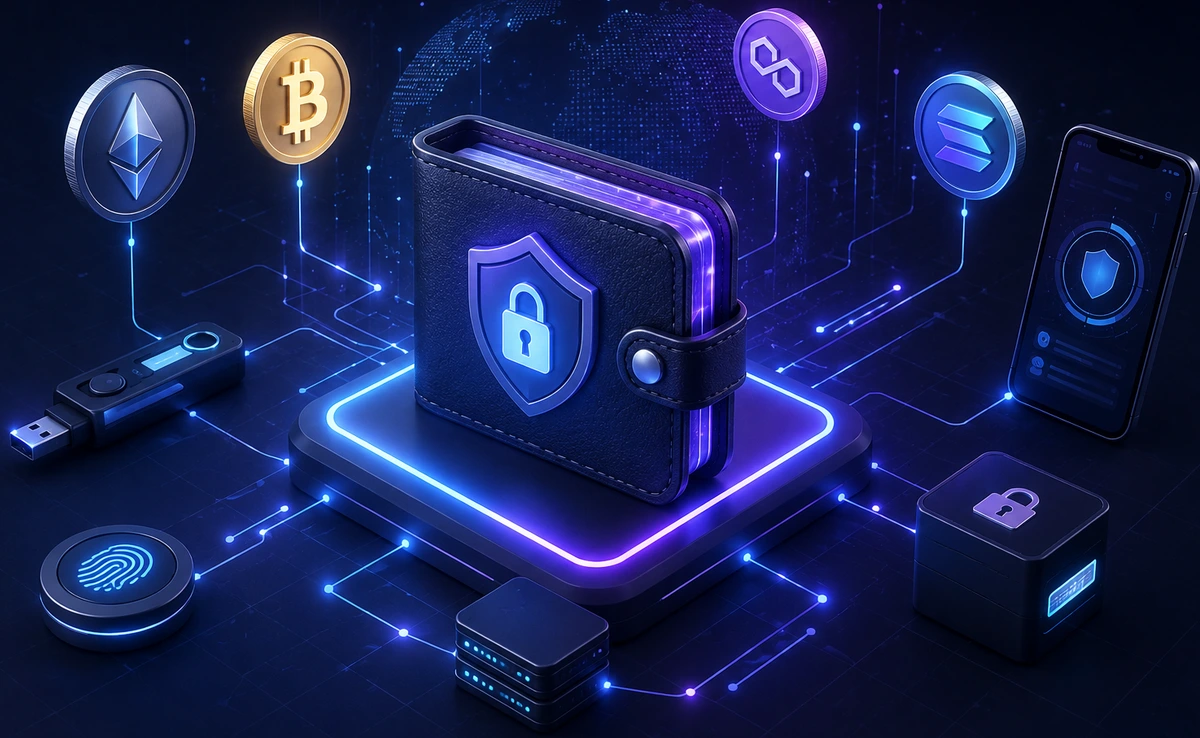
A Web3 wallet functions as an identity layer, a transaction signer, and the primary interface between users and blockchain-based applications.
For development teams, the wallet architecture represents the most risk-sensitive component of the stack—a single vulnerability can result in direct financial loss with no recourse mechanism.
This guide examines the technical architecture, security protocols, and implementation decisions required to build production-grade Web3 wallet gateways.
Core Wallet Architecture Components
The key management layer constitutes the foundational security boundary of any Web3 wallet. This layer determines how cryptographic keys are generated, stored, and utilized for transaction signing.
Hierarchical Deterministic Wallets (HD Wallets) based on BIP-32 and BIP-44 protocols generate an entire key hierarchy from a single seed phrase. This standard enables users to manage multiple blockchain addresses across different networks from one recovery phrase.
The seed phrase must be generated using cryptographically secure random number generators to prevent entropy weaknesses—the July 2026 Coldcard incident demonstrated how flawed seed generation can compromise wallets despite proper storage practices, resulting in approximately $130 million in losses.
Multi-Party Computation (MPC) represents an alternative cryptographic approach that distributes key shares across multiple parties. In properly designed MPC systems, no single party ever holds the complete private key. Threshold Signature Schemes (TSS) enable distributed key generation and signing without reconstructing the full private key at any point.
A common 2-of-3 configuration requires any two authorized participants to produce a valid signature while preventing any single participant from acting independently. MPC wallets also support key rotation and reissuance when users change devices or lose access, addressing a significant limitation of seed-phrase-based recovery.
Custody Model Selection
The custody model determines who controls the private keys and directly impacts regulatory exposure, user experience, and development complexity.
Non-Custodial Wallets place exclusive key control with the user. This model aligns with self-custody principles but shifts the entire security burden onto the user. Loss of the seed phrase results in permanent fund loss with no recovery path.
Custodial Wallets involve the service provider maintaining private keys on behalf of users. This model enables familiar Web2-style authentication (email/password) and account recovery but introduces significant regulatory compliance requirements and security responsibilities.
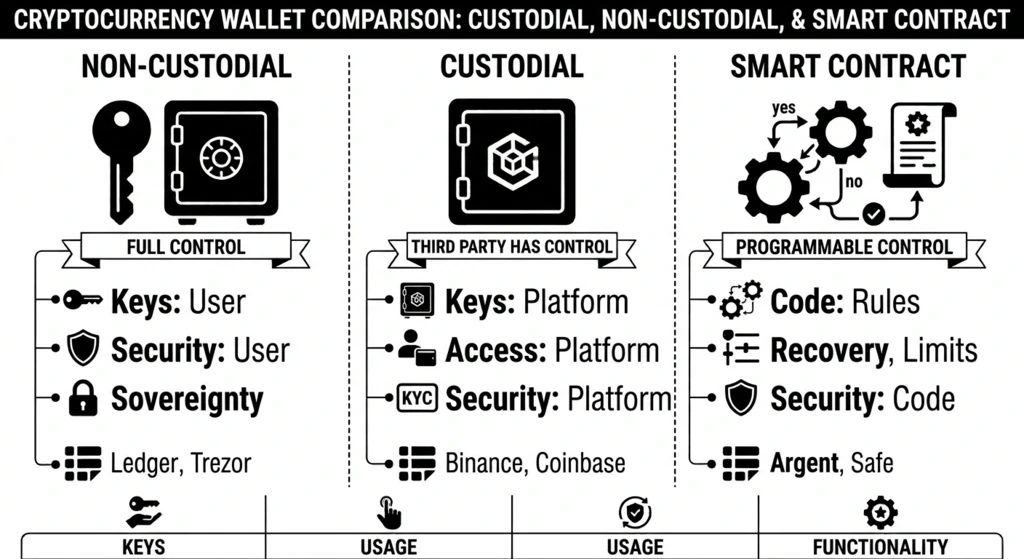
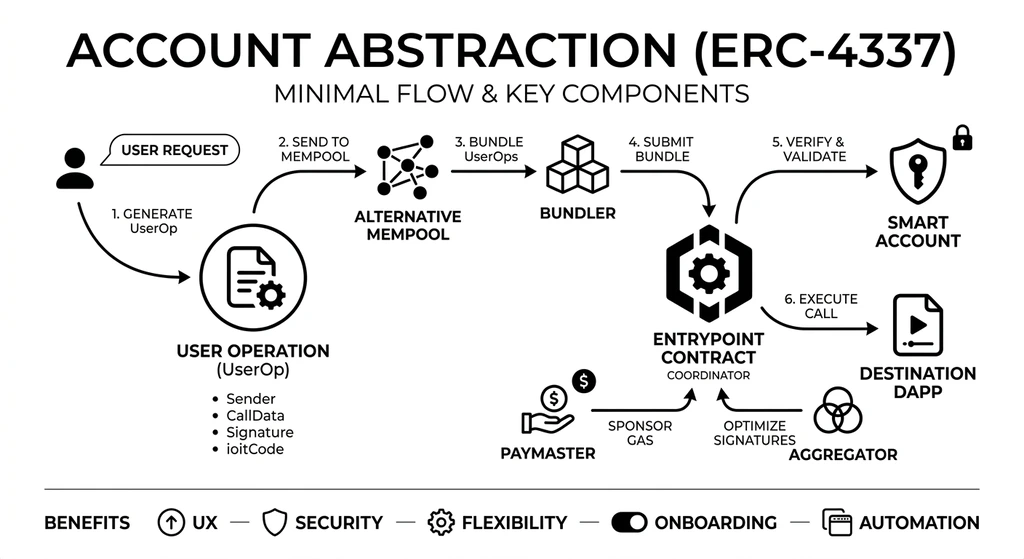
Smart Contract Wallets based on ERC-4337 introduce programmable account logic. These wallets can implement social recovery mechanisms, gas sponsorship through paymasters, transaction batching, and biometric authentication via passkeys. By June 2026, over 30 million ERC-4337 smart accounts had been deployed across Ethereum mainnet and major Layer 2 networks. UserOperation volume grew approximately 400 percent year-over-year, driven primarily by consumer applications in gaming and social platforms.
Embedded Wallets integrate wallet infrastructure directly into applications, enabling users to onboard through familiar methods (email, social login, SMS) without managing seed phrases. These wallets leverage MPC or smart account architectures to provide self-custody while abstracting key management complexity from end users.
WalletConnect Protocol
WalletConnect provides a standardized protocol for establishing secure remote connections between DApps and wallets. The protocol creates an air-gap between the browsing environment and private key storage, reducing exposure to web-based attack vectors. WalletConnect v2 requires users to pre-approve a set of chains upfront, contrasting with v1’s dynamic chain switching capability.
EIP-1193 and Provider Standards
The EIP-1193 standard defines the Ethereum provider JavaScript API, enabling DApps to discover and interact with wallets through the window.ethereum object. This standard ensures interoperability across different wallet implementations and DApp interfaces.
Clear Signing (ERC-7730)
Blind signing—where users approve raw transaction calldata displayed as unreadable hex strings—has resulted in hundreds of millions of dollars in losses. ERC-7730 addresses this vulnerability by defining an open format for human-readable transaction descriptions.
The standard enables wallets to display transaction intent in plain language: “Swap 100 USDC for ETH on Uniswap” or “Approve Aave to spend up to 500 DAI“. Ledger, Trezor, MetaMask, WalletConnect, and Fireblocks participate in the Ethereum Foundation’s Trillion Dollar Security Initiative implementing this standard. The ERC-7730 registry operates on a permissionless basis, with tooling and validation infrastructure now production-ready.
Data Layer and Blockchain Interaction
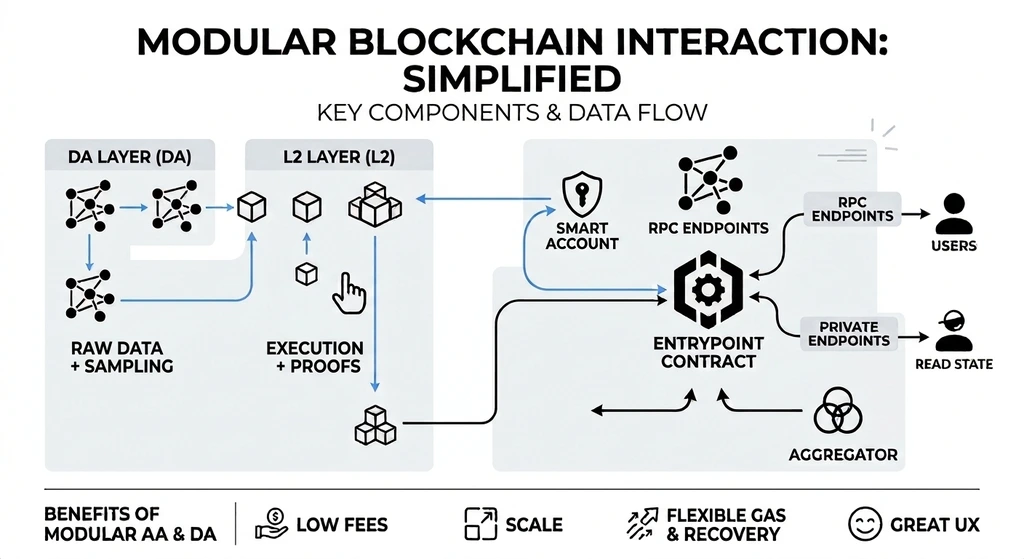
Wallets interact with blockchain networks through RPC (Remote Procedure Call) endpoints. Development teams must implement request batching and caching strategies for token metadata and balance queries to optimize performance. Production deployments should utilize redundant node providers to maintain uptime and prevent single points of failure.
Transaction Construction and Signing
Secure transaction construction requires validating each parameter before submission. The initialization flow must include provider detection, permission scope configuration, and secure session establishment. Transaction simulation—executing transactions in a local or forked environment before broadcasting—identifies potential failures, gas estimation errors, and unexpected state changes.
Compliance Integration
Anti-Money Laundering (AML) and Know Your Customer (KYC) compliance require integration with blockchain analytics providers. Chainalysis KYT and similar services enable real-time screening of transaction counterparts against sanctioned addresses and high-risk entities.
Security Implementation
Security requires implementation across multiple layers rather than relying on a single control.
- Key Generation: Use cryptographically secure random number generation. The Web Crypto API provides browser-based encryption capabilities for extension-based wallets.
- Transaction Authorization: Implement multi-factor authentication (MFA) using hardware security keys or authenticator applications rather than SMS-based verification.
- Permission Management: Enforce principle of least privilege by requesting only the minimum permissions required for each operation. Regularly review and revoke unused smart contract approvals.
- Storage Encryption: Encrypt all sensitive data—including key shares and session tokens—at rest. Zero-knowledge architectures ensure backend systems never access user master passwords or seed phrases.
- Hardware Security: For institutional deployments, Trusted Execution Environments (TEE) such as AWS Nitro Enclaves provide isolated compute environments for cryptographic operations.
Wallet Separation Strategy
Security practitioners recommend maintaining separate wallets for different use cases: a “hot” wallet for daily DApp interactions and a “vault” wallet for long-term storage of significant holdings. This separation limits potential losses from a single compromised session.
Blockchain Interaction Libraries
ethers.js and web3.js remain the standard libraries for Ethereum and EVM-compatible chain interaction. These libraries provide JSON-RPC client implementations, transaction construction utilities, and cryptographic primitives.
Wagmi offers a collection of React Hooks that streamline wallet connection, chain state management, and transaction execution. The framework supports browser wallets, WalletConnect, and Coinbase Wallet integration within minutes. Custom Wagmi connectors enable integration with embedded wallet solutions.
Wallet-as-a-Service (WaaS) Providers
Wallet-as-a-Service platforms provide managed wallet infrastructure through APIs. Providers including Turnkey, Coinbase Developer Platform, Fireblocks, and Cobo offer MPC-based key management, multi-chain support, and compliance tooling. These services reduce development time by abstracting complex cryptographic implementations while maintaining security guarantees. Cobo WaaS 2.0 enables developers to build functional web wallet applications within 30 minutes using natural language API calls through AI programming assistants.
Development Costs
Web3 wallet development costs vary significantly by scope and complexity. MVP implementations typically range from $15,000 to $45,000 with development timelines of 6 to 12 weeks. Enterprise-grade wallets with multi-chain support, MPC integration, and comprehensive compliance features exceed $150,000 and require several months of development. Ongoing maintenance and security updates constitute approximately 20 percent of the initial build cost annually.
Account Abstraction (ERC-4337)
Account abstraction transforms wallets from simple key pairs into programmable smart accounts that execute custom validation logic. This enables:
Gas abstraction: Users pay transaction fees in ERC-20 tokens or through sponsored paymaster contracts
Session keys: DApps receive limited-time, limited-scope signing without requiring user approval for each transaction
Social recovery: Designated guardians assist in wallet recovery without exposing private keys
Chain Abstraction
As blockchain ecosystems fragment across hundreds of Layer 2 and Layer 3 networks, chain abstraction enables wallets to present a unified interface across multiple chains. Users interact with a single address and balance view while the wallet handles network routing, bridging, and transaction settlement.
Post-Quantum Cryptography
Quantum-resistant cryptographic algorithms are entering production consideration. ML-DSA (Module-Lattice-Based Digital Signature Algorithm) support has been integrated into MPC signing systems, enabling post-quantum security through code upgrades without architectural changes.
FAQ
What distinguishes custodial from non-custodial Web3 wallets?
Custodial wallets require the service provider to manage private keys on behalf of users. Users authenticate through conventional credentials and can recover accounts through support processes. Non-custodial wallets generate and store private keys locally on user devices. Users maintain exclusive asset control but assume complete responsibility for key backup and security. Seed phrase loss results in permanent fund loss with no recovery path.
How does Multi-Party Computation (MPC) enhance wallet security?
MPC distributes cryptographic signing across multiple key shares held in separate environments. A typical 2-of-3 configuration requires any two authorized participants to produce a valid signature. No single entity ever holds the complete private key, preventing a single compromised credential from enabling fund theft.
What functionality does ERC-4337 account abstraction introduce?
ERC-4337 transforms wallets from simple key pairs into programmable smart contracts. Smart accounts implement custom validation logic, sponsor gas fees through paymasters, batch multiple transactions into single operations, and authenticate users through biometrics or social recovery mechanisms. As of June 2026, over 30 million ERC-4337 smart accounts operate across Ethereum mainnet and Layer 2 networks.
What problem does ERC-7730 clear signing solve?
Blind signing—users approving transaction data displayed as hex strings without comprehending the operation—has enabled hundreds of millions in losses. ERC-7730 defines a standard for displaying human-readable transaction descriptions before approval. Wallets implementing the standard convert opaque calldata into clear statements like “Swap 100 USDC for ETH on Uniswap,” enabling informed consent.
What are typical Web3 wallet development costs and timelines?
MVP wallets range from $15,000 to $45,000 with development timelines of 6 to 12 weeks. Enterprise-grade wallets with multi-chain support, MPC integration, smart account capabilities, and compliance features exceed $150,000 and require several months. Ongoing maintenance and security updates approximate 20 percent of initial build cost annually.

Isai Alexei is a journalist and financial analyst covering cryptocurrency markets and traditional securities for Blockchaindose. He has spent ten years analyzing digital assets, trading activity, and market structure.