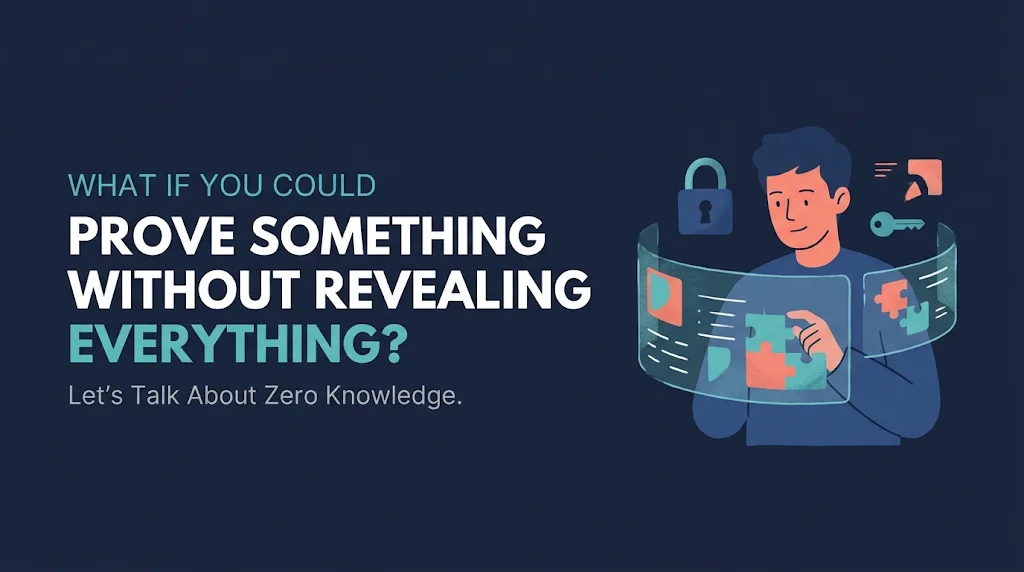
Imagine proving something is true without having to reveal your private information. Sounds strange? Well, this is one of the interesting ideas shaping the future of digital privacy. Let’s break it down together with zero-knowledge proofs.
Let’s Start With Something Familiar.
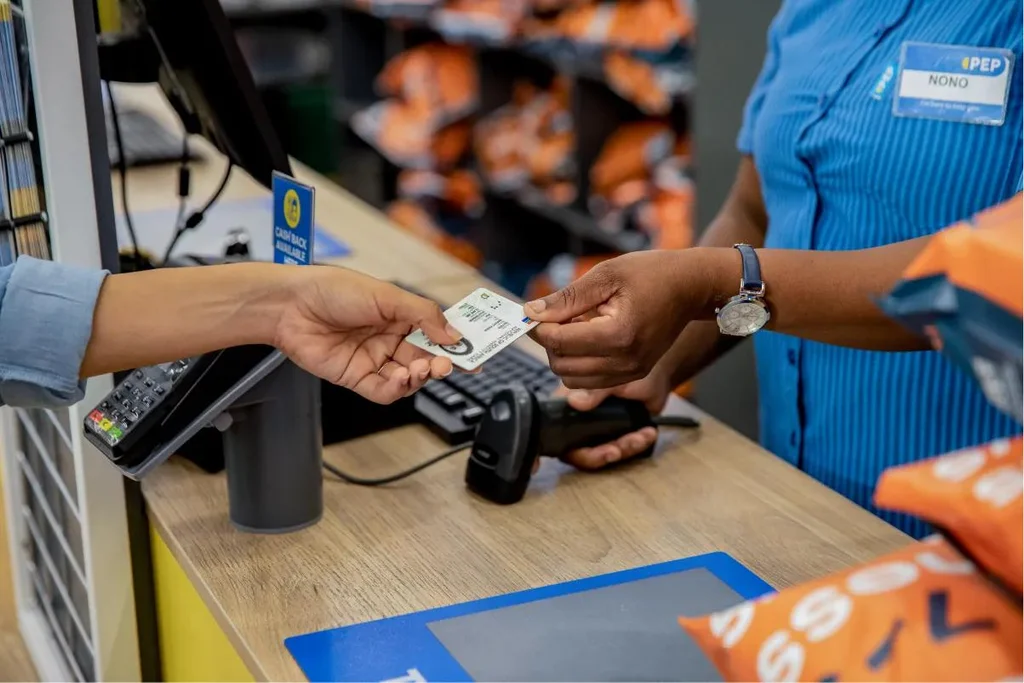
Imagine walking into a store to purchase something that is only available to people above 18.
The cashier asks you to prove your age, so you bring out your ID card.
But think about it for a moment. To prove just one thing, you’ve revealed your full name, date of birth, photograph and other personal details.
Did the cashier really need all that information?
Probably not. All they needed was confirmation that you’re above 18.
Now imagine providing a digital proof that confirms your age without revealing your actual date of birth or identity.
You prove what needs to be proven, and your private information stays private.
Interesting, right?
This is the idea behind Zero-Knowledge Technology, and I think it’s something more people should understand, especially those exploring Web3 and cryptocurrency.
So, What Exactly Is Zero Knowledge?
Let’s keep this simple.
Zero Knowledge is a cryptographic concept that allows someone to prove that a statement is true without revealing the private information behind it.
Think about proving that you have enough money to purchase something without showing someone your entire bank balance.
Or proving that you’re eligible for a service without submitting all your personal information.
That’s the idea.
Instead of exposing everything just to establish trust, you provide proof that a particular requirement has been satisfied.
Zero Knowledge isn’t about knowing nothing. It’s about proving something without revealing everything.
Let Me Tell You a Story About a Secret Cave.
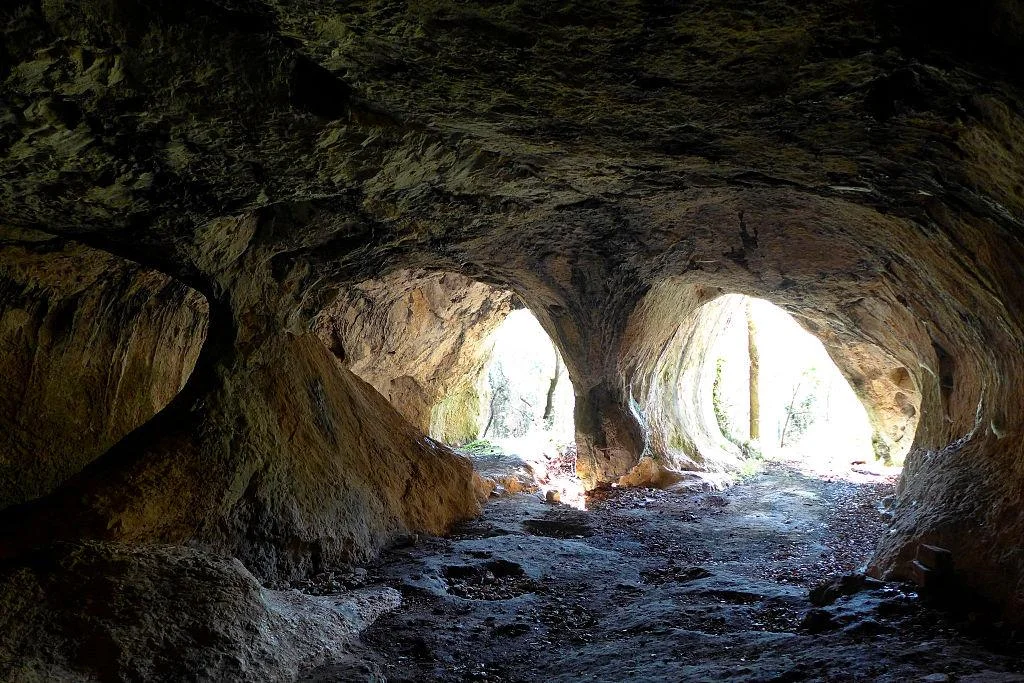
There’s a famous illustration that makes this concept easier to understand.
Imagine you and a friend discover a mysterious cave with two entrances, A and B. Deep inside, there’s a secret passage connecting both entrances.
You tell your friend you know how to access the passage, but they don’t believe you.
They challenge you to prove it.
You enter the cave through either entrance. Your friend waits outside and randomly asks you to come out through A or B.
If you entered through A but are asked to come out through B, you’ll need to know the secret passage to do so.
Your friend repeats this challenge several times.
Eventually, they become convinced that you know the secret, even though you never explained how the passage works.
That’s the basic idea behind a Zero-Knowledge Proof.
You demonstrated that you possess certain knowledge without revealing the knowledge itself.
Of course, real systems use mathematical protocols rather than physical caves, but this example helps us understand the principle.
Who Are the People Behind This Process?
There are three important elements you should know:
1. The Prover: This is the person or system that possesses private information and wants to prove something. In our cave story, that’s you.
2. The Verifier: This is the person or system checking whether your claim is valid. That’s your friend.
3. The Proof: This is the cryptographic evidence that allows the verifier to confirm your claim without accessing your secret.

A proper Zero-Knowledge Proof also follows three important properties:
- Completeness: A valid claim should be accepted when the protocol is followed correctly.
- Soundness: A false claim should not be convincingly presented as true, except with negligible probability.
- Zero Knowledge: The verifier learns nothing about the secret beyond what the proof establishes.
So, this isn’t simply someone saying, “Trust me.” There’s actual mathematics behind the verification.
Now, Why Do We Even Need This?
Think about how much personal information we share online.
Creating accounts, verifying identities, making payments and accessing financial services often require us to submit information.
Verification is important. Digital platforms need ways to establish trust and distinguish legitimate activities from fraudulent ones.
But sometimes, proving one simple thing requires revealing much more information than necessary.
Imagine applying for a service that requires proof that your income exceeds a particular amount.
Does the service really need your entire financial history?
Perhaps it only needs confirmation that you meet the requirement.
This is where Zero Knowledge becomes interesting.
It offers a way to verify specific information without unnecessarily exposing everything behind it.
Personally, I think this is one of the most important conversations we should be having about digital privacy.
Privacy shouldn’t always mean hiding everything. Sometimes, it simply means having control over what you reveal.
What Does This Have to Do With Crypto and Web3?
If you’ve spent time exploring Web3, you’ve probably heard people talk about decentralisation, transparency and trustless systems.
Let’s understand blockchain first.
Imagine a digital notebook shared by thousands of people. Whenever someone makes a transaction, it’s recorded in that notebook, and participants can independently verify the records.
That’s a simplified way of understanding a public blockchain.
Transparency is one of blockchain’s biggest strengths. People can inspect transactions and verify activities on the network.
But there’s another side to it.
On many public blockchains, wallet addresses and transaction details are visible to anyone who knows how to inspect the network.
Imagine making a transaction and having strangers examine the amount, wallet addresses and other publicly available details.
Some people may not mind, but others prefer more privacy.
So, how do we maintain verification without exposing every detail?
This is where Zero-Knowledge Proofs come in.
A blockchain application can use cryptographic proofs to demonstrate that a transaction or computation follows certain rules without revealing all the underlying information.
The network verifies the proof rather than needing to examine every private detail.
This doesn’t mean every blockchain transaction automatically becomes private. It means developers can build systems that combine verifiability with selective privacy.
And that’s one of the reasons Zero Knowledge has become an important part of the Web3 ecosystem.
Beyond Crypto: Where Else Can We Use It?
Here’s something worth understanding: Zero Knowledge isn’t exclusively a cryptocurrency concept.
Its potential applications extend into different industries.
Digital Identity: Imagine proving you’re above 18 without showing your actual date of birth or entire identity document.
Healthcare: Medical information is sensitive. Zero-Knowledge techniques could help verify certain health-related requirements without unnecessarily exposing complete medical records.
Financial Services: Imagine proving that you meet a financial requirement without revealing your entire bank statement.
Online Voting: Zero-Knowledge techniques can help build systems that protect voting privacy while allowing aspects of the voting process to be verified.
Notice the common idea?
In each situation, we need to establish that something is true without unnecessarily exposing private information.
That’s what makes this technology interesting beyond crypto.
Let’s Talk About the Technical Side: zk-SNARKs and zk-STARKs.
If you’ve explored Web3, you may have come across these two terms.
Don’t let the names intimidate you.
zk-SNARKs stands for Zero-Knowledge Succinct Non-Interactive Argument of Knowledge.
Simply put, they allow a system to generate a relatively small cryptographic proof that another party can verify without repeating the entire computation.
zk-STARKs stands for Zero-Knowledge Scalable Transparent Arguments of Knowledge.
They’re another family of cryptographic proof systems designed for scalable verification. One notable difference is that STARK constructions can avoid the trusted setup required by some SNARK systems.
Both have different technical characteristics and trade-offs.
You may also hear about ZK-rollups.
These are blockchain scaling solutions that process transactions outside the main chain and submit cryptographic proofs that the resulting state follows the required rules.
The main blockchain verifies those proofs, reducing the work it needs to perform.
You don’t need to memorise all these terms immediately. Just understand that they’re different technologies built around the broader idea of cryptographic proofs.
Is Zero Knowledge Perfect?
Not quite.
Generating cryptographic proofs can require significant computing resources, depending on the system.
Some implementations also involve complicated security assumptions and setup procedures.
And here’s an important misconception to avoid: Zero Knowledge doesn’t automatically make an entire application private.
A system might hide transaction amounts while still exposing wallet addresses or other information.
The overall privacy depends on how the application is designed and implemented.
It’s powerful technology, but it’s not magic.
My Final Thoughts: The Future of Privacy Is Interesting.
When I look at the idea behind Zero Knowledge, one thing stands out to me.
We’ve spent years building digital systems that often require us to share information before we can establish trust.
But what if we could approach things differently?
What if proving something didn’t always require exposing everything?
Imagine proving your identity without revealing your entire identity, verifying transactions without exposing every detail, or demonstrating eligibility without sharing unnecessary personal information.
That’s the possibility Zero-Knowledge technology introduces.
And for anyone getting into Web3, I think it’s important to look beyond token prices, market movements and the latest project launches.
There’s real technology being developed beneath the surface, and understanding it helps us appreciate what this ecosystem is trying to build.
Zero Knowledge is one of those developments.
Perhaps the future isn’t about proving how much information we can share. Perhaps it’s about proving what matters without revealing everything else.
Five Things to Take Away
- Zero Knowledge allows someone to prove a statement without revealing the secret behind it.
- The three main elements are the prover, verifier and proof.
- It relies on mathematics and cryptography.
- It has applications in blockchain, identity, healthcare and financial services.
- zk-SNARKs, zk-STARKs and ZK-rollups are important technologies within the broader Zero-Knowledge ecosystem.
If there’s one thing I hope you remember from this article, it’s this: You don’t always have to reveal everything to prove something.

I’m a Product Designer, Web3 enthusiast, and technology writer passionate about exploring how emerging technologies are shaping our digital future.
My interests span blockchain technology, cryptocurrency, decentralisation, digital privacy and product innovation. Beyond following developments in the Web3 ecosystem, I enjoy researching complex technical concepts and breaking them down into simple, relatable explanations that anyone can understand, regardless of their technical background.
As a writer, my goal is to educate, share perspectives, simplify ideas and help more people discover the opportunities behind emerging technologies.
I believe technology becomes more powerful when people understand it, and I’m passionate about making that understanding accessible to everyone.