
Picture a nurse applying for a job abroad. The hospital needs to know one thing: is her nursing licence real? To find out, someone scans a PDF, emails it, waits for a reply from a registry in another country, and hopes nobody forged the file.
The fact itself is not in doubt. The registry already knows the answer. The slow, expensive part is moving that trust from one place to another.
That is the problem verified credentials were built to solve.
Key takeaways
- Verified credentials are signed digital proofs that anyone can check in seconds and nobody can quietly alter.
- Three roles: issuer signs, holder keeps, verifier checks.
- Privacy is built in. You can prove one fact (“over 18”) without showing everything.
- They are not blockchain by default. Crypto is optional, not required.
- Europe is the accelerant. EU wallets are due around early December 2026.
- Market estimates disagree widely (from about $1 billion to well over $10 billion depending on definitions), so cite the source and scope.
- No crypto aggregator charts credentials directly. CoinGecko, CoinMarketCap and Santiment cover identity tokens, which measure trading, not credential use.
- Trust still depends on the issuer. A valid signature is not proof of trustworthiness.
What are verified credentials?
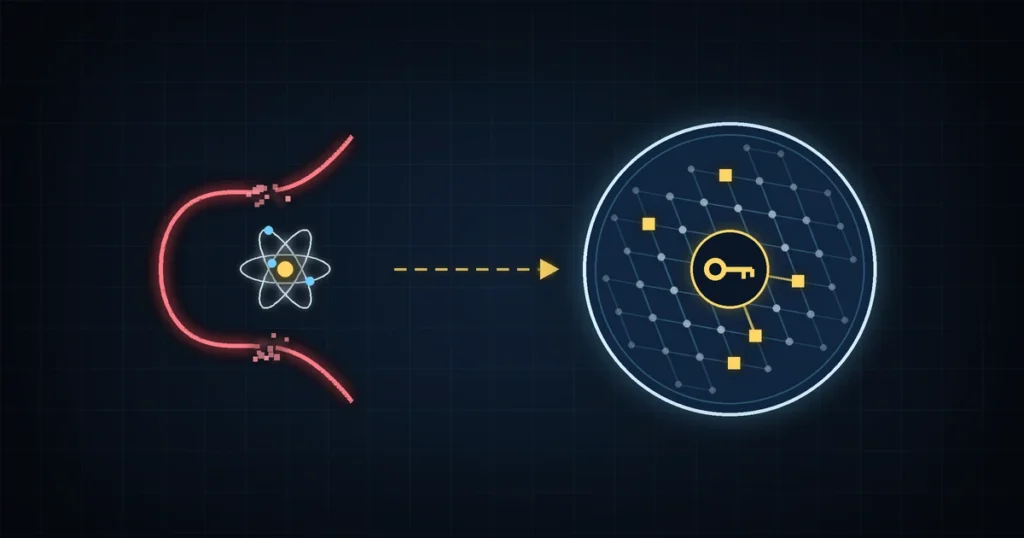
Verified credentials are digital proofs, signed by the organisation that issued them, that anyone can check instantly and that cannot be quietly edited.
Think of a normal certificate with a built-in lie detector. The statement is ordinary (“this person passed this exam”). What is new is the proof attached to it: a digital signature from the issuer. If anyone changes even one letter, the signature breaks and the check fails.
A quick note on words. You will see both “verified credentials” and “verifiable credentials”. The technical standard, published by the W3C (the body behind the web’s core standards), uses verifiable. Everyday writing often says verified. Same idea: a credential you can check without calling anyone.
In one line: a verified credential moves the proof from “trust this PDF” to “check this signature.”
Three characters, one simple story
Every verified credential involves the same three roles.
- The issuer is the organisation that already knows the fact: a university, a government, a bank, an employer. It signs the credential once.
- The holder is you (or your company). You keep the credential in a digital wallet on your phone and decide who sees it.
- The verifier is whoever needs proof: an employer, a landlord, a lender. They check the signature in seconds.
The clever part is what disappears. In the old model, the verifier had to contact the issuer every single time. Now you carry the proof between them, and the issuer and verifier never need to meet.
How it works in 4 steps
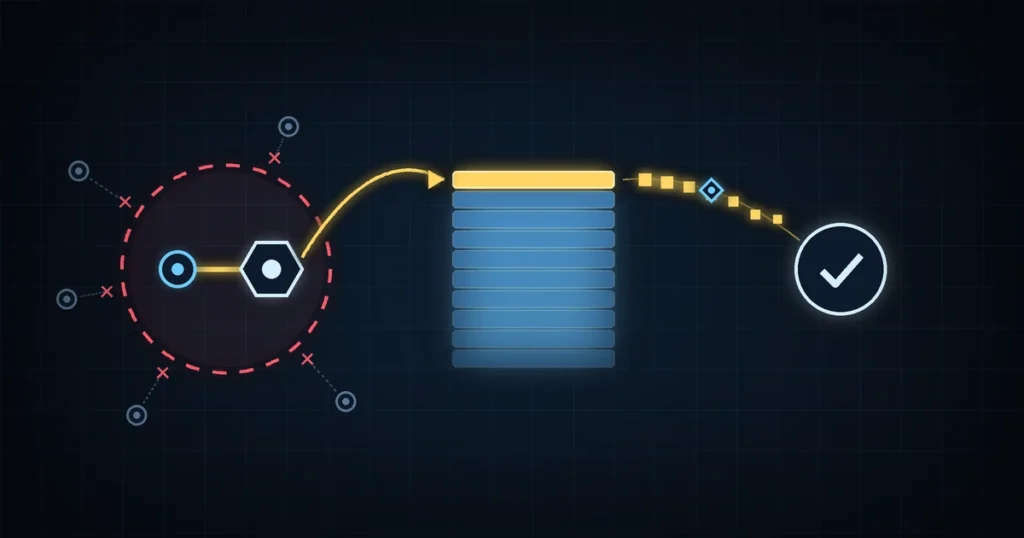
- Issue. The institute records that you passed a safety course and signs a digital credential.
- Hold. It lands in your wallet. It is stored with you, not in a central database everyone must query.
- Present. A client asks, “Are you certified, and is it still valid?” Your wallet shows exactly what is requested. You approve. Only those facts leave your phone.
- Verify. The client checks the issuer’s published key, confirms the credential is yours, and checks it has not expired or been withdrawn.
Credentials can expire. If one must be cancelled early, say a licence is suspended, the issuer updates a public status list that verifiers check automatically.
Why not just use a PDF?
This is the question everyone asks, so here is the plain answer.
| PDF or paper | Verified credential | |
| Can it be forged? | Easily, and hard to spot | Any edit breaks the signature |
| How do you check it? | Phone the issuer, or just trust it | Automatic, in seconds |
| How much do you reveal? | The whole document | Only what is asked |
| Can it be withdrawn? | Not really | Yes, via a status list |
Selective disclosure is the standout feature. To prove you are old enough to enter somewhere, you can show “over 18: yes” instead of handing over your date of birth, address and ID number.
Why now? Because Europe set a deadline
The technology is not new. The W3C published its data model in 2019, and a newer 2.0 version followed. What changed is the law.
Europe’s eIDAS 2.0 regulation requires every EU member state to offer citizens a European Digital Identity Wallet. One market report puts the deadline at 6 December 2026, which is only weeks away. By the end of 2027, many private organisations that already require strong user authentication, such as banks, will have to accept it.
Inside that wallet, core identity data is called PID (Person Identification Data). Everything else, such as a diploma, a membership or a mandate to act for a company, is an electronic attestation of attributes, which is simply the legal name for a verified credential. The top grade, a qualified attestation, carries legal weight across the whole EU.
Analysts at Gartner predicted that by 2026 over 500 million smartphone users would regularly use digital identity wallets for verifiable claims. Treat forecasts like that as ambitions rather than counts. Public usage data is still thin.
What the numbers say (and why they disagree)
Market researchers love this topic, and their estimates are all over the place. That is a finding in itself.
| Source | What it measures | Figure |
| Mordor Intelligence | Verifiable credentials market, 2026 | about $1.14 billion, rising to about $4.78 billion by 2032 (27.3% yearly growth) |
| Mordor Intelligence | Digital credential management, 2026 | about $1.78 billion, rising to about $4.37 billion by 2032 |
| BlockEden (citing forecasts) | VC platform market | $1.8 billion in 2025, forecast $12.6 billion by 2034 (24% yearly growth) |
| IMARC | Decentralized identity market, 2025 | about $1.87 billion, forecast far higher by 2034 (59.7% yearly growth) |
| Another forecaster | Decentralized identity market | $3 billion in 2025, $5 billion in 2026 |
| Next MSC | Broader identity verification market, 2026 | about $17.9 billion |
Why the gap? Each firm draws the boundary differently. Some count only credential software. Others include wallets, biometrics, ID checks and government pilots.
One community commentator also warns that market-size figures are projections, not revenue, and that voluntary consumer adoption remains hard to find. Both views can be true at once: the infrastructure and the rules are arriving fast, while everyday use is still early.
Where verified credentials are already being used
- Government: permits and registrations issued once and reused across agencies and borders.
- Finance: onboarding and KYC checks without piles of scanned documents.
- Healthcare: staff licences checkable by any employer.
- Supply chain: certificates that travel with the goods.
- Education: digital diplomas and badges (for example, Open Badges 3.0 now supports the W3C credential standard).
Myths worth busting
- “It needs a blockchain.” No. Most deployments do not use one.
- “It is just a signed PDF.” No. A signed PDF is for humans to read. A credential is a set of separate facts a system can act on, with partial disclosure and a way to withdraw it.
- “It means replacing our systems.” No. The source systems stay. Issuing adds a signed output beside the record you already keep.
- “A verified credential proves someone is trustworthy.” No. It proves a claim from an issuer. You still decide whether you trust that issuer, and whether the credential is current.
The honest catch
Three real hurdles remain:
- Trust frameworks. A signature proves who signed. Deciding which issuers count needs trusted lists and agreed rules. That is mostly legal and organisational work, and it is slow.
- Interoperability. Several formats (W3C VC, SD-JWT VC, mdoc) and several identifier methods exist. Wallets do not all work with all verifiers yet.
- Real adoption. Regulation will push the first wave. Convenience has to carry the rest.
The bottom line
The nurse from the opening does not need a three-day wait. With a verified credential, the hospital checks her licence at the moment she presents it. No scan, no email chain, no doubt.
The tech is ready. The law is landing. What remains is the hardest part: getting everyone to agree on who is allowed to vouch for what.
Frequently asked questions
What are verified credentials in simple terms?
Digital certificates signed by whoever issued them, so anyone can confirm they are genuine and unchanged without contacting the issuer.
Are “verified” and “verifiable” credentials the same?
In everyday use, yes. “Verifiable credential” is the formal W3C term. “Verified credential” is the common phrasing for the same idea.
How are they different from a PDF certificate?
A PDF must be trusted or confirmed by phone. A verified credential is checked against the issuer’s published key in seconds, and any edit makes the check fail.
Do I need a blockchain or crypto wallet?
No. You need a digital identity wallet, typically an app on your phone. Businesses use a Business Wallet that their systems can operate.
Can the issuer see where I use my credential?
No. Verifiers check the signature and a public status list locally, so the issuer does not learn who is verifying what.
What happens if a credential is revoked?
The issuer updates a public status list. Verifiers consult it during every check, so the credential stops passing.
Can I share only part of a credential?
Yes. That is called selective disclosure, for example proving you are over 18 without revealing your birth date.
Is the EU Digital Identity Wallet a verified credential?
It holds them. Core identity data (PID) and other attestations such as diplomas or mandates are verified credentials in the legal sense.
Do CoinGlass, Santiment or Glassnode have charts on verified credentials?
No. They cover derivatives, on-chain and social data for tradable assets. For the closest proxy, use identity-token categories on CoinGecko or CoinMarketCap, and label them as tokens, not credentials.
How long does a pilot take?
A pilot with one credential, one issuer and one verifier typically takes weeks. Agreeing who may issue and who will accept it sets the pace.
Are they secure?
The cryptography is strong, but real security also depends on how issuers are vetted, how wallets are protected, and whether verifiers actually check expiry and revocation. A signature alone is not a guarantee of current trustworthiness.

Dan is a seasoned crypto writer for Blockchaindose who got his start in the space back in 2019. Over the past four years, he’s built a solid grasp of how the industry moves, focusing heavily on DeFi, NFTs, GameFi, and promising new projects.
Off the clock, you’ll usually find him buried in a good book or kicking back with a movie. His blend of hands-on market experience and straightforward commentary makes him a clear, trusted voice across the platform.