
Everyone talks about Bitcoin’s limit of 21 million coins, and how 20 million are already out there. It sounds like a lot of Bitcoin is ready to be traded.
But that’s not the whole story. For anyone watching Bitcoin’s supply, the important question is how much of that available Bitcoin is actually held by people who are likely to sell. If you look at it that way, the market is much smaller than the headline number suggests. This article looks at the data to explain this and also points out where the idea of a “supply shock” doesn’t quite hold up.
The hidden stat: two-thirds of coins are barely moving
One key detail to note is that two-thirds of Bitcoin isn’t traded much.
Glassnode tracks Bitcoin holders based on how often they spend their coins. People who mostly receive Bitcoin and rarely spend it are considered “illiquid.” Those who spend often are called “liquid” or “highly liquid.”
According to Glassnode’s latest report from March 18, 2026:
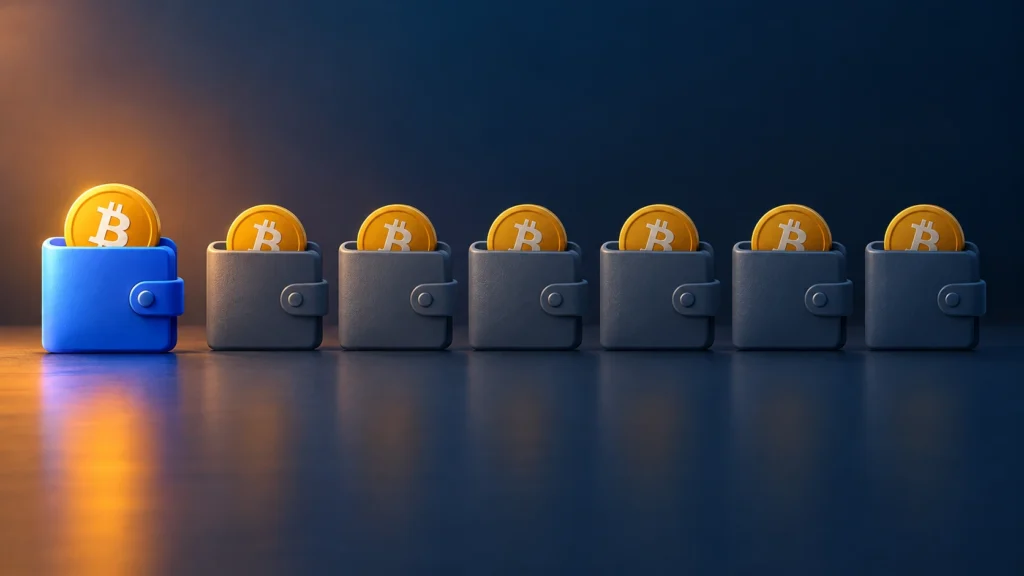
- About 13.5 million BTC are illiquid.
- About 2.57 million BTC are liquid.
- About 3.93 million BTC are highly liquid.
Adding these up gets us around 20 million BTC. So, by simple math, about 67% of Bitcoin is illiquid. The two liquid groups together hold about 6.5 million BTC, which is roughly one-third. Research for this article noted that illiquid supply was around 13.41 million BTC on October 8, showing that this situation hasn’t changed much.
The market focuses on the 20 million coin figure, but the Bitcoin that actually changes hands regularly is closer to one-third of that amount.
Long-term holders own about 80% of Bitcoin
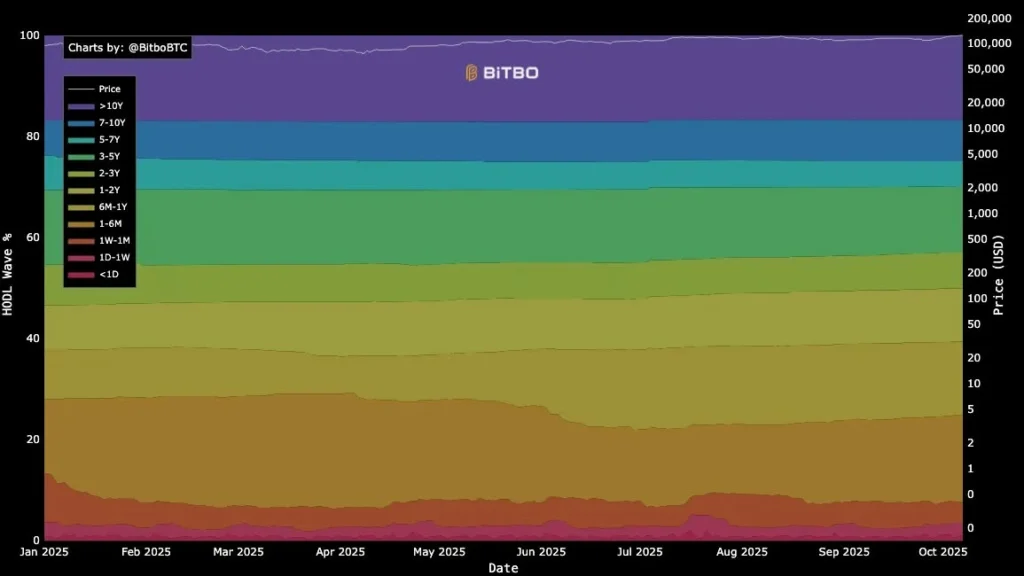
Glassnode considers someone a long-term holder if their Bitcoin hasn’t moved for at least 155 days. These holders control a large portion of the supply.
A Glassnode report from June 2026 indicated that about 16.64 million BTC, or roughly 83% of circulating coins, were held by long-term holders, according to a summary by KuCoin.
Matrixport’s July review placed this figure near 16.3 million BTC, which was a peak for that cycle. Slight differences in dates and how they measure can explain the small gap. Regardless, the percentage is around 80%.
An analysis by CryptoSlate, looking at how long coins have been held, found that about 12.2 million BTC (60.8%) hadn’t moved in over a year. Another 3.55 million BTC had been inactive for six to twelve months. This means roughly 78.5% of Bitcoin supply had been sitting idle for at least six months.
Why is this important for the price? Glassnode conducted a study on what affects Bitcoin’s price stability in 2026. They found that the amount of Bitcoin held by long-term holders explained nearly 19% of the changes in price volatility, more than factors like market capitalization, open interest, or trading volume. Illiquid supply was the second biggest factor, explaining about 12%. In simple terms, when most Bitcoin isn’t being moved, there’s less selling pressure to cause price swings.
Exchanges are running lean
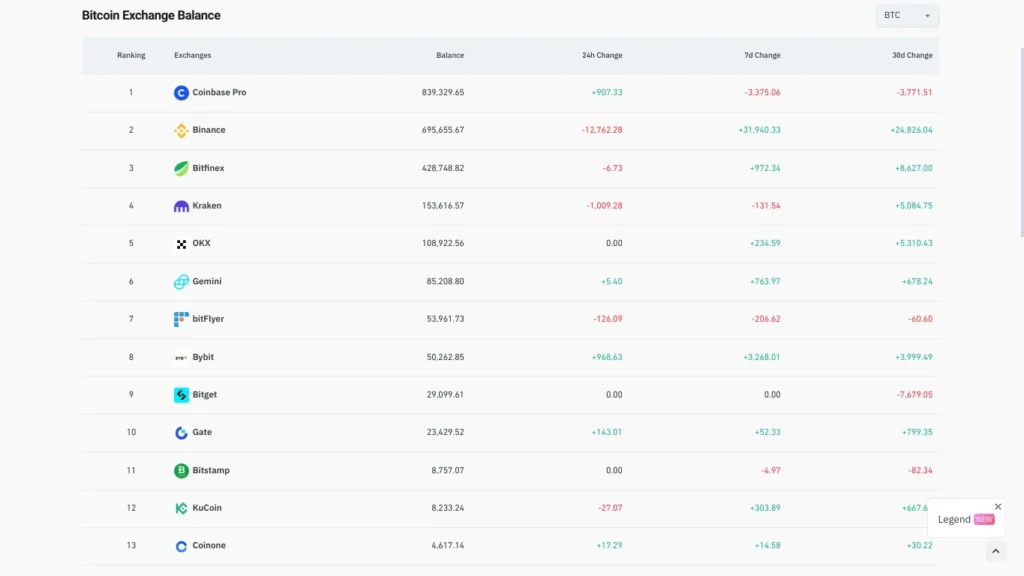
The number of coins held on exchanges is often used as an indicator of available supply because these coins are easy to sell. According to data from sources like Coinglass and Cryptoquant on October 3, 2026, there were about 2.68 million BTC on exchanges. This represents about 12.8% of the total 21 million Bitcoin supply and is the lowest level seen in roughly three years. Exchange reserves peaked at nearly 3.2 million BTC in early 2024 and steadily decreased throughout 2024 and the price increase to $126,000 in 2025.
Some other data sources show an even larger drop. Research for this article indicates that exchange reserves were around 2.1 million BTC in the first quarter of 2026, a seven-year low, with about 300,000 BTC leaving exchanges during that quarter. CryptoSlate also reported that large holders, or whales, bought approximately 270,000 BTC in April over 30 days, marking the most significant buying period since 2013, according to CryptoQuant.
These two figures for exchange reserves don’t exactly match because different trackers define “exchange” wallets differently. However, they both clearly show a downward trend.
ETFs now sit on a big pile of coins
Spot Bitcoin ETFs add another factor to consider. On October 8, 2026, when these funds had been active for 1,000 days, Finbold reported, citing BiTBO data, that BlackRock’s IBIT held about 806,000 BTC, or 3.84% of the total supply. This represented 62.3% of all Bitcoin held by spot ETFs, bringing the total ETF holdings to around 1.3 million BTC. Fidelity’s FBTC held about 182,000 BTC, and Grayscale’s GBTC held about 127,000 BTC.
An additional point from a BIT research report is that over 80% of the assets held by US spot Bitcoin ETFs are managed by a single custodian, Coinbase.
While coins held by ETFs are not permanently removed from circulation, as shares can be redeemed, they are held in custody and are not directly available on exchange order books. These holdings function more like long-term investments rather than readily tradable inventory.
Tight supply, but not a euphoric market
This situation doesn’t appear to be a late-stage market peak. Matrixport’s July review showed an MVRV Z-Score close to 0.25 and a NUPL value around 0.20. These metrics typically indicate recovery phases, not market tops. Matrixport considers levels above 0.75 on the NUPL scale to be in the euphoria zone.
The price of Bitcoin also supports this view. In early October, Bitcoin was trading around $84,500, well below its 2025 high of about $126,000, despite US spot ETFs attracting $2.65 billion in September. Glassnode data from late August also highlighted a large concentration of long-term holder cost bases between $83,000 and $86,000, which is near the current price level.
Where the “supply shock” story breaks
It’s true that the supply situation is tight, but it’s easy to overstate it. Here are five points that suggest otherwise:
1. Supply held by long-term owners can increase automatically. When coins are held for over 155 days, they are counted as long-term holdings, even if the owner plans to sell them later. So, a large number here doesn’t automatically mean new buyers are coming in.
2. When exchange reserves drop, it doesn’t necessarily mean people are buying and holding coins. CryptoQuant itself notes that a lower balance just means coins have left exchange wallets. Large buyers, like those using ETFs or over-the-counter services, often send coins directly to custodians, which are separate from exchanges. A comment from CryptoQuant in 2024 suggested that much of the decline in reserves that year was due to movements from Mt. Gox and Coinbase, not a widespread rush of everyday people hoarding Bitcoin.
3. People who bought recently are still selling. According to CryptoSlate, on October 4th, about 86% of the Bitcoin sent to exchanges came from short-term holders who were selling for a profit. This was the highest percentage seen in a year.
4. Older coins are indeed moving. Data from Glassnode, as reported by The Block, showed that around 62,000 BTC, worth about $7 billion at the time, moved out of long-term holder wallets after mid-October 2025. This was the first notable decrease in that category in the latter half of that year.
5. Different tracking methods give different results. Figures for reserves range from 2.1 million to 2.68 million BTC, and long-term holder supply figures are between 16.3 million and 16.64 million BTC. This shows how different methods and timing can lead to different answers. Kaiko, another data analysis firm, advises checking exchange wallet flows and proof-of-reserve reports before relying solely on balance numbers.
So, the real picture is that the supply environment is tight and becoming tighter, but short-term sellers can still enter the market quickly.
Why this matters
This is important because headline supply numbers tell you how many coins exist in total. Liquid supply, on the other hand, shows how many coins are actually available to be sold. When demand increases, a smaller pool of sellable coins means that even smaller buying trends can cause prices to move more significantly, whether up or down. This also explains why Bitcoin’s price might seem stable for months and then suddenly surge. It doesn’t guarantee a rally, but it changes how we should interpret any price movement.

Dan is a seasoned crypto writer for Blockchaindose who got his start in the space back in 2019. Over the past four years, he’s built a solid grasp of how the industry moves, focusing heavily on DeFi, NFTs, GameFi, and promising new projects.
Off the clock, you’ll usually find him buried in a good book or kicking back with a movie. His blend of hands-on market experience and straightforward commentary makes him a clear, trusted voice across the platform.