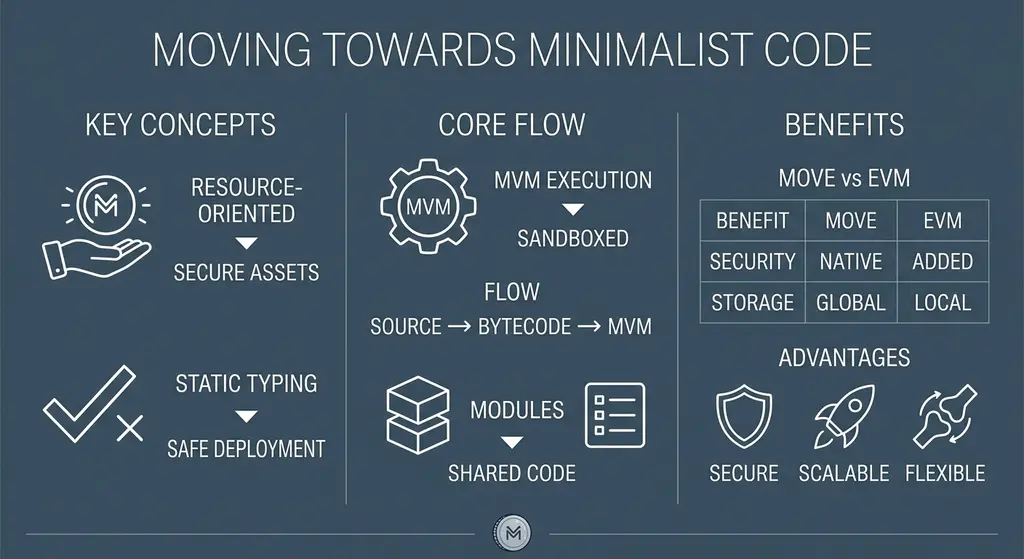
The Move programming language, originally developed at Meta for the Diem project, has been widely regarded as a technical advancement over Solidity. Its resource-oriented programming model treats digital assets as first-class resources that cannot be copied or implicitly discarded, eliminating entire classes of vulnerabilities at the language level.
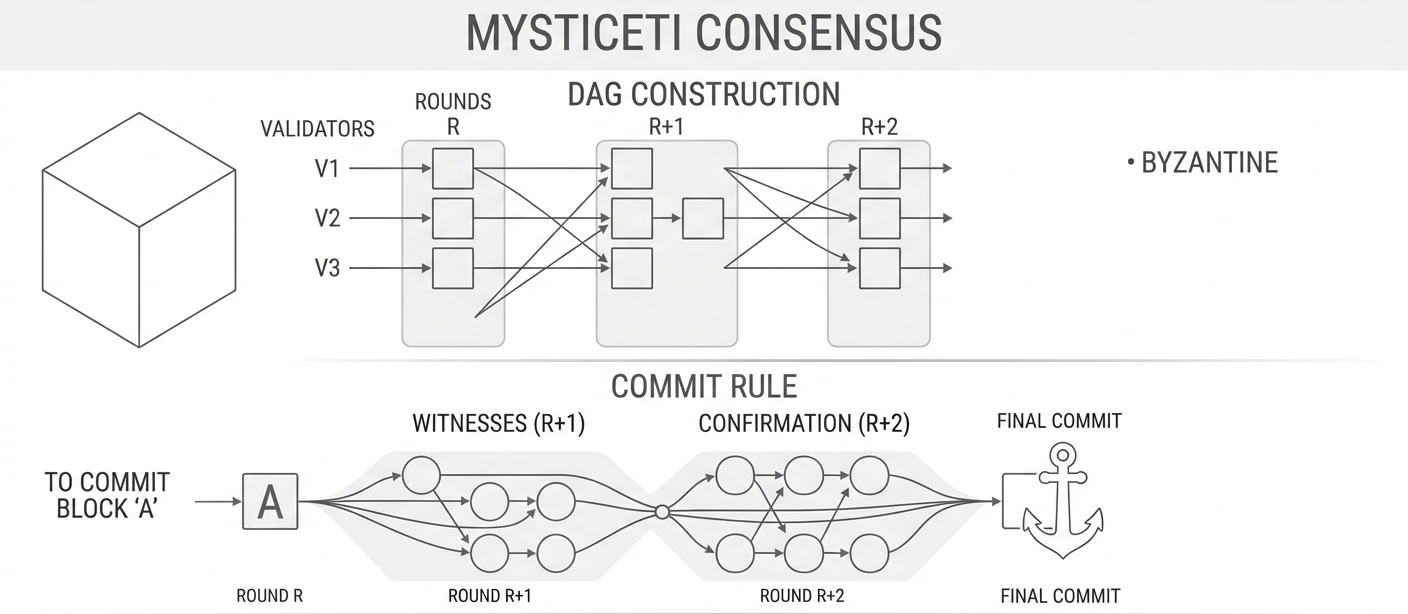
Sui’s implementation of Move introduces an object-centric data model that enables parallel transaction processing without coordination overhead. Sui achieves 0.5-second finality through its Mysticeti consensus protocol and has recorded 954 monthly active developers as of Q1 2026, more than double Aptos’ 465.
Yet these technical metrics have not translated into sustained ecosystem dominance. Developer counts have declined sharply. Third-party GitHub statistics indicate Sui currently has approximately 600 independent developers and 180 full-time developers, representing a year-over-year decline of roughly 55%. The departure of Sam Blackshear, Move’s creator, from Mysten Labs to Anthropic in August 2026 has further signaled structural challenges.
This article examines the specific friction points that have prevented Sui Move from achieving the adoption its technical architecture might suggest.
The Mental Model Shift: From Accounts to Objects
The most fundamental barrier to Sui Move adoption is the cognitive overhead required to transition from Ethereum’s account-based paradigm. Solidity developers think in terms of accounts holding balances. Sui Move requires developers to conceptualize every asset as an object with a unique ID.
This shift extends to access control. Solidity relies on msg.sender to verify caller identity. Sui Move employs a capability-based authorization model where permissions are embodied as specific objects. Developers must mint, transfer, and verify these capability objects explicitly rather than checking a sender address.
The ownership and borrowing model introduces additional complexity. Move’s compiler enforces strict rules about resource movement—objects cannot be copied, and requires specific conditions. This resembles Rust’s ownership system, which has a well-documented learning curve. Developers familiar with Solidity’s more permissive environment must retrain their intuition about state management.
Ecosystem Fragmentation: Write Once, Run Nowhere
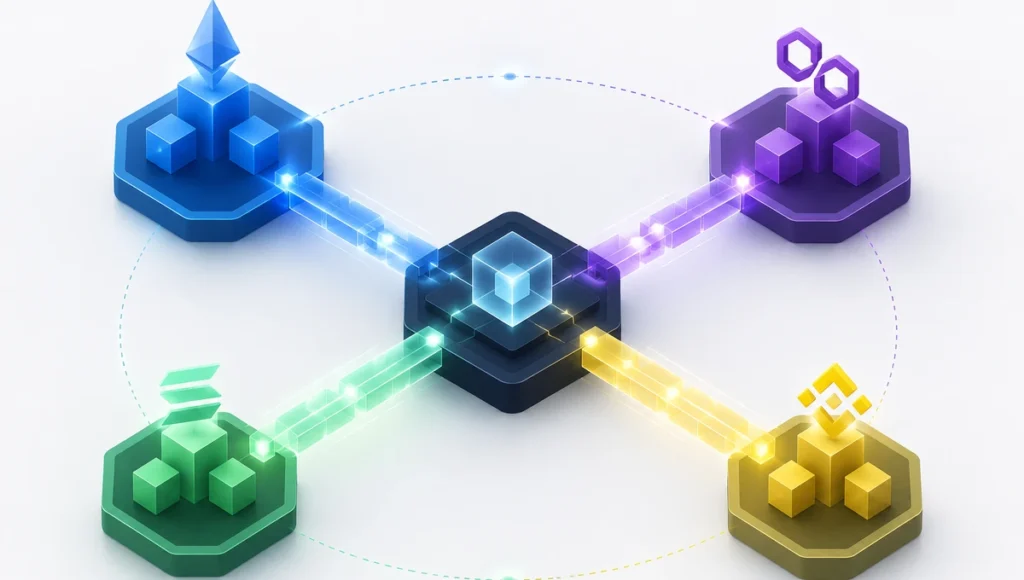
The Move ecosystem has fragmented into incompatible implementations across Sui, Aptos, and other chains. This fragmentation undermines the network effects that drive language adoption.
Sui introduced an object-centric data model while Aptos retained a more traditional account-centric model closer to the original Diem implementation.
The migration cost between Move implementations is substantial. Developers cannot simply port contracts between Sui and Aptos without significant rewriting. This creates lock-in effects that discourage experimentation and reduce the total addressable market for Move skills.
As one analysis notes, “production-grade Move support outside these ecosystems remains limited in 2026, so adopting Move is often a deliberate platform bet”.
Tooling Immaturity: CLI Limitations and Debugging Gaps
Sui Move’s toolchain remains in an evolutionary phase compared to Solidity’s mature ecosystem. Current friction points include:
Limited IDE support: The sui move cli provides basic compilation and deployment functionality but lacks semantic autocompletion. Developers cannot rely on IDE assistance for type inference or intelligent code completion.
No interactive debugging: The sui move test command supports unit test execution but provides no interactive debugging capability. Developers cannot step through execution, inspect state at breakpoints, or perform runtime analysis during test execution.
Dependency resolution issues: The sui move build command invokes mvr as a subprocess for dependency resolution. Version mismatches between CLI expectations and mvr requirements produce opaque errors. Developers report errors such as “legacy system name,” “old dependencies,” and “Cannot upgrade package without having a published id”.
Contract verification missing: Block explorers lack comprehensive smart contract verification functionality, making it difficult to audit deployed code or verify source code matches on-chain bytecode.
Documentation gaps: Documentation on capabilities does not clearly explain implementing revokable capabilities when capability objects transfer to other addresses. Sample code in tutorials has contained dummy implementations that silently drop objects instead of transferring them.
Developer Community Decline and Governance Friction
The developer exodus from Sui reflects both market conditions and ecosystem-specific issues.
Blackshear spent over eight years designing Move, first at Meta and then at Mysten Labs. His move to Anthropic for AI security research has been interpreted as a signal that even the language’s creator sees greater opportunity outside the crypto ecosystem. GitHub code commit volume for crypto projects has dropped sharply during the same period.
Community governance issues have surfaced in the Asia-Pacific (APAC) region. Developers have reported communication problems between Sui Foundation headquarters and regional teams, including information asymmetry and resource allocation opacity. One APAC representative reportedly stated the foundation “does not welcome and does not support meme” projects without reviewing complete materials.
The JSON-RPC deprecation in July 2026 affected third-party wallets including OKX Wallet, OneKey Wallet, and Binance Wallet, with some not fully adapted before the change took effect. This exposed information gaps between headquarters and regional developer communities.
Developers have cited not token prices or grant availability as primary reasons for leaving, but rather “respect, feedback, and attitude in long-term communication”.
Technical Friction Points Specific to Sui Move
Several technical constraints in Sui Move create additional friction:
No dynamic dispatch: Move does not support dynamic dispatch as found in Solidity. All calls resolve statically at compile time to known modules and functions. This limits certain design patterns and reduces flexibility in contract architecture.
Strict module dependencies: A module can only call itself or its explicitly declared dependencies. The dependency graph must remain acyclic. This constraint, while promoting security, adds complexity when designing modular systems.
Object reference immutability: Once created, object references cannot be changed. This creates difficulties for applications requiring dynamic content appending or mutable references.
Shared object programming complexity: Handling shared objects—those accessible by multiple transactions—requires patterns that developers find non-intuitive compared to Solidity’s shared state model.
The S2 Pivot: Acknowledging the Problem
In January 2026, Mysten Labs co-founder Adeniyi Abiodun announced Sui’s transition from a Layer 1 blockchain to a unified developer platform called S2 (Sui StackStack). The pivot explicitly acknowledges that “raw performance isn’t enough—you need integrated tools, clear documentation, and smooth onboarding”.
The S2 roadmap includes protocol-level privacy features, USDsui as a native stablecoin, gas-free stablecoin transfers, and enhanced DeFi infrastructure. The Move VM 2.0 upgrade has already reduced gas fees by 40%.
However, platform transitions do not automatically reverse developer attrition. The fundamental friction points—mental model shifts, ecosystem fragmentation, and tooling immaturity—require sustained, long-term investment to address.
FAQ
What is the primary difference between Sui Move and Solidity?
Sui Move uses a resource-oriented programming model where digital assets are first-class resources that cannot be copied or implicitly discarded. Solidity represents assets as mappings in storage. This difference makes certain vulnerability classes—such as double-spending—impossible at the language level in Move.
Why are developers leaving Sui Move despite its technical advantages?
Multiple factors contribute: the cognitive overhead of learning a new programming paradigm, ecosystem fragmentation that prevents code portability between Move implementations, immature tooling lacking debugging and autocompletion features, and governance friction including communication gaps between foundation headquarters and regional communities. The departure of Move’s creator, Sam Blackshear, to Anthropic has also affected developer sentiment.
How does Sui Move’s ecosystem fragmentation affect developers?
Sui Move and Aptos Move have diverged significantly. Sui introduced an object-centric data model while Aptos retained a more traditional account-centric model. A unified developer tooling standard does not exist. Developers cannot easily port contracts between implementations, which reduces the total addressable market for Move skills and increases platform lock-in risk.
What is the S2 (Sui StackStack) initiative?
Announced in January 2026, S2 represents Sui’s transition from a Layer 1 blockchain to a unified developer platform. The initiative acknowledges that raw performance alone does not drive adoption—integrated tools, clear documentation, and smooth onboarding are equally critical. The roadmap includes protocol-level privacy, a native stablecoin (USDsui), gas-free transfers, and enhanced DeFi infrastructure.
Is Move likely to surpass Solidity in adoption?
Based on current trends, Move faces substantial barriers to surpassing Solidity. Solidity benefits from established network effects, a mature toolchain, extensive libraries, and a large developer pool. Move’s fragmented ecosystem and steep learning curve limit its growth. While Move offers technical advantages in security and parallelization, ecosystem dominance requires more than technical superiority—it requires network effects, developer trust, and sustained investment in tooling and documentation.