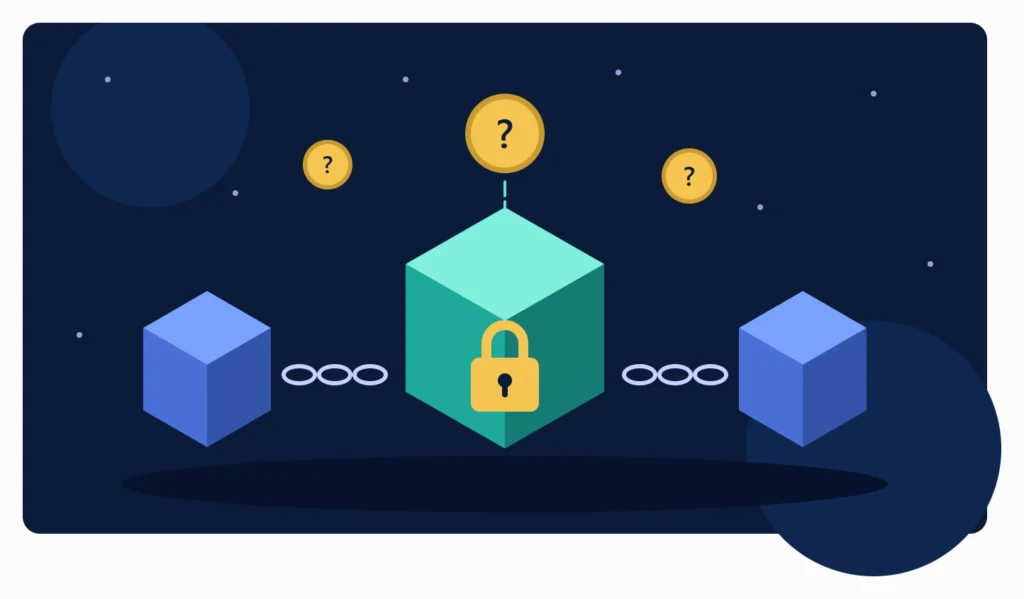

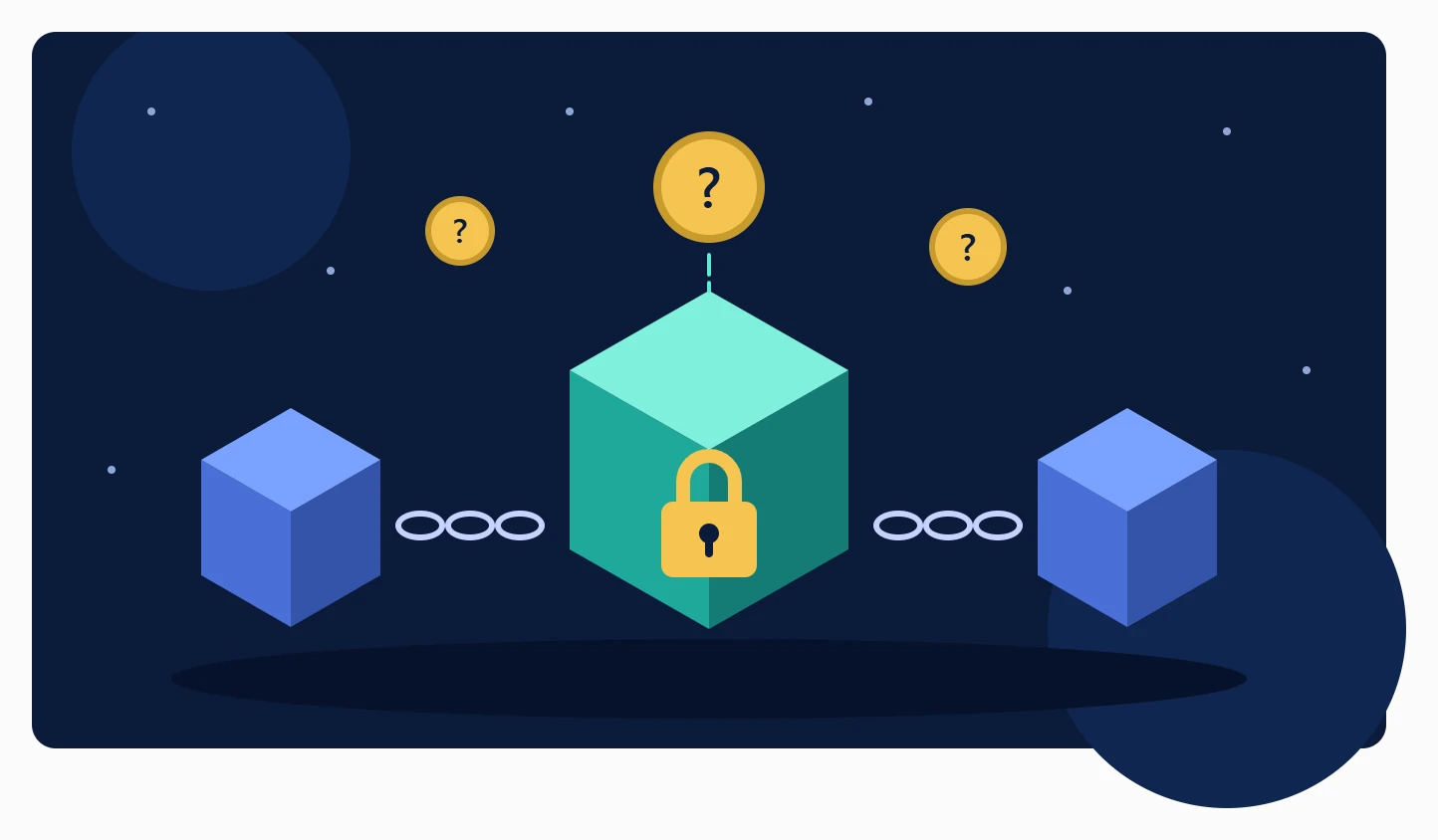
Public blockchains let anyone track transactions and wallet balances, which helps verify activity but also exposes financial details users may want to keep private. Confidential Transactions address this by hiding payment amounts while still letting the network confirm that every transaction follows the rules. They achieve this through cryptographic commitments and mathematical proofs, so the blockchain stays secure without publicly revealing each value. Although already used in privacy-focused blockchains, Confidential Transactions require extra computation and do not conceal every detail of a transaction.
Key takeaways
- Confidential Transactions hide transaction amounts while preserving public verification.
- Pedersen commitments allow amounts to be cryptographically represented without revealing their values.
- Range proofs help ensure hidden amounts are valid and cannot be used to create money out of thin air.
- Monero and Elements demonstrate how transaction confidentiality can be implemented in practice
- Confidential Transactions do not necessarily hide sender addresses, recipient addresses, or transaction activity.
What Are Confidential Transactions?
Definition
Confidential Transactions are a cryptographic method that allows blockchain networks to conceal the amounts transferred between participants while maintaining the ability to verify that transactions are legitimate.
On a conventional public blockchain such as Bitcoin, transactions expose the amounts being transferred. Anyone using a blockchain explorer can inspect transaction values and trace funds between addresses, subject to the network’s transaction structure.
Confidential Transactions change this by replacing visible amounts with cryptographic commitments. These commitments represent the transferred values without directly revealing them to the public. The network can still verify that the transaction balances correctly, that inputs cover outputs and fees, and that no additional funds have been created. This is important because hiding amounts should not remove the mathematical safeguards that prevent double-spending or inflation.

The concept is closely associated with Bitcoin developer Greg Maxwell, who proposed Confidential Transactions as a way to improve transaction privacy without abandoning public blockchain verification.
How Confidential Transactions Work
Confidential Transactions rely on cryptographic techniques that allow a blockchain to verify values without revealing them directly. Two of the most important mechanisms are Pedersen commitments and range proofs.
Transaction Amounts Are Replaced With Cryptographic Commitments
Rather than publishing the amount of a payment, the sender generates a cryptographic commitment to that value. A commitment acts like a sealed representation of an amount: it can be used in mathematical verification without revealing the underlying number.
A widely used construction is the Pedersen commitment, which combines the transaction amount with a secret blinding factor using elliptic-curve cryptography.
The blinding factor helps conceal the value, while the mathematical properties of the commitment allow valid relationships between amounts to be verified. The sender can prove that a commitment represents a legitimate transaction value without disclosing the amount itself.

This is what allows a public blockchain to maintain financial verification while limiting the information visible to outside observers.
The Network Verifies That the Transaction Balances
A blockchain still needs to ensure that the total value entering a transaction is sufficient to cover its outputs and fees. Otherwise, hiding amounts could create an opportunity for users to secretly generate additional money.
Confidential Transactions use the mathematical properties of commitments to verify that the values balance.
The network can check the relationship between committed inputs and outputs without knowing their individual amounts. If the commitments do not satisfy the required balance relationship, the transaction is rejected.
This preserves one of the most important properties of a blockchain: participants should not be able to spend more than they own or create unauthorized funds.
Range Proofs Prevent Hidden-Value Exploits
Balance verification alone is not sufficient. A hidden output could theoretically represent a negative amount, which might allow someone to manipulate the transaction balance while secretly creating extra value elsewhere.
Range proofs solve this problem by allowing a sender to demonstrate that a committed amount falls within an acceptable range, usually a non-negative value below a defined maximum, without disclosing the actual amount.
The network can verify that a hidden payment is a valid amount without knowing whether it represents 2 coins or 20 coins. This prevents invalid values from undermining the monetary supply while keeping transaction amounts confidential.
Confidential Transactions in Practice: Monero and Elements
Confidential Transactions are not simply a theoretical cryptographic concept. Different blockchain projects have adopted variations of the technology to address the limitations of transparent transaction records.
Real World example
Monero implemented Ring Confidential Transactions (RingCT) in January 2017 and made them mandatory in September that year. RingCT hides transaction amounts while allowing the network to verify transfers. Combined with stealth addresses and ring signatures, it also strengthens sender and recipient privacy, making Monero a practical example of confidential transactions working alongside other privacy mechanisms.
Real World example
Elements: Confidential Assets and Transaction Values
Elements is an open-source blockchain platform that supports Confidential Transactions and Confidential Assets. It uses cryptographic commitments to hide transaction amounts and asset types while preserving transaction verification. This can help businesses move digital assets without publicly exposing payment values, treasury movements, or commercially sensitive financial activity.
What Confidential Transactions Hide, and What They Do Not
Confidential Transactions improve financial privacy, but they do not make blockchain activity completely anonymous. They primarily conceal transaction amounts, while other information may remain visible to network observers.
What Remains Visible on the Blockchain?
Confidential Transactions do not necessarily hide sender addresses, recipient addresses, transaction timing, or the existence of a transaction. On blockchains where wallet addresses remain public, linking an address to an identifiable individual through an exchange withdrawal, payment receipt, or other records may still expose their activity.
Transaction timing and activity patterns can also reveal information. Even without knowing the exact amount transferred, an observer may identify when funds moved between wallets or connect a transaction to a particular event.
Why Amount Privacy Alone Is Not Enough
Hiding transaction amounts does not guarantee complete financial privacy. Monero addresses this limitation by combining RingCT with stealth addresses and ring signatures, providing additional layers of privacy to obscure transaction details.
Why Confidential Transactions Matter for Businesses and Users
Financial privacy is not limited to people who want to conceal personal spending. It can also be important for businesses, financial institutions, traders, and organizations operating on public blockchain networks.
Protecting Business Financial Information
Companies may use blockchain infrastructure for payments, settlements, asset transfers, and treasury operations. However, fully transparent transaction amounts could expose their financial relationships or operational activity.
Confidential Transactions could allow companies to benefit from blockchain-based settlement without publicly revealing every payment amount. This may help protect supplier negotiations, payment structures, treasury movements, and other sensitive financial information.
Reducing Financial Surveillance
On transparent networks, publicly available transaction values can help third parties estimate wallet balances and monitor spending patterns. Confidential Transactions make this analysis more difficult by removing visible amounts from the blockchain record.
This could improve privacy for individuals who do not want their financial history publicly accessible to anyone capable of inspecting blockchain data.
Supporting Tokenized Financial Markets
Tokenized assets may increasingly move across blockchain infrastructure, but financial institutions may be reluctant to use fully transparent networks if transaction details expose sensitive trading or settlement information.
Confidential transaction mechanisms could help address this concern by allowing networks to verify transfers while restricting visibility into financial values. However, amount confidentiality alone does not resolve all institutional requirements, including identity verification, regulatory reporting, transaction monitoring, and compliance.
The Limitations and Risks of Confidential Transactions
Despite their advantages, Confidential Transactions introduce trade-offs that developers and users need to consider.
Greater computational complexity: Cryptographic commitments and range proofs require additional calculations compared with transparent transactions. Depending on the implementation, this can increase transaction size, verification requirements, and resource usage.
Regulatory concerns: Hiding payment amounts can make financial monitoring more difficult for exchanges, regulators, and compliance teams. Privacy-enhancing technology may create additional challenges for platforms that must follow anti-money laundering and reporting obligations.
Incomplete privacy: Confidential Transactions primarily conceal amounts. Other transaction details may remain visible, allowing observers to analyze activity, timing, and address relationships.
Implementation risks: Cryptographic systems must be implemented correctly. Bugs in transaction verification or proof construction could create serious security vulnerabilities. Privacy mechanisms also need ongoing review as cryptographic research and network conditions evolve.
These limitations do not make Confidential Transactions ineffective. They show why amount confidentiality is only one part of a broader effort to develop secure, practical, and privacy-preserving blockchain systems.
My Perspective
I believe Confidential Transactions are an important step toward making blockchain more practical for everyday financial use. Transparency is one of blockchain’s biggest strengths, but exposing every payment amount isn’t necessarily beneficial for individuals or businesses. I think the real value of this technology lies in finding a balance where transactions remain verifiable without making everyone’s financial activity publicly visible. Privacy shouldn’t come at the cost of trust, and Confidential Transactions show that the two don’t necessarily have to conflict.
Q1: Can Confidential Transactions be traced on a blockchain?
Yes. Transaction amounts may be hidden, but transaction timing, addresses, and other metadata can remain visible, allowing analysts to track activity or connect transactions.
Q2: Can exchanges verify transactions with hidden amounts?
Yes, provided they have access to the necessary transaction information or disclosure data. Confidentiality does not inherently prevent authorized parties from verifying transaction details.
Q3: Do Confidential Transactions increase blockchain transaction fees?
They can. Cryptographic commitments and range proofs add data and computational requirements, which may increase transaction size and affect fees depending on the network.
Q4: Are Confidential Transactions safer than transparent transactions?
They offer better financial privacy, but not necessarily greater overall security. Both depend on the blockchain’s underlying security, while confidential systems also require correctly implemented cryptographic mechanisms.
Q5: Can Confidential Transactions be used for stablecoins and tokenized assets?
Yes. Confidential transaction technology can support digital assets beyond native cryptocurrencies, potentially allowing stablecoins and tokenized assets to move on-chain without publicly exposing transaction amounts, depending on the blockchain’s implementation.

Muhammad Mubashir is a crypto enthusiast who has been in the Web3 space since 2019 and writing content for major industry platforms since 2024. They specialize in blockchain architecture, Layer 1/2 solutions, NFTs, DeFi, and Web3 technologies, and enjoy gaming in their free time.