
Secret Network blockchain was the first public chain to run smart contracts that keep their inputs, outputs, and state fully encrypted, a feature that most privacy blockchains still can’t match. Built on the Cosmos SDK rather than Ethereum, it lets developers add confidentiality to DeFi, NFTs, and even AI workloads without asking users to trust a single company with their data.
Key Takeaways
- Secret Network launched as Enigma on February 13, 2020, and live smart contracts followed on September 15, 2020 – the first blockchain to run encrypted computation on a public chain.
- The network raised a $400 million private funding round (announced February 2022) from backers including Alameda Research, DeFiance Capital, and HashKey Capital.
- Instead of zero-knowledge proofs, Secret Network relies on Intel SGX trusted execution environments (TEEs) to keep contract data private.
- In October 2025, researchers demonstrated the TEE.fail attack, extracting Secret Network’s SGX-protected consensus seed and decrypting confidential transactions.
- Its DeFi ecosystem is anchored by Shade Protocol and the multi-asset Silk stablecoin, which is partially backed by BTC, EUR, and USD reserves rather than pegged 1:1 to the dollar.
The guide explains how Secret Network’s privacy technology functions, compares its TEE-based approach to zero-knowledge alternatives such as Monero and Penumbra, analyzes real community debates over its fees and governance, and ends with a candid assessment of its position heading into 2026.
What Is Secret Network Blockchain?
Secret Network blockchain is a Layer-1 proof-of-stake chain, built on the Cosmos SDK and Tendermint consensus engine, that gives smart contracts the ability to process encrypted data instead of exposing it publicly the way Ethereum or Solana do. The project started as Enigma, an MIT-born privacy research effort, before its community voted to rebrand and the network’s mainnet went live on February 13, 2020. Roughly six months later, the Vulcan upgrade made secret contracts live on mainnet on September 15, 2020, turning Secret Network into the first blockchain capable of general-purpose private computation.
The project attracted serious institutional backing early on: a $400 million funding round announced in February 2022 pulled in Alameda Research, CoinFund, Dragonfly Capital, DeFiance Capital, and HashKey Capital among others – as with any company-reported raise, exact terms and vesting schedules were never fully public.
A complete explanation of how the encryption functions — SGX enclaves, secret contracts, and viewing keys — appears in the following section. For now, it is sufficient to understand that, unlike most smart contract platforms, on Secret Network a contract’s inputs, outputs, and internal state remain invisible to everyone except the parties granted access by the developer or user.
How Secret Network’s Privacy Technology Works
Every node that validates Secret Network’s blocks runs inside an Intel SGX secure enclave – a hardware-isolated portion of the CPU that can process data without even the machine’s own operator being able to read it while the computation runs. When a user submits a transaction, the input is encrypted client-side, decrypted only inside the enclave, processed by the smart contract logic, and the resulting state and output are re-encrypted before ever leaving the enclave.
The encryption method allows developers to write “secret contracts” using CosmWasm, the same smart-contract system employed across much of the Cosmos environment, with almost no added cognitive complexity. The main addition is deciding what data should be shielded and who holds the viewing keys needed to unlock it later, whether for compliance, audits, or simply checking your own balance. Tokens built to this pattern follow the SNIP-20 standard, the confidential equivalent of an ERC-20 or CW-20 token, so a wallet balance or transfer amount isn’t visible on a block explorer the way it would be on Ethereum.
The hardware-based approach represents Secret Network’s core trade-off against zero-knowledge cryptography: TEEs are fast and can secure arbitrarily complex logic without custom cryptographic circuits, but they ultimately place trust in a chipmaker’s hardware design rather than in mathematics alone – a distinction that matters a great deal to privacy purists, as the next section explores.
Secret Network vs Other Privacy Blockchains
Secret Network is one of several other privacy-focused crypto projects taking different approaches to the same problem. Monero relies on ring signatures and stealth addresses to shield transactions but has no programmable smart-contract layer at all. Zcash offers optional zk-SNARK shielding on top of a transparent base chain. Newer entrants like Iron Fish use zk-SNARKs for fully shielded transactions, again without a general smart-contract environment. Penumbra and Namada both bring zero-knowledge privacy to Cosmos-style DeFi, competing almost directly with Secret Network’s own use case.
|
Project |
Privacy Method |
Smart Contracts |
Base Chain |
|
Secret Network |
Intel SGX (TEE) |
Yes – private |
Cosmos SDK |
|
Monero |
Ring signatures, RingCT |
No |
Standalone (PoW) |
|
Zcash |
zk-SNARKs (optional) |
Limited |
Standalone |
|
Penumbra |
Zero-knowledge proofs |
Private DeFi only |
Cosmos SDK |
|
Namada |
Zero-knowledge (MASP) |
Limited |
Multi-chain |
TEE vs Zero-Knowledge Proofs: The Community Debate
Crypto communities argue constantly over which privacy approach will eventually prevail. On Cosmos-focused forums, some users prefer TEEs because they can secure much more complex logic than current zero-knowledge circuits handle cost-effectively, while critics counter that heavy venture funding behind zero-knowledge projects skews which approach gets promoted rather than which is technically superior. Others point out that Secret Network only shields the contents of a transaction, not the sender and receiver addresses themselves, which some privacy purists consider a significant gap compared to fully shielded alternatives.
When users have directly compared Secret Network, Namada, and Penumbra, a recurring complaint has been that the newer zero-knowledge chains still experience technical glitches and lack full stability – transfers or swaps failing outright is a common frustration – while Secret’s TEE-based contracts are already live and usable, even if its own address-privacy model is less complete than a fully shielded design.
The Secret Network Ecosystem: Shade Protocol and Silk
Secret Network’s most active application layer is built around Shade Protocol, a suite of decentralized finance tools that includes a DEX and a privacy-preserving stablecoin called Silk. Rather than pegging 1:1 to the US dollar, Silk tracks a diversified basket of assets – roughly a third US dollars, around a fifth euros, and the rest split between Bitcoin and other reserves – an explicit design choice intended to avoid the type of collapse experienced by algorithmic stablecoins such as TerraUSD in 2022.
Community sentiment on Shade and Silk is genuinely split. Long-time users describe it as the most fully-realized application in the Secret ecosystem and say they moved most of their portfolio into SHD and SILK after using it directly, while others rate the underlying idea highly but say the bridging and onboarding experience needs serious usability work before it can compete with more polished DeFi front-ends elsewhere. The “great tech, rough edges” feedback appears frequently in Secret Network’s own community and functions as a fair summary of the project overall.
Known Challenges and Criticisms
Gas Fees and Network Congestion
Complaints about transaction costs and reliability are the most common criticism voiced by Secret Network users. Fees are set by individual validators rather than the protocol itself, and for years the default gas price included in the Keplr wallet was far above what most validators actually required – users comparing notes have found the “low” fee setting sometimes fails outright, forcing a retry at a higher price. Secret Network’s own core development team has publicly acknowledged this, explaining that fees have never been reduced to the theoretical minimum because some cost is needed to deter spam, while committing to updated wallet defaults.
Scalability complaints split into two distinct issues that are often conflated: query-node performance, meaning how fast an app like a wallet or NFT marketplace can read data from the chain, and validator or execution performance, meaning how fast the chain itself processes transactions. During high-demand events such as token airdrops, users have reported the network becoming effectively unusable, even though the team has explained that execution slowdowns were mostly traced to an older WebAssembly engine chosen early on for SGX compatibility rather than raw speed.
Governance and Tokenomics Concerns
A recurring critique on Cosmos community forums concerns how Secret Network’s community pool has been spent. Some users have pointed to governance proposals funding paid contributor roles and media projects as evidence of insiders benefiting from decentralized governance, and have flagged that early token allocations to the founding team and venture backers ran as high as a quarter to two-fifths of total supply.
Core contributors have pushed back publicly, arguing the network has more than 100,000 token holders and that neither the founding team nor its validators control enough voting power to unilaterally pass proposals, and that allocation percentages have fallen over time as the ecosystem decentralizes further.
As with most governance disputes in crypto, the truth is somewhere between “insider capture” and “healthy decentralized funding”. Reading actual proposal texts and on-chain voting records is better than accepting either side’s interpretation without direct examination.
The TEE.fail Security Research
The clearest evidence-based criticism of Secret Network’s architecture arrived in October 2025, when academic researchers from Georgia Tech and Purdue University published an attack called TEE.fail. The paper demonstrated a physical memory-interposition technique against DDR5 servers that could extract secrets directly from Intel SGX and TDX enclaves, and the researchers specifically showed they could pull Secret Network’s network-wide consensus seed out of its SGX enclave – a result that would allow decryption of confidential transactions across the chain.
The attack requires physical access to server hardware and specialized equipment costing under $1,000, so it isn’t something a remote attacker could pull off casually, but it does confirm a structural criticism privacy researchers have made of TEE-based chains for years: security ultimately rests on the hardware itself not being physically compromised, not on mathematics alone.
Secret Network’s Role in the Cosmos Ecosystem
As a Cosmos SDK chain, Secret Network is part of the broader Cosmos ecosystem of independent, application-specific blockchains connected via the Inter-Blockchain Communication (IBC) protocol. It secures itself with Tendermint’s Byzantine fault-tolerant consensus and a Proof of Stake validator set, meaning SCRT holders delegate tokens to validators who process blocks and can be penalized for downtime or misbehavior.
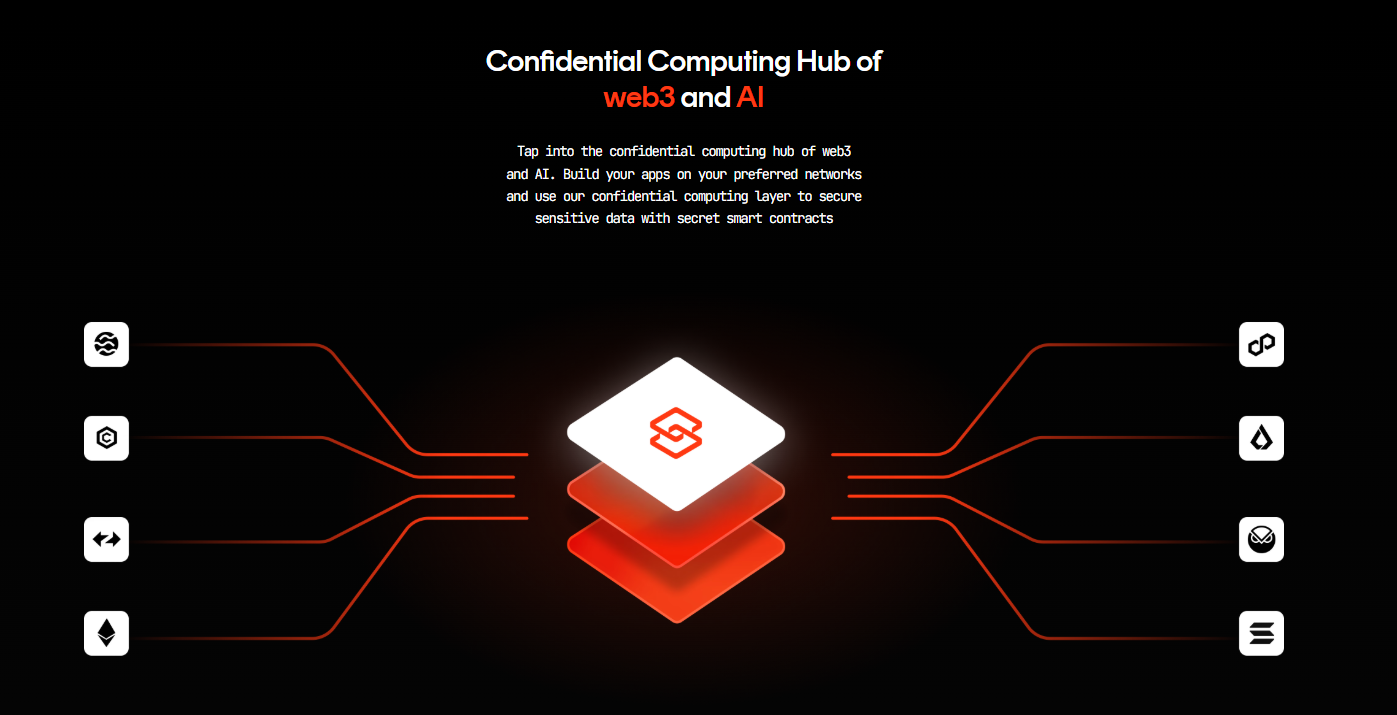
Because it isn’t built on the Ethereum Virtual Machine, Secret Network sits firmly in the non-EVM blockchain camp alongside other Cosmos SDK chains: developers write contracts in Rust using CosmWasm rather than Solidity, and interoperability with Ethereum or BNB Chain assets happens through dedicated bridges rather than native compatibility. IBC connectivity does mean Secret Network can act as a confidential settlement layer for other Cosmos chains, letting them tap into private computation without rebuilding their own stack.
Is Secret Network Worth Watching in 2026?
Secret Network’s own 2026 roadmap signals a pivot away from blockchain-native use cases and toward confidential computing infrastructure in a broader sense. The team says it is making large investments in SecretAI and SecretVM, confidential virtual machines aimed at letting any application, not just ones built natively on Secret Network, offload sensitive data processing to a verifiable, encrypted environment. Whether a reframing, competing as infrastructure for confidential AI workloads rather than as a privacy-focused Layer-1, finds real customers is likely to matter more to SCRT’s relevance than any crypto-native metric.
The project’s staying power so far comes less from flawless execution and more from a five-year head start: it remains, as of 2026, one of very few chains with live, general-purpose private smart contracts rather than a roadmap promise. Whether the lead is durable against better-funded zero-knowledge competitors, and against the hardware-level risks exposed by research like TEE.fail, is the real open question for anyone evaluating the Secret Network blockchain at present.
FAQ
Is Secret Network a scam?
No. Secret Network is a live, functioning Layer-1 blockchain with a working privacy product since 2020, not an unfunded promise. That said, critics raise legitimate governance concerns, including token concentration among early backers and community-pool spending decisions, that are worth researching independently before investing.
Why are Secret Network (SCRT) transaction fees sometimes high?
Fees are set individually by validators, and some wallets have historically defaulted to gas prices well above what most validators require. Using the lowest supported fee setting can occasionally cause a transaction to fail and need resubmitting at a higher price.
How is Secret Network different from Monero?
Monero shields transaction amounts and addresses by default using ring signatures, but it has no smart-contract functionality. Secret Network supports full private smart contracts and encrypted token transfers, but the SCRT token itself and wallet addresses are not shielded by default the way Monero’s are.
What is Silk, and is it pegged to the US dollar?
Silk is Shade Protocol’s privacy-preserving stablecoin. It isn’t pegged 1:1 to the dollar; instead it tracks a basket of reserve assets that includes US dollars, euros, and Bitcoin, a design intended to reduce the kind of single-point-of-failure risk that caused algorithmic stablecoins like TerraUSD to collapse.
What is the difference between TEE-based and zero-knowledge privacy?
TEE-based privacy, used by Secret Network, relies on hardware (Intel SGX) to process encrypted data inside a secure enclave, trusting the chip’s design and manufacturing. Zero-knowledge privacy, used by Monero-style ring signatures and by Zcash, Penumbra, and Namada’s SNARK-based systems, relies purely on cryptographic math rather than trusted hardware, at the cost of typically higher computational overhead for complex logic.

Isai Alexei is a journalist and financial analyst covering cryptocurrency markets and traditional securities for Blockchaindose. He has spent ten years analyzing digital assets, trading activity, and market structure.