Key Takeaways
- The best NFT marketplace for you depends on your goal: OpenSea suits beginners, Blur suits professional traders, and Magic Eden leads Solana and Bitcoin Ordinals.
- NFT sales volume reached $2.82 billion in H1 2025 (CryptoSlam), with Q3 2025 recording a quarterly sales count record of 18.1 million NFTs sold (DappRadar).
- Scam awareness is non-negotiable: never mint on a platform recommended by a stranger via Instagram or DMs
- Platform fees vary widely: from zero fees on Blur to up to 7.5% on SuperRare – fee structure alone can significantly impact your returns.
- The NFT market is multichain in 2026: Ethereum, Solana, Base, and Bitcoin Ordinals each have dedicated leading marketplaces – no single platform dominates all chains.
Finding the best NFT marketplace in 2026 is a different challenge from what it was three years ago. The era of a single dominant platform is over. According to DappRadar’s Q3 2025 Industry Report, NFT sales reached a quarterly record of 18.1 million transactions, generating $1.58 billion in trading volume – a 45% jump from the prior quarter. The market is recovering, but it is now fragmented across chains and purpose-built platforms. Beginners, artists, traders, and collectors each need different tools, and the wrong platform can cost you real money in fees, liquidity, or worse, a scam.
According to CryptoSlam, total NFT sales volumes reached $2.82 billion in the first half of 2025. Meanwhile, the global NFT market is valued at approximately $48.7 billion in 2025, with Ethereum still anchoring around 62% of all transactions and daily active NFT wallets climbing to 410,000. The competitive landscape has shifted dramatically: as of 2025, there are roughly 112 active NFT marketplaces, with the top three – OpenSea, Blur, and Magic Eden – commanding the vast majority of volume.
This guide cuts through the noise on finding the best NFT marketplace for your situation. It explains how each major platform works, who it is built for, what it costs, and what the NFT community is actually saying about it based on real user discussions. It also covers the scam tactics you need to recognize before you touch any platform.
What Makes the Best NFT Marketplace – and Why It Differs by User
There is no single best NFT marketplace for every person. A professional trader who needs zero fees and real-time analytics has entirely different needs from a digital artist who wants easy minting with low gas costs or a collector hunting for blue-chip Ethereum assets. The market itself reflects this: since 2022, NFT trading has shifted from OpenSea’s near-monopoly to a multi-platform ecosystem where different tools serve different functions.
Before picking a platform, you should pin down your role: are you a buyer, creator, trader, or gamer? Each category has a natural home. Creators generally need low minting fees and royalty support. Traders want liquidity, speed, and analytics. Collectors benefit from wide selection and strong verification. Gamers need platforms integrated with their specific game economies.
Key Factors to Evaluate Any NFT Platform
Trading fees and royalty policies are among the first things to check. Platforms like Blur charge zero marketplace fees, while others like SuperRare charge up to 7.5% per transaction plus a 15% commission on first sales. Royalty enforcement has become a flashpoint: most platforms now treat creator royalties as optional, which hurts artists but benefits traders. Only on-chain royalties baked into smart contracts via tools like Manifold are reliably enforced.
Blockchain compatibility matters because liquidity is chain-specific. Ethereum has the deepest pool of high-value collectors. Solana has significantly lower transaction costs. Bitcoin Ordinals is a newer category gaining traction. Base, Coinbase’s Layer-2 chain, climbed to third place by NFT volume in 2025 (DappRadar), driven by SocialFi adoption and Zora mints. A marketplace that only supports Ethereum will not help you if your audience is on Solana.
Community size and liquidity are inseparable. A platform with a small audience means fewer buyers for your NFTs, longer time on market, and potentially being forced to accept a lower price. One Reddit user who described flipping NFTs in 2024 shared a hard lesson: they made strong returns initially, then bought into a collection expecting growth, only to watch BTC decline drag the floor price down 80% with no buyers visible. Liquidity risk is real, and platform audience size is a direct factor.
The Best NFT Marketplaces in 2026: Platform-by-Platform Breakdown
The following breakdown covers the best NFT marketplace options most consistently recommended by the NFT community and supported by trading volume data. GameStop NFT, which appeared in older community discussions, closed its marketplace in early 2023 and is not included. Platforms mentioned here are active as of the time of writing.
OpenSea
OpenSea remains the most visited NFT marketplace, recording 7.8 million site visits in September 2025 (Accio/Similarweb data). Its May 2025 OS2 platform upgrade expanded support to 19 blockchains including Ethereum, Polygon, Solana, and more, while introducing a Voyages rewards system where trading earns XP redeemable for future $SEA governance tokens. In November 2025, OpenSea held a 23.1% market share of trading volume on Ethereum.
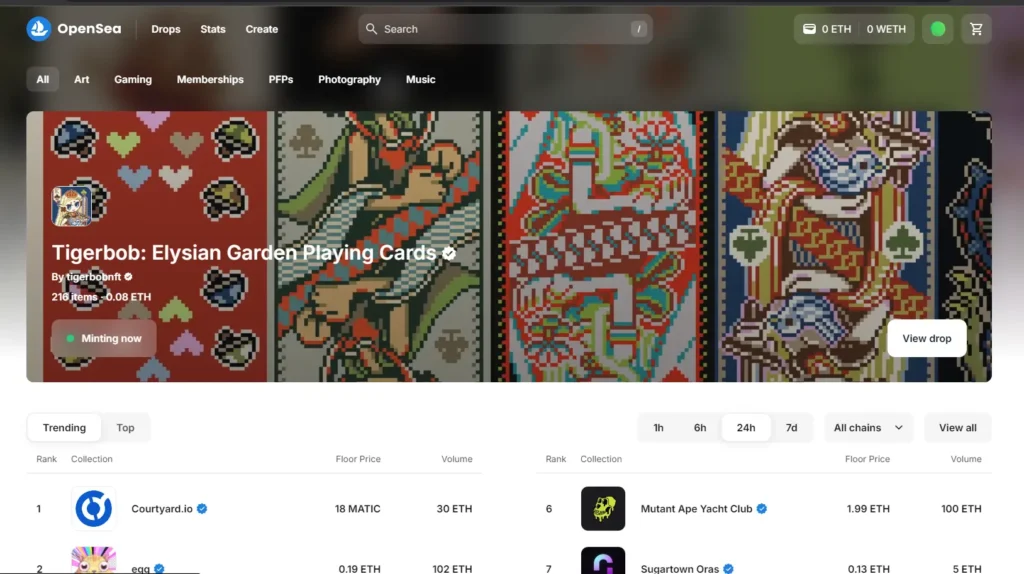
OpenSea charges a 2.5% fee on transactions. It supports a wide range of NFT categories: art, domain names, collectibles, music, and more. The platform is the most beginner-friendly option because of its clean interface, broad wallet support (MetaMask, Coinbase Wallet, and others), and massive listing depth. The OS2 upgrade also addressed previous criticism around UX. One Reddit user who left OpenSea after it removed lazy minting found alternatives in Manifold and Magic Eden – a sign that OpenSea’s creator tools have room to improve, though its buyer and collector experience is hard to beat.
OpenSea’s Ethereum royalty enforcement has been an ongoing point of criticism from creators. Like most platforms, it moved to optional royalties, meaning secondary sales may not generate income for original artists unless the contract enforces it on-chain.
Rarible
Blur is an NFT aggregator and marketplace built exclusively for high-volume, professional traders. It pulls listings from OpenSea, Magic Eden, and other platforms into a single interface with zero marketplace fees, real-time floor price tracking, batch buying, and advanced sniping tools. In November 2025, Blur captured 66.3% market share of Ethereum NFT trading volume – a strong indicator of where serious traders operate.
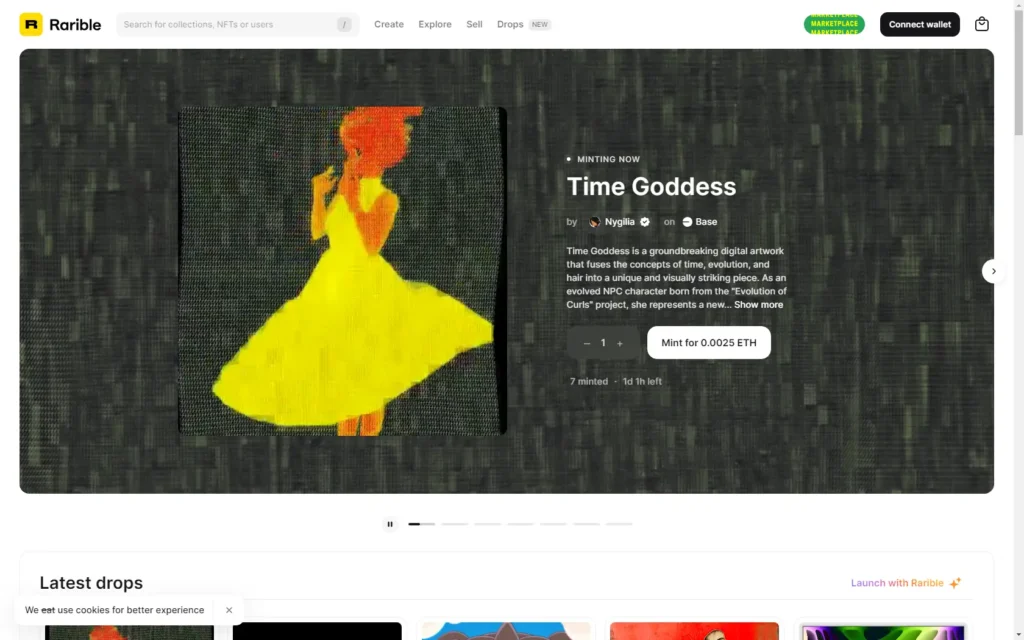
Blur launched the $BLUR token and has run multiple airdrop seasons to reward trading activity, which has driven enormous volume but also criticism that much of the activity is incentive-farming rather than organic collecting. It is not a platform suited to casual buyers or first-time creators. However, for anyone looking to flip NFTs, track floors, or run high-frequency trades, the community consensus is clear: Blur is the tool of choice. As one Reddit commenter put it bluntly, serious traders moved from OpenSea to Blur and never looked back.
Blur also introduced Blend, a lending protocol allowing traders to buy high-value NFTs without having the full purchase price upfront. This is a novel DeFi integration that adds financial utility to the marketplace.
Magic Eden
Magic Eden is the dominant marketplace for Solana-based NFTs and has successfully expanded to Ethereum, Polygon, Bitcoin Ordinals, and other chains. It consistently ranks among the top three best NFT marketplaces globally by volume. Magic Eden was one of the first established platforms to integrate Bitcoin Ordinals, which drove a significant volume surge and helped it briefly surpass Blur as the top marketplace by market share in early 2024.
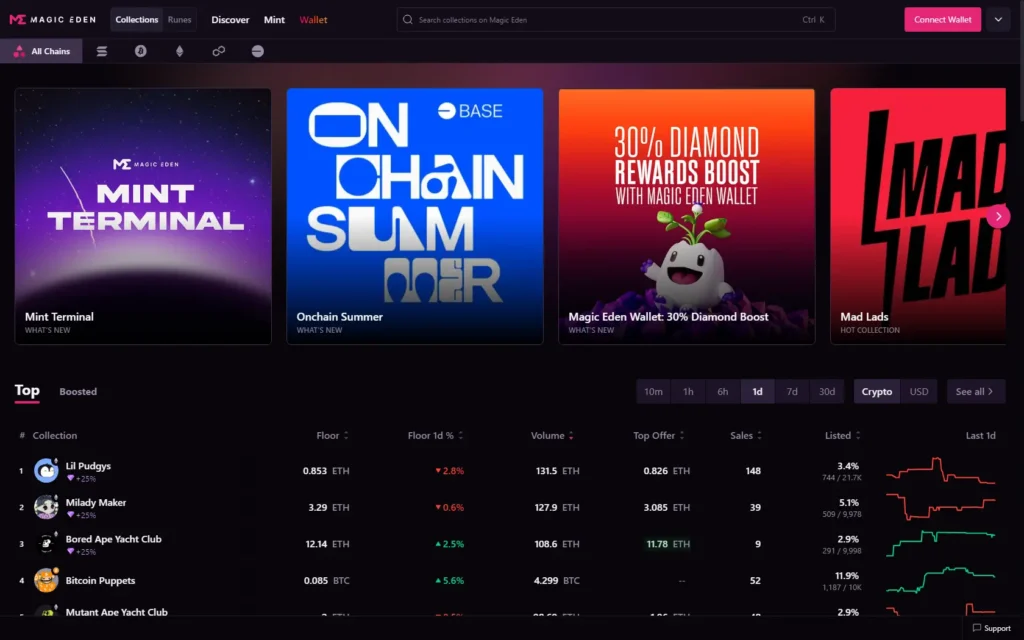
Its fees on Solana are minimal – close to zero in practice – making it attractive for creators who want to mint without high upfront costs. The platform is regularly cited by Reddit users who have direct experience buying, listing, and minting there as one of the most reliable options. One user with hands-on experience on Magic Eden, OpenSea, and JPG Store described actively minting, buying, and listing on all three without major issues.
Magic Eden also runs a strong launchpad for new collections, giving creators access to an existing collector base. If your NFT project targets the Solana ecosystem, Magic Eden is the natural first stop.
Blur vs. OpenSea vs. Magic Eden – Quick Comparison
| Feature | OpenSea (OS2) | Blur | Magic Eden |
|---|---|---|---|
| Marketplace fee | 2.5% | 0% (aggregator) | ~0-2% (chain varies) |
| Best for | Beginners, collectors | Pro traders, flippers | Solana/BTC creators, collectors |
| Chains supported | 19 blockchains | Ethereum, Blast | Solana, ETH, BTC Ordinals, Polygon |
| Royalty enforcement | Optional | Optional (0.5% min) | Opt-in support |
| Beginner-friendly | Yes | No | Yes |
Rarible – Best for Creator Control and Governance
Rarible is built around the principle of creator ownership. It supports multiple chains – Ethereum, Tezos, Immutable X, and others – and allows creators to set their own royalties and vote on platform governance using the RARI token. Trading fees are low, generally around 1%, making it one of the more affordable Ethereum options for both buyers and sellers.
Rarible is not the highest-volume platform, but it is consistently recommended by independent artists who value control over how and where their work is sold. The vice president of marketing at Rarible noted publicly in 2025 that lower trading volumes represent a healthier, more sustainable market moving past speculation into utility and community-driven projects. For creators who want royalty governance and chain flexibility without the corporate layer of a large exchange, Rarible is a strong choice.
SuperRare – Best for High-Value Digital Art
SuperRare is a curated platform for single-edition, high-end digital artworks. It is not a marketplace for volume trading or general collections. Artists must apply and be accepted before listing. Transaction fees are 3% for buyers plus a 15% commission on primary sales – the highest fees of any platform in this guide. Despite the cost, SuperRare attracts serious collectors of one-of-one digital art and artists who want their work next to recognized names.
If you are building a career as a serious digital artist and want a gallery-level platform, SuperRare is worth the application process. If you are a beginner or want accessible secondary trading, start elsewhere.
Foundation – Best for Curated Art Creators
Foundation operates on a similar model to SuperRare: it is invitation-based, focused on digital art, and runs on Ethereum. The platform charges a 5% fee on all transactions and has built a reputation as a clean, design-first platform for emerging and established digital artists alike. It supports images, video, and 3D art formats.
Foundation’s auction-based sales format means prices can climb significantly on popular pieces, but it also means there is no guarantee of a fast sale. Listing does not equal selling – audience building outside the platform, particularly on social media, is necessary for most creators.
Manifold – Best for Creators Who Want Independence
Manifold is not a marketplace in the traditional sense. It is a smart contract creation tool that lets creators launch their own NFT contracts, run drops on their own terms, and then list across platforms like OpenSea and Blur. Because royalties are baked into the contract at the on-chain level, they are enforced regardless of which marketplace is used for secondary sales.
Multiple Reddit users with hands-on experience recommend Manifold as the best choice for creators who want genuine ownership and royalty protection. It requires slightly more technical setup than a standard marketplace, but the tradeoff is significantly more control. For established artists with an existing audience who want to launch drops independently, Manifold is the most defensible long-term option.
Tensor – Best for Solana Power Users
Tensor has rapidly become the go-to platform for professional NFT traders on Solana. Its model is similar to Blur on Ethereum: advanced analytics, fast execution, and a trading-first interface. Tensor is the fastest-growing Solana-focused platform and has strong overlap with Magic Eden’s collector audience, but with more emphasis on trader tools.
For anyone actively flipping Solana NFTs, Tensor and Magic Eden together cover the full spectrum of casual to professional trading on that chain.
Objkt – Best for Tezos NFTs
Objkt.com is the leading marketplace for Tezos-based NFTs. Tezos is a proof-of-stake blockchain, making it significantly more energy-efficient than Ethereum. Transaction costs are very low, which has attracted a strong community of digital artists who want affordable minting without high gas fees. Generative art on Tezos has been particularly active, and several well-known digital artists have sold major works through the Tezos ecosystem.
If your interest is generative or experimental digital art and you want lower fees than Ethereum, Objkt paired with the Tezos chain is worth exploring.
Other Platforms Worth Knowing
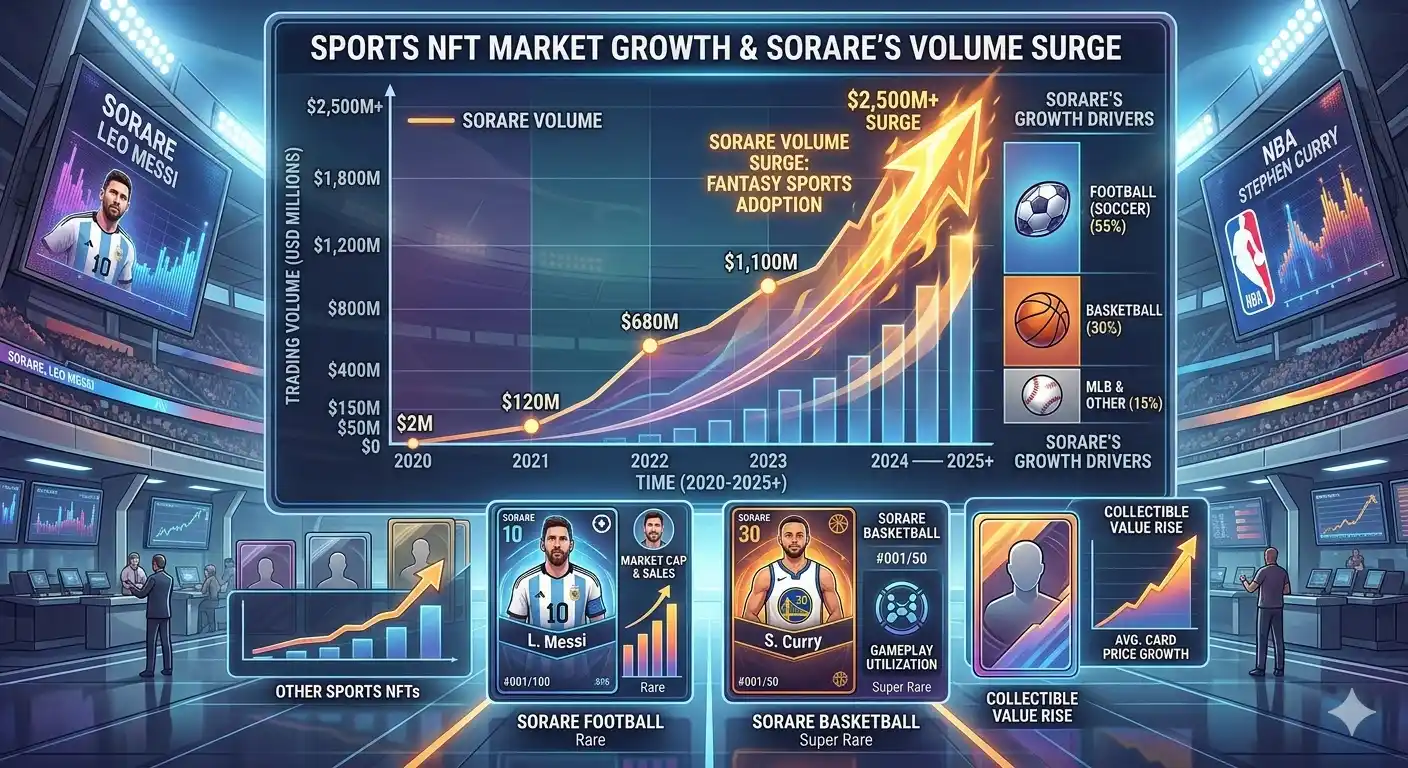
Several other platforms serve specific niches. NBA Top Shot remains the primary destination for basketball highlight NFTs, built on the Flow blockchain and backed by the NBA itself. Sorare is the standout performer in sports NFTs, with trading volume up 337% in Q3 2025 (DappRadar) driven by football, basketball, and baseball digital collectibles tied to real-match performance. Axie Infinity‘s native marketplace continues to operate for in-game character trading, particularly in Southeast Asia, though it has stepped back from its 2021 peak. Zora has driven over 1.6 million mints on the Base chain, making it a notable player in the growing Base ecosystem.
NFT Marketplace Fees Compared
| Platform | Marketplace Fee | Primary Sale Commission | Best For |
|---|---|---|---|
| OpenSea (OS2) | 2.5% | None | Beginners, broad collectors |
| Blur | 0% | None | Pro traders, high-frequency flippers |
| Magic Eden | ~0-2% | None | Solana/BTC Ordinals creators, collectors |
| Rarible | ~1% | None | Independent creators, governance-focused |
| SuperRare | 3% | 15% | High-value single-edition digital art |
| Foundation | 5% | None | Curated digital art, auction format |
| Tensor | ~0-2% | None | Solana pro traders |
| Objkt | ~2.5% | None | Tezos generative/experimental art |
| NBA Top Shot | 5% | None | Basketball highlight NFT collectors |
| Sorare | Varies | None | Fantasy sports NFT collectors |
The NFT Market in 2025 and 2026: What the Data Actually Shows
The NFT market did not die after the 2022 crash. It restructured. According to DappRadar’s Q3 2025 report, NFT sales hit 18.1 million transactions in Q3 alone – the highest quarterly count since 2022 – generating $1.58 billion in trading volume. The number of unique wallets trading NFTs grew from 1.66 million in Q1 to 2.14 million in Q3 2025.
Average prices have fallen significantly from the 2021 peak, but this is being framed by some market analysts as a sign of healthier, more accessible participation rather than collapse. Cheaper NFTs mean more people can participate. Average NFT sale values in H1 2025 ranged between $80 and $100 per transaction (CryptoSlam), a far cry from the multi-thousand-dollar averages of 2021 but consistent with a market that has normalized.
The standout performer by category in Q3 2025 was sports NFTs, which saw trading volume surge 337% to $71.1 million, largely driven by Sorare’s expansion. Profile picture (PFP) collections also recovered, with trading volume up 187% quarter-over-quarter to $544 million. Blue-chip collections – CryptoPunks, Bored Ape Yacht Club, Pudgy Penguins, and Moonbirds – led the rebound.
One notable trend is the rise of Base as an NFT chain. Base NFTs hit $122 million in trading volume and 6.7 million sales in 2025, with Base overtaking Solana and Abstract to become the third-largest chain by NFT volume (DappRadar). OpenSea leads Base NFT trading while Rarible captures higher-value, art-focused collections on the chain.
Gaming NFTs, by contrast, saw a 17% drop in trading volume and a 32% decline in transaction count in Q3 2025 (DappRadar). This is consistent with broader sentiment in the community: the play-to-earn model that drove Axie Infinity’s 2021 peak has not produced a comparable second wave, and gaming NFTs remain a high-risk niche.
Which Blockchain Is Best for NFTs in 2026
The blockchain you choose determines which marketplace you use, what fees you pay, and who your potential buyers are. There is no single best answer – it depends on your category and goals.
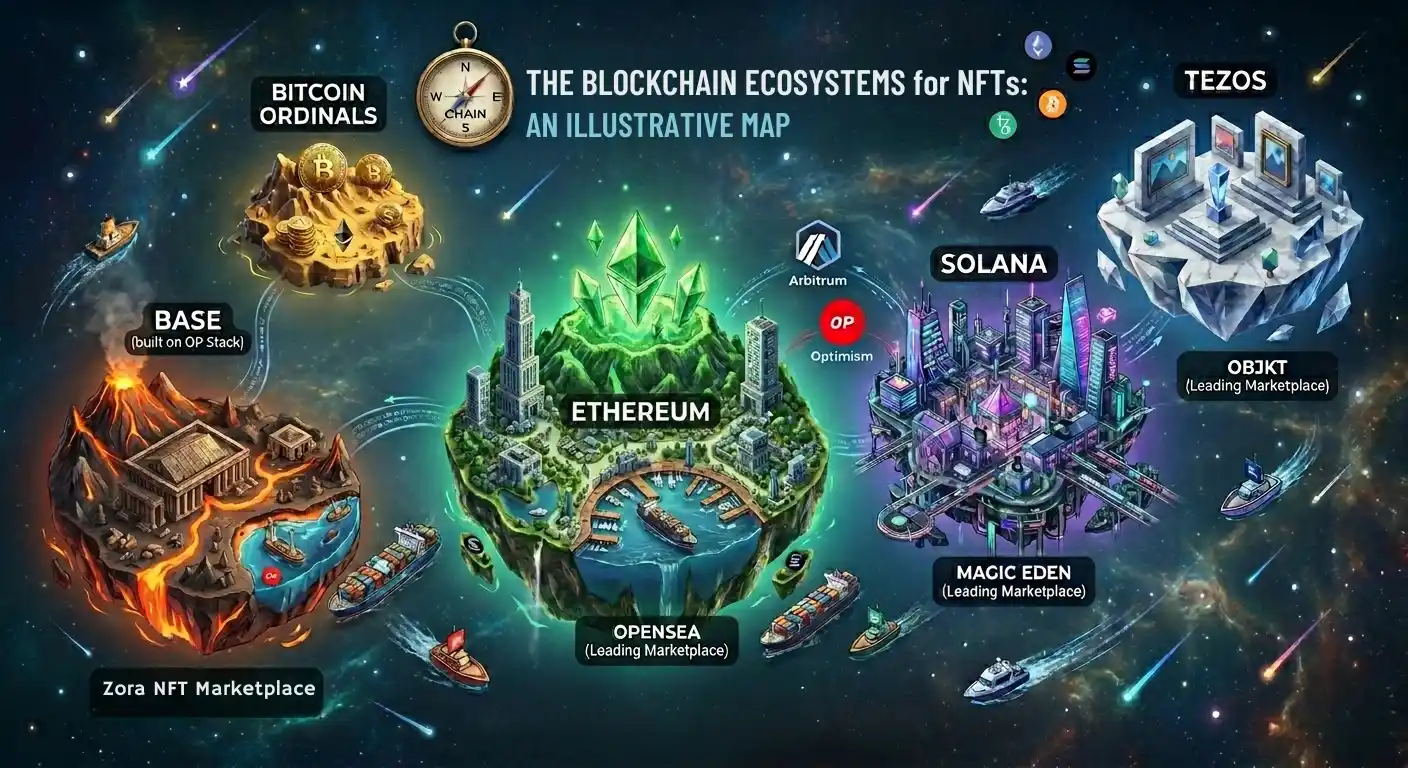
Ethereum remains the highest-value ecosystem. It holds the blue-chip collections (CryptoPunks, BAYC, Pudgy Penguins), the deepest pool of institutional and serious collectors, and the most developed infrastructure. However, gas fees – though reduced by Layer-2 solutions – are still higher than alternatives. Ethereum NFT trading volume dominates globally.
Solana offers near-zero transaction fees and fast confirmation times. It has a highly active retail trading community and is home to a growing number of gaming and collectible projects. Magic Eden and Tensor are the dominant marketplaces. Solana’s ecosystem is volatile – collections can gain and lose value aggressively – but it attracts a large volume of lower-priced trades.
Bitcoin Ordinals is the newest and most experimental category. Inscribing NFTs onto individual satoshis is a technically interesting proposition, and Magic Eden was quick to capture this market. Volume is real but the ecosystem is younger and less liquid than Ethereum or Solana.
Base (Coinbase’s Layer-2) has emerged as a fast-growing option in 2025, driven by lower fees and Coinbase’s large user base. Zora has been a major mint driver on Base. As of 2025, Base ranks third globally by NFT volume.
Tezos is the ecosystem of choice for environmentally conscious creators and experimental/generative digital art. Objkt is the primary marketplace. Transaction costs are very low and the community has a strong focus on artistic integrity over speculation.
NFT Scams: What to Watch For Before You Touch Any Platform
Scam awareness is not optional in the NFT space. Multiple patterns recur across Reddit threads and community discussions, and they specifically target newcomers and artists.
The most common and dangerous scam is the Instagram or DM-based mint redirect. A stranger contacts you expressing enthusiasm for your artwork and offers to buy it as an NFT – but only if you mint it on a specific platform they recommend. The “buyer” insists on using their platform rather than established ones like OpenSea or Magic Eden. As one Reddit thread made clear: this is a scam without exception. Legitimate buyers do not redirect artists to unknown minting sites. These sites typically drain your wallet the moment you connect it or charge large “gas fees” that disappear along with the scammer.
Other patterns to recognize include phishing links disguised as marketplace support (sent via Discord, Telegram, or Twitter), fake versions of legitimate sites (always verify the URL character by character before connecting a wallet), and rug pulls on NFT collections that disappear after minting fees are collected. One Reddit user described a scenario where a “potential buyer” on Instagram demanded they mint on an unfamiliar site and pay 0.25 ETH in fees – a clear warning sign.
The rule is simple: only connect your wallet to platforms you reached by typing the URL yourself. Never click a link sent in a DM and connect your wallet. And if someone is approaching you unsolicited about buying your NFTs, treat it as a scam until proven otherwise.
How to Choose the Best NFT Marketplace for Your Goals
If you are entering the NFT space for the first time, choosing the best NFT marketplace is simpler than the number of platforms suggests:
- If you are a beginner collector or buyer: start with OpenSea. It supports the most blockchains, has the most listings, and is the easiest to navigate. Its OS2 upgrade has further simplified the experience.
- If you are an artist or creator on Ethereum: consider Manifold for your own smart contract drops and list on OpenSea or Rarible for secondary exposure. SuperRare or Foundation are worth pursuing once you have an established following.
- If you are an artist or creator on Solana: Magic Eden is your primary platform. Its launchpad gives you access to an existing collector base and its fees are minimal.
- If you are a professional trader: Blur on Ethereum and Tensor on Solana are the tools built for you. Both offer advanced analytics, minimal fees, and aggregated listings.
- If you are a sports or gaming collector: Sorare for fantasy sports digital cards, NBA Top Shot for basketball, and Axie Marketplace for gaming assets are your destination platforms.
As one Reddit commenter with genuine experience across multiple platforms put it, the best approach for a first-time participant is to treat the early period as learning time rather than earning time. The hours spent understanding how platforms work, what fees they charge, and which communities are active are worth more than rushing into an early flip.
Conclusion: The Best NFT Marketplace Depends on What You Are Trying to Do
The best NFT marketplace in 2026 is not a single platform – it is the right platform for your specific goal. OpenSea remains the broadest and most beginner-accessible option. Blur dominates Ethereum volume for professional traders. Magic Eden owns Solana and Bitcoin Ordinals. SuperRare and Foundation serve high-end digital art. Manifold gives creators the most control. Rarible supports governance-oriented creators. Tensor, Objkt, and Sorare each serve their specific niches with depth.
The market data is clear: NFTs are not dead. DappRadar’s Q3 2025 report confirmed a record quarterly sales count, and CryptoSlam tracked $2.82 billion in H1 2025 global sales volume. The market has become more accessible, more multichain, and more specialized. That means more choices – but also more due diligence required. Know your platform, verify your URLs, and never let a stranger’s DM guide you to an unknown minting site. Those basics will serve you better in the NFT space than almost any other piece of advice.
FAQ
For beginners, OpenSea’s OS2 platform is the best NFT marketplace starting point. It supports 19 blockchains, has the most listings globally, and offers a clean interface with broad wallet support. Its 2.5% fee is reasonable and transparent.
Blur charges zero marketplace fees and is the lowest-cost option, but it is designed for professional traders and not beginner-friendly. Magic Eden on Solana also has near-zero fees in practice. For Ethereum-based NFTs accessible to a general audience, Rarible at around 1% is among the more affordable options.
Yes. DappRadar’s Q3 2025 Industry Report recorded 18.1 million NFT sales in the quarter – the highest count since 2022 – generating $1.58 billion in trading volume. The global NFT market is valued at approximately $48.7 billion in 2025. Activity has recovered from the 2022 crash, though average prices are significantly lower than the 2021 peak.
Magic Eden is the dominant marketplace for Solana NFTs and is the first platform most Solana-native creators launch on. Tensor is the preferred alternative for professional Solana traders who want advanced analytics and sniping tools.
Never click links sent in DMs from strangers and connect your wallet to an unknown site. Always type the marketplace URL directly into your browser. Be aware that any unsolicited approach on Instagram, Discord, or Telegram from someone wanting to buy your art and directing you to an unfamiliar platform is almost certainly a scam designed to drain your wallet. Stick to established platforms – OpenSea, Magic Eden, Blur, Rarible, Foundation, SuperRare – and verify the URL before connecting your wallet.
It is possible but not reliably predictable. NFT values are highly volatile and tied to market sentiment, community size, and broader crypto conditions. As one Reddit user described from direct experience: strong short-term gains are possible but collections can lose 80% of their value with no buyers in sight when market conditions shift. Treat any initial NFT investment as a learning experience, not a reliable income stream.
Manifold is a smart contract creation tool that lets artists mint NFTs under their own contract rather than a shared marketplace contract. This means royalties are enforced at the on-chain level on secondary sales, regardless of which marketplace sells the NFT. It gives creators more control and stronger royalty protection than listing directly on any standard marketplace.