
A tech workspace showing developers building, launching, and scaling a digital NFT marketplace platform with UI mockups and blockchain architecture diagrams.

Stefan Sanetrik

NFT Marketplace Development: How to Build, Launch, and Scale a Platform in 2026

NFT marketplace development has matured significantly from the clone-and-launch playbook of 2021. Anyone who followed the hype cycle closely will recognize the pattern: generic platforms copied OpenSea’s interface, launched with inflated marketing claims, and collapsed when trading volume dried up. The spam comment that kicked off community discussion on this topic – promising to make ‘every business the top one in the industry’ – captures exactly the vague, buzzword-driven pitch that characterized that era. The community response was swift and accurate: none of those claims meant anything.

Key Takeaways

  • NFT marketplace development is not a standard web application build – it requires smart contract architecture, wallet integration, decentralized storage, and on-chain transaction logic that most traditional development teams do not have experience with.
  • The global NFT market is projected to reach $86.23 billion in 2026 at a 41.8% CAGR, but the winners are specialized platforms – open general marketplaces face enormous competition from entrenched players like OpenSea and Blur (Business Research Company, 2025).
  • Building from scratch costs $50,000 to $500,000+ depending on complexity; white-label solutions launch in 2 to 3 weeks for $25,000 to $50,000 – the validated path is to launch white-label first, then invest in custom development once the market responds.
  • Wash trading is the single biggest integrity risk for NFT marketplaces: research from Wharton and UCLA found approximately 38% of NFT trades and up to 60% of traded value across major platforms likely involve manipulation.
  • The NFT marketplaces succeeding in 2026 are niche-first and utility-driven – gaming assets, RWA tokenization, event ticketing, and phygital goods generate more defensible volume than general art platforms.

What actually works in 2026 is different. According to Business Research Company’s 2025 global market report, the NFT market reached $60.82 billion in 2025 and is projected to grow to $86.23 billion in 2026. But the growth is not uniformly distributed. More than 65% of NFT trades now involve assets with tangible utility – gaming items, music royalty tokens, event tickets, and real-world asset representations – according to data from Chainalysis and DappRadar. The market has consolidated around platforms that solve specific problems for specific communities.

This guide covers what NFT marketplace development actually involves in 2026: the types of platforms that attract real users, the technical architecture required, the cost breakdown, the security risks that sink platforms post-launch, and how to approach the build vs. buy decision honestly.

The Four Types of NFT Marketplaces and Which to Build

Before architecture decisions, before blockchain selection, before any code: you need to decide what type of marketplace you are building. This is the most important decision in NFT marketplace development because it determines your audience, your feature set, your competitive position, and your realistic revenue model.

Open Marketplaces

Open marketplaces allow anyone to mint, list, and trade any NFT without curator approval. OpenSea is the dominant example, handling the majority of Ethereum NFT volume. Blur has captured the high-frequency trader segment with advanced analytics, bulk buying, and NFT lending features. Rarible operates as a community-owned open marketplace with governance via the RARI token.

Building an open marketplace in 2026 is the hardest competitive position to defend. You are competing directly with platforms that have years of liquidity network effects, established creator communities, and brand recognition. Open marketplace development is also the most complex and expensive architecture because the platform must handle unlimited asset variety, unpredictable metadata formats, quality moderation at scale, and protection against counterfeit listings. The cost range for a serious open marketplace build is $150,000 to $500,000+ for custom development, and the competitive dynamics make success difficult without a clear differentiation strategy.

Check out our curated list of Top NFT marketplace development companies

Curated Marketplaces

Curated marketplaces require creators to apply or be invited before listing work. SuperRare, Foundation, and Nifty Gateway follow this model. The quality control creates a different market dynamic: lower volume but higher average prices and stronger collector trust. SuperRare enforces royalties and maintains a gallery-like experience that appeals to serious art collectors.

Building a curated marketplace is architecturally simpler than an open platform because you control what gets listed. The development challenge shifts toward curation workflow, artist onboarding, and community building rather than open-ended moderation at scale. This model is viable for a focused team with existing relationships in a specific creative community.

Niche and Vertical Marketplaces

Niche marketplaces focus on a specific asset category: gaming items, music rights, sports collectibles, event tickets, real estate tokens, or luxury goods. Magic Eden started as a Solana gaming NFT marketplace and expanded to become the dominant multi-chain gaming platform, now supporting Solana, Ethereum, Bitcoin Ordinals, and Polygon with in-game asset minting, cross-game wallets, and season-based reward systems.

This is the most defensible position for a new NFT marketplace in 2026. A platform that solves a specific problem for a specific community – gaming item liquidity for a particular game, tokenized ticket resale for a specific venue network, RWA trading for a specific asset class – can build genuine utility and community loyalty that general platforms cannot replicate. The development cost is lower because the feature scope is narrower, and the competitive moat is higher because the audience is specific.

Physical-Backed and RWA Marketplaces

Physical-backed NFT marketplaces link tokens to real-world assets: trading cards in vaults (Courtyard), luxury goods with embedded NFC chips, property deed tokenization, or fractional ownership of high-value collectibles. These platforms require an additional layer of infrastructure beyond standard NFT marketplace development: custody solutions, legal frameworks connecting on-chain ownership to real-world rights, and often KYC requirements for regulatory compliance.

The development complexity is the highest of any marketplace type – and so is the potential market size. Real estate NFTs reached a $1.4 billion market in 2026, growing 32% year-over-year according to Colexion market data. Building in this space requires not just blockchain expertise but legal and compliance architecture that most pure-play NFT development teams lack.

Marketplace TypeExampleDev ComplexityCost RangeCompetitive Risk
Open generalOpenSea, BlurVery high$150K – $500K+Very high
Curated artSuperRare, FoundationMedium$80K – $200KMedium
Niche / verticalMagic Eden, AxieMedium-high$80K – $300KLow (if niche)
Physical-backed / RWACourtyardHighest$200K – $500K+Low (niche+legal)
White-label MVPAny nicheLow$25K – $50KDepends on niche

Core Architecture of an NFT Marketplace

An NFT marketplace is fundamentally more complex than a standard e-commerce platform. It has to interact directly with blockchain networks, execute smart contracts, manage crypto wallet authentication, handle gas fee estimation and transaction state, and provide trustworthy ownership verification – all in real time. Building an NFT marketplace from scratch means building several interconnected systems simultaneously.

Smart Contracts: The Core Logic Layer

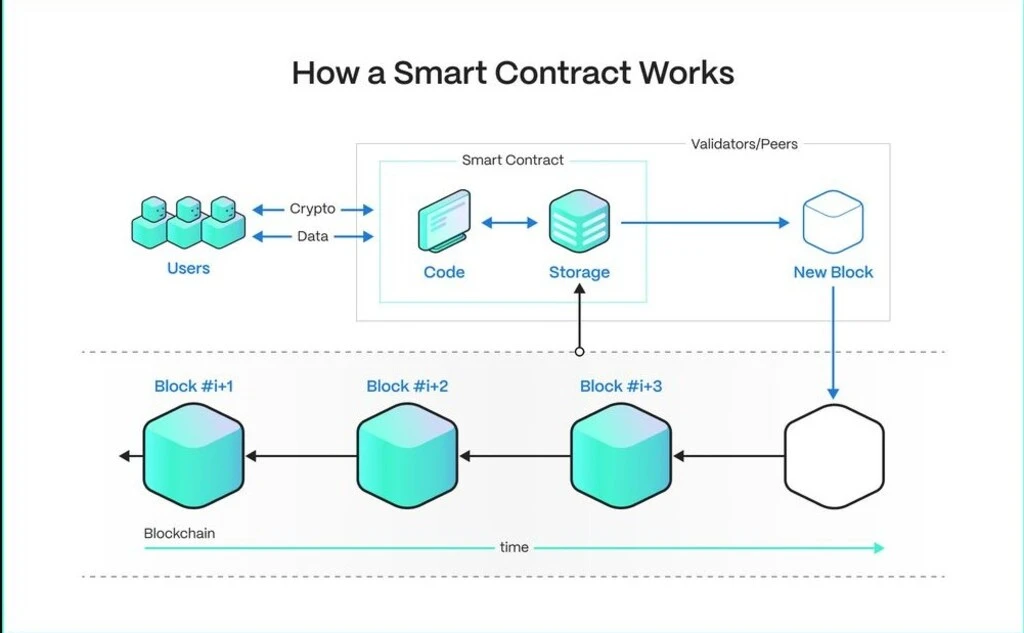
Smart contracts handle the most critical functions of any NFT marketplace: minting new tokens, executing listings, processing bids and auctions, managing ownership transfers, and calculating and distributing royalties. Every one of these operations is immutable once deployed – a bug in your contract cannot be patched the way a regular software bug can. A fix requires deploying an entirely new contract and migrating assets, which is expensive, disruptive, and damages user trust.

For a marketplace that allows open minting, the core contract must handle ERC-721 and ERC-1155 tokens at minimum, plus any chain-specific standards for the blockchains you support. For gaming and RWA applications, ERC-6551 (token-bound accounts) is increasingly relevant. Smart contract auditing by an independent security firm is not optional – it is the primary cost that first-time builders underestimate. Professional audits from reputable firms (Certik, Trail of Bits, Halborn, OpenZeppelin) run $15,000 to $50,000 depending on contract complexity.

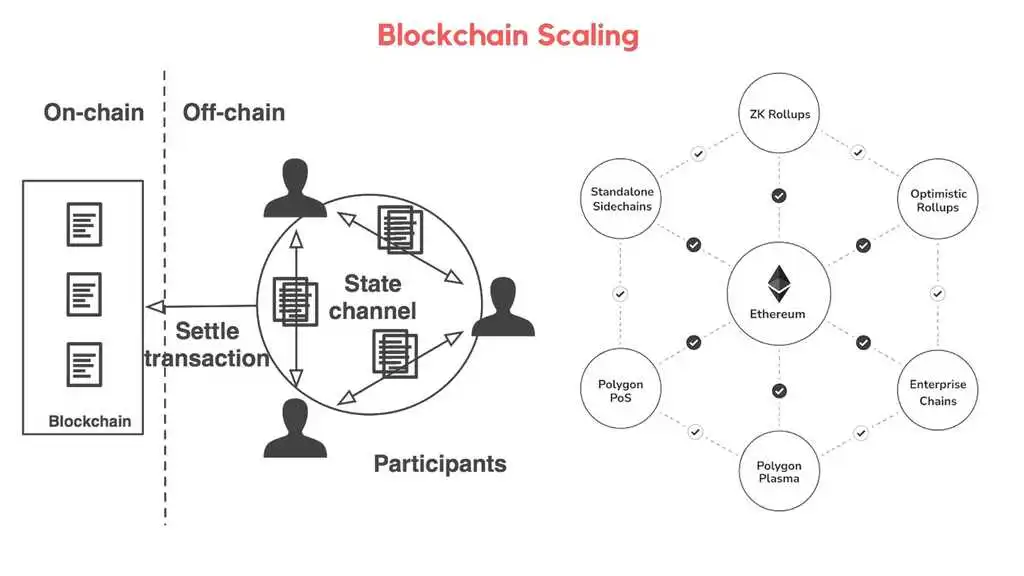
Blockchain and Layer-2 Selection

Blockchain selection determines your transaction costs, your user base, your available developer talent, and your audit costs. In 2026, the main options for NFT marketplace development are:

  • Ethereum Mainnet: Highest security and institutional credibility, most NFT developer talent, but gas fees remain variable. Best for high-value assets where per-transaction cost is not a barrier.
  • Polygon: EVM-compatible, very low fees, the most common choice for mid-tier marketplace builds balancing cost, security, and developer availability. Ethereum security with practical transaction economics.
  • Immutable X: Purpose-built for NFT applications. Zero gas fees for NFT transactions with Ethereum-level security. Increasingly the default choice for gaming and art marketplace deployments that prioritize UX.
  • Solana: Ultra-fast with very low transaction costs. Audit costs run 20-30% higher than Ethereum-equivalent due to Rust developer scarcity. Home to Magic Eden and SolSea. Best for gaming and mobile-first applications.
  • Base: Coinbase’s Layer-2 on Ethereum. Low fees, EVM compatibility, and Coinbase’s distribution layer improving mainstream user onboarding. Growing quickly for gaming and NFT applications in 2026.
A 2D matrix chart plotting Ethereum, Polygon, Solana, Base, and Immutable X based on transaction cost versus developer ecosystem size, including primary use cases for each network.

Frontend: The User Experience Layer

The frontend is the part of NFT marketplace development most teams overinvest in relative to the smart contract and backend layers. Standard frameworks – React and Next.js are the dominant choices – are used alongside Web3-specific libraries for blockchain interaction: ethers.js or viem for Ethereum, the Solana Web3.js SDK for Solana, and WalletConnect or RainbowKit for multi-wallet connection UI.

The most important UX advancement in NFT marketplaces in 2026 is the move away from seed-phrase-first wallet experiences toward account abstraction. Account abstraction allows users to interact with a marketplace using email login, social login, or biometric authentication without managing a seed phrase directly. This shift, enabled by ERC-4337 on Ethereum, is what allows successful 2026 platforms to accept credit card and Apple Pay purchases. Platforms still requiring users to install MetaMask and manage seed phrases before making their first purchase are losing users to competitors with smoother onboarding.

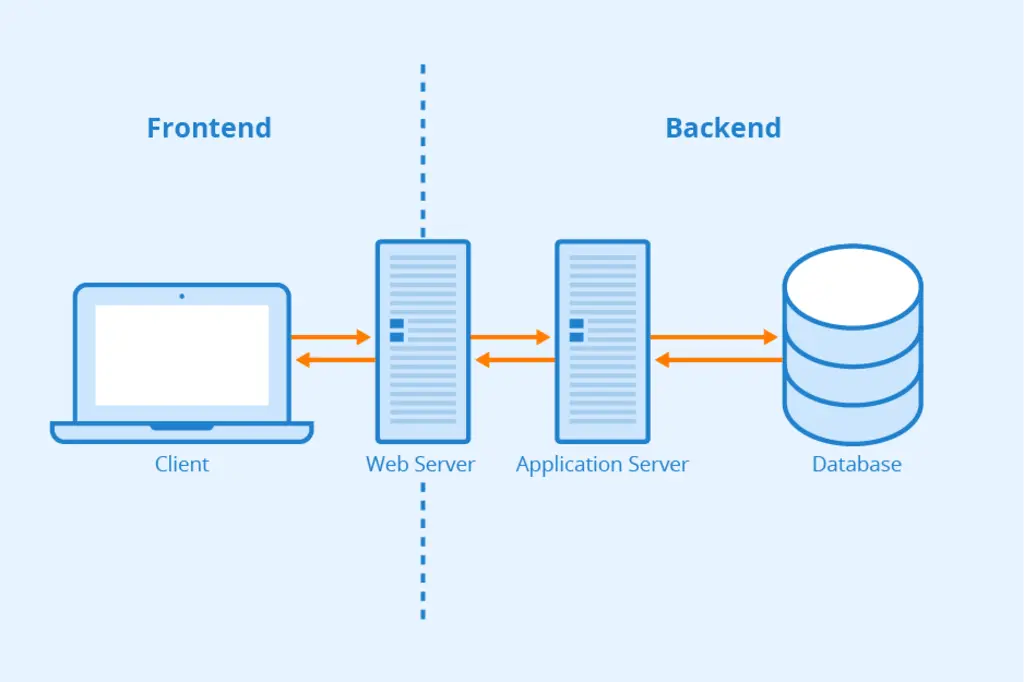
Backend and Database Layer

Not everything belongs on-chain. On-chain storage is expensive and slow relative to traditional databases. NFT marketplace backends typically use a combination: blockchain for ownership records and transaction logic, and off-chain databases for user profiles, collection metadata caching, search indexes, notification systems, and analytics. The Graph and similar indexing protocols are used to efficiently query blockchain data without making expensive RPC calls for every page load.

Traffic spike management is a significant backend challenge. NFT drops and auctions can create 10x to 100x traffic spikes in minutes. Infrastructure that cannot handle this will fail precisely at the moment that matters most for user trust and revenue. Auto-scaling cloud infrastructure, CDNs, and caching layers are required for any serious marketplace build.

Metadata and Storage

NFT metadata – the images, audio, video, and attribute data that describe each token – must be stored somewhere accessible and, ideally, permanent. The two primary options are IPFS (using a pinning service like Pinata or Filebase) for content-addressed decentralized storage, and Arweave for permanent storage backed by an endowment model. On-chain metadata storage is possible but prohibitively expensive for most collections. The choice matters for user trust: an NFT whose metadata disappears because a server went down is functionally worthless.

NFT Marketplace Development: Step-by-Step Process

Step 1: Market Research and Niche Definition

The most important step in NFT marketplace development happens before any code is written. Define your niche with precision: which specific community are you building for, what problem does your platform solve that existing platforms do not, and what makes your market position defensible? A gaming marketplace for a specific game or franchise. A music rights platform for independent artists in a specific genre. A luxury goods authentication platform for a specific product category.

The London Business News 2026 NFT marketplace guide framed this correctly: you would not open a store that sells ‘everything’ without a billion-dollar marketing budget. The same applies to NFTs. The biggest mistake founders made in previous years was trying to be a generalist. In 2026, the winners are the specialists. Look for industries where ownership verification is currently broken, where fake goods are a persistent problem, or where secondary market liquidity is genuinely missing.

Step 2: Choose Your Build Approach

The decision between white-label and custom development should be driven by what you need to validate, not by a preference for building from scratch.

White-label first: If you have not yet proven that your target community will actually use a marketplace, white-label is the right starting point. White-label NFT marketplace solutions from platforms like Thirdweb or dedicated white-label providers can be live in 2 to 3 weeks for $25,000 to $50,000. This gives you a working product to test with real users before committing to custom development investment.

Custom development: Once you have transaction data proving demand exists, custom development gives you the flexibility to build features that differentiate you from competitors. Custom builds take 8 to 12 months and cost $80,000 to $500,000+ depending on features and complexity. This is the right path for marketplaces with unique mechanics, complex royalty structures, gaming economies, or RWA compliance requirements that white-label platforms cannot accommodate.

A branching decision flowchart titled "BUILD vs. WHITE-LABEL". It begins with the prompt "Do you have proven user demand?" and splits into two main paths: the Custom Development Path (long timeline, high upfront cost) and the White-Label Path (short timeline, low upfront cost), showing steps, costs, and timeline callouts for each option based on product differentiation.
Custom Build NFT marketplace vs White-label development solution

Step 3: Smart Contract Development and Auditing

Smart contract development is typically the most technically demanding phase of NFT marketplace development and the one with the highest failure risk. Core contracts must handle minting, listing creation and cancellation, bid placement, auction settlement, royalty calculation and distribution, and platform fee collection.

Test extensively on testnets before mainnet deployment. Simulate high traffic, edge cases (zero bids, failed transactions, bidder wallet drain mid-auction), and all user flows. Then commission an audit before launch – not after. The cost of an audit ($15,000 to $50,000) is a fraction of the cost of a post-launch exploit. Over $100 million worth of NFTs were stolen between July 2021 and July 2022 according to Nadcab Labs’ security analysis, with attackers averaging approximately $300,000 per incident.

Step 4: Frontend Development and Wallet Integration

Build the minting page, collection browser, individual asset pages, user profiles, and transaction flows. Priority features for launch: wallet connection (MetaMask, Coinbase Wallet, WalletConnect minimum), collection and asset browsing with search and filtering, minting flow with gas estimation, buy now and auction bidding, and seller listing and delisting. Account abstraction for email/social login significantly improves onboarding conversion and should be prioritized for any platform targeting mainstream rather than crypto-native users.

Set up blockchain event indexers to track all on-chain activity (The Graph is standard for Ethereum). Build APIs for collection metadata, price history, and user activity. Implement search with filters for price, collection, rarity traits, and chain. Set up notification systems for bid activity, sales, and listing expirations. Configure auto-scaling infrastructure before launch – not after your first drop collapses your servers.

Step 6: Security Hardening and Launch Preparation

Beyond smart contract auditing, marketplace security requires attention to the full attack surface: frontend phishing protection, backend API rate limiting, wallet connection security (preventing malicious wallet injection), price oracle validation, and moderation systems to handle counterfeit listings and DMCA-infringing content. Set up a bug bounty program to incentivize security researchers to report vulnerabilities post-launch.

Step 7: Launch and Liquidity Strategy

An NFT marketplace with no users has no liquidity and no reason for creators to list. Launch strategy is as critical as technical execution. Recruit a founding cohort of creators before launch. Plan a curated drop for launch day. Incentivize early liquidity with reduced fees for initial listings. Partner with a community that already exists rather than trying to build one from scratch. Many technically excellent NFT marketplaces have failed not because of bugs but because they launched into a vacuum.

NFT Marketplace Revenue Models

Understanding how your marketplace generates revenue is part of the architecture decision, not an afterthought. Different revenue models have different implications for smart contract logic, fee accounting, and platform incentives.

  • Transaction fees: The most common model. A percentage of each sale goes to the platform (typically 1% to 2.5% for competitive platforms, up to 5% for niche or curated ones). OpenSea charges 2.5%. Blur operates with optional fees to compete on volume.
  • Primary sales commission: A cut of initial minting sales. Platforms that offer launchpad services for new collections take 5% to 15% of primary sale revenue.
  • Listing fees: One-time or recurring fees to list assets. Less common now due to competitive pressure but still used by curated platforms.
  • Creator royalties: Platforms that enforce creator royalties can attract creators who prioritize ongoing revenue. The royalty enforcement model directly affects creator retention.
  • Subscription and premium features: Analytics dashboards, verified creator badges, promotional placement, and advanced trading tools sold as subscriptions.
  • Token-gated access: Platform-native tokens that provide fee discounts, governance rights, or access to exclusive drops.

Most platforms in 2026 combine transaction fees with at least one secondary model. The revenue model choice affects competitive positioning: platforms that charge high transaction fees lose volume to lower-fee competitors unless they offer differentiated services that justify the premium.

Security: The Risks That Actually Sink NFT Marketplaces

Security in NFT marketplace development is not limited to smart contract vulnerabilities. The attack surface is much wider, and the most common forms of marketplace failure in 2026 are not technical exploits – they are integrity failures that destroy user trust.

Wash Trading

Wash trading is the most pervasive integrity risk in NFT marketplaces. Research from Wharton and UCLA found that approximately 38% of trades and up to 60% of traded value across major NFT exchanges likely involve manipulation. A 2026 study published in Research Policy, detecting wash trades via machine learning, found that approximately $30 billion in NFT volume on Ethereum has been linked to wash trading according to Dune Analytics data. The pattern is consistent: a trader controls multiple wallets, sells an NFT between them at increasing prices to create the appearance of demand, then sells at the inflated price to an unsuspecting buyer.

For marketplace builders, the implication is direct: platforms with obvious wash trading lose credibility with serious collectors and creators. Detection mechanisms (wallet clustering analysis, on-chain pattern detection, machine learning flagging) and KYC requirements for high-volume accounts are the primary tools. Platforms in Europe and the UK are already expected to align with AML frameworks under FATF guidance, making KYC compliance increasingly mandatory regardless of platform choice.

Smart Contract Vulnerabilities

Once deployed, smart contracts cannot be patched. The main vulnerability classes in NFT marketplace contracts are reentrancy attacks (where an external contract calls back into your contract during execution to drain funds), integer overflow and underflow errors in price calculations, unauthorized access to admin functions, and price oracle manipulation on auction settlement. Independent security audits catch the majority of these before launch. Post-launch, a bug bounty program incentivizes ongoing security research.

Frontend and Phishing Attacks

The frontend attack surface is often overlooked. Attackers create fake versions of legitimate marketplace domains, post malicious links in creator Discord servers, and use compromised social media accounts to redirect users to wallet-draining sites. Countermeasures include domain monitoring, clear wallet transaction confirmation UI that shows exactly what permissions are being signed, and education for users about signature request types.

Open marketplaces face persistent problems with users minting NFTs of artwork they do not own. Without moderation, this creates legal liability and damages platform reputation. Automated image similarity detection, DMCA takedown processes, and creator verification systems are standard requirements for any marketplace accepting open submissions.

Frequently Asked Questions

What is NFT marketplace development?

NFT marketplace development is the process of building a platform where users can mint, buy, sell, and trade non-fungible tokens. It requires blockchain integration, smart contract development for transaction logic, wallet connectivity for user authentication, decentralized storage for NFT metadata, a frontend for user interaction, and backend infrastructure for search, indexing, and analytics. It is significantly more complex than a traditional e-commerce platform build.

How much does it cost to build an NFT marketplace in 2026?

Costs range from $25,000 to $50,000 for a white-label MVP (live in 2 to 3 weeks) to $150,000 to $500,000+ for a fully custom platform built from scratch. The main cost drivers are smart contract complexity and auditing, the number of blockchains supported, custom feature requirements, and development team location. The validated approach is to launch with white-label first, then invest in custom development once you have transaction data proving demand.

Which blockchain is best for NFT marketplace development?

Polygon is the most common choice for mid-tier marketplace builds in 2026, balancing cost, security, and developer availability. Ethereum mainnet is best for high-value assets where per-transaction fees are not a barrier. Immutable X is purpose-built for NFT applications with zero gas fees for NFT transactions, making it increasingly the default for gaming and art marketplaces. Solana offers ultra-low transaction costs for gaming and mobile-first platforms. The right choice depends on your target audience, transaction volume, and niche.

What are the core features a basic NFT marketplace needs at launch?

At minimum: wallet connection (MetaMask, Coinbase Wallet, WalletConnect), user profiles, collection creation and browsing, NFT minting flow with gas fee estimation, fixed-price listing and buying, basic search and filtering, and transaction history. Auctions, royalty configuration, analytics dashboards, and creator verification can be added post-launch once the core trading mechanics are stable.

How long does it take to build an NFT marketplace?

A white-label solution can be live in 2 to 3 weeks. A custom build from scratch typically takes 8 to 12 months for a mid-complexity platform with standard features, and 12 to 18 months for an enterprise-grade platform with multi-chain support, compliance requirements, and advanced trading mechanics. Smart contract auditing adds 2 to 6 weeks to the timeline and should not be skipped to save time.

What is wash trading and how does it affect NFT marketplaces?

Wash trading is the practice of selling an NFT between wallets controlled by the same person or group to create artificial trading volume and inflate apparent price. Research from Wharton and UCLA found that approximately 38% of trades across major NFT exchanges likely involve this manipulation. It damages marketplace credibility with serious collectors, attracts regulatory scrutiny, and harms users who buy at artificially inflated prices. Marketplaces should implement wallet clustering analysis, on-chain pattern detection, and KYC for high-volume accounts to mitigate this risk.

Do I need to audit the smart contracts for my NFT marketplace?

Yes, for any marketplace handling real monetary value. Smart contracts are immutable once deployed – a security bug cannot be patched the way regular software can. A fix requires deploying a new contract and migrating all assets, which is expensive and damaging to user trust. Professional smart contract audits from firms like Certik, Trail of Bits, or Halborn cost $15,000 to $50,000 depending on contract complexity. This is one of the highest-ROI investments in NFT marketplace development.