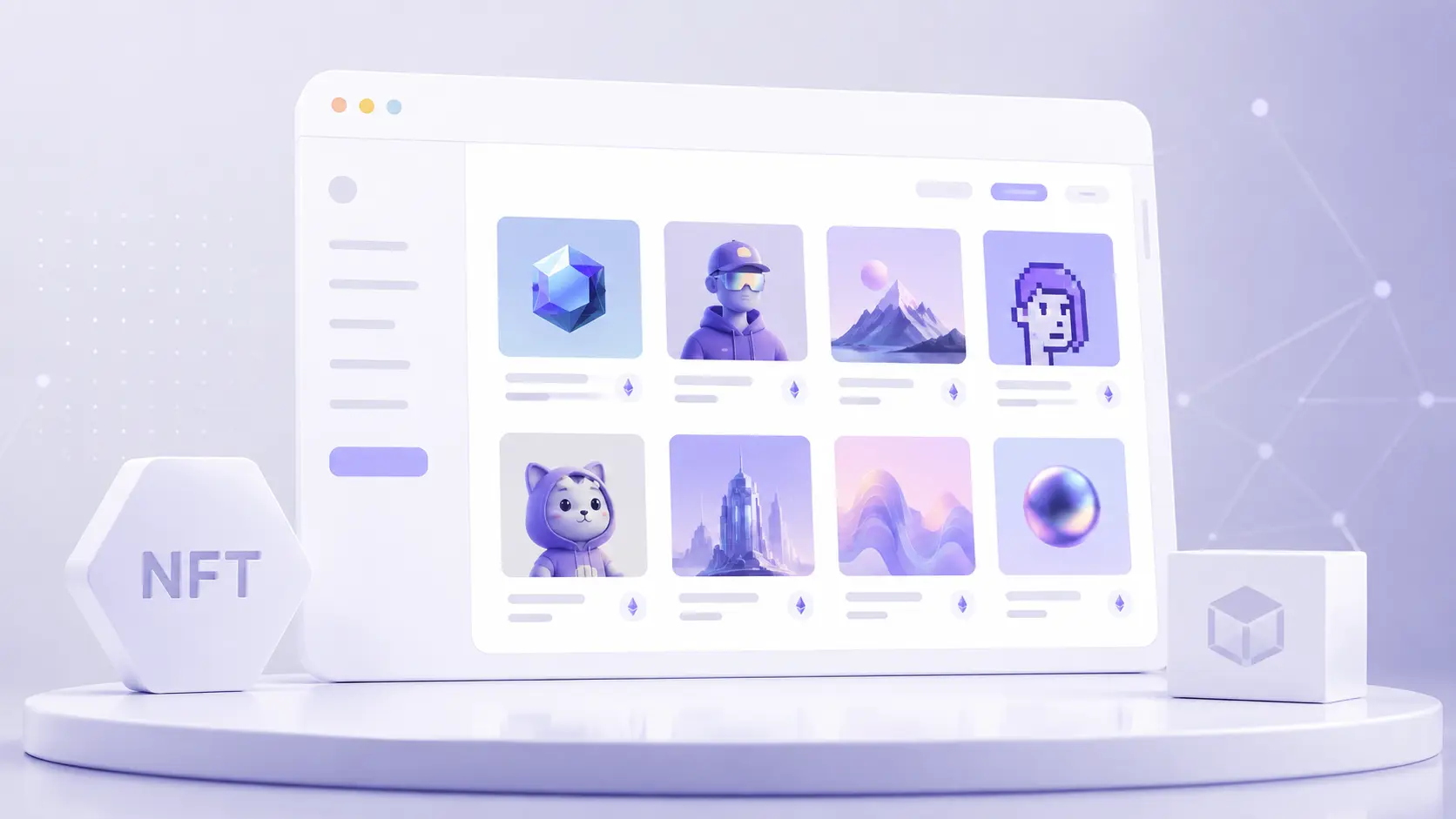
Are you contemplating establishing your own NFT platform? You might want to think again. To create your own NFT marketplace typically costs over $600,000 and can take around eight months of hard work involving a team of people. Therefore, many businesses should go for a ready-made white label NFT marketplace instead of hundreds of thousands of dollars of investment into a brand new platform.
Key takeaways
- A white label NFT marketplace can be ready in 2 to 8 weeks, while a custom one takes 4 to 8 months or longer.
- Buying a license costs $10,000 to $30,000 upfront. Monthly subscriptions for SaaS builders start around $19 to $99. For big gaming projects, it can be $3,000 to $10,000 or more per month.
- The real risks are about being stuck with a vendor and using contracts that claim to be audited but are shared among many buyers without proper individual checks.
- Instead of just watching a demo, look at who owns the contract, what the terms are for moving your data later, and whether there’s a specific audit report for your provider.
- For 2026, a realistic goal is to test out a specific market niche affordably. Don’t aim to compete with big players like OpenSea by using a pre-built, rented code base and trying to match their features.
And this is really a good moment to consider it. According to a Bloomberg report based on DappRadar data, NFT trading volumes dropped down to $823 million in Q2 2025 from $1.4 billion in the previous quarter. It means that not all developers need to make a huge investment in creating their own platform. They can always start small with those ready-made platforms and then invest in the development of their own unique platform if the network activity proves the investment to be reasonable.
In this review, we will discuss these platforms, how they work, and how much you can expect white label NFT platforms to cost in 2026. Let’s start by understanding some important ideas.
What Is a White Label NFT Marketplace?
This appears to be a ready-made NFT marketplace that you license. You get the source code, enabling you to rebrand it entirely. You may customize the design, selecting which asset types the platform will list, such as digital art, games, or music, and add other features. The time to develop a white-label marketplace can be significantly reduced since most of the hard work has already been done by the vendor. You only need to configure the vendor’s solution to your requirements, and what the end-users will see is a marketplace that is virtually indistinguishable from the one you have built yourself.
But there is another aspect, less apparent at first but nevertheless crucial in many respects. It has to do with how much control the customer retains over the fundamental conventions, known as ‘smart contracts’, that were necessary to make their particular blockchain-based systems work. The standard smart contracts for NFTs are ERC-721 for uniquely identifiable tokens and ERC-1155 for fungible tokens, such as in-game assets.
There are two other questions that a prospective white-label customer should ask themselves before finalizing the deal. Both of them concern the very practical matters of who has audited the contract code for the particular offer they are considering and who will be in charge of it once it goes live. You may get rather varying answers from different providers.
Two Models of Delivery: Licensed Software and SaaS Builders
This explains why customers may be surprised at the prices, comparing white label options for sale: “white label” here refers to two fundamentally different things.
Licensed, Self-Hosted Deployments
Development agencies sell you their proprietary code base, customized with your logo, under a license of a single customer. The product is deployed on your infrastructure, where the code can remain proprietary, depending on the contract terms.
You maintain your own hosting, uptime, and security, while the developer provides support and updates. It is important to understand that the code base is likely to be the same for all customers, possibly customized to a certain extent.
SaaS Marketplace Builders
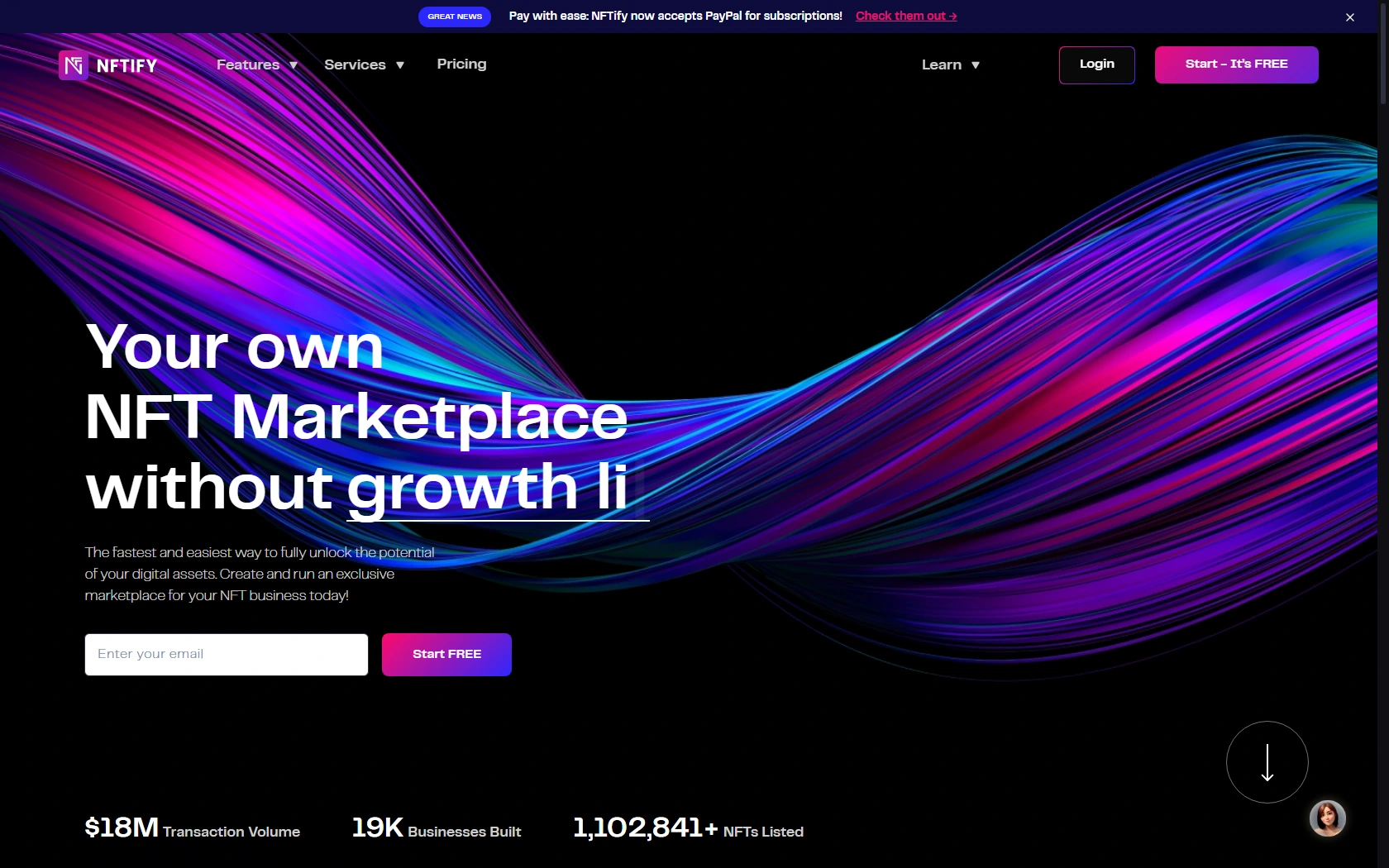
Solutions such as NFTify allow you to build a marketplace of choice without writing a single line of code. Instead, you subscribe to the software as a service (SaaS) and customize the front end to your liking. You can launch the marketplace within days versus months for a custom build. Your costs are significantly lower, with no need for expensive infrastructure.
However, the limitations of such a SaaS solution are also evident, since you will have to rely on a limited set of features and design options offered by the provider. In addition, porting your solution to another platform may be complicated, requiring you to find a new provider and redo all the steps.
I prepared guides from each of the companies offering white label solutions for your review. As mentioned, such end-to-end services are likely to start from about $10,000 to $90,000, depending on the item and vendor.
Pros and Cons of Going White Label
The advantages are real, but every one of them has a mirror-image limitation. Weigh both columns before signing anything.
| Advantages | Limitations |
| Launch in 2-8 weeks instead of 4-8+ months | Deep logic changes (custom auctions, tokenomics) usually impossible or priced as custom work |
| 60-80% lower upfront cost than a custom build | Subscription and per-transaction fees accumulate; five-year cost can exceed a custom build |
| Battle-tested core features and UX | Same codebase and UX as other buyers – weak differentiation |
| Vendor handles updates and infrastructure (SaaS) | Vendor lock-in: users, data, and contracts are tied to their stack |
| Pre-written smart contracts | “Audit-ready” is not audited; contract provenance is often opaque |
Lock-in deserves its own callout because it’s the cost founders discover last: once collections, users, and transaction history all live inside a vendor’s stack, switching means starting over in practice, not just in theory. Contract ownership, data export, and source-code escrow belong in the negotiation before signing, not after, once the buyer has already lost the upper hand.
White Label NFT Marketplace Costs in 2026
Nearly every published number in the white label space comes from a vendor pricing its own product, so read every figure below as a self-reported estimate, not audited market data. Cross-referencing several 2026 cost breakdowns still produces a fairly tight cluster of ranges.
| Cost item | Typical range | Notes |
| Licensed white label platform | $10,000-$30,000 | One-time fee; 2-6 week deployment; customization billed extra |
| SaaS builder subscription | $2,000-$10,000 / month | Low entry cost; fees scale with usage and never stop |
| Clone script | $7,000-$20,000 | Cheapest tier; highest code-provenance risk |
| Independent smart contract audit | $5,000-$20,000 | Non-negotiable if you deploy your own contracts |
| KYC/AML integration | $5,000-$15,000 + per-check fees | Required for regulated markets and fiat on-ramps |
| Hosting and maintenance | $1,000-$3,000 / month | Applies to self-hosted licensed deployments |
Firstly, choosing a chain which is lower fee (as you will have to run your own Polygon NFT marketplace) not only makes the deployment easier but also decreases the cost per user interaction compared to deploying on Ethereum mainnet.
Audit Some providers offer smart contracts which have been audited, meaning that a report of such an audit would be available to you. In other cases, you will have to request a separate audit of the smart contract which will cost you $5k-$20k; however, if there are any vulnerabilities in the codebase used as the basis for multiple marketplaces, they will all be exposed at once.
Best White Label Providers: Who Actually Sells What
Below you can see how we split them into three categories.
Before moving on to the next section, I have to note that this list was compiled from the white label providers point of view, meaning that you will find a lot of marketing-speak there. Everything that is said beneath the headings is something these companies would tell you themselves, so if you want to know what to ask for when choosing the best white label NFT marketplace provider, this is your guide.
This way, you can compare the options on your shortlist to our review of the best NFT marketplace development companies.
| Provider type | Examples (self-reported claims) | Best fit |
| SaaS / no-code builders | NFTify (launch in minutes, subscription-based) | Creators and small brands testing demand with minimal budget |
| Blockchain dev agencies with white label products | 4IRE (1-2 month launches), Rain Infotech (sub-3-week deployment, pre-audited contracts), Coinsclone, Suffescom, SoluLab | Startups wanting a branded, self-hosted platform with some custom work |
| Enterprise infrastructure suites | ChainUp (NFT module within a larger exchange stack) | Established companies adding NFTs to existing regulated products |
This theme repeats in each of the three groups of vendors mentioned above. The marketing copy of all vendors will have similar wording. The thing is that these are statements that get verified in the contract.
When making your first call with a shortlisted vendor ask for several things: Request Live Client Builds / Audit Reports + Standard License Agreement. With that information you will be able to learn about the nature of the vendor and about the quality of his communication far quicker than by any other means!
How to Select the Best White Label Vendor
- Who owns the deployed smart contracts? Who has administrative keys over them? What will happen to my data once I am off?
- Data export and user portability. This must be described in writing, not left to the exit interview.
- What audit proof do I have that this code is audited? I need to know the auditor’s name and, preferably, have the readable report for the latest contract version.
- Do I have the freedom to make changes without damaging the upgradeability of the contracts? What kind of support do I get in this case, and how can I avoid regression costs?
- Live demos of edge cases (minting → buy → fail → dispute). Edge cases will expose your product’s quality control and customer support, but they tend to remain hidden unless you see them demonstrated.
- Moderation and anti-fraud tools. From personal experience, we know that in a dispute between copy-minted NFTs and the main item on the marketplace, all sales of the disputed items are blocked until the conflict is resolved. Think about what safeguards and moderation tools you want to have in place at the onset.
- The total cost over 5 years of licenses/subscriptions, transaction fees, hosting, support, and customizations. This helps make sure you don’t fall into the trap of paying a really low monthly fee for a SaaS version and then having the total cost far exceed what you would spend developing an option where you just pay a licensing fee. It can easily blow past within two or three years.
Launch Guide: From Demo to Live Marketplace
- Define your business niche and income model. Figure out with whom the marketplace will be working and how will the business profit from them (commission rates, listing fees, minting fees, etc.) before the vendor meetings.
- List 3-5 vendors that might work. Evaluate those vendors with the help of our criteria and request the license agreement as soon as possible (as soon as they verbally say ‘yes’, not after that).
- Figure out your ownership and exit strategy. Plan who will own the contract and rights in case of contract termination or dispute, data exports, source code escrow and all other SLAs.
- Configure your brand. Choose the branding elements which will be displayed based on your visual identity. Choose the blockchain which will be used by your website, what wallets are supported and fee parameters including commissions, royalties & listings.
- Verify / Commission the Audit. You should verify that the audit provided is relevant for the current version of your contract or we can commission an independent audit for you before the mainnet launch.
- Test On Testnet. Go through the whole process including minting, listing, bidding, purchasing, payouts and refunds with real wallets before mainnet launch.
- Launch Then Fund Your Growth. After your testing period is over, you will want to focus on allocation of the budget for growth.
- From our own experience, we realized that creating a great community around your NFT marketplace is significantly more efficient for the volume of trades compared to any single feature, especially with specialized nft marketing agency help.
Is a White Label Launch Still Worth It in 2026?
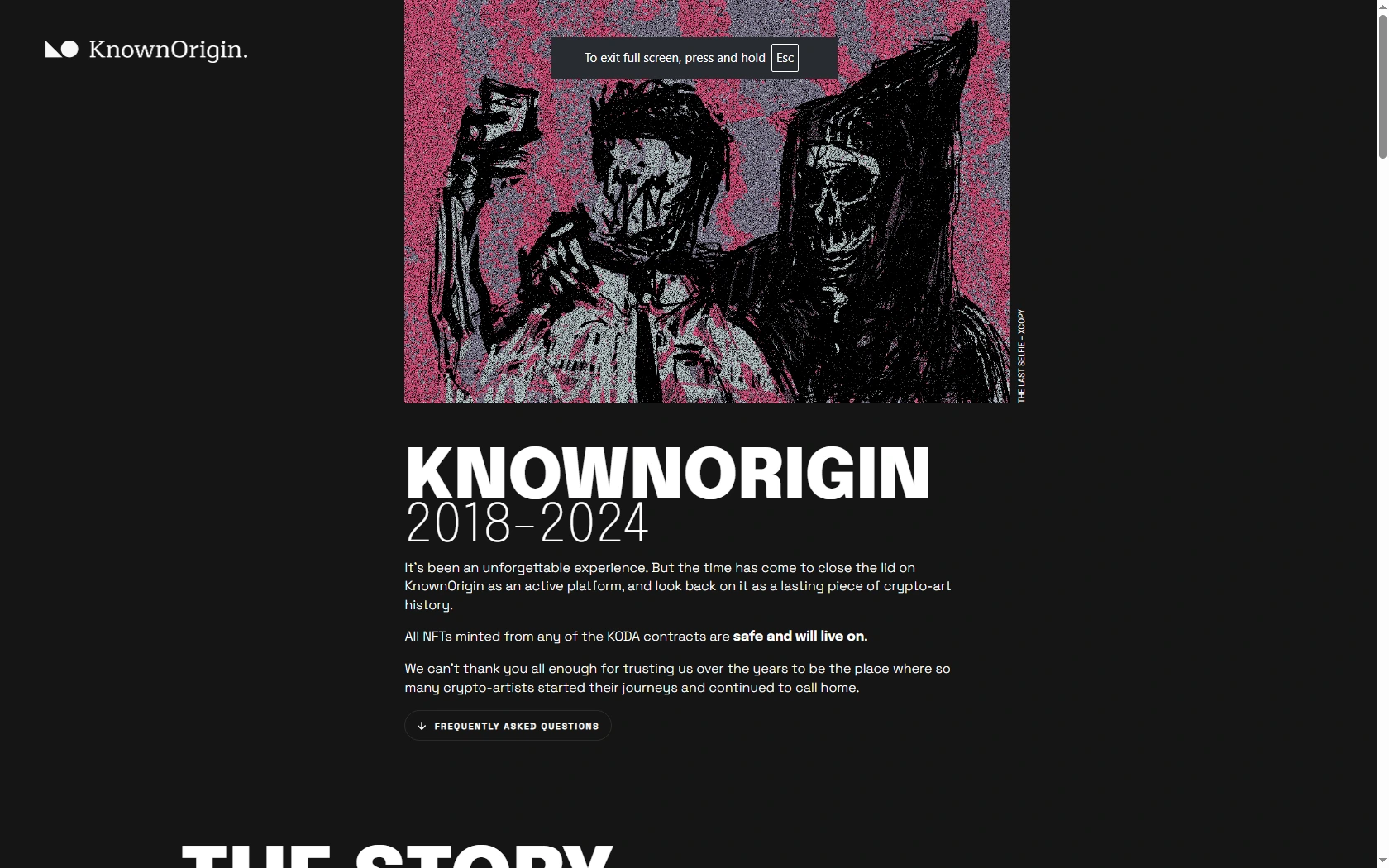
The blunt truth-only if the concept has focus. After platform closures that seemed to arrive like a series of dominoes falling as volume dried up following the early 2021 peak-Foundation, MakersPlace, KnownOrigin, Nifty Gateway, X2Y2-the rush to close down the marketplaces has continued well into 2026.
Average sale values of $80-$100 per NFT (CryptoSlam data) mean commission-based revenue needs high transaction counts, not a handful of trophy sales. The latest NFT market data still undercuts the recovery narrative many vendor sales teams lean on.
The other trend in the latest market figures was growth. Sales counts and trader volumes increased throughout the whole down trend. That growth was in areas like sports collectables, real-world asset trading, games collectables trading and low value high volume trading.
This is the precise case for white labelling; low outlay, fast start, inexpensive learning. Look at what successful marketplaces-what has it managed to establish ownership on? Focus, pick your focus, validate it on a white label site. The transactional data that grows out of that will later justify commissioning custom NFT software development.
A white label NFT marketplace is an appropriate tool for testing a focused hypothesis cheaply and quickly in this reduced market. It is not an appropriate tool for feature warfare against established sites, and anyone saying anything else is still operating as if it’s the market of early 2021 instead of early 2026..
FAQ
What is the price range of a white label NFT marketplace?
Industry estimates are as low as $10k-$30k one time for licensed deployments and as little as $2k-$10k/month for SaaS builders and $7k-$20k for clone scripts. Add about $5k-$20k if the vendor has no audit report to present, KYC as necessary per requirement and hosting costs where a self-hosted solution needs deployment on servers.
How long does it take to launch the marketplace?
Days are possible when setting up from SaaS builders and it would take 2-6 weeks, and 2-8 weeks with essential modifications to a licensed product. Customized projects may however take as long as 4-8 months.
Do I own the marketplace and underlying code as well?
It all depends on what your contract is. Sometimes a licensed solution would allow source code and smart contract ownership. Whereas a SaaS marketplace would never offer both these advantages of the platform; instead, it is often referred to renting. This and contract parameters of taking administrative charge and having data exported is quite vital during negotiations.
What is the difference between white-label platforms and clone scripts?
White-label platforms are managed services with options that may be modified by the owner. Clone scripts on the other hand is a feature set copy of a popular marketplace sold off to many at extremely low rates, typically with no proper code backup or support on board. Price difference is rather insignificant where the same would not apply to risks.
Can I later move away from a white label provider?
The on-chain assets (the NFTs) are portable as-a-matter-of-fact, but your storefront, accounts, and data, are typically not portable. If Migrating from a saas builder then it often requires reconstructing your platform. Negotiate data export, and a source code escrow in the front end of any agreement, this keeps the door to exits open.
Will I still make money from an NFT marketplace in 2026?
Market share is consolidating and it is more difficult, not for specialists (real-world assets, sports, gaming or regionally based markets), since transaction volumes were robust in the midst of price declines, than a generalist approach, where the white label economies of scale fit. Prove it on a smaller scale and then expand on things that have real traction, is always the move.

Dan is a seasoned crypto writer for Blockchaindose who got his start in the space back in 2019. Over the past four years, he’s built a solid grasp of how the industry moves, focusing heavily on DeFi, NFTs, GameFi, and promising new projects.
Off the clock, you’ll usually find him buried in a good book or kicking back with a movie. His blend of hands-on market experience and straightforward commentary makes him a clear, trusted voice across the platform.