Tokenized equities exploded in 2025, and is hitting new peaks in 2026. In Jan 2025, the total value of tokenized equities was of $32 million. One year later, Jan 2026, the tokenized equity market is valued at $963 million, a more than 2800% year-over-year surge.
These numbers are a signal of great potential for the tokenized equity space in the upcoming years. But, what is tokenization? How does it work?
Key Takeaways
- Tokenized equities jumped from $32M to $963M in one year.
- Equity tokenization turns real shares into blockchain-based tokens with fractional ownership.
- Investors get 24/7 trading, faster settlement, and global access.
- Tokenization upgrades market infrastructure but doesn’t replace brokers.
- Private shares, VC funds, and real estate are now moving on-chain.
- Kraken, Coinbase, Tokeny, Bybit, and HOODX lead tokenized stock access in 2026.
What is Equity Tokenization?
In finance, equity is a share of ownership in a company or an investment. Holding equity means you share in profits, voting rights, and residual claims on assets in case of liquidation.
Tokenization is the conversion of physical rights into an asset into a blockchain-based token. When combined, equity tokenization is born.
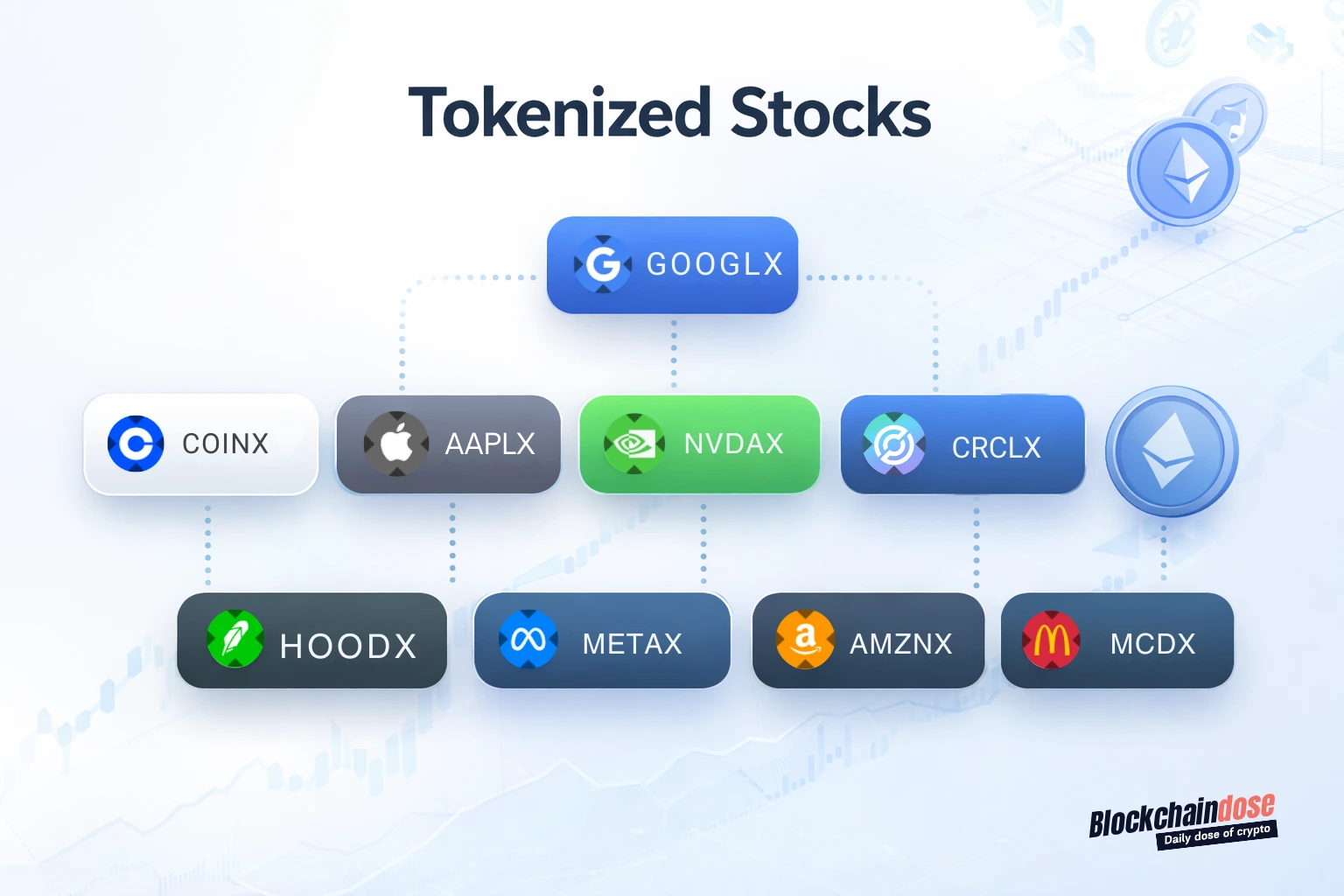
Equity tokenization is a process where a company’s or corporation’s stock is converted into digital, blockchain-based tokens. This moves the rights to these traditional assets into the digital ledger technology. Equity tokens are a digital representation of ownership in companies, and funds.
The conceptualizers believed that by issuing shares on blockchain, you eliminate many administrative costs, streamlining the processes of trading shares. They track values of the underlying traditional equity, a company’s stock.
Their style of function is quite similar to that of the stablecoin-fiat relationship. Equity tokens maintain a specified peg with the underlying security, just how stablecoins maintain a 1:1 peg with the USD. Every time the value of the stock declines or surges in traditional markets, the equity token’s value also surges or drops.
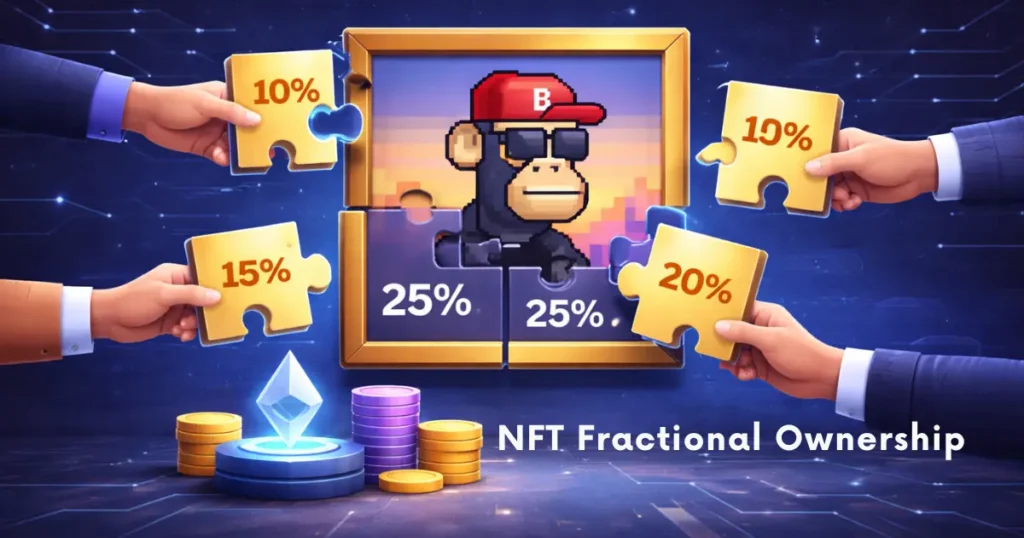
With equity tokenization comes fractional ownership. Hence, even small investors can invest in higher-value equities and enjoy the benefits.
Key Benefits Mentioned
There are lots of positive expectations, including:
- 24/7 trading markets
- Fractional ownership
- Global investor access
- Lower barriers for non-US investors
- Faster settlement
- Lower fees
- Improved transparency through blockchain records
- Easier transfer of ownership
So, Who Really Benefits?
Tokenization benefits different classes of crypto stakeholders. For supporters of equity tokenization, increased liquidity helps asset owners. Moreover, the global token access widely benefits. However, investors in underserved regions. For skeptics, the benefits could favor institutions, sophisticated traders, and become another speculative trend.
How Tokenized Equities Function
The consistent description of the functional flow of tokenized equities takes these steps:
- A tokenizing platform purchases real shares from a company, i.e., Nvidia, Microsoft.
- At about the same time, tokens equivalent to the stock are minted on a blockchain.
- These tokens represent ownership of the stock and a degree of financial exposure.
- The transfer of every token happens on the blockchain, with near-instant settlements.
Are Hybrid Systems Possible?
The short answer is, yes.
There has been a common misconception that companies must tokenize all outstanding shares. But, the truth is, not all shares must go on-chain. In hybrid systems, some shares remain as tokens, and others remain traditional.
Does Tokenization Eliminate Brokers and Financial Institutions?
The above is a common question. However, tokenization does not really eliminate exchanges and brokers. It gives room for them.
Some brokerage firms could offer custody services for tokenized shares on users’ behalf. Others could shield the users from the complexities associated with blockchain tech. Buying tokenized stocks may feel identical to using a normal brokerage app.
Is Tokenization a Revolution or Merely an Infrastructure Upgrade?
A recurring theme on social networks is that tokenization is not a revolution of equity markets. Rather, it is an infrastructural upgrade. Tokenization modernizes settlement speed, reconciliation, ownership tracking, and operational efficiency. Many in the crypto community believe tokenization is “A backend upgrade rather than a new asset class.”
Types of Equity That Can Be Tokenized
A primary defining feature of tokenization is flexibility. Tokenization can touch different asset classes. Some of the well-known types of equity tokenization are:
Private company shares
Albeit offering high returns, private equity companies fail at liquidity, high investment minimums, and limited access. But, tokenization is the solution. It addresses the issues by making the shares easily accessible assets on blockchain. Everyone gets exposure to these previously hard-to-reach assets.
Through tokenization came fractionalization. This lowers entry barriers, allowing more investors to participate in this business. For companies, tokenization expands fundraising possibilities while maintaining transparency and automated compliance.
A good example of private company share tokenization was displayed at the Consensus Hong Kong 2026, where this idea of tokenizing unlisted companies gained significant attention. Hecto Finance brought an idea to design an on-chain index tracking private firms like SpaceX. All this would happen with the help of Canton Network.
Venture Capital Investments
Predominantly, venture capital funds demand high amounts of investments. The minimums investments range from $250K to $500K, locked up for long periods of time. As such, only a small class of high-net-worth investors was able to access them.
Through tokenization, the ownership stakes in VCs are divided into smaller units called tokens. As such, an investor needs not commit high amounts of capital in a single fund.
An added advantage of VC tokenization is blockchain-based tracking models that bolster transparency.
In 2024, Blackrock launched BUIDL, which quickly climbed ranks capturing almost a third of tokenized funds in weeks. It managed close to $3 billion worth of assets by early 2026.
Real Estate Equity
Equity in real estate stands among the easiest assets to tokenize. In traditional real estate, participation often demands large capital, long legal processes and lengthy transactions. Through tokenization, real estate stock is sellable, through exchanges as tokens.
In Colorado USA, the St. Regis Aspen Resort tokenized ownership into Aspen Coin. The goal? Increasing liquidity and access to secondary markets.
Where Can You Buy Tokenized Equity in 2026?
Kraken
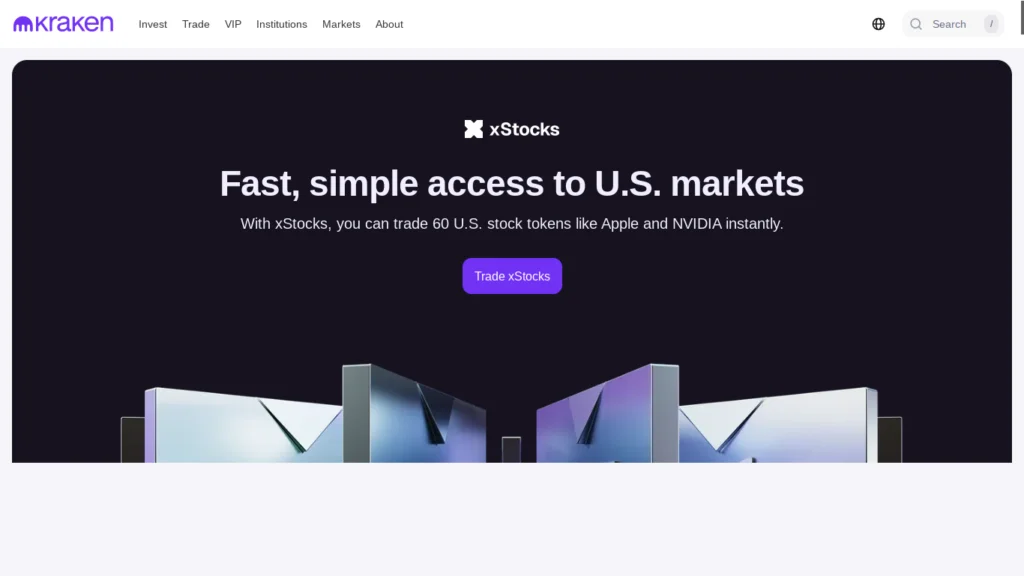
Crypto trading marketplace Kraken stands tall amongst top sites for purchasing equity tokens. As per reports, this network, via Solana-based xStocks, is now issuing in excess of 60 US stock tokens.
The aim is to make the US-based stock available to many globally, especially in regions with no stringent jurisdiction strains. Participants have the option of investing from as little as $1 in many different stocks.
Kraken’s xStock’s enables trading of US-based security 24/7, while bolstering liquidity. For trading fees, Kraken implements a tiered maker/taker model.
A good example of stocks you can purchase on Kraken include:
- Tesla TSLA
- Microsoft
- Strategy
- Intel
- Netflix
Coinbase
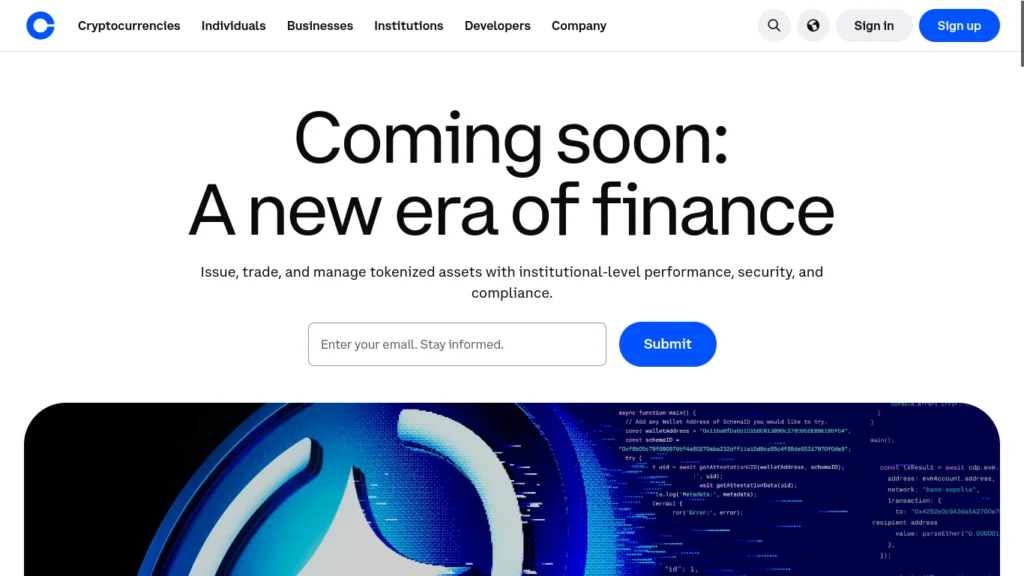
Another top crypto trading platform Coinbase is making an entrance in the world of tokenized equity. As per recent reports, the behemoth exchange has been pursuing SEC approval for issuing tokenized stock in he US.
A look at Coinbase web page, Coinbase.com, brings to light a new subsection under Coinbase Tokenize. This will be Coinbase’s own page to encourage the issuance, trading, and managing of tokenized assets, while keeping in mind institutional-level performance, compliance and security.
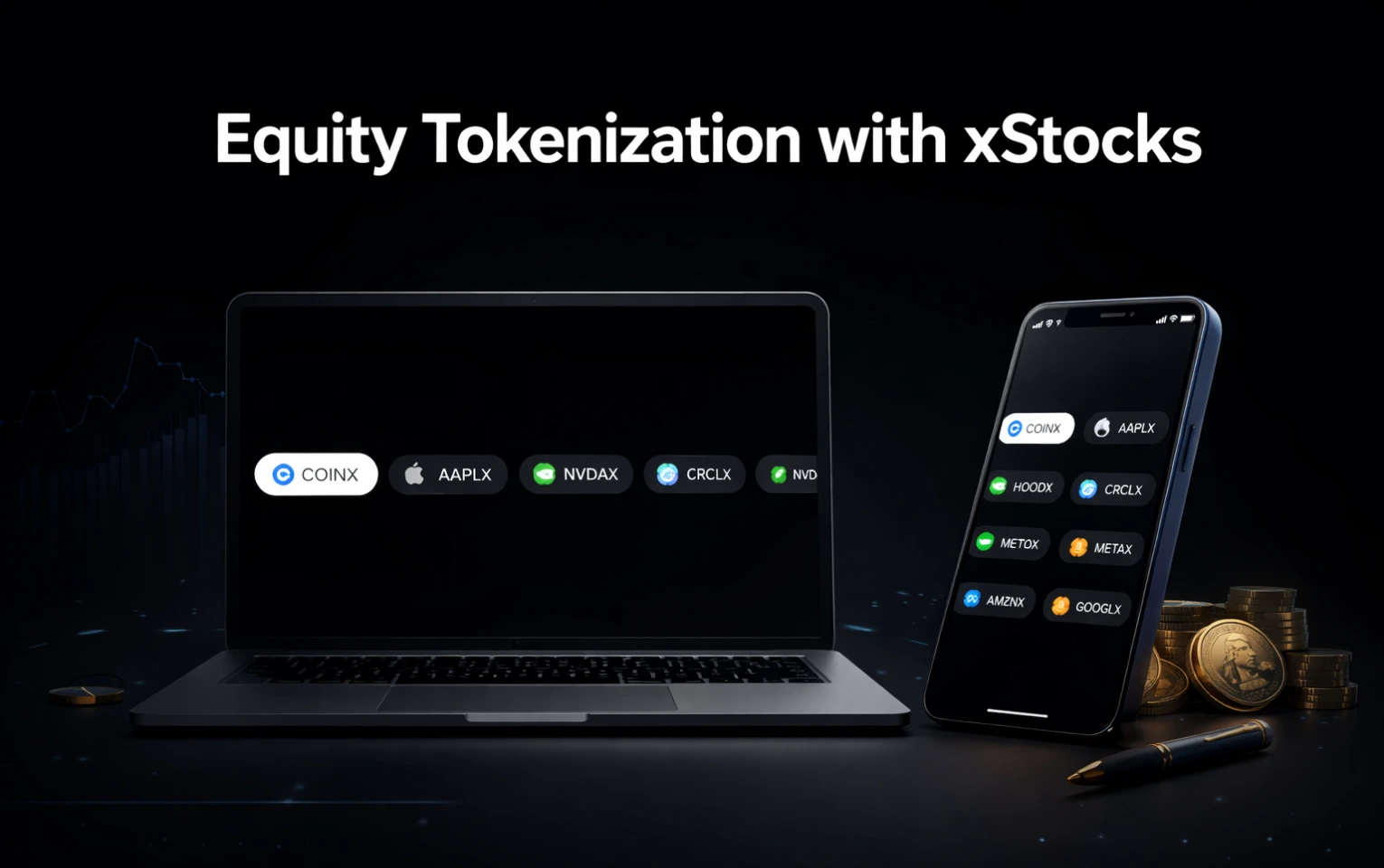
The primary stock you can own via Coinbase Tokenize will be COINx. However, the exchange will expand to many others.
Tokeny
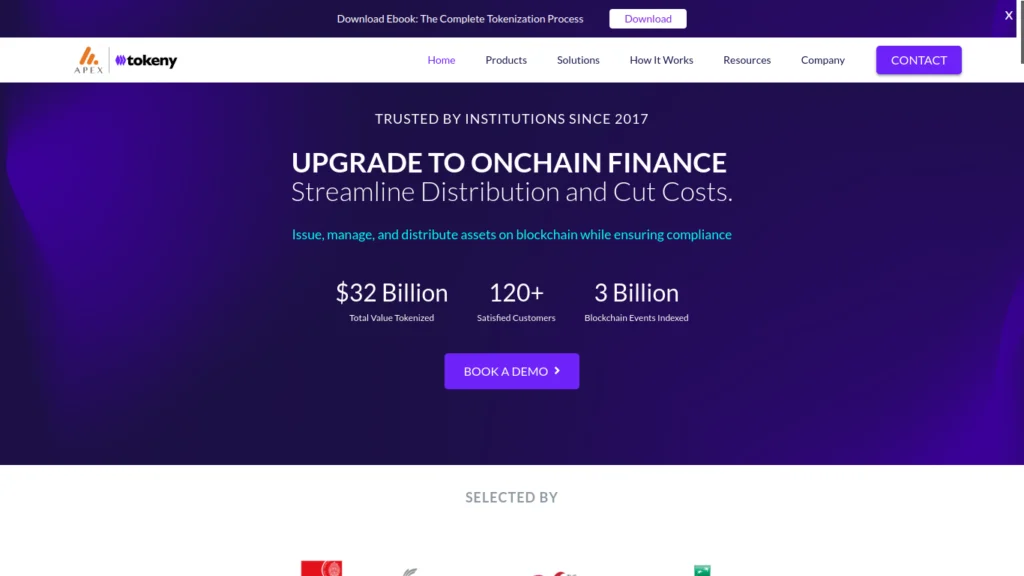
A Luxembourg-based network, Tokeny has been quite popular in the world of finance for its tokenization options. In its life, Tokeny has participated in tokenizing over $32 billion worth of assets for dozens of customers.
A key tool used by Tokeny to its advantage is the ERC-3643 which has been designed to enable equity-like tokenized securities. With the ERC standard, Tokeny can reach different Ethereum-compatible chains like Avalanche, and more recently the likes of IOTA and HBAR.
Bybit
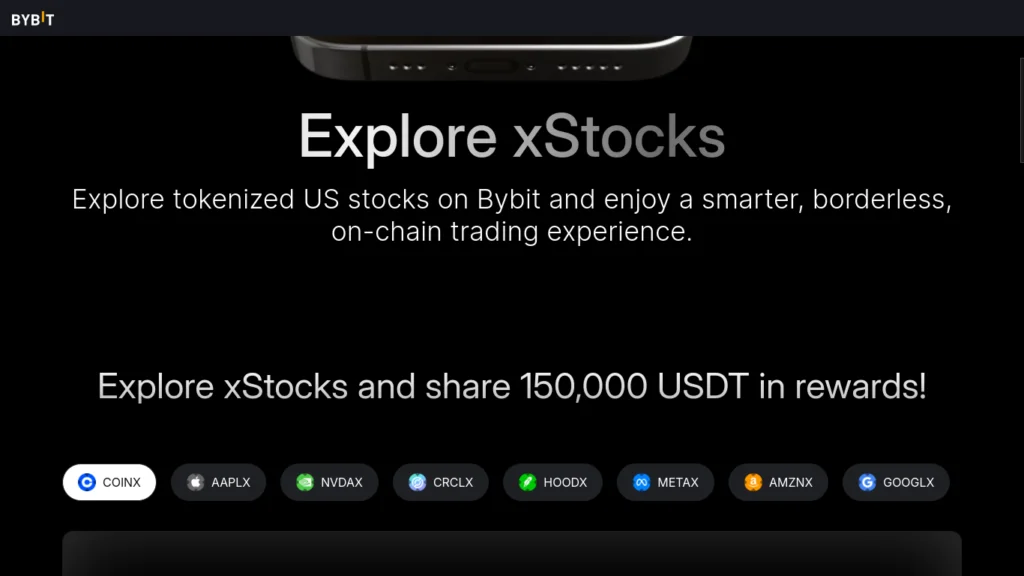
Among the earliest entrants into the world of equity tokenization is Bybit exchange. It stands amongst the first to launch xStocks, and like Kraken, it also brings a set of over 60 US stocks in the form of Solana-based tokens.
The platform’s wide accessibility with the mobile app, web app, and API connectivity for active trading, makes xStocks widely accessible.
In conjunction with the likes of Backed Finance and Coinbase, Bybit brings stock like:
- CoinX
- HOODX
- Tesla
- Microstrategy
Robinhood HOODX
HoodX is a product of Robinhood that brings US stocks to European users. Not all European users of Robinhood access HOODX. This tracker certificate offers eligible crypto investors access to stock prices of Robinhood markets.
By design, HOODX has been created to exist on multiple blockchains, including Ethereum ERC-20 token and Solana SPL token. By going the multichain way, Robinhood makes accessibility even easier.
Several centralized crypto exchange platforms offer trading services for RobinHood’s HOODX. Amongst them are Bybit and Robinhood.
FAQ
Conclusion
What started merely as an ambitious idea, equity tokenization has matured into a bridge between traditional markets and digital infrastructure. Perhaps expanding faster in 2026, than in the preceding years.
The model addresses questions about access, and ease of participation to equity markets. However, it does not erase the existing financial systems as we know them.
Ownership is becoming programmable, portable, and global. Equity tokenization provides a world where investing is not confined by borders or banking systems, but enabled by digital networks operating around the clock.