In 2021, when the concept of NFT was merely young, the entire building principles around non-fungible tokens revolved around hype. The story is quite different today. Now, more than ever, NVT development involves displaying a keen interest, not just in beautiful arts, but also in tokens that unlock some form of utility, or something tangible.
Key Takeaways
- NFT development covers the full technical stack: smart contracts, token standards, marketplace integration, metadata storage, and wallet connectivity
- The global NFT market is projected to reach $86.23 billion in 2026 at a 41.8% CAGR, driven by gaming, real-world asset tokenization, and phygital products rather than speculative art (Business Research Company, 2025).
- The two foundational token standards are ERC-721 for unique one-of-one assets and ERC-1155 for multi-type collections
- NFT development costs in 2026 range from $10,000 for a white-label collection launch to $500,000+ for a fully custom marketplace
- The NFT projects that failed in 2021-2022 built around speculation rather than utility
The transition from just excitement to actual usefulness is not an indicator of a declining market, but a reflection of genuine maturity. The 2025 report from the Business Research Company indicates that the global NFT market value reached $60.82 billion in 2025 and is anticipated to reach new highs of $86.23 billion by the close of 2026. According to another report, gaming and real estate NFTs appear to account for the largest portions of trading volumes at approximately 25% and 11% respectively.
Currently, NFT developers are creating infrastructure such as smart contracts, minting systems, marketplace platforms, and token standards that underpin these use cases. This guide examines all the essential information a builder, brand, or developer must grasp regarding NFT development in 2026.
What NFT Development Truly Involves
The phrase NFT development is often used rather loosely by many. NFT development involves various levels of tasks that most projects require to collaborate effectively. Here are all the levels:
- Token creation: This process includes multiple phases of developing the NFT. It encompasses outlining its standard, characteristics, metadata framework, and issuance rules within a smart contract.
- Smart contract creation: This is the stage where you start coding, testing, reviewing, and launching the blockchain applications that manage minting, transfers, royalties, and any specific rules your project needs.
- Metadata and storage: At this point, you specify essential details associated with each token, and its location. Certain living areas may involve IPFS, Arweave, or on-chain based on the necessity for permanence.
- Marketplace integration: Your NFTs must reach the market. However, which platforms will you utilize? Numerous NFT marketplaces exist such as OpenSea, Magic Eden, or a tailored marketplace.
- Frontend and wallet connectivity: Building the user-facing application that lets people mint, view, transfer, and interact with NFTs through their wallets.
- Backend infrastructure: APIs, indexers, notification systems, and databases that support the application layer without putting everything on-chain
The choices of the layers to input for your NFTs depends widely on how simple, or complex you need them. A simple one could only work with the first three layers plus basic marketplace listing. However, more complex gaming NFT collections demand your NFTs to undergo all the six development layers above.
NFT Token Standards: Selecting the Appropriate Base
Various token standards can support NFTs. Making a poor choice could lead to costly errors later on. It could force a redeployment and migration to other standards, costing funds that could otherwise be used in other developments. Hence, it is beneficial to understand the token standards as shown below:
ERC-721: The Unique Standard
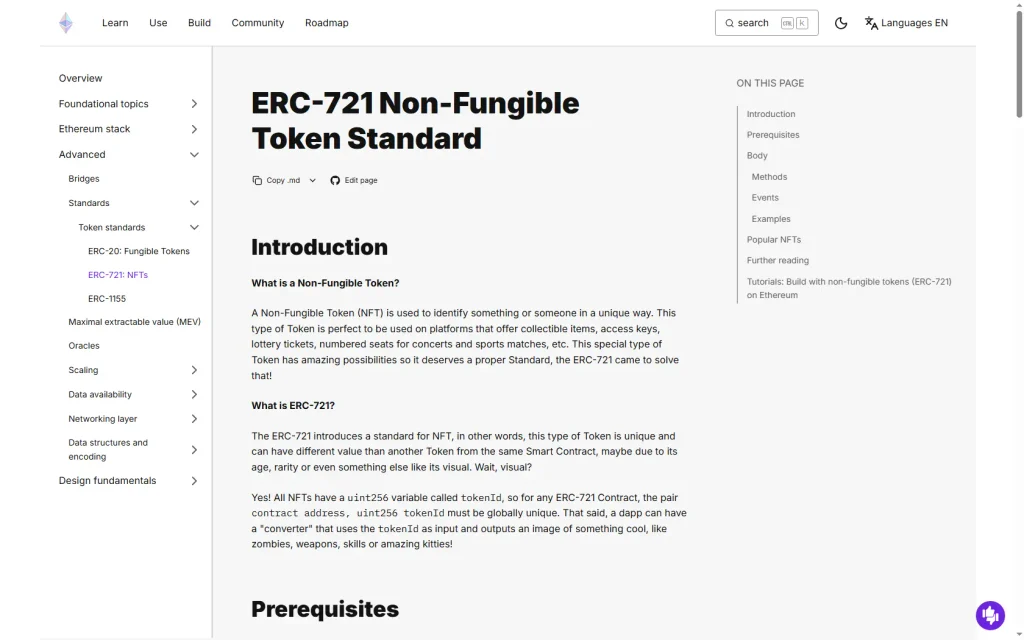
Established in 2018, this is the original and first NFT standard on Ethereum, the largest blockchain network in crypto. ERC-721 minted tokens all come with a distinct ID along with its own metadata. Therefore, no two tokens can be substituted for one another. If you want to produce unique digital artwork, authenticity certificates, personalized real estate titles, and any asset requiring each token to be entirely unique, ERC-721 is the right choice for your project.
The disadvantage? Efficiency. Every transfer or interaction means an individual transaction. In the long run, the gas fees increase proportionally with volume. For a project implementing 10,000 unique tokens with varied metadata, ERC-721 is suitable. In a gaming project that requires transferring hundreds of items at once, the gas fees become excessively high.
ERC-1155: Multi-Token Effectiveness
Created by Enjin, ERC-1155 enables a single contract to manage various token types at the same time. It merges fungible tokens, non-fungible tokens, and semi-fungible tokens all in a single deployment. It is excellent for batch transfers because you can transfer various items in one transaction, significantly lowering gas costs.
This token standard is very suitable for gaming projects, artwork based on editions, and ticketing for events. But, since all assets use the same contract, a small flaw in the code could impact the entire network of assets.
ERC-6551: Token-Bound Accounts
ERC-6551 is a newer standard that allows an NFT to have its own crypto wallet. An NFT using this standard can hold other tokens, own other NFTs, and interact with dApps directly.
Why is this important? With these capabilities, a digital character can own its own in-game items, or a phygital product NFT can accumulate provenance records over time. As such, the biggest adopters of this token class are Dynamic gaming NFTs, and metaverse applications.
Solana: Metaplex Core
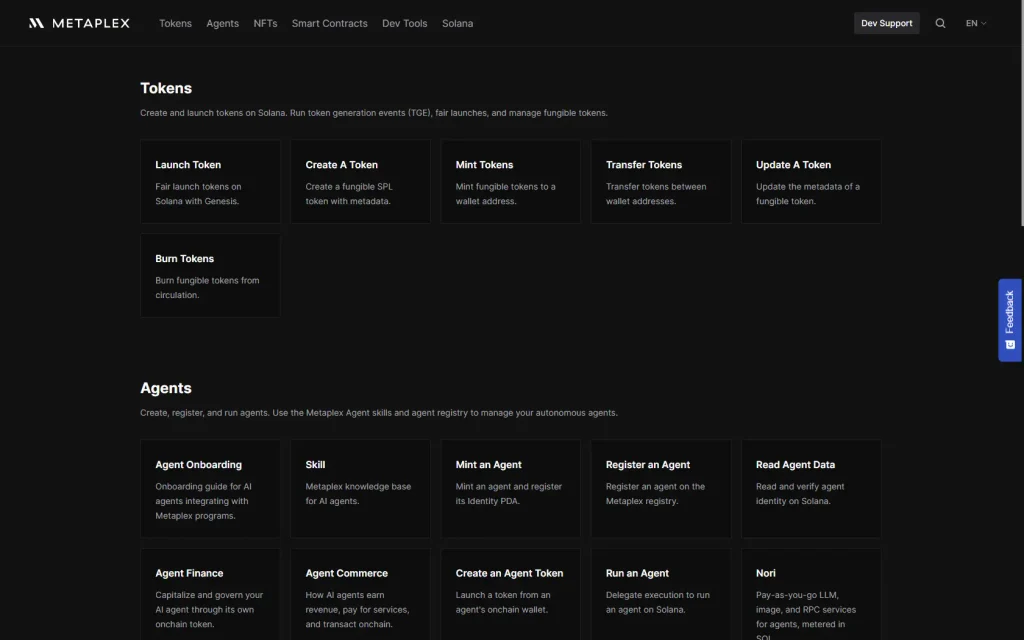
On Solana, NFT development uses an independent framework called Metaplex. Launched in 2024, Metaplex Core uses a single-account design that reduces minting costs to approximately 0.0029 SOL per token compared to 0.022 SOL under the previous standard. The reduction stands at over 80%.
For most gaming projects and projects with high transaction frequency, Metaplex Core brings faster speeds and lower fees. As such, in 2026, Solana seems to host a largest share of gaming NFTs especially due to Ethereum gas fees.
Blockchain Comparison for NFT Development
| Blockchain | NFT Standard | Avg. Mint Cost | Best For | Market Share |
| Ethereum | ERC-721 / ERC-1155 | Variable (L2: <$0.10) | Art, RWA, DeFi NFTs | ~62% |
| Solana | Metaplex Core | ~$0.001 | Gaming, mobile apps | ~18% |
| Polygon | ERC-721 / ERC-1155 | <$0.01 | High-volume collections | ~11% |
| BNB Chain | BEP-721 / BEP-1155 | <$0.05 | Cost-sensitive projects | ~6% |
Source: CoinLaw NFT Market Growth Statistics, February 2026.
The NFT Development Process: From Concept to Launch
Stage 1: Project Definition and Architecture
Before writing a single line of code, critical architectural decisions must be made. This stage shapes the NFT project’s future potential and defines the technical constraints. Important questions to answer at this stage include:
- What is the proposed NFT’s use-case and how will it be utilized?
- Which blockchain will be utilized?
- How will users interact with the NFT contract?
- Will the NFT’s metadata be static or dynamic?
- Will royalties be implemented on-chain or off-chain?
The answers to these questions will dictate the project’s potential and determine what features can be implemented at launch. Many failed NFT projects from the 2021-2022 period had minimal long-term utility beyond the initial hype. With the NFT market cooling down, these collections had little reason to exist, and the only value was the expectation of a price increase.
An engineer with four years of experience in the NFT space stated that the company he worked for focused on the wrong NFT use cases. The executives wanted to constantly jump on the next viral trend, dismissing actual utility-driven products as “costly.” Their most promising NFT project which was a ticketing platform with inherent utility remained underfunded. This is not surprising, as utility-driven NFTs are the backbone of Web3 development in 2026.
Stage 2: Smart Contract Development
Smart contract coding is the technical implementation of an NFT project’s concept. Smart contracts define the NFT attributes such as the artwork, supply size, number of creators, and royalty terms. At this stage, developers also decide whether to use third-party libraries like OpenZeppelin or develop unique smart contract code. Developers define who can mint the NFT be it whitelisted addresses, registered wallets or just everyone. They also implement features like hidden metadata reveal or lazy minting. Some contracts allow the creator to keep the NFT metadata private until a specific date or event.
ERC-2981 standard defines dynamic royalties but only at the marketplace level. However, smart contracts cannot enforce these terms. Other standard extensions such as ERC-721C offer improved security but may limit the NFT’s liquidity by restricting sales on certain marketplaces.
Stage 3: Metadata and Storage Design
NFT metadata defines the information that will be associated with a blockchain token. Metadata can define the NFT’s name, description, and visual appearance. This data is typically stored on decentralized storage solutions because NFT metadata is not secured or validated by the blockchain itself.
The most popular decentralized storage solution is IPFS, which allows files to be retrieved using a standard HTTP link. Files are also identified by a unique cryptographic hash. However, this system depends on nodes that host the data, which makes it necessary to use pinning services like Filebase or Pinata. Another alternative is Arweave. This is a storage network designed for permanent NFT data storage with low costs.
Storing data on a blockchain is possible but expensive, which limits its use to high-value NFTs. On-chain metadata storage puts all information directly into smart contracts. On-chain storage makes NFTs completely censorship-resistant but is only economically feasible for small-scale collections.
Stage 4: Deployment on Testnet and Auditing
Before mainnet deployment, smart contracts must be tested on a testnet. Testnets are blockchain replicas that utilize test cryptocurrencies. Testing ensures that all smart contract functions like minting, transfers, royalties, and metadata are operational and have no edge case bugs.
Smart contract security audits are mandatory for all NFT projects that expect to attract meaningful value. A vulnerability in the code can lead to project theft and loss of funds. Well-known security auditing firms include CertiK, Trail of Bits, Open Zeppelin, and Halborn. The contracts utilizing OpenZeppelin’s libraries benefit from their security audits, but other custom code components need separate reviews.
Stage 5: Frontend and Wallet Development
The frontend code is the part of an NFT project that users see and interact with. The frontend code can be developed using standard web technologies like React and NextJS frameworks combined with web3.js or ethers.js libraries. WalletConnect standard enables compatibility with Web3 wallets, while RainbowKit and ConnectKit are excellent UI-focused tools for connecting to Ethereum-based blockchains.
A seamless wallet experience is one of the most critical parts of an NFT project. The user-initiated minting transaction must be simple and intuitive, guiding the user through the wallet login and transaction confirmation steps. If a transaction fails, the application should explain the cause rather than show a generic error message. The wallet interface should also support popular Ethereum-compatible wallets such as MetaMask Desktop/Web, Coinbase Wallet, Phantom on Solana, or mobile wallets.
A confusing or broken minting experience can destroy the user trust, especially during a high-profile product launch with thousands of potential buyers.
Stage 6: Marketplace Listing and Launch
After developing and testing the NFT project, it must be listed on a marketplace to gain visibility and attract buyers. For Ethereum, the largest NFT marketplace by volume is OpenSea. But Magic Eden’s seems to thrive more with cross-chain dominance. Blur is another popular option due to its high-volume trading capabilities. For niche audiences, marketplaces like Foundation, SuperRare, and Manifold offer an alternative.
Projects can also develop their own NFT marketplace. However, this is an expensive and time-consuming endeavor. This guide to NFT marketplace development companies contains valuable information about NFT development companies that can build a custom NFT marketplace for a business.
NFT Development Costs in 2026
NFT project scope determines how much it will cost to build the product. The table below contains a cost breakdown for a few common NFT-related use cases:
| Project Type | Cost Range (2026) | Timeline | Key Variables |
| Basic NFT collection (white-label) | $10,000 – $50,000 | 4 – 12 weeks | Art generation, chain choice |
| Custom NFT collection (from scratch) | $30,000 – $120,000 | 8 – 16 weeks | Contract complexity, audit |
| Basic NFT marketplace | $50,000 – $150,000 | 3 – 6 months | Features, chain integrations |
| Custom enterprise NFT platform | $150,000 – $500,000+ | 6 – 18 months | Compliance, custom logic |
| NFT gaming economy | $80,000 – $350,000+ | 4 – 12 months | Game engine integration, scale |
Sources: Business Research Company 2025, Antier Solutions 2026, The Block Opedia 2026.
NFT development costs vary significantly depending on the project’s complexity, required technologies, and the region where developers are located. The main expenses related to NFT development in 2026 are smart contract security audits and the development team’s experience. For custom NFT contracts, third-party audits can consume 30%-40% of the project’s total budget. A mid-level security audit from a well-known provider costs around $15,000 to $50,000, but high-complexity smart contracts require deeper expertise. Finally, while UI/UX design is an essential consideration, it rarely comprises a significant portion of the total NFT development budget.
The location of the development team also impacts NFT development rates. In the U.S., senior blockchain developers charge between $146,000 and $200,000 or more per year. Developers in Eastern Europe and Southeast Asia can provide similar expertise for 40%-60% lower prices. Some NFT projects utilize this difference by combining a senior technical lead from a higher-cost region with junior developers from lower-cost jurisdictions.
NFT Development Use Cases: Finding the Real World Applications in 2026
The Reddit conversation that prompted this article identified the central issue of most NFT projects in 2021 as their use-case. Most NFTs were merely digital images with little or no functionality beyond being a speculative asset. Once the speculative bubble burst, there was little reason for these NFTs to retain any value.
The NFT projects that continue to attract development and investment in 2026 understand the importance of an NFT’s utility. The use cases span multiple industries, from gaming to real-world asset tokenization.
NFT Gaming – The Largest NFT Development Category
NFT gaming is the fastest-growing segment in the NFT space, comprising 25% of all NFT trading volumes. It is also one of the few NFT categories that continues to attract significant development resources. The shift is happening from play-to-earn to a play-and-own paradigm that better reflects the actual value of game items. This transition is also driven by the fact that play-to-earn projects’ token economies are unsustainable in the long run.
Ubisoft’s Champions Tactics product, built on Immutable’s zkEVM platform, utilizes NFTs as in-game currency and items without promoting them as central to the game’s economy. Similar NFT gaming products can be developed using our NFT game development service.
Metaverse Development and Virtual Worlds
The concept of metaverse development is also intrinsically linked to NFTs. Virtual worlds utilize NFTs to represent in-game assets ranging from land to clothing, with the technology stack being similar to standard NFT development. Because of the similarities, many NFT development companies also provide metaverse development services.
NFT Ticketing – Combating Counterfeiting
NFT technology can be utilized to combat counterfeiting in the ticketing space. NFTs can represent event tickets and provide a public source of information about their validity and authorized resell channels. After the event, the ticket can be converted into a collectible NFT with royalties going to the original artist. Ticketmaster has already experimented with NFT ticketing for sports and concerts. According to the 2026 report by CoinLaw, NFT ticketing comprises 5.3% of the global event ticketing market.
NFT ticketing represents a natural evolution for the ticketing industry, offering enhanced security and new revenue streams. ERC-721 standard can be utilized for unique event tickets, while ERC-1155 is more appropriate for multi-tiered ticket systems with different privileges. Smart contracts can also be utilized to program ticket resales and enforce royalty payments.
Real-World Asset Tokenization
Tokenization of real-world assets is another promising application for NFTs. The real-asset NFT space is dominated by real-estate tokenization, with a 32% YoY growth to $1.4 billion in 2026, according to Colexion’s market research. However, other innovative tokenization concepts include tokenized trading cards stored in vaults, luxury goods authentication, hotel ownership, and car rentals using NFTs as a standard for value.
Real-world asset NFTs are more complex to develop than standard NFTs since the token must represent actual value beyond the speculative value of the crypto asset. The underlying asset’s custodian and the legal agreements regarding its terms are also critical components of such projects. This complexity requires developers to have a comprehensive understanding of both technology and law.
Phygital NFT Development
Phygital NFTs are yet another innovative concept that combines physical and digital goods. Physical products such as luxury watches, shoes, and clothes can interact with an NFT, offering additional benefits or verifying the product’s authenticity. According to Colexion’s market research, phygital NFT transaction volumes grew 60% YoY in 2026. The luxury fashion industry is one of the primary adopters of phygital NFTs, with other product categories expected to follow soon.
Phygital NFTs typically offer greater value than standard NFTs and require additional development work such as NFC or QR code scanning to interact with the physical product. As a result, phygital NFTs can be more expensive to develop than regular blockchain-based NFT projects.
Music Royalties and the Creator Economy
NFTs can be utilized to represent music rights in the creator economy. According to Colexion’s market research, music NFTs generated over $520 million in streaming revenues and artist royalties in 2026. Rapper Nas released three tiers of NFTs related to two of his tracks, giving the owners a proportion of the streaming revenue and other benefits. This is only one example of how the creator economy can benefit from NFTs. Smart contracts can distribute the proceeds to multiple creators who have contributed to a song.
However, this type of project requires additional development because streaming platforms must provide information about the song’s performance to the smart contract. In practice, this means that such NFT projects require oracle services to obtain this information from the blockchain and trigger the necessary actions.
Dynamic NFTs – The Next Innovation
NFTs are generally static, meaning that their metadata cannot be changed once they are deployed on the blockchain. In practice, this means that standard NFTs are appropriate for unique digital collectibles but have limited utility beyond issuing the token. Dynamic NFTs (dNFTs) address this limitation by allowing metadata to be updated based on specific criteria.
Conditions such as weather, game events, or user behavior can be utilized to update a dNFT. For example, an NFT can represent an insurance policy, and the payout would be automatically distributed to the policy holder’s wallet upon the occurrence of a specific weather event. Similarly, a character in an NFT game can transform once a particular mission is completed. dNFTs can also be utilized for traditional rewards-based programs, with the loyalty card updating its metadata once the user reaches a certain spending threshold.
dNFTs utilize the standard ERC-1155 or the newly adopted ERC-6551 contracts and can be programmed to react to external sources of information via oracles. dNFT development is more complex than standard NFT development due to the need to implement programmatic metadata updates and respond to external information sources. Additionally, dNFTs require ongoing maintenance and funding as oracle services are typically paid for each query.
NFT Development: Build It Yourself Or Buy White-Label?
White-label NFT development solutions provide an attractive alternative to developing an NFT project from scratch. This decision should be based on the specific needs of the NFT project and the available resources. If the NFT project focuses on art, brand, and utility and the technology is only a “vehicle” for launching the concept, then the white-label solution is the best choice.
White-Label NFT Development Prospects
White-label NFT marketplaces such as NiftyKit, Manifold, or Thirdweb allow creators to launch their own NFT projects without developing any code. Smart contracts, minting pages, and marketplace interfaces are all provided by the white-label providers. These solutions typically cost between $10,000 to $50,000 and take 4-12 months to launch. White-label NFT marketplaces are suitable for art collections, limited edition NFTs, memberships, and ticketing as the value is in the product itself rather than the technology.
White-label NFT development solutions can also be an excellent option for testing an idea before investing in a custom NFT platform. The project can be launched with a white-label solution first and then migrated to a custom development if it gains traction.
Custom NFT Development: When to Build It Yourself
Custom NFT development is a better option when the project requires unique features that are not available in the white-label solutions. This applies to NFT games that offer complex features such as crafting, staking, and breeding or real-world asset tokenization projects that require additional legal compliance. Similarly, a custom NFT marketplace may be the best option if the project needs advanced discovery features, unique content management solutions, or specialized royalty systems.
Custom NFT development is also a better option for larger organizations that want to have full control and compliance with their NFT platform. This helps to avoid the risks associated with relying on a third-party platform, particularly with regard to security and regulatory compliance. Finally, custom NFT development can be considerably more cost-effective than using a white-label solution in the long run if the project achieves enough success to justify the higher initial costs.
NFT Development and Web3: The Bigger Picture
NFT development is only one element of a larger Web3 technology stack. An NFT project is typically built on top of a blockchain platform and utilizes crypto wallets, decentralized oracles, and other infrastructure components. The NFT technology itself is relatively simple. Complexity arises from supporting an entire ecosystem of NFT-related applications such as marketplaces, games, and metaverse experiences.
AI development is also starting to play a role in NFT development. According to Colexion’s market research, AI utilization in NFT development is set to comprise 30% of all NFTs launched in 2026. AI can be utilized to generate NFT artwork, update dynamic NFTs based on user behavior, or store information about who created an AI-generated NFT. Developers interested in this space should also review our Web3 development guide, which describes the learning path for NFT development.
Ethereum developers typically learn Solidity programming language while Solana developers focus on the Rust programming language. In both cases, proficiency in standard Web development is an advantage prior to studying blockchain-specific languages.
Frequently Asked Questions
What is NFT development?
NFT development is the process of building the technical infrastructure that creates, manages, and enables the trading of non-fungible tokens. It covers smart contract development (the blockchain programs that define what the NFT is and how it behaves), token standards (ERC-721, ERC-1155, Metaplex Core), metadata storage (IPFS, Arweave), marketplace integration, and the frontend applications that users interact with. A complete NFT project requires all of these layers working together.
How much does it cost to develop an NFT project in 2026?
Costs range from $10,000 to $50,000 for a white-label collection launch using existing platforms, to $50,000 to $150,000 for a basic custom marketplace, to $500,000 or more for enterprise-grade platforms with complex compliance requirements. The largest cost driver is custom smart contract development and security auditing, not frontend design. Team location also significantly affects cost: US-based senior blockchain developers command $150,000 to $200,000+ annually, while equivalent teams in lower-cost regions run 40-60% less.
What is the difference between ERC-721 and ERC-1155 for NFT development?
ERC-721 creates one unique token per ID leaving every token completely distinct. It is the standard for one-of-one art, individual certificates, and unique real-world asset representations. ERC-1155 manages multiple token types in a single contract and supports batch transfers, making it significantly more gas-efficient for gaming projects, edition-based collections, and ticketing at scale. Choosing the wrong standard requires redeployment, so this decision must be made correctly upfront.
Which blockchain is best for NFT development in 2026?
Ethereum (including Layer 2 networks like Polygon, Arbitrum, and Base) is best for projects where security, ecosystem breadth, and institutional credibility matter most. These include art, RWA tokenization, and DeFi-integrated NFTs. Solana is the preferred choice for gaming, mobile-first applications, and any project where transaction speed and low fees are primary requirements. Polygon specifically suits high-volume collections where Ethereum security is needed but mainnet gas fees would be prohibitive.
Do NFT smart contracts need to be audited?
Yes, for any project holding real monetary value. Unaudited smart contracts are the primary attack surface in NFT exploits and hacks. Audits from reputable firms (Certik, Trail of Bits, OpenZeppelin, Halborn) typically cost $15,000 to $50,000 depending on complexity. Projects using standard OpenZeppelin base contracts benefit from the fact that the core code has already been audited. Yet, custom logic added on top requires its own security review.
What are dynamic NFTs and how are they built?
Dynamic NFTs are tokens whose metadata updates in response to real-world events, game state changes, or time-based conditions. They are built using ERC-1155 or ERC-6551 standards and rely on oracle networks (primarily Chainlink) to bring external data onto the blockchain. Use cases include gaming characters whose stats update after matches, insurance policies that trigger payouts automatically, and loyalty tokens that change tier based on verified purchase history. Development complexity and ongoing operational costs are substantially higher than for static NFTs.
What are the best NFT use cases in 2026?
The use cases with the most active development and verified market traction in 2026 are gaming (25% of NFT trading volume), real-world asset tokenization (32% year-over-year growth, $1.4 billion market), event ticketing (5.3% of global event ticketing market), phygital luxury goods (60% transaction volume growth), and music royalty tokenization ($520 million in revenue). Speculative art collections without underlying utility are the category that contracted most significantly since 2022.

Dan is a seasoned crypto writer for Blockchaindose who got his start in the space back in 2019. Over the past four years, he’s built a solid grasp of how the industry moves, focusing heavily on DeFi, NFTs, GameFi, and promising new projects.
Off the clock, you’ll usually find him buried in a good book or kicking back with a movie. His blend of hands-on market experience and straightforward commentary makes him a clear, trusted voice across the platform.