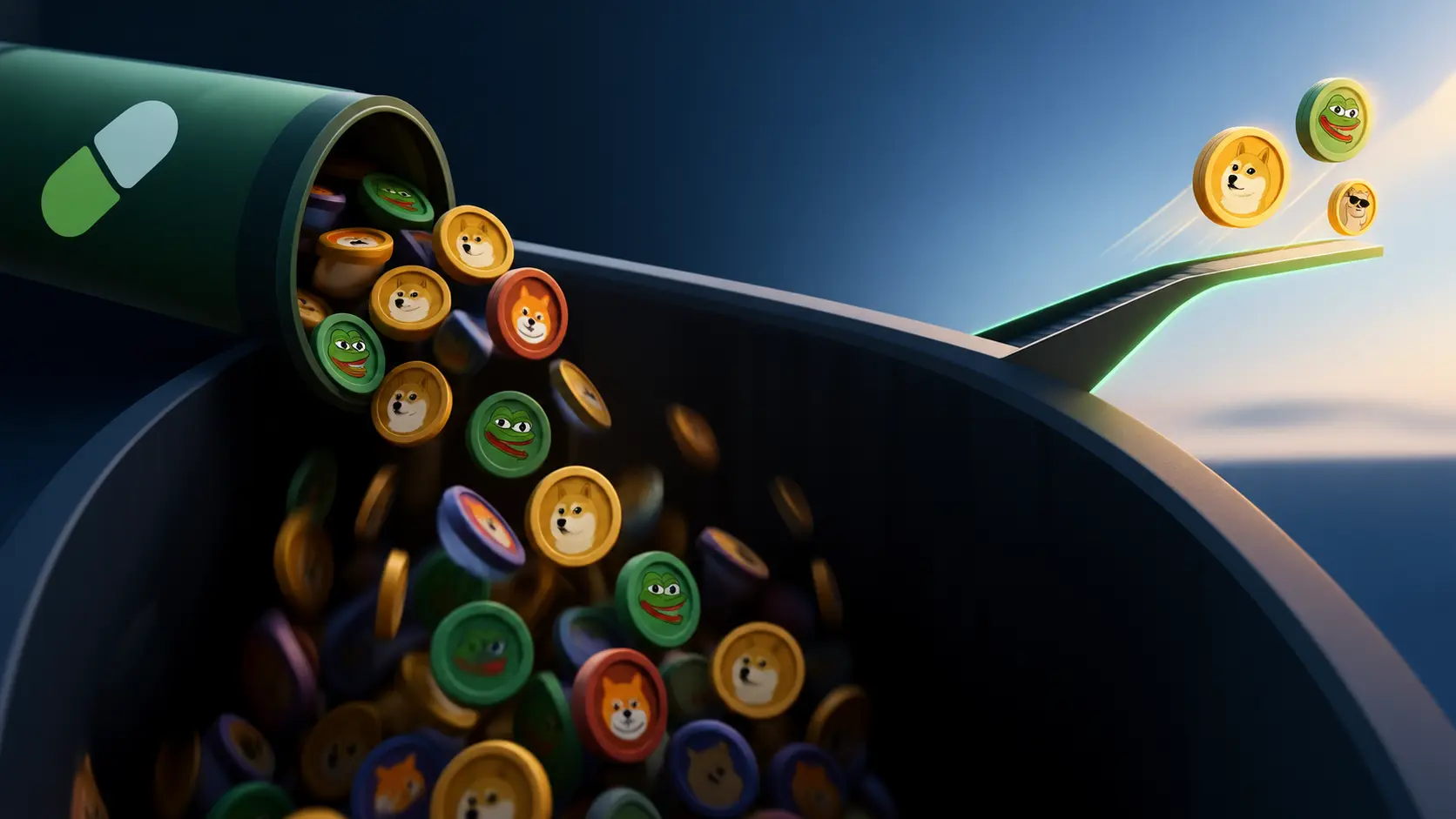
If you look at Pump.fun on any given day, you’ll see a common pattern, a flood of new tokens, mostly with dog pictures or cartoon faces. The majority of the tokens trade for a few hours, then the chart just goes flat and dies. The pumpfun graduation rate is wanting, and no one really talks about how bad this process is. Yet, the data is there on the blockchain, and it tells a clearer story than just saying memecoins are risky.
Pumpfun graduation rate: The number that explains everything
The key number to understand all of this is pumpfun graduation rate. This is when a token on Pump.fun reaches a certain buying interest and moves off the platform’s bonding curve onto a real decentralized exchange.
Graduation happens when a token hits about $69,000 in market cap, and less than 2% of all tokens ever created on Pump.fun actually make it off the platform. That’s actually the more optimistic way to look at it.
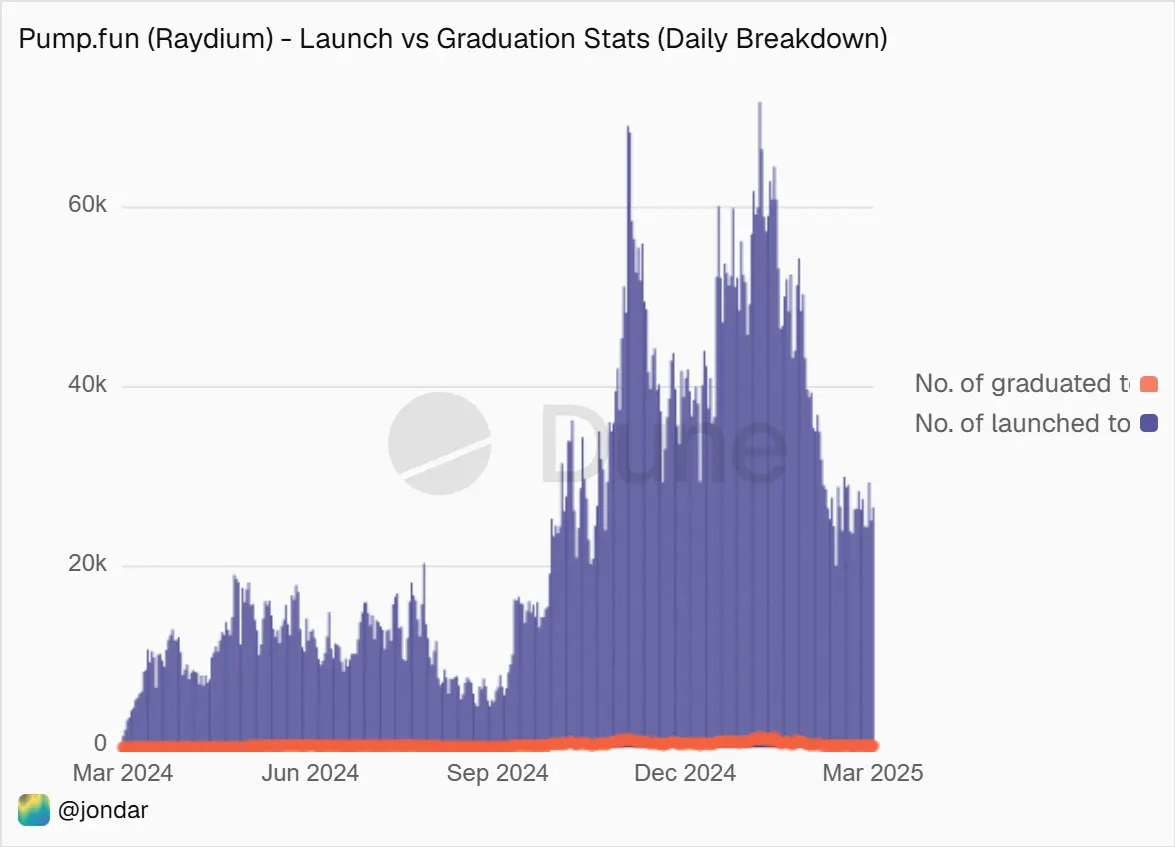
Academic researchers who studied every single launch show a much tougher reality. For one month, from September to October 2025, 655,770 tokens were created on Pump.fun, but only 4,338 successfully graduated. That’s a graduation rate of about 0.63%.
By mid-2026, things had gotten even worse. A study looking at 832,941 launches between May and June 2026 found a combined graduation rate of just 0.198%. That’s more than a threefold decrease from the 0.63% rate seen the previous year.
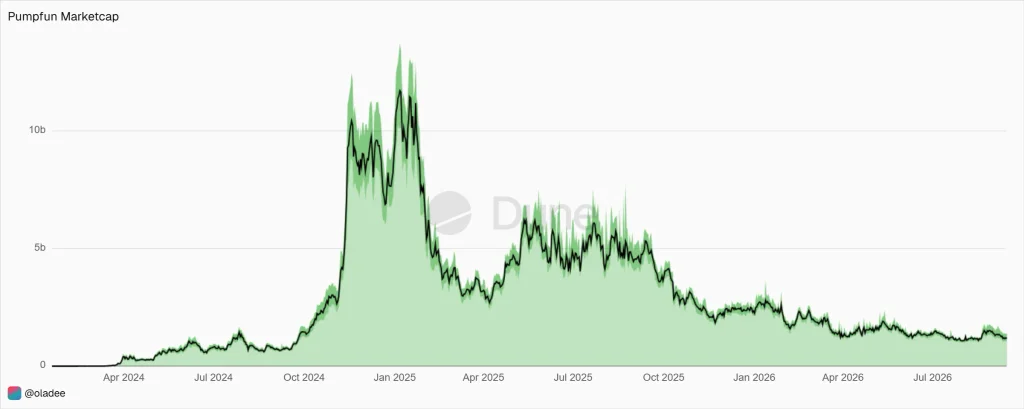
A 0.26% graduation rate means that out of every 1,000 tokens launched, only about two or three actually reach the finish line. The other 997 get stuck on the curve and disappear. This shows how the system works for memecoins. It is built to create a lot of activity, not a lot of winners.
Surviving isn’t the same as profiting
Even if a token manages to graduate, that’s good news for the token, but not necessarily for you. Data from Dune analyst on Pump.fun’s entire trader base shows that very few people actually profit.
Out of the over 13.4 million wallet addresses that have used Pump.fun, only about 55,012 have ever made more than $10,000. And only 294 wallets, around 0.002%, have reached over $1 million. Another look at the same data found very similar results. Only 0.412% of wallets have profited more than $10,000, 0.048% have cleared $100,000, and just 293 wallets(0.00217%) have earned over $1 million.
This shows the reality of the whole market. There’s a huge number of accounts with small gains or losses, and a very small group at the top holds most of the profits.
Who exactly is in that small group? People who buy tokens in the first few seconds of a launch, even before there’s a price chart, a website, or anything really worth looking at.
Where the money actually goes
A good example is Focai, a memecoin that launched on Pump.fun. At least 15 wallets, suspected of insider trading, turned a $14,600 investment into over $20 million. That’s a huge return, about 136,000 times their initial investment. They bought over 60.5% of all the tokens.
One of these wallets made $3.47 million in just three hours. They invested $1,168 and sold for a profit of 2,973 times their buy-in. This is a common strategy, just documented unusually well this time.
Being fast is the main advantage now. Research from Galaxy shows that Solana memecoins are held for a median of only about 100 seconds, down from 300 seconds a year ago. This suggests bots and quick traders now dominate the market. If most people sell within two minutes, the goal isn’t picking the right coin, it’s being the first to buy.
This isn’t just a small part of crypto anymore; it’s become huge and organized. Galaxy Research found that out of 32 million tokens created on Solana, almost 13 million were launched on Pump.fun alone. This is a nearly 300% increase in less than two years, and the platform has essentially made token creation on Solana into a mass-production process. It’s like a factory running all day, with a tiny 0.2% fee as its only quality check.
It isn’t purely a wasteland
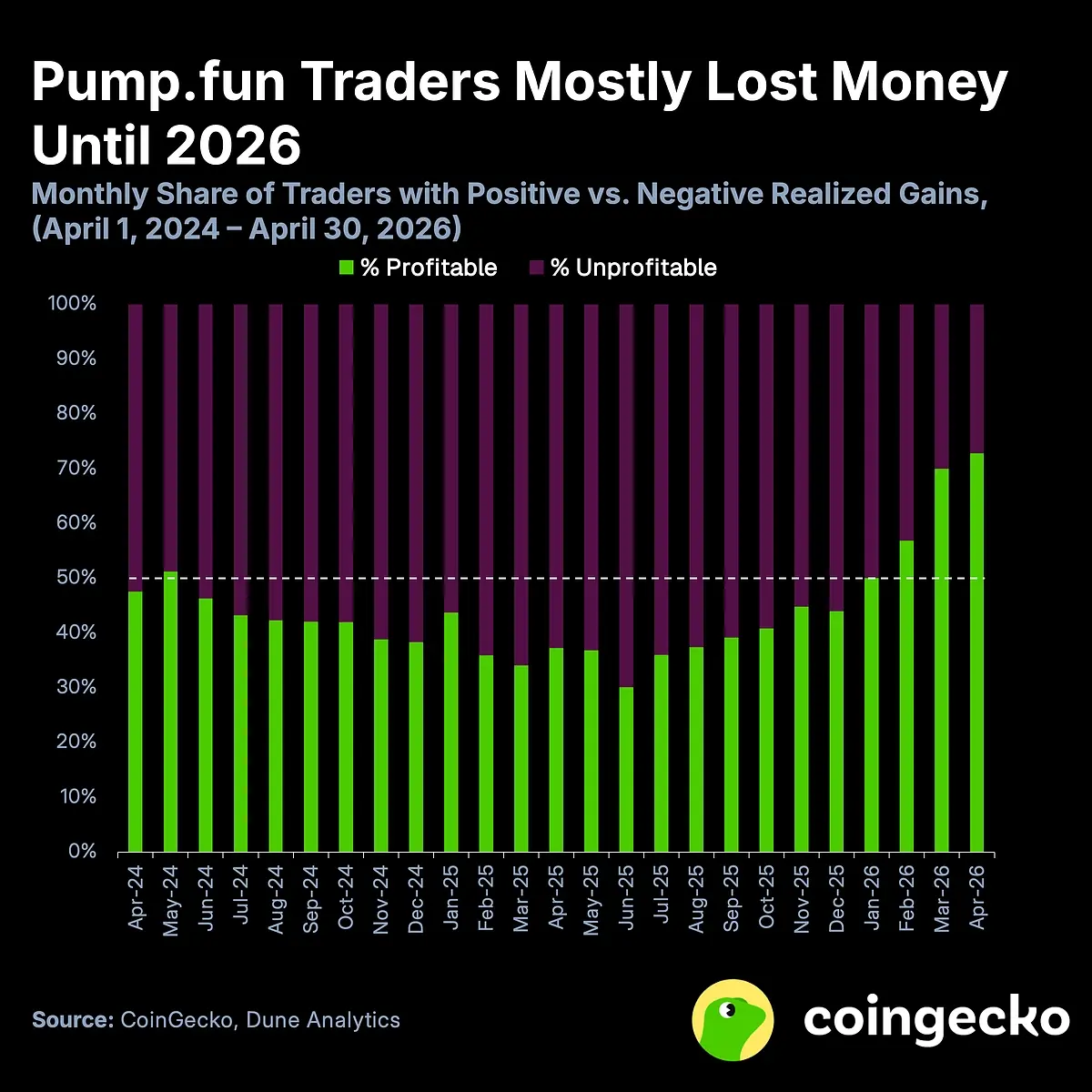
However, it’s not entirely a lost cause, as things do change. The number of traders making profits each month on Pump.fun has shifted dramatically as per Coingecko. From April 2024 to late 2025, most traders lost money each month, with the lowest point for profitable wallets being 30.1% in June 2025. But then the trend reversed. In February 2026, 56.8% of traders made money, and this rose to 70.0% in March and 73.3% in April 2026.
This shift is important because it shows the losing streak wasn’t inevitable; it was tied to a specific wave of retail buyers who were exhausted. By late 2025, the number of active wallets per month dropped from a high of 5.2 million in May 2025 to just 1.8 million in December 2025.
The traders who remained in 2026 were a smaller, more careful group. With fewer people jumping into every new launch, the average results improved. This suggests the market isn’t fixed by unchangeable rules, but rather by how people behave as a group.
Even the graduation rate itself moves with sentiment. Pump.fun graduating tokens rose above 1% of all daily launches during a 2026 rebound, the highest level since summer 2025.

Dan is a seasoned crypto writer for Blockchaindose who got his start in the space back in 2019. Over the past four years, he’s built a solid grasp of how the industry moves, focusing heavily on DeFi, NFTs, GameFi, and promising new projects.
Off the clock, you’ll usually find him buried in a good book or kicking back with a movie. His blend of hands-on market experience and straightforward commentary makes him a clear, trusted voice across the platform.