When traders and collectors ask which platform dominates the NFT space right now, the answer is no longer as simple as “Blur or OpenSea.” The latest NFT marketplace volume & market share data for June 2026 reveals a clear three-tier hierarchy: Magic Eden at the top, OpenSea climbing back from the brink, and Blur losing the momentum it once owned. Understanding these shifts matters for anyone building, trading, or reporting on digital assets.
The Big Picture: A Market in Rotation
Total weekly NFT trading volume currently hovers around $85 million across all major chains. That figure is far from the 2022 peaks, but the underlying battle for share is more interesting than the absolute numbers.
Three sources tell a similar story with slightly different lenses:
CoinGecko’s June dashboard (active marketplaces, all chains):
- Magic Eden: $120.6M volume → 36.7% share
- Blur: $84.7M volume → 25.4% share
- OpenSea: $66.5M volume → 19.9% share
Glassnode’s June 5 snapshot (on-chain aggregation):
- Blur: 0.904%
- OpenSea: 22.6%
The Glassnode number looks like an outlier until you realize it measures a different window and excludes Bitcoin Ordinals activity — where Magic Eden dominates. This discrepancy highlights a critical flaw in relying on a single data source.
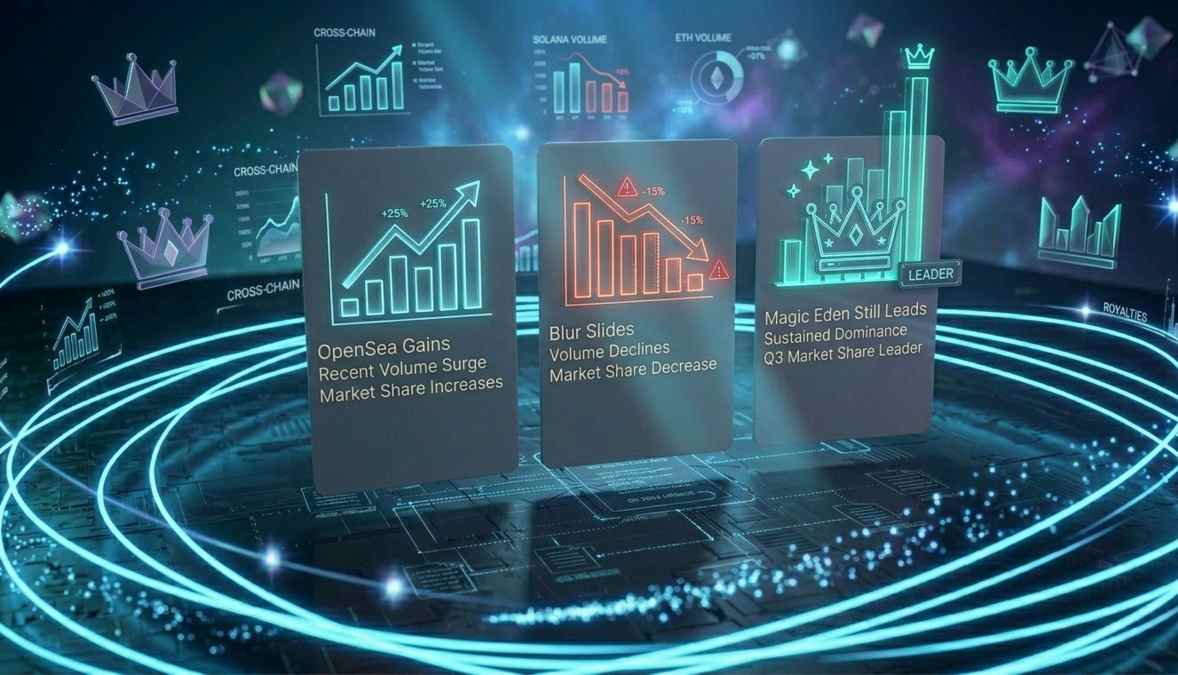
Key takeaway: Magic Eden leads because it embraced cross-chain infrastructure early, especially Bitcoin Ordinals and Solana. OpenSea is recovering, but from a low base. Blur’s decline is not a collapse; it is a normalization after its points-driven trading mania cooled.
Magic Eden Still Leads — And Here Is Why
Magic Eden’s position atop the NFT marketplace volume & market share ranking is no accident. The platform now handles more than one-third of all NFT trading volume across Ethereum, Solana, Polygon, and Bitcoin Ordinals.
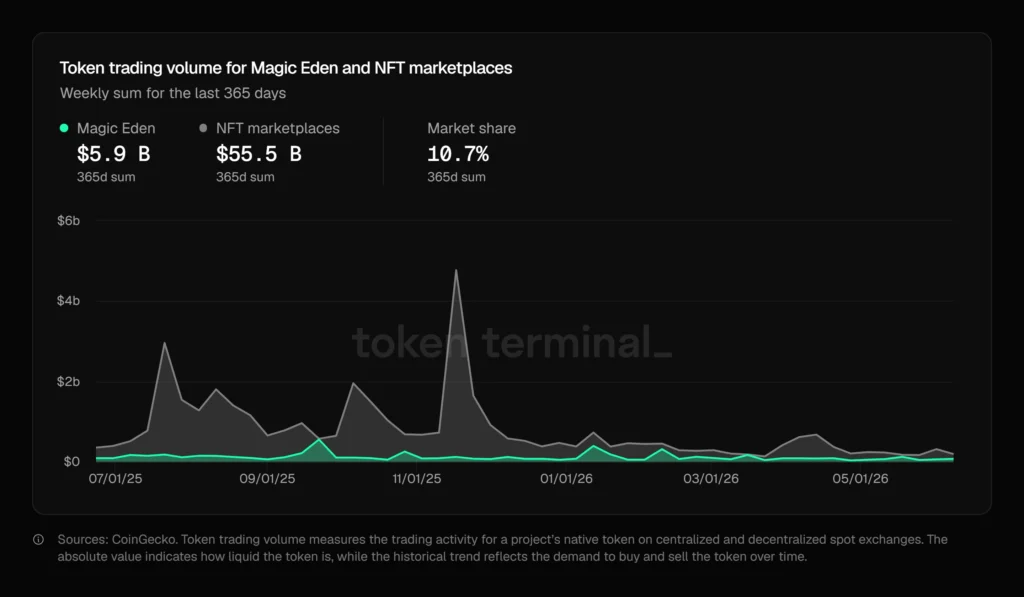
The reason behind this leadership is simple: Magic Eden never relied on a single token incentive loop. While Blur built its volume on recurring liquidity mining programs, Magic Eden built a neutral aggregator model that functions across multiple chains. When the points meta faded, traders did not leave Magic Eden — they stayed because the platform actually helps them discover and compare collections.
OpenSea Gains — A Slow, Credible Comeback
OpenSea’s market share doubled from 9.9% in January to nearly 20% in June. That is real growth, not a statistical mirage.
OpenSea’s return to relevance follows two strategic decisions. First, it removed mandatory creator royalty enforcement when the market rejected it, then reintroduced optional royalties as a user preference. Second, it quietly improved its Pro aggregation tools, making it easier to list assets across marketplaces without leaving the OpenSea interface.
This approach works because OpenSea still possesses the strongest brand recognition among mainstream NFT users. Blur may have a higher concentration of professional traders, but OpenSea remains the primary entry point for new collectors.
Blur Slides — But Is Not Out
Blur’s market share has fallen more than 80% from its January levels. The decline appears dramatic, but context matters.
Blur’s volume was always partially inflated by wash trading and points farming. When the platform reduced rewards, liquidity quickly disappeared. Blur still leads in advanced trader functionality, including bid pools, lending tools, and vault systems, but it has struggled to expand beyond the niche of highly speculative traders.
No Bitcoin integration. No meaningful mobile experience. No compelling reason for mainstream users to choose Blur over OpenSea or Magic Eden.

Blur’s current 25% market share may represent its natural equilibrium — still healthy, but no longer dominant.
What This Means for NFT Marketplace Development
For any studio building an NFT marketplace today, the NFT marketplace volume & market share trend sends a clear signal: aggregation beats exclusivity.
Magic Eden’s rise and Blur’s decline demonstrate that users prefer unified access to liquidity rather than isolated ecosystems. Traders increasingly want a single interface where they can discover collections, compare prices, and execute transactions across multiple chains.
The winning marketplace of 2026 will not be the one offering the largest token rewards. It will be the platform that connects every chain, every collection, and every buyer with the lowest possible friction.

Isai Alexei is a journalist and financial analyst covering cryptocurrency markets and traditional securities for Blockchaindose. He has spent ten years analyzing digital assets, trading activity, and market structure.