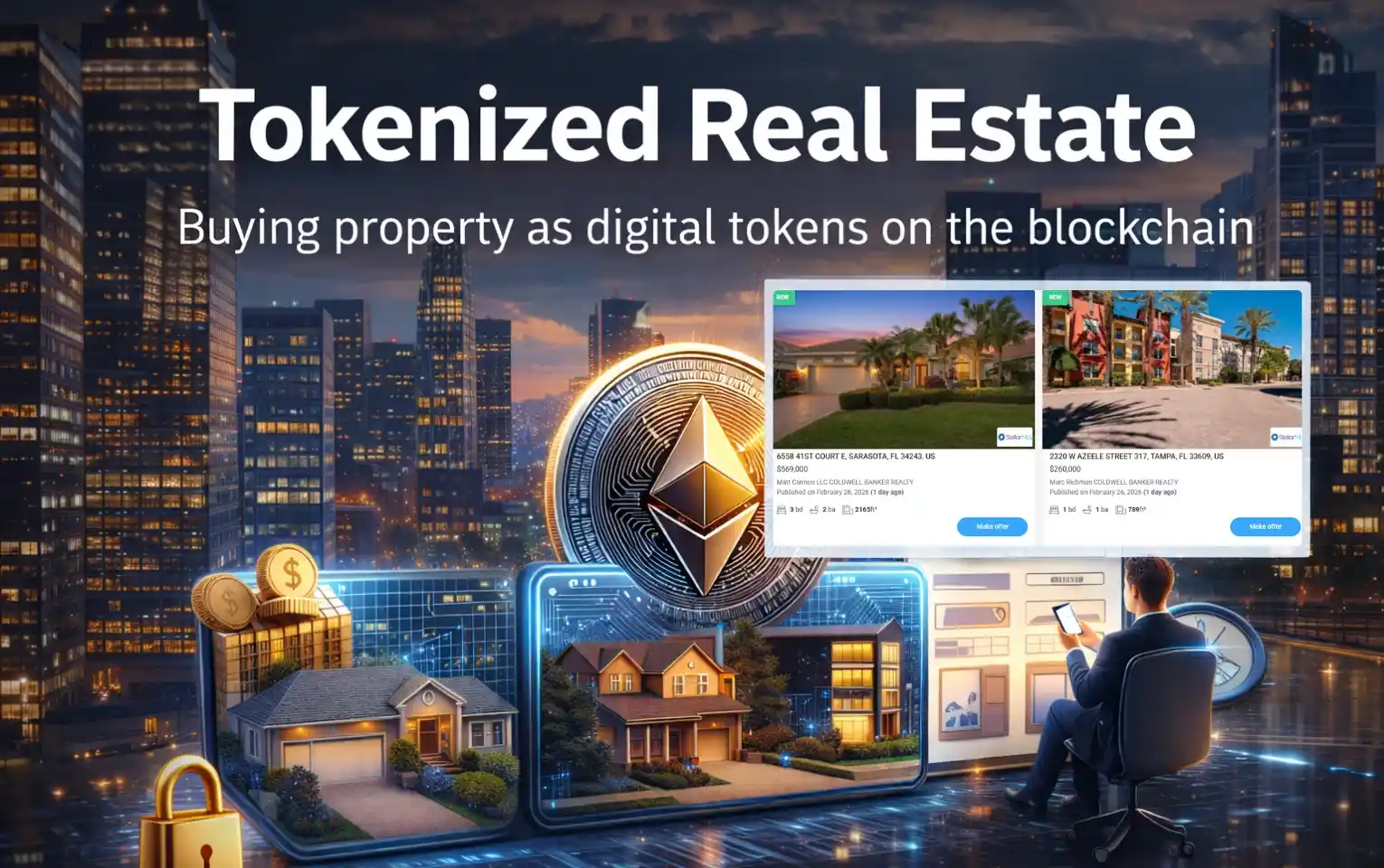
Can a $393 trillion industry be tokenized and sold through blockchain technology? Well, the answer is real estate tokenization. For years, real estate has been viewed as a slow-moving industry, only available to the select few. Attempts to enter this space have been marked with complications, documentations, and frustration. Minimum investment requirements were huge, not possible for small time investors. All this was supposed to change with the dawn of tokenization.
But, what is tokenization? This guide explored the world of real estate tokenization, and how it changed everything.
Key Takeaways
- Platforms like RealT, Propy, and Securitize lead the market, but the industry is still early.
- Tokenization turns real estate ownership rights into digital tokens that are easy to transfer and split.
- It opens access to residential, commercial, and industrial properties with small investments.
- Blockchain, smart contracts, and token standards automate ownership, income payouts, and governance.
- Liquidity is still weak and legal systems don’t fully support on-chain ownership.
What is Tokenization of Real Estate?
Tokenization is the process where the rights to physical assets are moved into blockchain technology, and represented by digital tokens. These tokens are programmable, verifiable records of ownership, value, or entitlement, and they can be transferred, divided, or managed more efficiently than traditional paper-based or centralized digital systems.
Its goal? Redefining the valuation, ownership, representation and exchange of real estate projects, through tokens. Banks, and other behemoth financial institutions need not to play intermediaries.
Real estate is one of the largest, most illiquid markets experiencing evolution through tokenization. In real estate tokenization, investors can own a share of a real estate investment project by holding a few tokens or NFTs. Imagine holding a share in the Dubai Complex, through holding a digital token.
Types of Real Estate Assets Eligible for Tokenization
Residential Real Estate
This is real estate specially built to target residential properties. It includes single-family homes, apartment buildings, multi-family complexes, condominiums, housing estates, student housing and co-living developments. Since these buildings will often produce predictable rental income, they have low transparent valuation benchmarks.
Commercial properties
This is one of the largest segments of the global property market, and a prime target for tokenization. It includes office buildings, business parks, retail spaces, shopping malls, mixed-use developments, hotels, warehouses, and more.
Industrial and Logistics Properties
The growth of industrial real estate has been quite significant as the commerce world continues to expand. Some industrial real estate assets include manufacturing plants, distribution centers, cold storage facilities, and fulfillment warehouses. The properties enjoy long-term leases and stable corporate tenants, making cash flows predictable.
Technical Architecture of Real Estate Tokenization
The functional aspect of real estate is a multi-layered technical architecture that bolsters both transparency and immutability of the assets. It combines Blockchain technology, smart contracts, tokens,and even wallets.
Blockchain
Blockchain technology is the entire foundational settlement and record-keeping layer of the real estate world. It is the home upon which ownership is recorded transparently. Ethereum, Solana, Polygon, BNB Chain, Avalanche, are among the many popular blockchains for real estate tokenization. In the search for a good blockchain network, most projects aim for stability, security, transparency, amongst other things.
Other projects will opt for more private-centered chains, which focus on the special use cases of a project. While, others still will merge the perks of private blockchains and public chains to create hybrid models. Whatever the design, blockchain is the foundational technology of the real estate world.
Smart Contracts
Smart contracts are the key to real estate tokenization. These automated agreements have rules that govern different facets of real estate tokenization, including ownership, transfer, and general governance.
So, what will smart contracts actually do?
- Fractional ownership issuance
- Transfer restrictions and eligibility checks
- Dividend or rental income distribution
- Voting and governance mechanisms
- Corporate actions (splits, buybacks, redemptions)
Due to the complexity of the real estate space, some platforms choose to use modular contract stacks for different functions. For instance, there are smart contracts designed only for onboarding, others for tokens, others for governance etc.
Tokens and Token Standards
Different token standards are used in creating the digital representations. The most popular token standards used, especially in Ethereum and compatible blockchains include ERC-20, ERC-721, and ERC-3643. In most models, you will find a hybrid of standards that bolster functional efficiency. It’s in wallets where these tokenized versions of real estate projects are held. These wallets act as digital bags that allow participants to completely retain control of their assets.
Can Technology be Improved?
Already, this technology is self-contained. However, there is still room for bettering the technology in real estate. For instance, DeFi-style mechanisms can help improve the delivery of services. Here are some highlights:
- Liquidity pools backed by rental income
- Index-style property vaults (bundled exposure instead of single assets)
- Lending markets where real estate tokens are used as collateral
- Yield incentives to bootstrap early liquidity
While those ideas could help, they are mostly theoretical, hence no one can clearly and outrightly say that they will work.
Top Tokenized Real Estate Platforms
RealT
The first in the line of tokenized real estate marketplaces to work with in 2026 is RealT, a platform born in 2019. This platform was designed with a primary mission of making everything easier for people to access the real asset market.
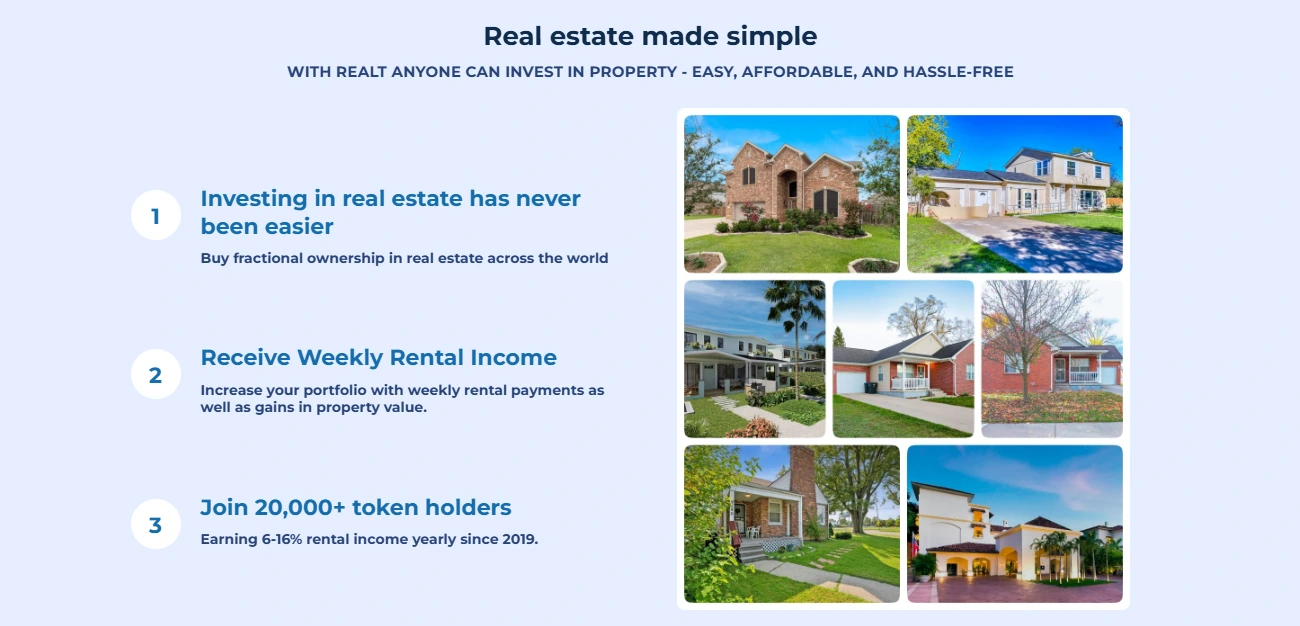
RealT will take rental homes, represent them digitally as blockchain-based tokens and allow people to own a fraction by buying the token. Minimum investment? As little as $50.
What about the income? As a residential apartment, RealT has been charging rent. Investors will receive a share of the rant from stablecoins like USDC or DAI. This rental income, or a portion there-of is paid every day, and the investment opportunity is globally accessible.
According to data, by the end of 2025, Realt owned over 700 tokenized properties, primarily homes for single families. Such large numbers means the platform can offer consistent rewards.
Propy
Propy is famous for its ability to handle international transactions. This network supports the proper buying and selling of properties across borders. The platform first entered the world of real estate tokenization back in 2017, when they handled their first real estate transaction.
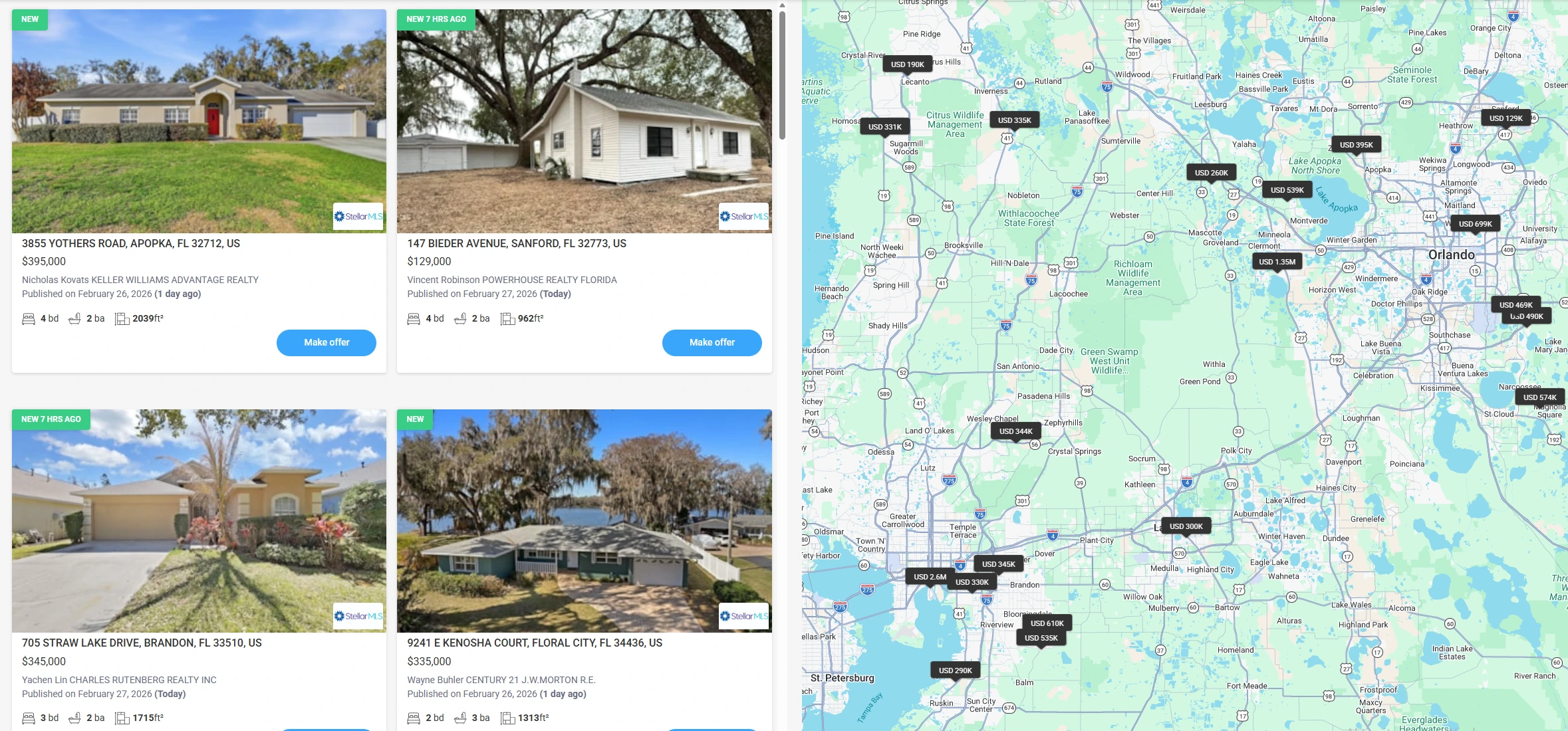
Being among the oldest platforms, Propy has over its life been able to tokenize many different properties, including homes, and even commercial real estate. It touches different regions across the world, including high-end cities like Dubai and Carlifornia.
Securitize
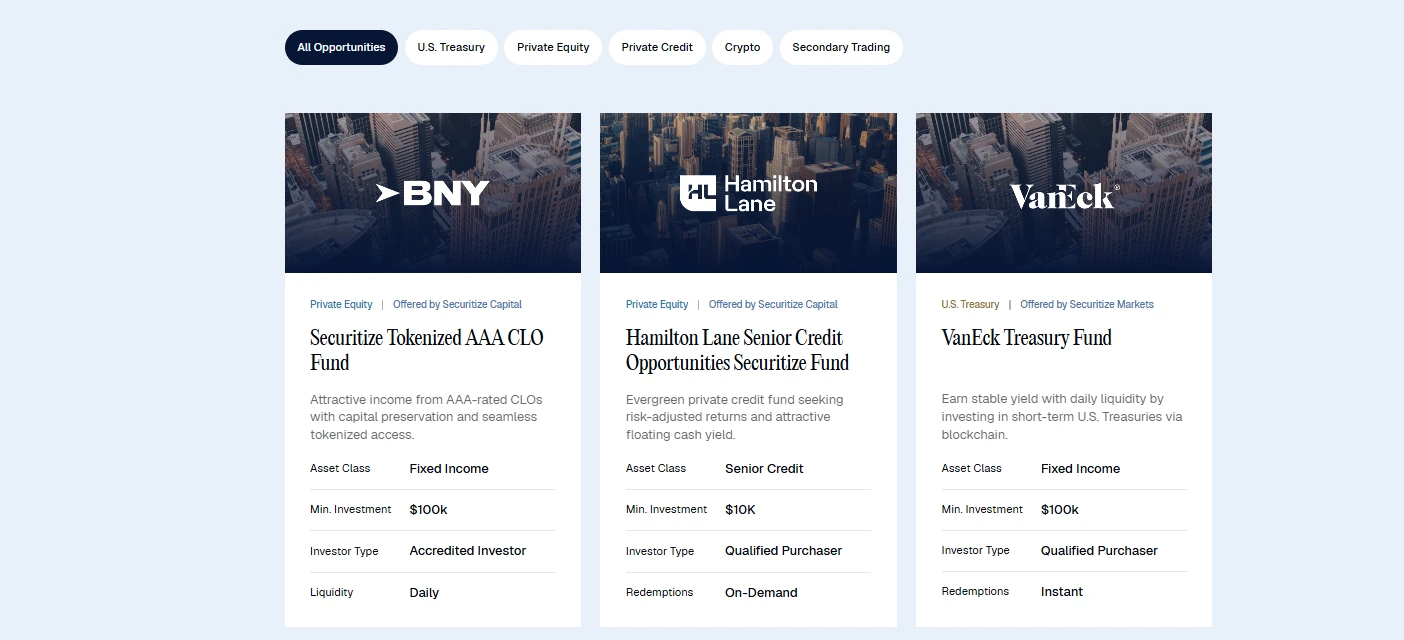
Another big hitter, Securitize, is designed with a view of making companies turn all different assets, including real estate, into tokens. Everything and everyone must follow the same rules provided when issuing digital tokens.
The platform affords investors, with a world of tooling features that easily handle onboarding and market access. This platform which has been widely linked to investment managers Blackrock has been planning to go public in a deal that will revalue the company to over $1.25 billion.
Frequently Asked Questions
Conclusion
It is clear that tokenization, whilst tokenization holds immense potential, it is still at infancy. It is still immature in practice, and constrained by liquidity and law. While the technology has the potential of improving, what it offers as of now is still good enough.

Stefan is the founder of Blockchaindose and a long-time tech enthusiast who first dove into crypto back in 2012, starting out by mining his first coins on graphics cards. Over the years, he shifted gears into active trading and investing. Today, his main focus is driving the platform forward and showing people how crypto can actually be used in the real world—beyond just the speculation.
That blend of early-adopter roots, hands-on market experience, and a practical vision makes his perspective a solid anchor for the team.