
In the crypto world, there’s a common statistic that gets repeated a lot without much scrutiny. Right now, crypto leaving exchanges is a common idea.
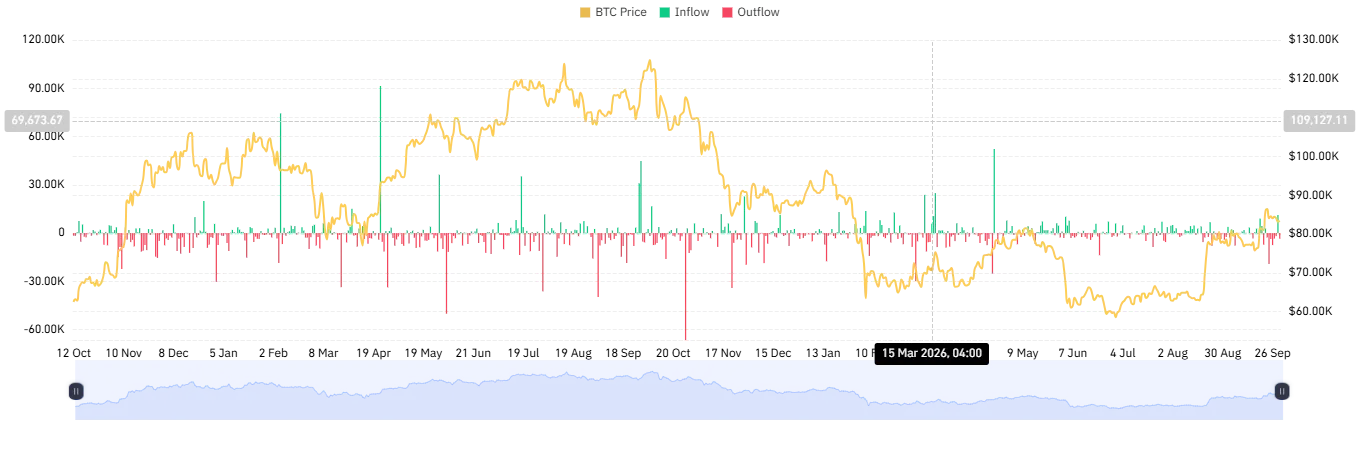
You see headlines about exchange reserves hitting lows not seen in years, big players moving Bitcoin to cold storage, and ETFs buying up supply. The general thinking is that this is automatically good for prices because if there’s less Bitcoin on exchanges, there’s less available to sell.
But what most people aren’t asking is, Where did these coins actually go?
That’s the part that isn’t tracked as closely. We know how many coins are leaving exchanges, but we don’t know where they’re ending up. And where they go really changes what that number means.
The headline number is real: Is Crypto Leaving Exchanges?
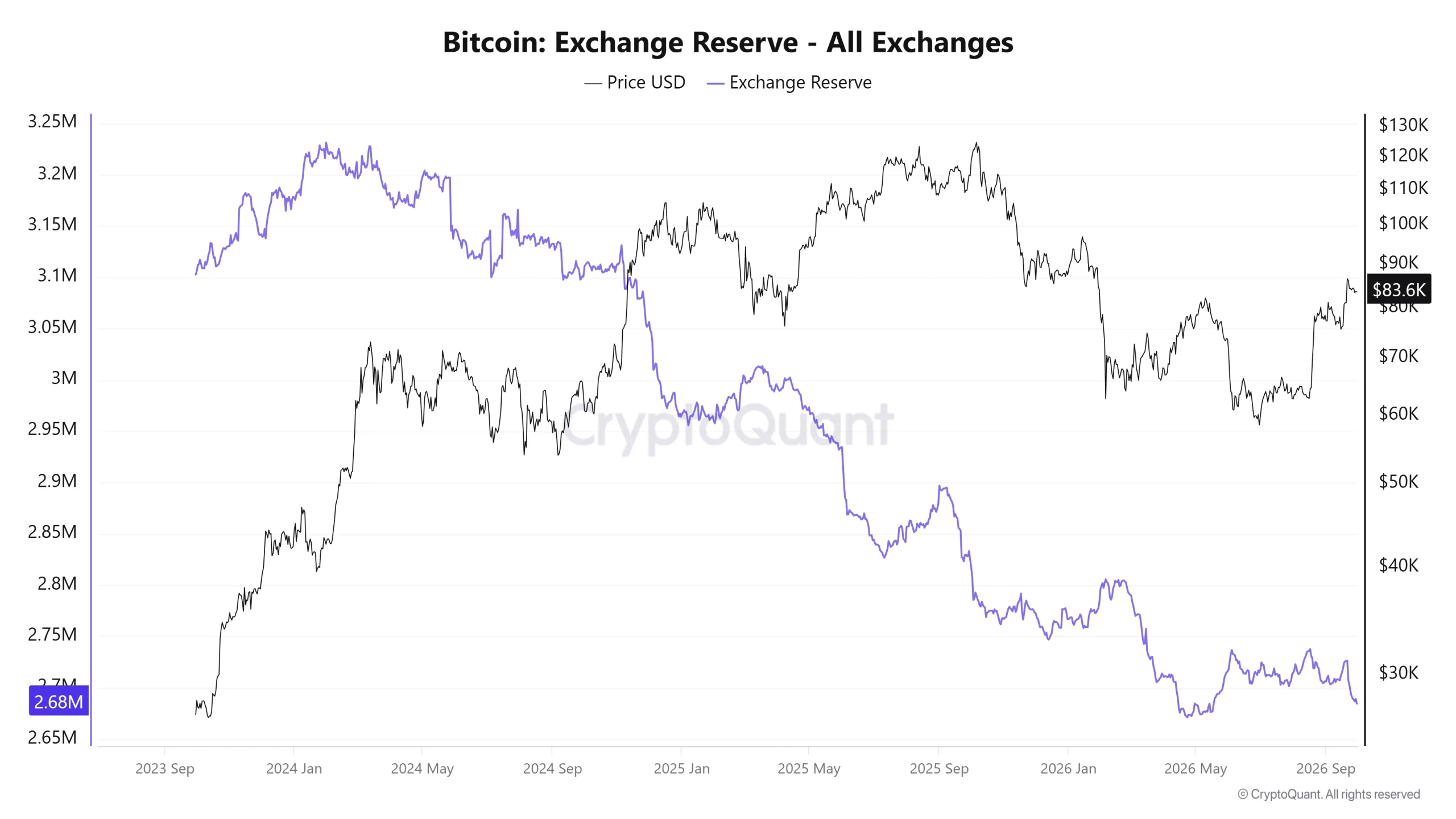
The fact that coins are leaving exchanges is accurate. The amount of Bitcoin held on exchanges has been dropping for years, and it’s a significant amount.
In October 2021, reserves were around 3.2 million BTC. By late 2024, that number had fallen to about 2.46 million. By mid-2025, CryptoQuant reported it at 2.44 million BTC, the lowest it’s been since 2018.
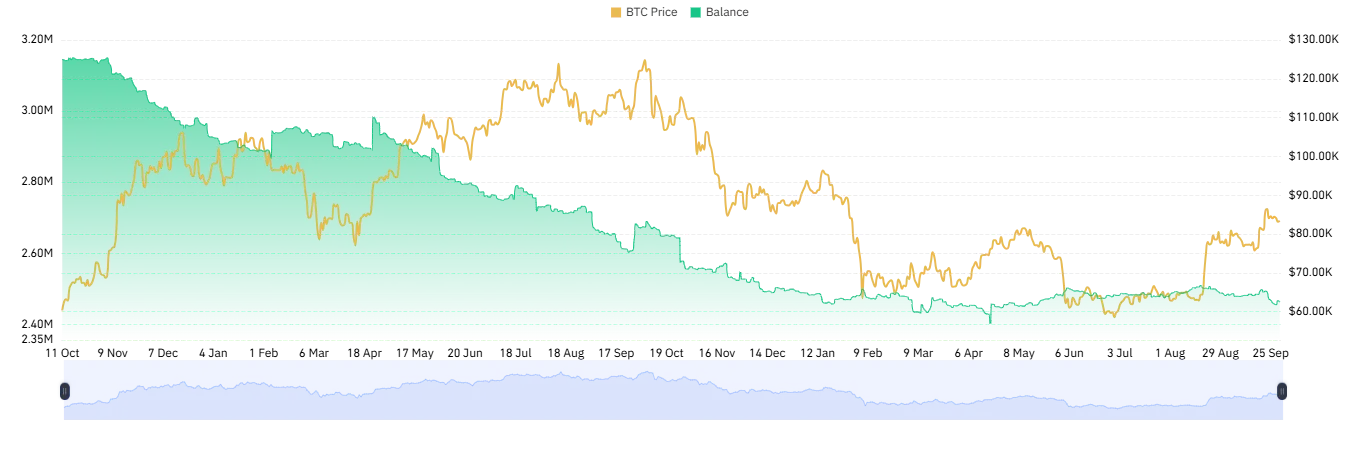
That’s a decrease of over 700,000 BTC in less than four years, which is worth tens of billions of dollars at current prices.
This trend is real and well-documented, confirmed by both CryptoQuant and Glassnode. There’s no real argument about this data.
What’s less clear is the second part of the story: who took the Bitcoin and what they plan to do with it.
2017 vs. today: two very different exoduses
Back in 2017, when people moved coins off exchanges, it was usually for a simple reason. They’d either put them on their own hardware wallets or send them to a different exchange to get a better price.
At that time, there wasn’t any decentralized finance (DeFi), no Layer 2 solutions for scaling, and hardly any institutional custody services. So, when coins left an exchange, it generally meant an individual was taking direct control of their own cryptocurrency.
Things are different now, and this change is important. A large portion of the coins that used to be on exchanges are now being moved into the custody of ETFs. Since spot Bitcoin ETFs were launched, a significant amount of these outflows have come from institutional investors placing their Bitcoin into these regulated products.
They often use custodians like Coinbase Custody, which holds Bitcoin for most of the big US funds. By early September 2026, US spot Bitcoin ETFs had around $101 billion in assets under management, with more than $55.6 billion in net inflows since they started. This isn’t about individual retail investors moving coins to their own wallets to hold themselves.
This is the key point many people are missing: when an ETF buys Bitcoin and moves it into custody, it looks the same on a chart of coin movements as when a retail investor moves Bitcoin into their own wallet. Both actions result in an “outflow.” However, the implications for how available that supply is and how it might perform under market pressure are very different.
DeFi saw a lot of activity, but it wasn’t as huge or as wild as in 2021. During that DeFi summer, the total value locked in DeFi protocols went up to almost $180 billion.
This happened mainly because people took money from exchanges and put it into yield farms and liquidity pools. Then, during the bear market of 2022-2023, it dropped to about $40–50 billion. By early 2026, the total value locked had climbed back to around $130-140 billion, according to DefiLlama.
However, what’s in those DeFi protocols has changed. Lending platforms like Aave are now the biggest players, and the borrowing activity looks more like institutions using crypto as collateral rather than individuals chasing high yields.
Layer 2 solutions are a new place for crypto to go that didn’t exist in past market cycles. Since Ethereum’s Dencun upgrade in 2024, ETH and stablecoins have been steadily flowing into L2 bridge contracts for networks such as Arbitrum, Optimism, and Base. Coins taken off exchanges on Ethereum’s main network are often moved to an L2 within days. This funds activity that doesn’t really go into a personal wallet in the traditional sense.
When you put all this together, the way crypto moves off exchanges has changed a lot:
- In 2017, most of it went into personal wallets, with some moving between exchanges.
- During 2020-2021, it went into DeFi yield farms, NFT contracts, and early bridge protocols.
- From 2023-2026, it’s going into ETF custody, established DeFi lending platforms, and L2 bridges. There’s less money simply being held by individual retail investors than people might think.
Why the same numbers tell different stories
This is the main point: saying “coins left exchanges” doesn’t tell just one story; it’s actually at least four different stories happening at once. When coins go into ETF custody, they are locked up by institutions and probably won’t be moved quickly.
When coins go into a personal wallet, it shows an individual’s confidence, and they could move them back to an exchange if market sentiment changes. Coins moved to an L2 are still being used, just in a different place. And coins held in a DeFi lending pool are being used as collateral, which carries its own risks if prices drop sharply.
Treating all these movements as the same kind of “bullish supply shock” signal is where a lot of market analysis gets it wrong. It’s also why analysts are increasingly saying that exchange reserve numbers alone can be misleading. You need to know where the coins actually ended up to understand what the numbers mean.
The honest limitation
No single tool, like Glassnode, CryptoQuant, or DefiLlama, provides a clear chart showing exactly what percentage of outgoing coins went to retail, custody, DeFi, or L2s across the entire market history. Information on these different destinations is scattered across various tools built by different teams for different purposes.
What you can get are strong general trends: the decrease in exchange reserves is real, the growth in ETF custody is significant, the nature of DeFi has changed, and L2 bridge activity is a genuinely new channel. Putting these pieces together gives you a reasonable picture, not an exact breakdown. So, any article claiming precise splits should be viewed with caution.
Why this is worth knowing
If you only look at “Bitcoin is leaving exchanges” as a single bullish headline, you miss the more useful read: crypto’s market structure has matured into layers. Supply isn’t just moving off exchanges anymore, it’s moving into custody vaults, lending markets, and other chains, each with different rules for when and how it might come back. Understanding which layer coins are sitting in tells you far more about real selling pressure, real liquidity, and real risk than the raw “outflow” number ever will.

Dan is a seasoned crypto writer for Blockchaindose who got his start in the space back in 2019. Over the past four years, he’s built a solid grasp of how the industry moves, focusing heavily on DeFi, NFTs, GameFi, and promising new projects.
Off the clock, you’ll usually find him buried in a good book or kicking back with a movie. His blend of hands-on market experience and straightforward commentary makes him a clear, trusted voice across the platform.