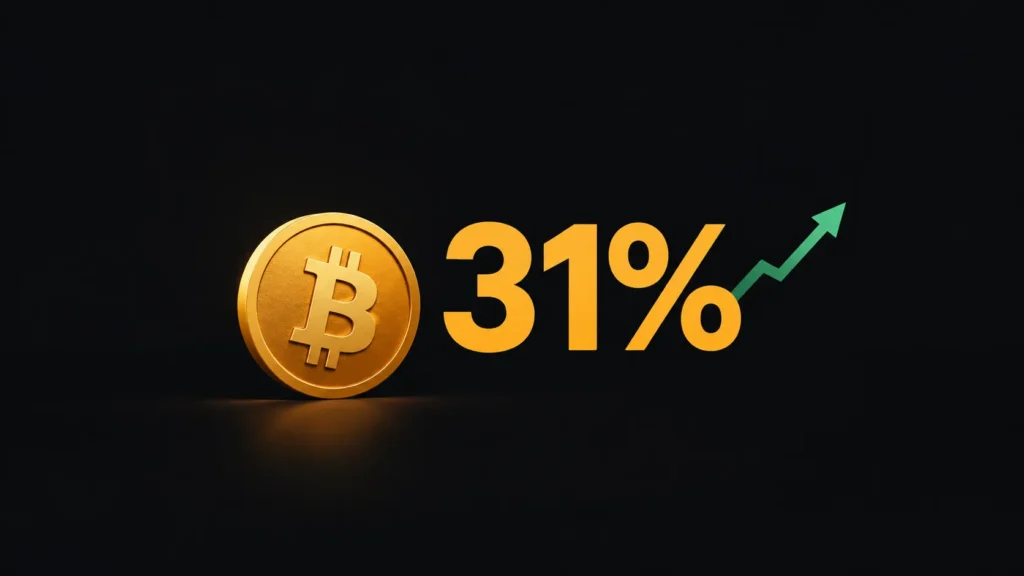

Bitcoin’s network looks emptier than it did in 2021, but the “31% of users vanished” claim doesn’t hold up. The real story is quieter and arguably more interesting.
Scroll through crypto social media and you’ll get to see 31%, a number that seemingly scares many in Bitcoin corridors. It is said that 31% of Bitcoin users are leaving, retail is gone, and ETFs are eating the network.
The number is real, but it doesn’t mean what people say it means.
Where the 31% comes from
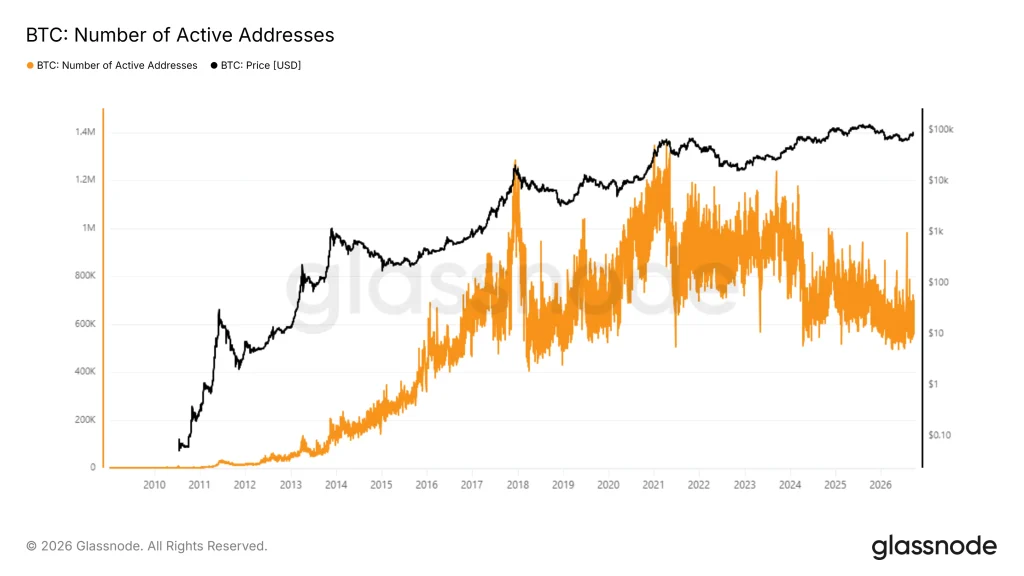
The figure traces back to Glassnode, which tracks how many Bitcoin addresses are active on the network. Its eight-day average fell from about 778,680 in mid-August 2025 to 535,942 on February 23, 2026. That’s a drop of roughly 31%.
The first problem is that it measures addresses, not people. One person can use dozens of addresses. One exchange can serve millions of customers through a handful of them.
The second problem is timing. The 31% is a drop reported for a 6 month period. It does not explain the five year trend in any way.
The longer picture is actually starker
If you want the bigger decline, look at Santiment. Since February 2021, the number of unique Bitcoin addresses making transactions is down 42%, and new address creation is down 47%.
A newer Santiment comparison puts the same story in daily numbers. In May 2021, Bitcoin averaged roughly 1.12 million active addresses and about 489,000 new wallets a day. Those figures have fallen to about 624,000 and 278,000, declines of roughly 44% and 43%.
So the honest headline isn’t “31% of users left.” It’s that on-chain participation is down by more than 40% from the last bull market’s peak. That’s a bigger drop than the viral number, and it’s less dramatic than “exodus” makes it sound.
The hidden stat: the chain is as busy as ever
This is the detail most people miss. If millions of users had really walked away, you’d expect the network to go quiet. It didn’t.
- Bitcoin handled about 444,000 transactions a day in August 2025.
- It handled about 439,000 in the 30 days to February 2026.
- Throughput has held in the 400,000–450,000 range even as active addresses fell.
Fewer addresses are producing about the same number of transactions. That suggests a smaller group of heavier users, such as exchanges, custodians and large holders, moving coins in batches. Nothing suggests a crowd of new retail users is making up the difference.
Fees say the same thing
Retail booms are noisy. People rush to move coins, blockspace gets crowded, and fees spike. That isn’t happening now.
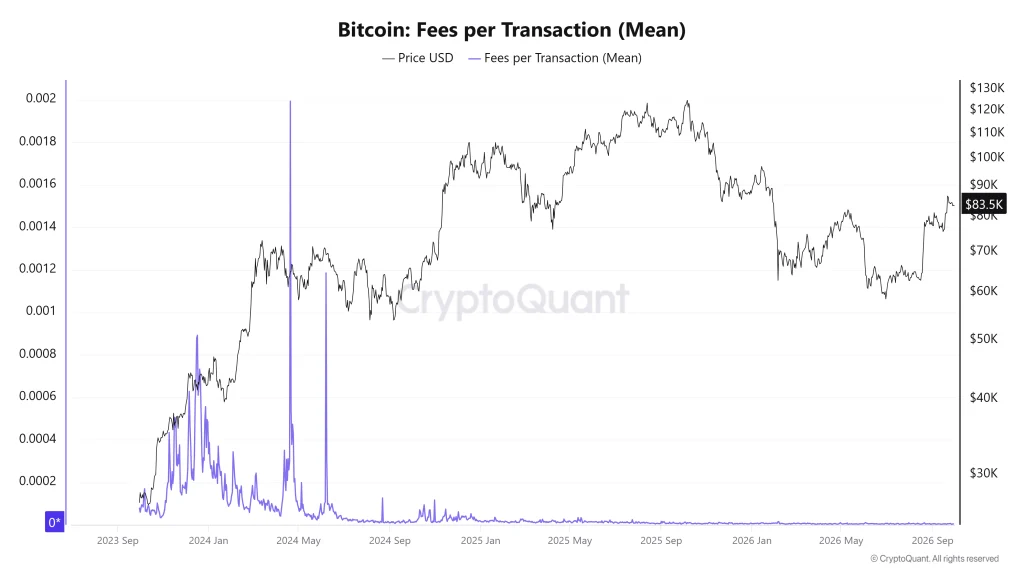
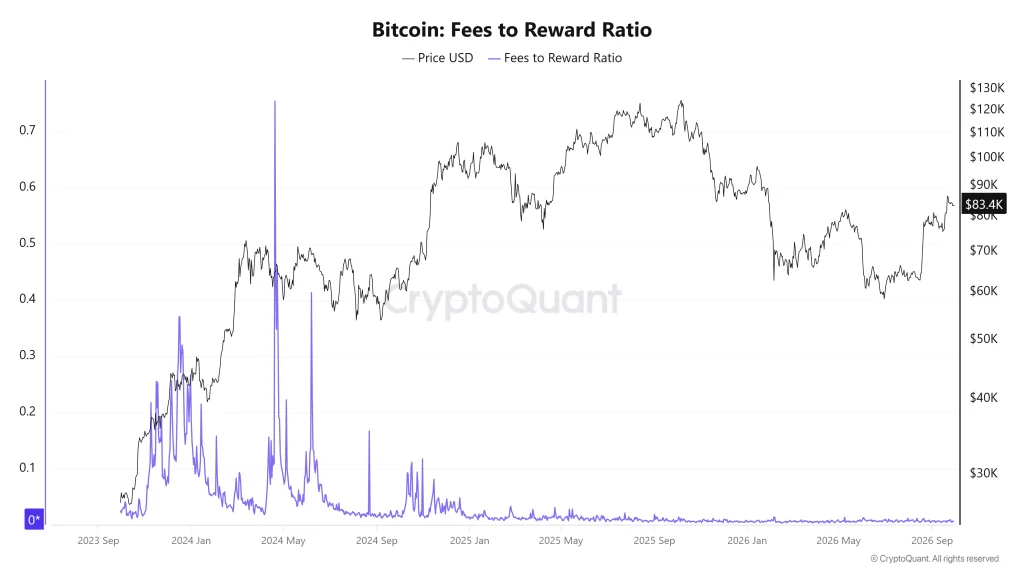
Average Bitcoin fees recently sat around $0.24, or about 1.8 sats/vB, with daily fee revenue under $100,000. Low fees fit a network with little competition for space. That backs the “weak retail” reading, though low fees can also come from better batching or cheaper transaction types, so they don’t prove who is responsible.
Where did the buyers go? Into ETFs
Bitcoin’s price and market cap have kept climbing while on-chain use fell. Some of that demand moved somewhere else.
According to Maketo, the 12 U.S. spot Bitcoin ETFs held about 1.3 million BTC on September 25, 2026. That’s worth roughly $108.6 billion and equals about 6.4% of all Bitcoin ever mined.
- BlackRock’s IBIT holds about 800,648 BTC, or 62% of the total.
- Fidelity’s FBTC holds about 184,218 BTC, or 14%.
Here’s the catch. Buying an ETF share in a brokerage app changes your Bitcoin exposure without creating a new Bitcoin address or moving a coin on-chain. The buyer never touches the network, so they never show up in address counts.
One more warning for anyone quoting ETF numbers. Between August 25 and September 25, 2026, ETF holdings grew by about $9.99 billion. Only about $3.37 billion of that was new money, and the rest came from Bitcoin’s price rising. A bigger ETF balance doesn’t always mean more buyers.
Ownership is drifting toward big balances
Maketo’s September 27 snapshot shows how concentrated Bitcoin ownership has become:
- Addresses holding 100+ BTC control 61.87% of supply, up from 59.95% two years ago.
- Addresses holding 1+ BTC control 93.03%.
- Tiny addresses under 0.01 BTC number 44.3 million but hold just 0.25% of supply.
- The 100–1,000 BTC band grew from 20.27% to 26.19% of supply in two years.
Big balances don’t automatically mean institutions. Exchanges and ETF custodians pool many customers’ coins into large wallets, so some of this “whale” growth is just customers’ coins being stored in bulk.
Coins are sitting still
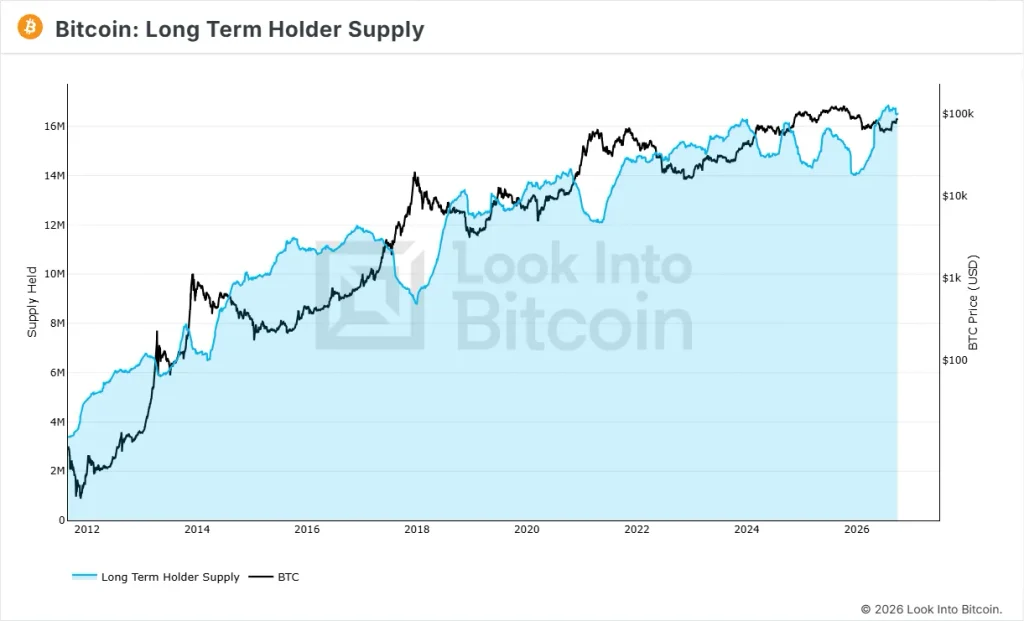
Maketo’s HODL-wave data shows that about 63.3% of Bitcoin supply hasn’t moved in at least a year. Glassnode and Look Into Bitcoin also report elevated long-term holder supply, with estimates ranging from 14.7 million BTC to 16.64 million BTC in July 2026. Those numbers use different dates and methods, so they shouldn’t be treated as the same measurement.
Dormant coins can belong to a committed investor, a big fund, or someone who lost their keys. Still, more of Bitcoin is being held and less is circulating.
So is retail “vanishing”?
Partly, and mostly on-chain.
- ✅ True: Active addresses and new addresses are far below 2021 levels.
- ✅ True: Fees are low, so blockspace demand is weak.
- ✅ True: ETFs now hold a meaningful slice of supply.
- ❌ Not proven: That 31% of people left.
- ❌ Not proven: That Bitcoin is already an “institutional settlement layer.” ETF trades mostly settle off-chain.
A fair summary is that Bitcoin exposure is moving off the chain and into brokerage accounts and custodians. Retail hasn’t necessarily left. It may just be buying Bitcoin without ever touching the network.
Why this matters
Address counts are one of the most quoted health metrics in crypto, and they are now less reliable as a measure of adoption. If ownership shifts to ETFs and custodians, a shrinking address count can sit alongside growing demand. Anyone judging Bitcoin’s health by on-chain activity alone is looking at only part of the picture, and headlines like “31% exodus” mislead by treating addresses as people.

Dan is a seasoned crypto writer for Blockchaindose who got his start in the space back in 2019. Over the past four years, he’s built a solid grasp of how the industry moves, focusing heavily on DeFi, NFTs, GameFi, and promising new projects.
Off the clock, you’ll usually find him buried in a good book or kicking back with a movie. His blend of hands-on market experience and straightforward commentary makes him a clear, trusted voice across the platform.