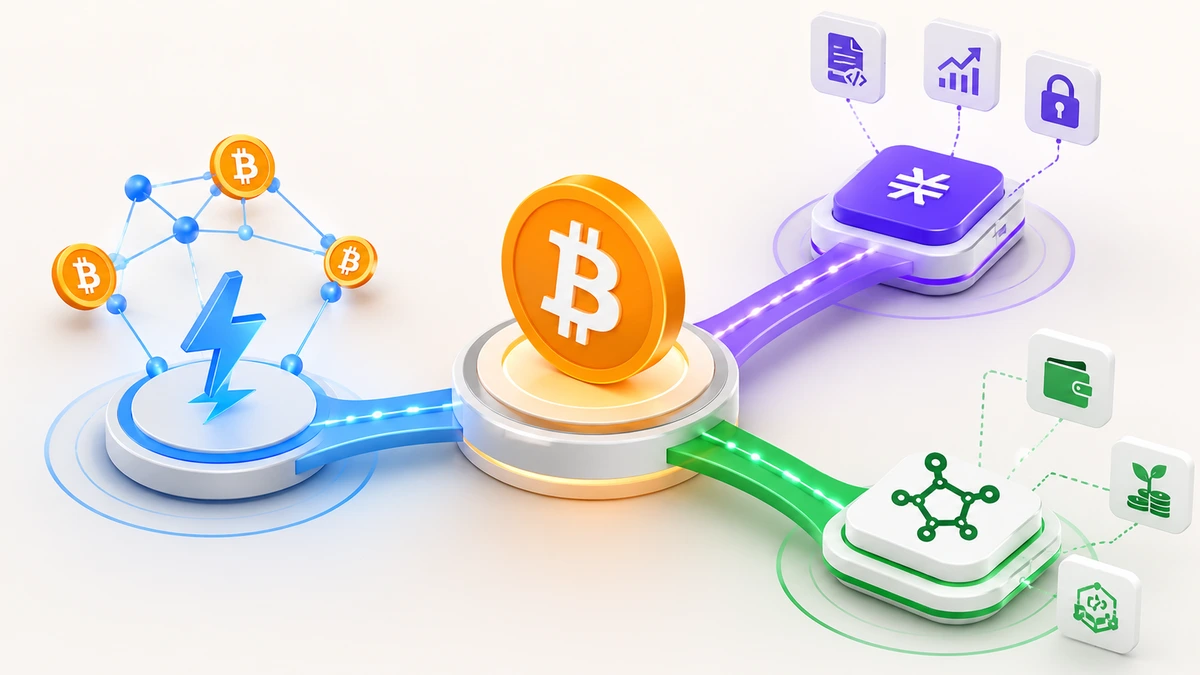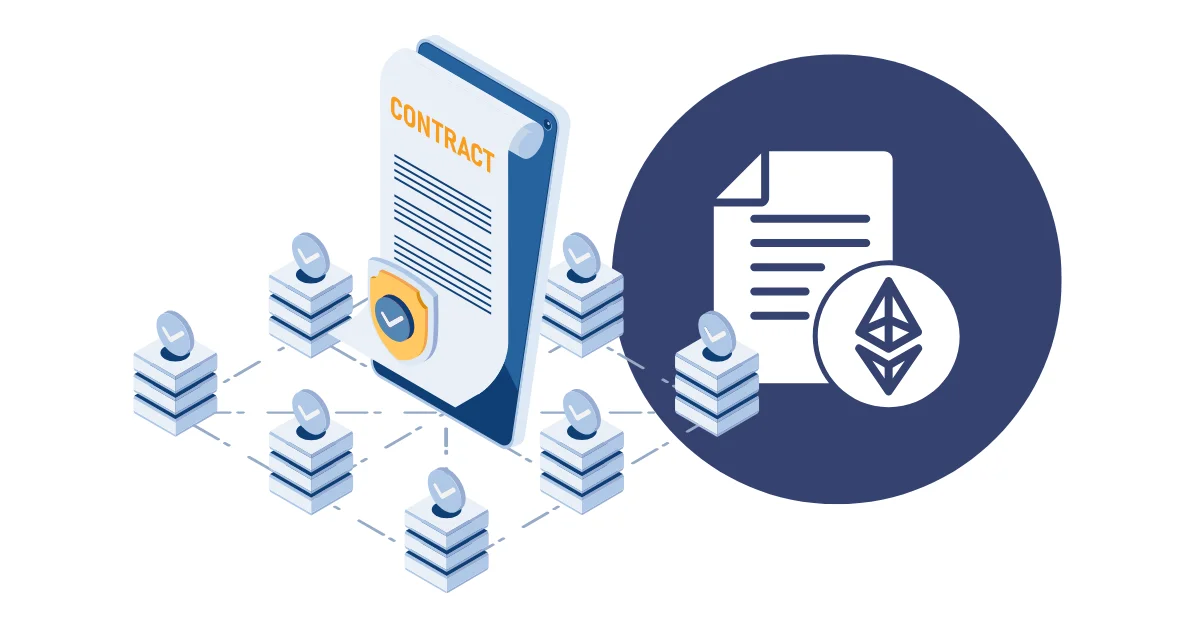

Multiple Layer-1 networks are now building infrastructure designed exclusively for autonomous AI agents, eliminating the human from the transaction loop entirely. Neo co-founder Da Hongfei formalized this direction in March 2026 with a strategy document positioning Neo X as a “Humanless Blockchain“.
BNB Chain followed in July 2026 with plans for a dedicated Layer-1 targeting 100,000 transactions per second for agentic trading. Alphea debuted its AI-native execution network at the Hong Kong Web3 Festival in April 2026. These projects share a common thesis: the next wave of on-chain activity will be generated by code, not clicks.
The Humanless Blockchain Thesis
Da Hongfei published a long-form strategy piece arguing that autonomous software agents will become the dominant on-chain actors over the next decade. The argument builds on crypto’s evolutionary phases: Bitcoin introduced an open monetary network, Ethereum expanded possibilities with programmable contracts, and automated market makers added new liquidity mechanisms. Against that backdrop, competing solely on marginal performance gains leaves blockchains undifferentiated, while infrastructure purpose-built for AI-driven agents remains relatively unexplored.
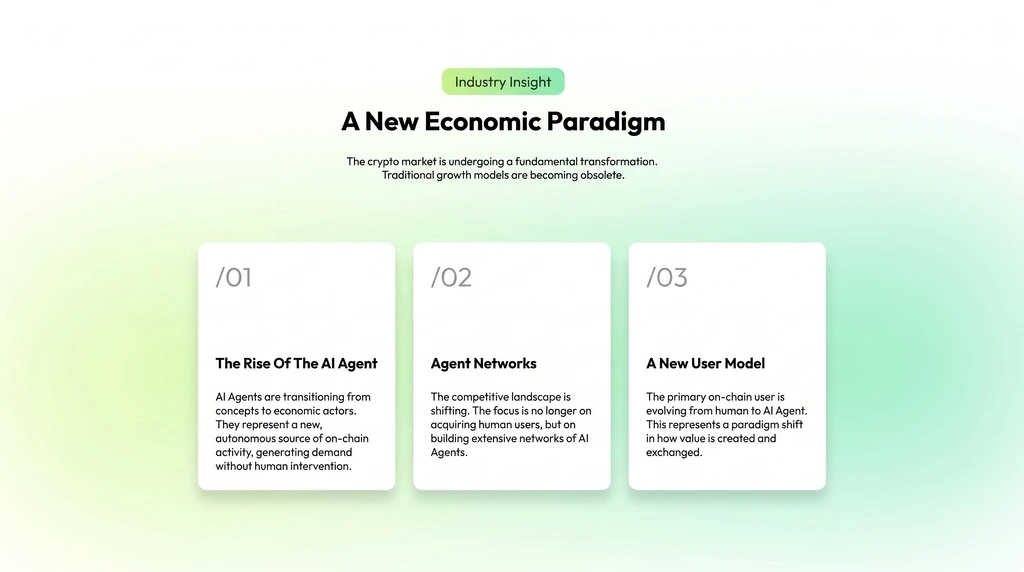
The “Humanless Blockchain” concept posits a shift from individuals manually controlling wallets toward autonomous agents that express intent, optimize strategies, and coordinate in real time. End users primarily set objectives while personal agents execute, coordinate, and settle transactions on-chain.
Neo X Architecture for Agent-Native Operations
Neo X incorporates several design components central to serving AI agents. Agent identity uses EIP-8004-style registries to manage identities, reputations, and validation records, supporting discoverability and portable trust profiles. Coordination between agents occurs through standardized communication channels and a skill index that reduces dependence on improvised off-chain coordination.
SpoonOS functions as an “agent operating system” layer handling deployment, configuration, monitoring, updating, and collaboration across multiple agents. NeoFS serves as the storage layer where agent states, strategies, and results persist, enabling continuity and context across sessions.
Privacy for sensitive strategies combines trusted execution environments with zero-knowledge techniques to shield proprietary logic and reduce exposure to adversarial behaviors. The network extends Neo’s dBFT model with BLS signatures while preserving one-block finality, targeting use cases where agents require immediate settlement assurances.
GAS functions as the utility asset pricing core consumption across the agent stack. Under the “agentic economy,” GAS becomes the metering unit for computation and ongoing services: transaction costs, agent service payments, storage expenses in NeoFS, and protocol-level services.
The Neo Foundation reported a $461 million treasury as of end-2025 and continues advancing its humanless blockchain strategy to build financial infrastructure for an AI-native future. Da Hongfei delivered a presentation on the concept at the National University of Singapore, expanding on the AI-native blockchain strategy.
BNB Chain’s Machine-Native Layer-1
BNB Chain announced on July 8, 2026, a new Layer-1 blockchain built specifically for AI agents that trade, pay, and operate on-chain without human intervention. The design targets more than 100,000 transactions per second, sub-50-millisecond pre-confirmation, and block finality in under one second. The project’s second-half 2026 technical roadmap outlines a public testnet for late 2026 and mainnet for early 2027.
The argument behind the design is direct: existing blockchain infrastructure was not built for the speed and privacy that autonomous systems demand. An autonomous agent does not behave like a person. It executes continuously, reacts in milliseconds, and can generate transaction volume that dwarfs human activity.
Three constraints drive the new architecture. Latency is the first constraint. A human accepts a transaction confirming in a few seconds. An agent competing to execute a trade may lose its opportunity in that window. Throughput is the second constraint. Networks tuned for human traffic congest when machine agents flood them with orders. Predictability is the third constraint. Agents need to know when a transaction is final so they can act on the result, making sub-second, deterministic finality a functional requirement rather than an optional feature.
BNB Chain’s proposed design removes the public mempool, the waiting queue where pending transactions normally sit, and routes orders directly to block producers through a mechanism called TxStream. The goal cuts latency and closes the window for front-running that machine agents would otherwise exploit.
Alphea’s AI-Native Execution Network
Alphea unveiled its decentralized execution environment at the Hong Kong Web3 Festival 2026. The Layer-1 platform is purpose-built for autonomous AI agents with persistent state, verifiable execution, and usage-based economics. Alphea targets what it describes as a fundamental gap in today’s AI infrastructure: while AI models generate outputs capably, the systems they depend on to operate—cloud compute, storage, billing, and coordination—remain designed around human users and centralized control.
“We’re building the layer where AI doesn’t just produce work, it lives and operates,” said Henry Park, Founder and CEO of Alphea. “That means execution, memory, and economics all have to be rethought from the ground up.”
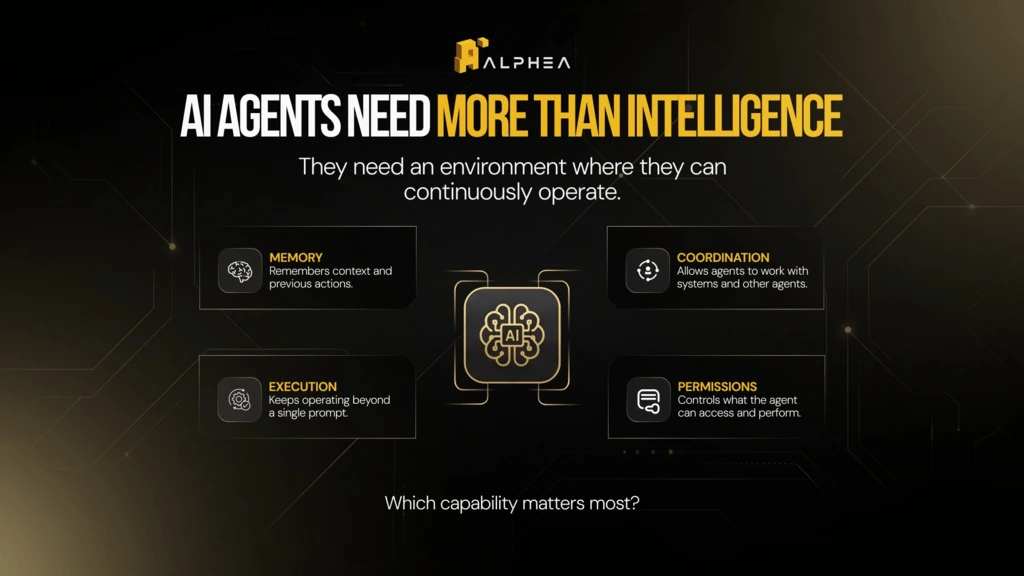
At the core of Alphea’s architecture is Delta, a packaging format that transforms AI-generated outputs into self-contained executable units. Rather than requiring manual deployment, permissioning, and resource allocation, Delta packages arrive at the network with all context needed for autonomous execution. Storage operates dynamically, with active data held close to execution and less-used data migrated to more durable tiers.
Every workload is accompanied by a proof of execution that verifies not only that a task was performed, but how it was performed and what resources it consumed. This validates decentralized execution without relying on a single point of trust. The economic model ties token activity directly to resource usage: agents pay in proportion to the infrastructure they consume.
Alphea secured $5 million in strategic funding in July 2026 from global venture capital firms including MH Ventures.
MultiversX Agent Hub and Commerce Stack
MultiversX launched the Agent Hub in March 2026, a developer portal designed specifically for AI coding agents. The portal provides structured, machine-readable context about MultiversX SDKs and codebases so agents produce correct onchain code from the first prompt. The underlying infrastructure includes MX-8004 for onchain identity, UCP for unified agent-to-agent communication, ACP and AP2 for autonomous negotiation and payment, and x402 for HTTP-native micropayments. Relayed v3 enables gasless transactions, so neither agents nor their users need to hold EGLD to start.
Infrastructure Requirements for Machine-Scale Activity
Across these initiatives, common infrastructure requirements emerge. Speed at the edge makes sub-second finality and minimal pre-confirmation latency baseline requirements. Sustained throughput requires networks to absorb machine-scale transaction volume without congesting or degrading. Fairness and privacy demands removing exploitable windows like public mempools to protect agents from front-running. Reliability under load necessitates continuous operation without gaps or maintenance windows, as agents run continuously.
Da Hongfei frames the shift as analogous to Bitcoin and Ethereum before it: creating something that did not exist before. The “Humanless Blockchain” concept posits a shift from individuals manually controlling wallets toward autonomous agents that express intent, optimize strategies, and coordinate. The Neo Foundation continues pursuing this strategy to build financial infrastructure for an AI-native future. Whether these specific performance targets hold, the direction is clear: the agentic economy is coming, and it will run on infrastructure engineered for machines.
FAQ
What defines a “Humanless Blockchain” architecture?
A network where autonomous agents replace manual wallet controls as primary on-chain actors. It includes agent identity registries, standardized coordination, persistent storage, one-block finality, and no public mempool—all engineered for machine-speed, code-driven operations without human transaction oversight.
Why can existing Layer-1 networks not adequately serve autonomous agents?
Existing L1s rely on public mempools and multi‑second confirmations. Agents operate in millisecond windows, so latency degrades performance. Human‑oriented throughput congests under machine‑volume loads. They also lack native agent identity and communication standards, forcing off‑chain coordination.
What role do humans play in a Humanless Blockchain ecosystem?
Humans set high‑level objectives, risk parameters, and budgets while agents execute in real time. DAO governance allows token holders to vote on protocol upgrades. Participation shifts from transactional execution to strategic oversight and policy governance.
How do autonomous agents pay for transactions and services?
Agents use utility tokens (e.g., Neo GAS) to meter computation, storage, and bandwidth. Platforms like MultiversX support relayed transactions, letting developers sponsor agent operations. Token expenditure scales with resource consumption, allowing dynamic allocation based on task priority.
What bottleneck does removing the public mempool address?
Removing the mempool eliminates the vulnerable window where pending transactions are exposed to front‑running. BNB Chain’s TxStream routes transactions directly to block producers, reducing latency and ensuring deterministic ordering. This prevents adversarial agents from manipulating transaction sequencing for economic gain.
I am Isai Alexei. I work as a journalist and financial analyst covering cryptocurrency markets and traditional securities. I have spent ten years analyzing digital assets, trading activity, and market structure.