There is a major shift within the Bitcoin blockchain in 2026, and hardly anyone has been paying attention. While everyone is focusing on Bitcoin’s price changes, and the flow of monies to ETFs, something bigger, or better yet, smaller, is happening. The number of Bitcoin microtransactions has been surging.
This is not a small mistake, or a short term issue. Rather, it is a fundamental change in the usage of the Bitcoin network. And it’s happening while Bitcoin’s price is struggling, which makes this increase even more surprising.
The number behind the noise
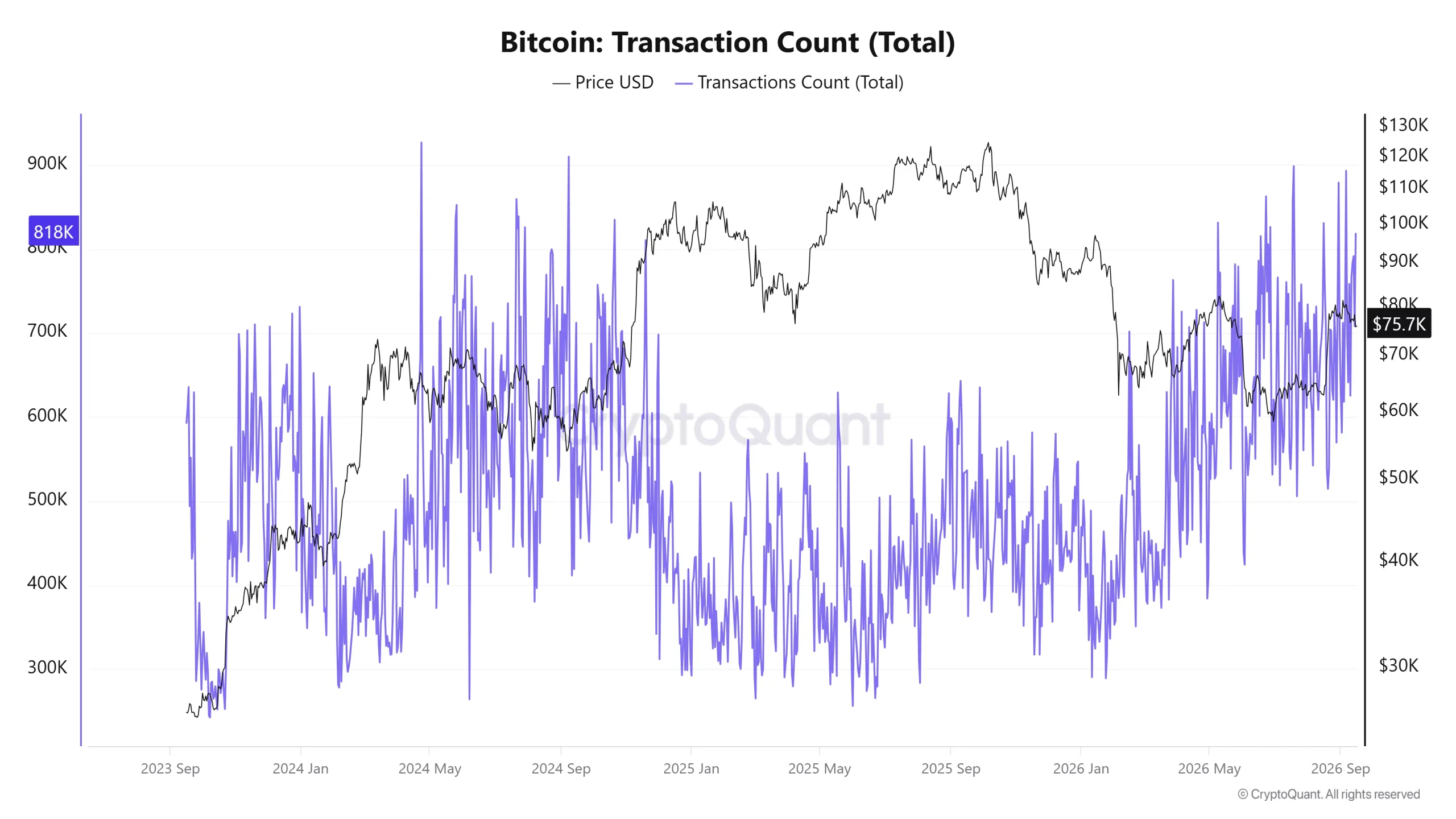
In 2026, the number of daily transactions surged significantly. In July, the number of daily transactions actually peaked at over 893,000. 2026 is therefore on record amongst the busiest periods in Bitcoin’s 17-year history. These numbers are perhaps more than double those seen in 2025.
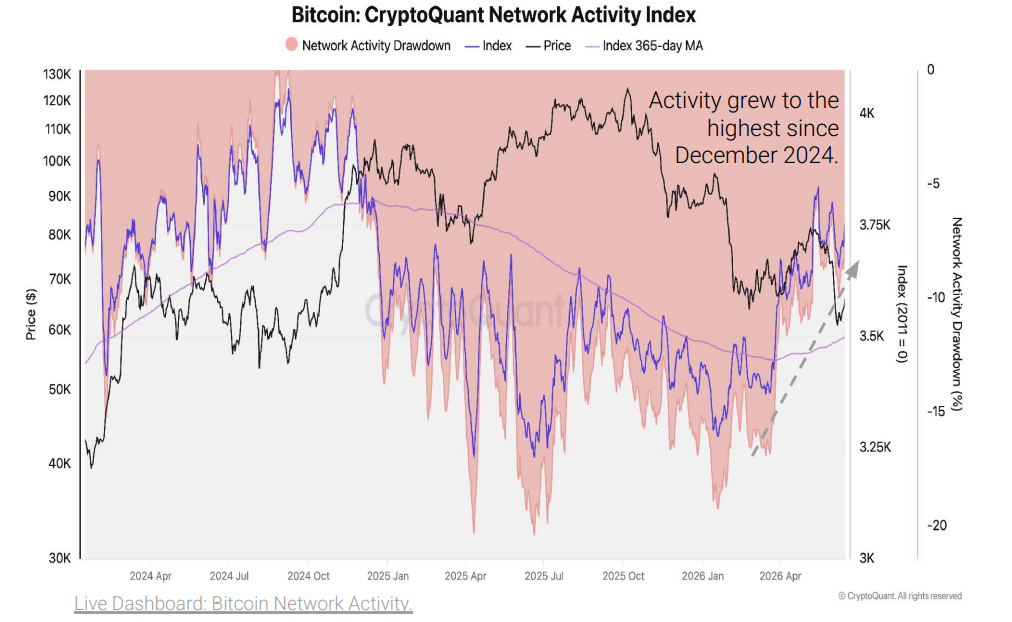
CryptoQuant’s Network Activity Index, which measures overall use of the network, has gone above its usual trend line for the first time since December 2024 and has continued to rise since January.
On the surface, this looks like typical behavior during a market rally: more transactions, more usage, more people adopting it. But when you look closer, the situation changes.
Julio Moreno, CryptoQuant’s head of researcheven noted that transactions of less than 0.01 BTC, which is about $600–$650 right now, now make up around 80% of all daily Bitcoin transactions. This represents a big jump, from just 44% reported in 2023.
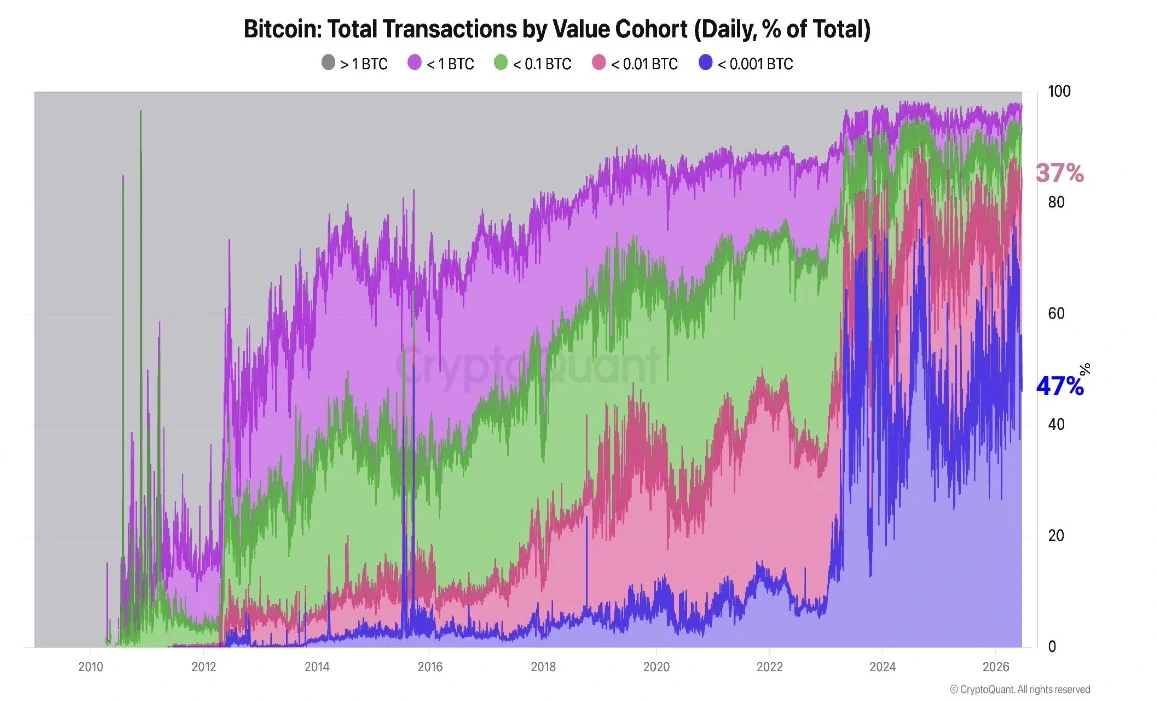
The Cryptoquant Charts above just show the distribution of Bitcoin transactions based on value cohorts. And, it is clear that transactions of miniature value are increasingly gaining route. In fact, transactions below 0.001 BTC represent over 47% of total transactions. Over 80% of transactions fall below the 0.01 BTC mark.
Moreno has made it clear that this isn’t about people wanting to move money, but rather about people wanting to move data. He noted that the increase in transactions is happening almost entirely within the lowest value categories. This pattern is common for activity driven by the technology itself, where there are many transactions but the amount of Bitcoin being transferred is small.
The real reason behind the activity
The main reasons for this shift are three specific protocols: Runes, Ordinals, and BRC-20 tokens. These systems use a feature in Bitcoin called OP_RETURN to add data, create tokens, and record information directly onto the blockchain. None of this is “money” in the usual sense; it’s extra information disguised as a Bitcoin transaction.
Some of these transactions include as little as 546 satoshis, which is about $0.35. This tiny amount is just enough to meet the network’s minimum requirement, while the main purpose is the data that’s attached.
Data from Dune Analytics that tracks these protocols shows that on some busy days, activity related to Runes alone has accounted for over 80% of all Bitcoin transactions, sometimes even more than regular Bitcoin transfers.
In fact, a GlassNode data analysis shows that, with June 2026 seeing peaks of over 820,000 transactions, about 600 thousand transactions per day were all about Runes.
While Ordinal inscriptions also contribute vastly to this number, 2026 has seen a major decline in new daily inscriptions. In fact, the chart displaying the number of ordinal inscriptions on the Bitcoin network per day shows some plateauing at the top, signs of a cooling market.
Another chart showing the amount paid for ordinal transaction fee experiencing a similar pattern, all signalling a calming market. Yet, both charts still indicate that ordinals are contributing to the large numbers of Bitcoin microtransactions. Between January and February 2026, the number of daily ordinal inscriptions peaked at over 175,000.
With an average ordinal inscription costing between $5-$30, the large number of ordinals means many Bitcoin microtransactions.
In October, a change in Bitcoin Core v30 significantly increased the amount of data that could be included in a single transaction. The limit for OP_RETURN outputs went from about 83 bytes to around 100,000 bytes. This, along with node operators updating their systems, made it much easier for inscription-style activity to take off. Data from 2026 shows that this is exactly what happened.
The mempool is filling up, but with pennies
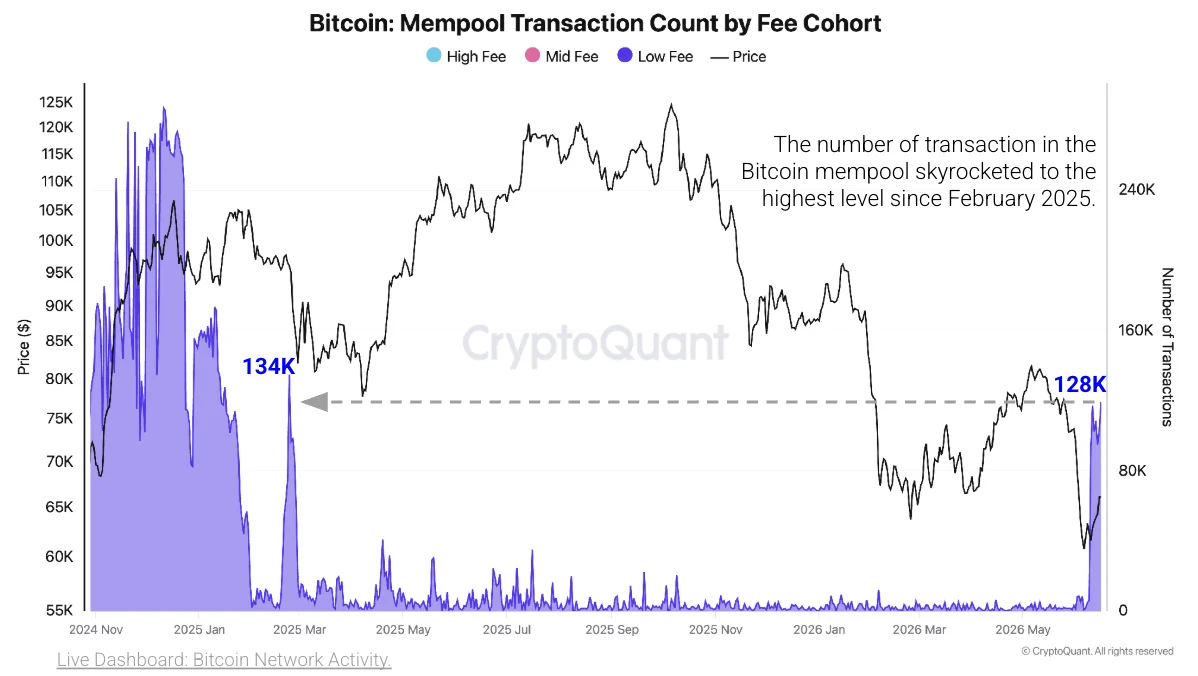
A clear sign of the shift to microtransactions is the network congestion. In mid-2026, the Bitcoin mempool, which is where unconfirmed transactions wait, grew to about 128,000 transactions. This was the highest number since February 2025. However, it’s important to note that these were mostly low-fee, low-value transactions, and the congestion was not as bad as in September 2023 or November 2024.
Researchers have also pointed out to around 96,000 transaction outputs that don’t lead to real addresses. These outputs are used to store text or data. Since Bitcoin nodes have to keep track of all unspent outputs forever, this activity adds a small, permanent cost to running a full node.
For now, transaction fees haven’t increased much. Even on a busy day in 2026 with nearly 900,000 transactions, the total network fees actually went down by about 8%, even though the total value transferred increased.
This suggests the surge in transactions isn’t driven by typical economic activity that competes for fees. If inscription-related activity continues to grow, it could eventually start competing for block space and drive up costs for important, time-sensitive payments.
Meanwhile, the “real money” side looks completely different
The activity involving larger amounts of money looks quite different. While the number of transactions has spiked with very small transfers, the value transferred has concentrated in a different direction.
Data shows that transactions over $100,000 have consistently made up the bulk of the total value moved on the Bitcoin network. Large transfers, often over $1 million, frequently account for 60–80% of the daily value transferred.
In simple terms, a few big transactions move most of the money, while many tiny transactions move very little. Over the past year, the average daily economic settlement has been around $7.5 billion, and it went up to $16 billion per day when Bitcoin’s price passed $100,000.
Why active addresses and “record transactions” can mislead
Here’s why looking at things like active addresses or just counting transactions can be misleading. A lot of the numbers are actually the figures that get bumped up the most by inscription activity. GlassNode has noted that the count of active addresses can be skewed.
This happens because of inscription minting and burning, new addresses created by protocols that don’t represent actual users, and when a single account is used multiple times. It might look like a network is suddenly full of new users. Yet, in reality, it could just be a few systems creating a lot of repetitive, low-value activity on the blockchain.
Why These Numbers Actually Matter
It’s easy to dismiss this as a minor technical detail, something only blockchain analysts need to worry about. But that’s a mistake. How the Bitcoin network is actually used affects:
- How fees are set
- The economics for running nodes
- Whether we see Bitcoin as “digital gold” or more like a “data storage layer,”
- The heated political discussions about decisions made by the Core developers, which have gotten more intense as inscription activity has increased.
Looking merely at the number of transactions can be quite a misleading endeavor. A network can seem very busy, but have less actual economic activity. If you want to understand real Bitcoin adoption, you need to look beyond the raw transaction numbers. Focus on metrics that help separate the real activity from the noise.
The statistic that “80% of transactions are microtransactions” isn’t a scandal, nor does it mean Bitcoin is broken. But it does show that the easiest numbers to point to when talking about Bitcoin’s health are no longer the most accurate. Understanding this difference is exactly why it’s important to look into these stats before you repeat the next headline about a “record-breaking” day on the Bitcoin network.

Dan is a seasoned crypto writer for Blockchaindose who got his start in the space back in 2019. Over the past four years, he’s built a solid grasp of how the industry moves, focusing heavily on DeFi, NFTs, GameFi, and promising new projects.
Off the clock, you’ll usually find him buried in a good book or kicking back with a movie. His blend of hands-on market experience and straightforward commentary makes him a clear, trusted voice across the platform.